
Basic information
- CAS
872-53-7- Standard SMILES
O=CC1CCCC1- InChIKey
VELDYOPRLMJFIK-UHFFFAOYSA-N- Molecular formula
- C6H10O
- Average molar mass
- 98.14 g/mol
- Monoisotopic mass
- 98.07316494
Names & identifiers
- Preferred name
- Cyclopentanecarbaldehyde
- IUPAC
- cyclopentanecarbaldehyde
- English name
- Cyclopentanecarbaldehyde
- Molecular formula
- C6H10O
- Molecular weight
- 98.14
Names & synonyms
Cyclopentanecarbaldehyde872-53-7CyclopentanecarboxaldehydeEINECS 212-829-7DTXSID10236176NSC 17492RefChem:580974DTXCID10158667212-829-7CyclopentanealdehydeFormylcyclopentaneMFCD00060798
Show more names
CYCLOPENTANCARBALDEHYDEopentanecarboxaLRARECHEM AK ML 0065CYCLOPENTYLMETHANALCyclopentyl aldehyde
CyclopentylformaldehydecyclopentanecaboxaldehydeCHEMBL274711NSC-17492C3019EN300-57255Cyclopentanecarboxaldehyde (stabilized with HQ)cyclopentancarbaldehyd
Database identifiers
- CAS
872-53-7- PubChem CID
- 70106
- DTXSID
DTXSID10236176- ChEMBL
CHEMBL274711- UNII
- 8AE23T4KWE
- EC Number
- 212-829-7
- Nikkaji
- J79.991B
Properties
Computed structural properties
- XLogP
- 1.3
- Topological polar surface area
- 17.1 Ų
- Hydrogen bond donors
- 0
- Hydrogen bond acceptors
- 1
- Rotatable bonds
- 1
- Heavy atoms
- 7
- Formal charge
- 0
- Complexity
- 62.6
Physicochemical properties
- Boiling point
- 140 · 140-141 °C (lit.)
- Density
- 0.919 g/mL · 0.919 g/mL at 25 °C (lit.)
- refractive index
- 20 · n20/D 1.4430(lit.)
- Flash point
- 83 °F · 83 °F
- storage temp.
- 2 · 2-8°C
- solubility
- soluble in Chloroform
- form
- Liquid
- color
- Clear colorless to light yellow
- Water Solubility
- Soluble in water and ethanol
- Exposure limits
- 0.1 ppmOSHA: · ACGIH: TWA 0.1 ppmOSHA: TWA 0.1 ppm(0.4 mg/m3)NIOSH: IDLH 100 mg/m3; TWA 0.1 ppm(0.4 mg/m3)
- InChI
- InChI=1S/C6H10O/c7-5-6-3-1-2-4-6/h5-6H,1-4H2
- InChIKey
- VELDYOPRLMJFIK-UHFFFAOYSA-N
- SMILES
- C1(C=O)CCCC1
- CAS DataBase Reference
- 872 · 872-53-7(CAS DataBase Reference)
- NIST Chemistry Reference
- Cyclopentanecarboxaldehyde(872-53-7)
- UNSPSC Code
- 12352100 · 12352100
- NACRES
- 22 · NA.22
- Symbol(GHS)
- 2 · GHS02,GHS07
- Signal word
- Warning
- Hazard statements
- 226 · H226-H315-H319-H335
- Precautionary statements
- 210 · P210-P233-P240-P241-P303+P361+P353-P305+P351+P338
- target organs
- Respiratory system
- PPE
- Eyeshields, Faceshields, Gloves, type ABEK (EN14387) respirator filter
- Hazard Codes
- Xi
- Risk Statements
- 10 · 10-36/37/38
- Safety Statements
- 16 · 16-26-36-37/39
- RIDADR
- 1989 · UN 1989 3/PG 3
- WGK Germany
- 3 · 3
- HazardClass
- 3 · 3
- PackingGroup
- III
- HS Code
- 29122990 · 29122990
- Storage Class
- 3 · 3 - Flammable liquids
- Hazard Classifications
- 3 Eye · Aquatic Chronic 3Eye Irrit. 2Flam. Liq. 3Skin Irrit. 2STOT SE 3
- Limited Quantities
- 5 L · 5.0 L (1.3 gallons) (liquid)
- Excepted Quantities
- Max Inner Pack (30g or 30ml) and Max Outer Pack (1Kg or 1L)
Safety & regulation
GHS classification
GHS Classification
Warning
H226 (17%): Flammable liquid and vapor [Warning Flammable liquids]
P210, P233, P240, P241, P242, P243, P261, P264, P264+P265, P271, P280, P302+P352, P303+P361+P353, P304+P340, P305+P351+P338, P319, P321, P332+P317, P337+P317, P362+P364, P370+P378, P403+P233, P403+P235, P405, and P501 (click each P-code to see the statement)
Aggregated GHS information provided per 47 reports by companies from 7 notifications to the ECHA C&L Inventory. Each notification may be associated with multiple companies.
Hazard information
Hazard Classes and CategoriesFlam. Liq. 3 (17%)
Safety data
- PPE
- Eyeshields, Faceshields, Gloves, type ABEK (EN14387) respirator filter
- wgk
- 3
- ridadr
- UN 1989 3/PG 3
- hs_code
- 29122990
- risk_code
- 10-36/37/38
- Signal word
- Warning
- Symbol(GHS)
- GHS02,GHS07
- hazard_code
- Xi
- safety_code
- 16-26-36-37/39
- hazard_class
- 3
- Storage Class
- 3 - Flammable liquids
- packing_group
- III
- target organs
- Respiratory system
- Hazard statements
- H226-H315-H319-H335
- Limited Quantities
- 5.0 L (1.3 gallons) (liquid)
- Excepted Quantities
- Max Inner Pack (30g or 30ml) and Max Outer Pack (1Kg or 1L)
- Hazard Classifications
- Aquatic Chronic 3Eye Irrit. 2Flam. Liq. 3Skin Irrit. 2STOT SE 3
- Precautionary statements
- P210-P233-P240-P241-P303+P361+P353-P305+P351+P338
Chemistry & industry
Applications
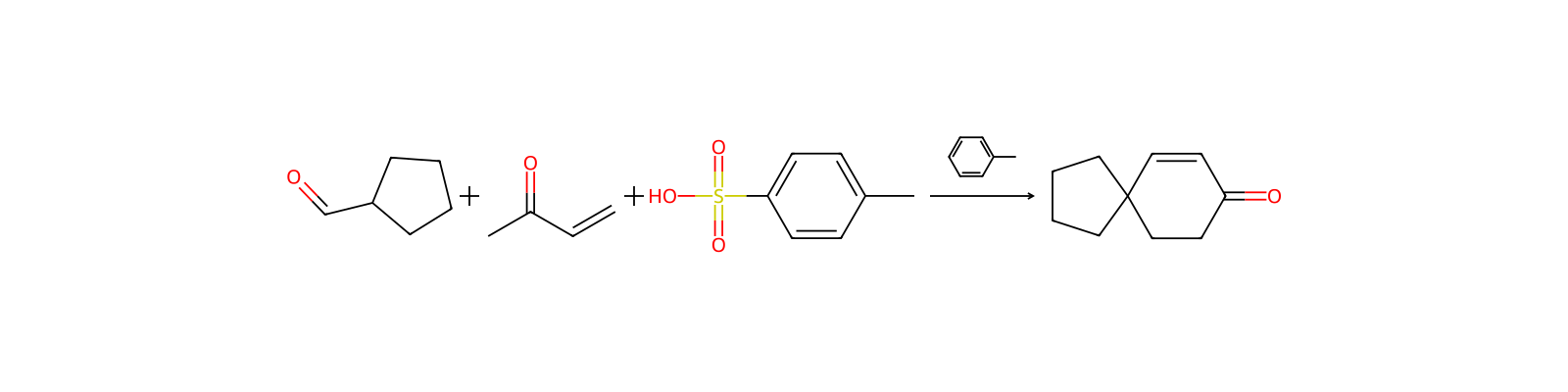
UsesCyclopentanecarboxaldehyde may be used in the synthesis of:D,L-trans-2-cyclopentylmethylene-1-nitroso-1-(2-hydroxycyclohexyl)hydrazineethyl 5-cyclopentyl-5-hydroxy-2-pentenoateethyl 3-cyclo entyl-3-hydroxy-2-vinylpropanoate
General DescriptionCyclopentanecarboxaldehyde can be prepared from cyclohexene, via copper-catalyzed oxidation with persulfate. It can also be synthesized from mercuric sulfate and cyclohexene.
Upstream & downstream products
Downstream products
Suppliers100 total
梯希爱(上海)化成工业发展有限公司021-67121386 · [email protected]
衢州润东化工有限公司0570-8789886 18892685668 · [email protected]
上海阿拉丁生化科技股份有限公司400-6206333 13167063860 · [email protected]
常熟市海天医药原料有限公司13913622609
上海斐珑化学品有限公司021-68735616 · [email protected]
韶远科技(上海)有限公司021-50795510 4000665055 · [email protected]
Syntechem Co.,Ltd[email protected]
上海迈瑞尔生化科技有限公司4006356688 18621169109 · [email protected]
北京华威锐科化工有限公司0757-86329057 18934348241 · [email protected]
阿法埃莎(中国)化学有限公司400-6106006 · [email protected]
安耐吉化学&3A(安徽泽升科技股份有限公司)400-0056266 · [email protected]
常州安轩化工有限公司13912302692 · [email protected]
苏州泽厚生物科技有限公司0512-68716880 19984816880 · [email protected]
上海瀚鸿科技股份有限公司021-54306202 13764082696 · [email protected]
上海有德化工科技有限公司021-37910092 15821801668 · [email protected]
上海相辉医药科技有限公司13761987713 · [email protected]
上海景颜化工科技有限公司13817811078 · [email protected]
嘉兴市艾森化工有限公司0573-85285100 18627885956 · [email protected]
上海西浦化工有限公司+86 (21) 6715-7650 · [email protected]
上海攀鸿化工科技有限公司021-56491756 13512199871 · [email protected]
常州布克化工有限公司13606129753 13775119556 · [email protected]
武汉丰泰威远科技有限公司027-87465837 19945049750 · [email protected]
四川库利南科技有限公司400-1166-196 18981987031 · [email protected]
skychemical Co.Ltd021-20958197 20965099 · [email protected]
天津希恩思生化科技有限公司400 638 7771 · [email protected]
南京维奥化工有限公司Please Send Email 18652950785 · [email protected]
上海乔木化学科技有限公司021-60451683 15021268886 · [email protected]
河南多贝化工有限公司0370-2785118 17550508557 · [email protected]
赛默飞世尔科技(中国)有限公司800-810-5118 · [email protected]
南京精瑞久安生物技术有限公司025-58196018 800028039 · [email protected]
上海特伯化学科技有限公司+86-21-60341587 · [email protected]
上海健超生物科技有限公司150-2103-5486 18017383231 · [email protected]
TCI AMERICA800-4238616 · [email protected]
TOKYO CHEMICAL INDUSTRY CO., LTD.03-36680489 · [email protected]
TCI Europe320-37350700 · [email protected]
常州凯立医药科技有限公司0519-81096292 15312577869 · [email protected]
深圳康特腾科技有限公司86-0755-86635001 · [email protected]
Shanghai Witofly Chemical Co.,Ltd[email protected]
上海睿升化工科技有限公司+86-021-50935922
上海湄水化工科技有限公司021-60549325 18616193163
上海将来实业股份有限公司021-61552785 · [email protected]
安徽科迪达化工有限公司0554-2106669 · [email protected]
湖南华腾制药有限公司400-8592883 · [email protected]
嘉兴诺华化工有限公司18957373295
上海马氏化学科技有限公司19916721580 · [email protected]
上海麦克林生化科技股份有限公司15221275939 15221275939 · [email protected]
杭州杰恒化工有限公司0571-87396432 · [email protected]
上海嵩爰化工科技有限公司010-1234567 18521000990 · [email protected]
江苏艾康生物医药研发有限公司025-66028182 17714375163 · [email protected]
凯试(上海)科技有限公司021-50135380 · [email protected]
Related reactions
135 records


Compound notes
Loading…