HomeMCPWorkbenchSkills
HomeWorkbenchNotificationsMe
llms.txt · MCP GuidePrivacy Policy · Terms of Service · Supportv1.8.0
  1. Home
  2. /Compound

Anthrone

HCID 7018
New noteNew reactionRequest quotes
Print preview

Completing data — refresh the page later to see the latest
Basic informationOverviewNames & identifiersPropertiesSafety & regulationChemistry & industryRelated reactionsCompound notes
Substructure searchFind similar structures

Basic information

CAS
90-44-8
Standard SMILES
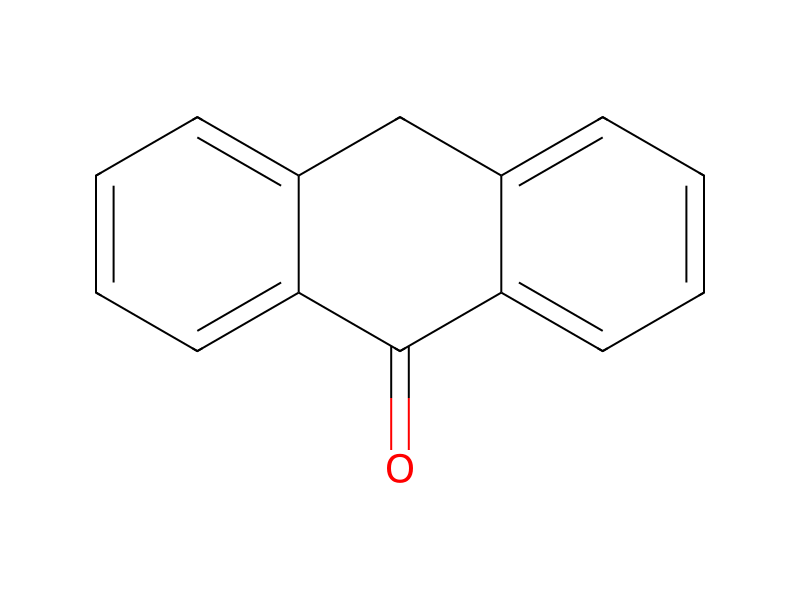
O=C1c2ccccc2Cc2ccccc21
InChIKey
RJGDLRCDCYRQOQ-UHFFFAOYSA-N
Molecular formula
C14H10O
Average molar mass
194.23 g/mol
Monoisotopic mass
194.07316494

Overview

Anthrone is a member of the class of anthracenes that is 9,10-dihydroanthracene carrying an oxo group at C-9. It has a role as a radical scavenger. It is a tautomer of a 9-anthrol.

Names & identifiers

Preferred name
Anthrone
IUPAC
10H-anthracen-9-one
English name
Anthrone
Molecular formula
C14H10O
Molecular weight
194.23

Names & synonyms

ANTHRONE90-44-89(10H)-AnthracenoneCarbothroneanthracen-9(10H)-oneAnthranone9-Oxoanthracene9,10-Dihydro-9-oxoanthraceneAnthracene, 9,10-dihydro-9-oxo-DTXSID1049431FP0FJ7K744CHEBI:33835
Show more names
Anthron(10H)-9-AnthracenoneAnthroneGrANTHRACENONEAnthrone,97%
NSC-1965DTXCID0029391RefChem:113082201-994-010H-anthracen-9-oneAz-OMFCD000011879,10-DIHYDROANTHRACEN-9-ONE

Database identifiers

CAS
90-44-8
PubChem CID
7018
DTXSID
DTXSID1049431
ChEMBL
CHEMBL124440
ChEBI
CHEBI:33835
UNII
FP0FJ7K744
EC Number
201-994-0
Nikkaji
J3.916K

Properties

Computed structural propertiesFilling in

XLogP
3.7
Topological polar surface area
17.1 Ų
Hydrogen bond donors
0
Hydrogen bond acceptors
1
Rotatable bonds
0
Heavy atoms
15
Formal charge
0
Complexity
234

Experimental & physicochemical properties

PolymersOther Classes -> Polycyclic Aromatic Hydrocarbons
SpringerMaterials PropertiesAngular frequency
LogP · 2 items

Log Kow = 3.66

3.46

Color/Form · 2 items

ORTHORHOMBIC NEEDLES FROM BENZENE AND PETROLEUM ETHER

COLORLESS NEEDLES

Solubility · 2 items

SOL IN MOST ORG SOLVENTS WITHOUT FLUORESCENCE

SOL IN ACETONE, HOT BENZENE, CONCN SULFURIC ACID, HOT DIL ALKALI

Melting Point155 °C
Vapor Pressure0.0000183 [mmHg]
Physical DescriptionColorless solid; [Hawley] Colorless crystalline powder; [Alfa Aesar MSDS]
Stability/Shelf LifeTENDENCY TO CHANGE TO ANTHRAQUINONE /IN SOLN/

Safety & regulation

Safety information is for reference only and does not replace the supplier’s Safety Data Sheet (SDS), applicable regulations, or professional assessment.

GHS classification

GHS Classification · 5 items

This chemical does not meet GHS hazard criteria for 3.9% (2 of 51) of reports.

Warning

H315 (96.1%): Causes skin irritation [Warning Skin corrosion/irritation]

P261, P264, P264+P265, P271, P280, P302+P352, P304+P340, P305+P351+P338, P319, P321, P332+P317, P337+P317, P362+P364, P403+P233, P405, and P501 (click each P-code to see the statement)

Aggregated GHS information provided per 51 reports by companies from 9 notifications to the ECHA C&L Inventory. Each notification may be associated with multiple companies.

Hazard information

Regulatory Information · 2 items

Chemical: 9(10H)-Anthracenone

9(10H)-Anthracenone: Does not have an individual approval but may be used under an appropriate group standard

Hazards SummaryA skin and severe eye irritant; [Alfa Aesar MSDS] See POLYCYCLIC AROMATIC HYDROCARBONS.
Hazard Classes and CategoriesSkin Irrit. 2 (96.1%)

Safety & protection

Disposal Methods · 1 item

SRP: At the time of review, criteria for land treatment or burial (sanitary landfill) disposal practices are subject to significant revision. Prior to implementing land disposal of waste residue (including waste sludge), consult with environmental regulatory agencies for guidance on acceptable disposal practices.

Toxicology

Environmental Fate

Chemistry & industry

Pharmacology

Metabolism/MetabolitesYIELDS ANTHRAQUINONE & 9-HYDROXYANTHRACENE IN RATS. /FROM TABLE/

Uses & manufacturing

Uses · 4 items

Used in the colorimetric determination of sugar and animal starch in body fluids, as a general reagent for carbohydrates, in the determination of animal starch in liver tissue, and in organic synthesis; [HSDB]

IN COLORIMETRIC DETERMINATION OF SUGAR AND ANIMAL STARCH IN BODY FLUIDS; IN ORG SYNTHESIS

GENERAL REAGENT FOR CARBOHYDRATES; DETERMINATION OF ANIMAL STARCH IN LIVER TISSUE

Derivatives: melitracen

Methods of ManufacturingFROM ANTHRAQUINONE BY REDN WITH TIN, GLACIAL ACETIC ACID AND HYDROCHLORIC ACID. BY CYCLIZATION OF O-BENZYLBENZOIC ACID WITH LIQ HF.
General Manufacturing Information9(10H)-Anthracenone: ACTIVE
Applications · 3 items

UsesUsed for determination of carbohydrates Anthrone is used for the determination of carbohydrates. It is used as a general reagent in the colorimetric determination of carbohydrates in yeast and plant extracts. It is involved in organic synthesis. It is utilized for the determination of sugar in body fluids. It finds application as a laxative.

UsesAnthrone is a tricyclic aromatic ketone and related compound of anthracene. Anthrone is used as a reagent in the colorometric determination of carbohydrates.

General DescriptionAnthrone has the ability to reduce aldehyde containing reducing sugars such as streptose and N-acetyl glucosamine present in streptomycin, into acids. It develops a red- violet color. Therefore, it is used to determine streptomycin quantitatively. Anthrone has been used to detect carbohydrate containing lipids and to measure sugar content such as sucrose and trehalose in the liquid medium.

Related reactions

22 records
New reaction record
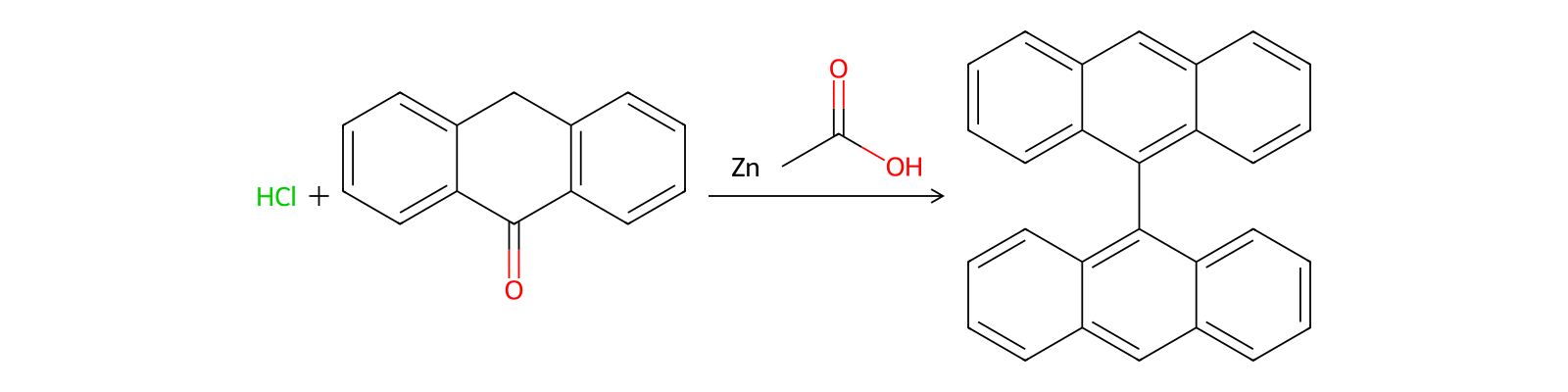
HRID 47175 reaction equation
HRID 47175As reactantuspto-grants-2004_03
HRID 247541 reaction equation
HRID 247541As productuspto-grants-1987_11
HRID 323695 reaction equation
HRID 323695As productuspto-grants-2001_04
HRID 358435 reaction equation
HRID 358435As productuspto-grants-1984_08
HRID 414475 reaction equation
HRID 414475As reactantuspto-grants-1988_12
HRID 431413 reaction equation
HRID 431413As reactantuspto-grants-2003_12
HRID 441591 reaction equation
HRID 441591As productuspto-grants-1977_08
HRID 462936 reaction equation
HRID 462936As productuspto-grants-1985_05
Page 1 of 3

Compound notes

Loading…

On this pageBasic informationOverviewNames & identifiersPropertiesSafety & regulationChemistry & industryRelated reactionsCompound notes
More actions
New noteNew reactionRequest quotes
Other Experimental Properties · 3 items

ANY FLUORESCENCE PRESENT IS DUE TO ANTHRANOL

ADDITION CMPD WITH 4 MOLECULES DESOXYCHOLIC ACID, C110-H170-O17, MP 179 °C

EQUIL IN ABSOLUTE ALCOHOL: 89% ANTHRONE; 11% ANTHRANOL; TENDENCY TO CHANGE TO ANTHRAQUINONE

Physicochemical properties

Melting point
154 · 154-157 °C (lit.)
Boiling point
721 °C · 721 °C
Density
1.055 · 1.0550 (rough estimate)
bulk density
450 kg/m3 · 450kg/m3
refractive index
1.55 · 1.5500 (estimate)
storage temp.
2 · 2-8°C
solubility
INSOLUBLE
form
Powder
color
Yellow
Water Solubility
INSOLUBLE
Sensitive
Light Sensitive
Merck
14 · 14,691
BRN
1910173 · 1910173
Henry's Law Constant
1.2 · 1.2×101 mol/(m3Pa) at 25℃, HSDB (2015)
Stability
Stable. Incompatible with strong oxidizing agents. Combustible.
Major Application
diagnostic assay manufacturinghematologyhistology
InChI
1S/C14H10O/c15-14-12-7-3-1-5-10(12)9-11-6-2-4-8-13(11)14/h1-8H,9H2
InChIKey
RJGDLRCDCYRQOQ-UHFFFAOYSA-N
SMILES
O=C1c2ccccc2Cc3ccccc13
CAS DataBase Reference
90 · 90-44-8(CAS DataBase Reference)
EWG's Food Scores
1 · 1
FDA UNII
0 FJ7K744 · FP0FJ7K744
NIST Chemistry Reference
Anthrone(90-44-8)
EPA Substance Registry System
9 · 9(10H)-Anthracenone (90-44-8)
UNSPSC Code
85151701 · 85151701
NACRES
47 · NA.47
Symbol(GHS)
7 · GHS07
Signal word
Warning
Hazard statements
315 · H315-H319-H335
Precautionary statements
261 · P261-P264-P271-P280-P302+P352-P305+P351+P338
target organs
Respiratory system
PPE
95 · dust mask type N95 (US), Eyeshields, Gloves
Hazard Codes
Xi,Xn
Risk Statements
36 · 36/37/38-20/21/22
Safety Statements
26 · 26-36
WGK Germany
3 · 3
RTECS
8925500 · CB8925500
F
8 · 8
TSCA
TSCA listed
HS Code
2914399090 · 2914399090
Storage Class
11 · 11 - Combustible Solids
Hazard Classifications
2 Skin · Eye Irrit. 2Skin Irrit. 2STOT SE 3
Hazardous Substances Data
90 · 90-44-8(Hazardous Substances Data)
Toxicity
60 mg/plate · mmo-sat 60 mg/plate MUREAV 157,149,85
· 3 items

TERRESTRIAL FATE: Based on a recommended classification scheme(1), an estimated Koc value of 2300(SRC), determined from a measured log Kow(2) and a recommended regression-derived equation(3), indicates that anthrone will have only slight mobility in soil(SRC). Biodegradation of anthrone is expected based on limited data and may be a major fate process for this compound in soil(SRC). A mixed bacterial population, isolated from a hydrocarbon-polluted creek, degraded 40% of anthrone to traces of anthrone and to anthraquinone in 30% yield(4). Anthrone's estimated values for vapor pressure(5) and Henry's Law constant(6,SRC) indicate that volatilization from dry and moist soil surfaces is not likely to be a major fate process for this compound(SRC).

AQUATIC FATE: Based on a recommended classification scheme(1), an estimated Koc value of 2300(SRC), determined from a measured log Kow(2) and a recommended regression-derived equation(3), indicates that anthrone should adsorb to sediment and suspended solids(SRC). Anthrone may volatilize slowly from water surfaces based on an estimated Henry's Law constant of 7.9X10⁻⁷ atm-cu m/mole(SRC), developed using a fragment constant estimation method(4). Estimated half-lives for a model river and model lake are 65 and 480 days, respectively(3,SRC). An estimated BCF value of 360(3,SRC), from a measured log Kow(2), suggests that anthrone will bioconcentrate in aquatic organisms(SRC), according to a recommended classification scheme(5).

ATMOSPHERIC FATE: According to a suggested classification scheme(1), an estimated vapor pressure of 1.8X10⁻⁵ mm Hg at 25 °C(2,SRC) indicates that anthrone will exist in both the vapor and particulate phases in the ambient atmosphere. Vapor-phase anthrone is degraded in the atmosphere by reaction with photochemically produced hydroxyl radicals(SRC); the half-life for this reaction in air is estimated to be about 40 hours(3,SRC). Particulate-phase anthrone may be physically removed from the air by dry deposition(SRC).

Animal ConcentrationsSnails, Thais haemostoma, which had been collected from two areas offshore in Pensacola Bay, FL near an onshore hazardous-waste site contained anthrone/phenanthrone at unreported concentrations(1).
Effluent Concentrations · 1 item

Several unspecified isomers of anthrone were detected in chlorinated coal-tar leachate at unreported concentrations(1). A heavy-duty diesel exhaust particulate sample, NBS SRM 1650, contained anthrone at unreported concentrations(2). Diesel emission particulates, collected from a Volkswagen Rabbit contained anthrone(3). Fine particle emissions from the combined exhaust of a vented natural gas-fired residential space heater plus a water heater contained 21.4 pg/kJ anthrone(4).

Soil Adsorption/Mobility · 1 item

The Koc of anthrone is estimated as approximately 2300(SRC), using a measured log Kow of 3.66(1) and a regression-derived equation(2,SRC). According to a recommended classification scheme(3), this estimated Koc value suggests that anthrone has only slight mobility in soil(SRC).

Atmospheric ConcentrationsREMOTE: Anthrone was found on aerosols from the southern North Atlantic Ocean, at a mean concentration of 0.47 ng/cu m(1).
Artificial Pollution SourcesAnthrone's production and use in organic synthesis and as a general reagent for carbohydrates(1) may result in its release to the environment through various waste streams(SRC).
Sediment/Soil Concentrations · 1 item

Superficial marine sediments of Cortiou Creek, in the sewage area of Marseilles, France, are contaminated with anthrone at concentrations ranging from non-detectable to 300 ng/g (9 of 10 sites had measurable quantities of anthrone; detection limit not given)(1).

Environmental Bioconcentration · 1 item

An estimated BCF value of 360 was calculated for anthrone(SRC), using a measured log Kow of 3.66(1) and a recommended regression-derived equation(2). According to a recommended classification scheme(3), this BCF value suggests that bioconcentration in aquatic organisms will be an important fate process(SRC).

Volatilization from Water/Soil · 1 item

The Henry's Law constant for anthrone is estimated as 7.9X10⁻⁷ atm-cu m/mole(SRC) using a fragment constant estimation method(1). This value indicates that anthrone will slowly volatilize from water surfaces(2,SRC). Based on this Henry's Law constant, the volatilization half-life from a model river (1 m deep, flowing 1 m/sec, wind velocity of 3 m/sec) is estimated as approximately 65 days(2,SRC). The volatilization half-life from a model lake (1 m deep, flowing 0.05 m/sec, wind velocity of 0.5 m/sec) is estimated as approximately 480 days(2,SRC). Anthrone's values for vapor pressure(3) and Henry's Law constant(1,SRC) indicate that volatilization from dry and moist soil surfaces is not likely to be a major fate process for this compound(SRC).

Environmental Abiotic Degradation · 1 item

The rate constant for the vapor-phase reaction of anthrone with photochemically produced hydroxyl radicals has been estimated as 9.8X10⁻¹² cu cm/molecule-sec at 25 °C(SRC) using a structure estimation method(1,SRC). This corresponds to an atmospheric half-life of about 40 hours at an atmospheric concentration of 5X10+5 hydroxyl radicals per cu cm(1,SRC).

Probable Routes of Human ExposureNIOSH (NOES Survey 1981-1983) has statistically estimated that 28 workers are potentially exposed to anthrone in the USA(1).
Environmental Water ConcentrationsDRINKING WATER: Two samples of Ottawa drinking water, one collected in January and the other in February 1978, contained non-detectable (detection limit not reported) and 1.4 ng/L anthrone, respectively(1).

Safety data

F
8
PPE
dust mask type N95 (US), Eyeshields, Gloves
wgk
3
tsca
TSCA listed
rtecs
CB8925500
hs_code
2914399090
Toxicity
mmo-sat 60 mg/plate MUREAV 157,149,85
risk_code
36/37/38-20/21/22
Signal word
Warning
Symbol(GHS)
GHS07
hazard_code
Xi,Xn
safety_code
26-36
Storage Class
11 - Combustible Solids
target organs
Respiratory system
Hazard statements
H315-H319-H335
Hazard Classifications
Eye Irrit. 2Skin Irrit. 2STOT SE 3
Precautionary statements
P261-P264-P271-P280-P302+P352-P305+P351+P338
Hazardous Substances Data
90-44-8(Hazardous Substances Data)

Upstream & downstream products

Upstream raw materials

AnthraquinoneTin granularAcetic acid 9-anthryl ester9(10H)-Anthracenone, oxime9,10-Dihydroanthracen-9-ol9,10-Dihydroxy-9,10-dihydroanthracene2-Benzylbenzoic acidtert-Butyl peroxybenzoate

Downstream products

Solvent Red 14910-NitroanthroneSolvent Red 52BenzanthroneVat Black 299-phenylanthracene9-Vinylanthracene9,10-DihydroanthraceneAnthraceneoxanthranol9-Bromo-10-(2-naphthyl)anthraceneBianthrone

Additional notes

DefinitionChEBI: A member of the class of anthracenes that is 9,10-dihydroanthracene carrying an oxo group at C-9.