

Basic information
- CAS
90-59-5- Standard SMILES
O=Cc1cc(Br)cc(Br)c1O- InChIKey
JHZOXYGFQMROFJ-UHFFFAOYSA-N- Molecular formula
- C7H4Br2O2
- Average molar mass
- 279.91 g/mol
- Monoisotopic mass
- 277.85780357
Overview
structure in Merck Index, 9th ed, #2995
Names & identifiers
- Preferred name
- 3,5-Dibromosalicylaldehyde
- IUPAC
- 3,5-dibromo-2-hydroxybenzaldehyde
- English name
- 3,5-Dibromosalicylaldehyde
- Molecular formula
- C7H4Br2O2
- Molecular weight
- 279.91
Names & synonyms
3,5-DIBROMOSALICYLALDEHYDE3,5-Dibromo-2-hydroxybenzaldehyde90-59-57A260PBI3ANSC-6221DTXSID1021796RefChem:91447DTXCID601796202-003-4DalydeBenzaldehyde, 3,5-dibromo-2-hydroxy-3,5-Dibromosalicylaldeyde
Show more names
AKOS B028985AKOS BBS-00003256OTAVA-BB BB7018801957SALOR-INT L497649-1EALABOTEST-BB LT00137784DibroMosalicylaldehydeDembrexine EP Impurity C5-DibroMosalicylaldehyde
2-Hydroxy-3,5-dibromobenzaldehydeMFCD00003318Salicylaldehyde, 3,5-dibromo-4,6-Dibromo-2-formylphenol; Dalyde; NSC 62213,5-dibromo-2-hydroxy-benzaldehydeSalicylaldehyde,5-dibromo-3,5-dibromo-salicylaldehydeCHEMBL229251
Database identifiers
- CAS
90-59-5- PubChem CID
- 7024
- DTXSID
DTXSID1021796- ChEMBL
CHEMBL229251- UNII
- 7A260PBI3A
- EC Number
- 202-003-4
- Nikkaji
- J4.323K
Properties
Computed structural properties
- XLogP
- 3
- Topological polar surface area
- 37.3 Ų
- Hydrogen bond donors
- 1
- Hydrogen bond acceptors
- 2
- Rotatable bonds
- 1
- Heavy atoms
- 11
- Formal charge
- 0
- Complexity
- 151
Physicochemical properties
- Melting point
- 82 · 82-83.5 °C (lit.)
- Boiling point
- 261.2 · 261.2±35.0 °C(Predicted)
- Density
- 1.9661 · 1.9661 (rough estimate)
- refractive index
- 1.497 · 1.4970 (estimate)
- storage temp.
- Keep in dark place,Sealed in dry,Room Temperature
- solubility
- 25 mg/mL, · methanol: soluble25mg/mL, clear, yellow to brown
- pka
- 6.08 · 6.08±0.23(Predicted)
- form
- Crystalline Powder
- color
- Yellow to yellow-brown
- Water Solubility
- 25 mg/mL · Soluble in methanol 25 mg/mL. Insoluble in water.
- Sensitive
- Air Sensitive
- Merck
- 14 · 14,3027
- BRN
- 1424739 · 1424739
- InChI
- 1S/C7H4Br2O2/c8-5-1-4(3-10)7(11)6(9)2-5/h1-3,11H
- InChIKey
- JHZOXYGFQMROFJ-UHFFFAOYSA-N
- SMILES
- Oc1c(Br)cc(Br)cc1C=O
- CAS DataBase Reference
- 90 · 90-59-5(CAS DataBase Reference)
- EWG's Food Scores
- 1 · 1
- FDA UNII
- 7 A260PBI3A · 7A260PBI3A
- NIST Chemistry Reference
- 3 · 3,5-Dibromosalicylaldehyde(90-59-5)
- EPA Substance Registry System
- 3 · Benzaldehyde, 3,5-dibromo-2-hydroxy- (90-59-5)
- UNSPSC Code
- 12352100 · 12352100
- NACRES
- 22 · NA.22
- Symbol(GHS)
- 7 · GHS07,GHS09
- Signal word
- Warning
- Hazard statements
- 315 · H315-H319-H335-H400
- Precautionary statements
- 273 · P273-P302+P352-P305+P351+P338
- target organs
- Respiratory system
- PPE
- 95 · dust mask type N95 (US), Eyeshields, Gloves
- Hazard Codes
- Xi
- Risk Statements
- 36 · 36/37/38
- Safety Statements
- 26 · 26-37/39-24/25
- RIDADR
- 3077 · UN 3077 9 / PGIII
- WGK Germany
- 3 · 3
- RTECS
- 5609000 · CU5609000
- HazardClass
- 9 · 9
- PackingGroup
- III
- HS Code
- 29130000 · 29130000
- Storage Class
- 11 · 11 - Combustible Solids
- Hazard Classifications
- 1 Eye · Aquatic Acute 1Eye Irrit. 2Skin Irrit. 2STOT SE 3
- REACH Registrations
- Active
- Limited Quantities
- 5 kg · 5.0 kg (11 lbs) (solid)
- Excepted Quantities
- Max Inner Pack (30g or 30ml) and Max Outer Pack (1Kg or 1L)
Safety & regulation
GHS classification
GHS Classification
Warning
H315 (92.5%): Causes skin irritation [Warning Skin corrosion/irritation]
P261, P264, P264+P265, P271, P273, P280, P302+P352, P304+P340, P305+P351+P338, P319, P321, P332+P317, P337+P317, P362+P364, P391, P403+P233, P405, and P501 (click each P-code to see the statement)
Aggregated GHS information provided per 53 reports by companies from 12 notifications to the ECHA C&L Inventory. Each notification may be associated with multiple companies.
Hazard information
Regulatory InformationStatus: Active Update: 12-06-2017 https://echa.europa.eu/registration-dossier/-/registered-dossier/19749
Hazard Classes and CategoriesSkin Irrit. 2 (92.5%)
Safety data
- PPE
- dust mask type N95 (US), Eyeshields, Gloves
- wgk
- 3
- rtecs
- CU5609000
- ridadr
- UN 3077 9 / PGIII
- hs_code
- 29130000
- risk_code
- 36/37/38
- Signal word
- Warning
- Symbol(GHS)
- GHS07,GHS09
- hazard_code
- Xi
- safety_code
- 26-37/39-24/25
- hazard_class
- 9
- Storage Class
- 11 - Combustible Solids
- packing_group
- III
- target organs
- Respiratory system
- Hazard statements
- H315-H319-H335-H400
- Limited Quantities
- 5.0 kg (11 lbs) (solid)
- Excepted Quantities
- Max Inner Pack (30g or 30ml) and Max Outer Pack (1Kg or 1L)
- REACH Registrations
- Active
- Hazard Classifications
- Aquatic Acute 1Eye Irrit. 2Skin Irrit. 2STOT SE 3
- Precautionary statements
- P273-P302+P352-P305+P351+P338
Chemistry & industry
Applications
Uses3,5-Dibromosalicylaldehyde reacts with alkyl cyanoacetates in the presence of ammonium acetate to yield 4H- chromenes. It can be used in the synthesis of Schiff base and can be used as reactant for synthesis of Schiff base ligands which forms mononuclear complexes with copper(II), nickel(II), zinc(II) and cobalt(II).
General Description3,5-Dibromosalicylaldehyde reacts with alkyl cyanoacetates in the presence of ammonium acetate to yield 4H- chromenes.
Upstream & downstream products
Upstream raw materials
Downstream products
Suppliers100 total
国药集团化学试剂有限公司86-21-63210123 · [email protected]
梯希爱(上海)化成工业发展有限公司021-67121386 · [email protected]
上海阿拉丁生化科技股份有限公司400-6206333 13167063860 · [email protected]
Career Henan Chemica Co+86-0371-86658258 +86-13203830695 · [email protected]
Changzhou Carman Chemical Co., Ltd.15061933924
合肥翰刚医药科技有限公司+8618062405514 · [email protected]
河北创海生物科技有限公司+86-86-13131129325 · [email protected]
Dayang Chem (Hangzhou) Co.,Ltd.+86-0571-88938639 17705817739 · [email protected]
科瑞迪化学400-821-5857 021-64326257 · [email protected]
Syntechem Co.,Ltd[email protected]
上海迈瑞尔生化科技有限公司4006356688 18621169109 · [email protected]
武汉易泰科技有限公司上海分公司18930552037 · [email protected]
山东鑫赢舜新材料有限公司0531-13220555910 15168808500 · [email protected]
阿法埃莎(中国)化学有限公司400-6106006 · [email protected]
江苏弘和药物研发有限公司5108538618 · [email protected]
太原市瑞和丰科贸有限公司+86 351 7031519 · [email protected]
安耐吉化学&3A(安徽泽升科技股份有限公司)400-0056266 · [email protected]
上海瀚鸿科技股份有限公司021-54306202 13764082696 · [email protected]
上海相辉医药科技有限公司13761987713 · [email protected]
上海景颜化工科技有限公司13817811078 · [email protected]
Pure Chemistry Scientific Inc.001-857-928-2050 or 1-888-588-9418 · [email protected]
郑州研德生物科技有限公司0371-63682289 15538176268 · [email protected]
上海竺钥化工有限公司021-33559231 18964673308 · [email protected]
山东西亚化学有限公司13355009207 13355009207 · [email protected]
玛雅试剂+86 (573) 82222445 (0)18006601000 452520369 · [email protected]
四川库利南科技有限公司400-1166-196 18981987031 · [email protected]
天津希恩思生化科技有限公司400 638 7771 · [email protected]
艾科试剂4008-755-333 18080918076 · [email protected]
天津科创医药中间体技术生产力促进有限公司022-60116533 13207668525 · [email protected]
上海思域化工科技有限公司86-21-34053660 · [email protected]
赛默飞世尔科技(中国)有限公司800-810-5118 · [email protected]
江苏艾康生物医药研发有限公司025-66113011 13913916777 · [email protected]
TCI AMERICA800-4238616 · [email protected]
TOKYO CHEMICAL INDUSTRY CO., LTD.03-36680489 · [email protected]
TCI Europe320-37350700 · [email protected]
湖北德丽医药科技有限公司13372285931 19237964946 · [email protected]
武汉市罗氏科技发展有限公司18986168071; 18986168071 · [email protected]
常州东辰医药科技有限公司0519-88995800 13815038136;13815038136 · [email protected]
北京环宇世纪化学科技有限公司hysj_bj.com
上海将来实业股份有限公司021-61552785 · [email protected]
安徽科迪达化工有限公司0554-2106669 · [email protected]
上海毕得医药科技股份有限公司400-164-7117 18317119277 · [email protected]
日照力德士化工有限公司010-51268198 · [email protected]
北京奥秘佳得医药科技有限公司+86-13522808617 · [email protected]
美岚实业(上海)有限公司021-58958189 · [email protected]
上海爱蝶实业有限公司021-58957966 18930537195 · [email protected]
成都零六生物科技有限公司400-1166-196 13458535857 · [email protected]
广拓化学(上海)有限公司021-60899189-8001 18918189673 · [email protected]
上海麦克林生化科技股份有限公司15221275939 15221275939 · [email protected]
杭州杰恒化工有限公司0571-87396432 · [email protected]
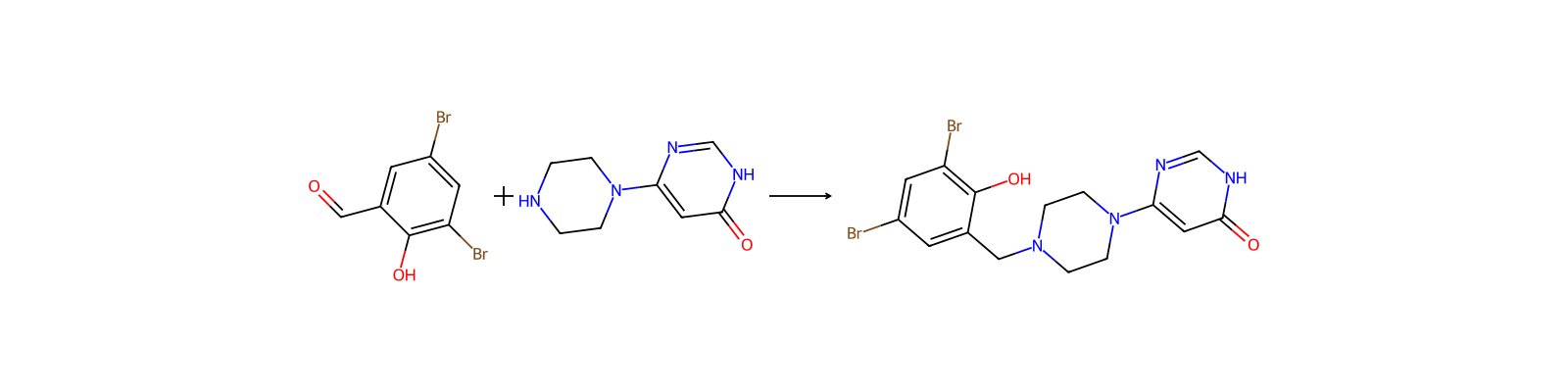
Related reactions
22 records


Compound notes
Loading…