
Isatin
Completing data — refresh the page later to see the latest

Basic information
- CAS
91-56-5- Standard SMILES
O=C1Nc2ccccc2C1=O- InChIKey
JXDYKVIHCLTXOP-UHFFFAOYSA-N- Molecular formula
- C8H5NO2
- Average molar mass
- 147.13 g/mol
- Monoisotopic mass
- 147.0320284
Names & identifiers
- Preferred name
- Isatin
- IUPAC
- 1H-indole-2,3-dione
- English name
- Isatin
- Molecular formula
- C8H5NO2
- Molecular weight
- 147.13
Names & synonyms
Isatin91-56-51H-Indole-2,3-dioneINDOLE-2,3-DIONE2,3-Diketoindoline2,3-DioxoindolinePseudoisatinIsotinIsatic acid lactamIsatinic acid anhydrideo-Aminobenzoylformic anhydride2,3-Dioxo-2,3-dihydroindole
Show more names
IsatinesatinlsatinISATIC ANHYDRIDE2,3-INDOLINEDIONE
2,3-dihydro-1H-indole-2,3-dioneDTXSID3038694CHEBI:27539NSC-926282X95S7M06DTXCID10186942,3 DioxoindolineRefChem:148910
Database identifiers
- CAS
91-56-5- PubChem CID
- 7054
- DTXSID
DTXSID3038694- ChEMBL
CHEMBL326294- ChEBI
CHEBI:27539- UNII
- 82X95S7M06
- EC Number
- 202-077-8
- Nikkaji
- J4.342G、J608.794I
Properties
Computed structural propertiesFilling in
- XLogP
- 0.8
- Topological polar surface area
- 46.2 Ų
- Hydrogen bond donors
- 1
- Hydrogen bond acceptors
- 2
- Rotatable bonds
- 0
- Heavy atoms
- 11
- Formal charge
- 0
- Complexity
- 212
Experimental & physicochemical properties
LogP
0.83
0.830
Melting Point
203
203.00 °C. @ 760.00 mm Hg
Vapor Pressure0.0000111 [mmHg]
Physical DescriptionOrange solid; [Merck Index] Orange odorless powder; [Alfa Aesar MSDS]
Kovats Retention Index1712;1712
Physicochemical properties
- Melting point
- 193 · 193-195 °C (dec.) (lit.)
- Boiling point
- 267.22 °C · 267.22°C (rough estimate)
- Density
- 1.3067 · 1.3067 (rough estimate)
- bulk density
- 600 kg/m3 · 600kg/m3
- vapor pressure
- 0 Pa · 0Pa at 25℃
- refractive index
- 1.47 · 1.4700 (estimate)
Safety & regulation
Safety information is for reference only and does not replace the supplier’s Safety Data Sheet (SDS), applicable regulations, or professional assessment.
GHS classification
GHS Classification
This chemical does not meet GHS hazard criteria for 25.7% (44 of 171) of reports.
Warning
H317 (62.6%): May cause an allergic skin reaction [Warning Sensitization, Skin];H412 (60.8%): Harmful to aquatic life with long lasting effects [Hazardous to the aquatic environment, long-term hazard]
P261, P272, P273, P280, P302+P352, P321, P333+P317, P362+P364, and P501 (click each P-code to see the statement)
Aggregated GHS information provided per 171 reports by companies from 12 notifications to the ECHA C&L Inventory. Each notification may be associated with multiple companies.;Reported as not meeting GHS hazard criteria per 44 of 171 reports by companies.;There are 10 notifications provided by 127 of 171 reports by companies with hazard statement code(s).;Information may vary between notifications depending on impurities, additives, and other factors. The percentage value in parenthesis indicates the notified classification ratio from companies that provide hazard codes. Only hazard codes with percentage values above 10% are shown. For more detailed information, please visit ECHA C&L website.
Hazard information
Regulatory Information
Chemical: 1H-Indole-2,3-dione
Status: Active Update: 02-09-2015 https://echa.europa.eu/registration-dossier/-/registered-dossier/15909
1H-Indole-2,3-dione: Does not have an individual approval but may be used under an appropriate group standard
Other Safety InformationIMAP assessments - 1H-Indole-2,3-dione: Human health tier II assessment
Hazards Summary
Not a skin or eye irritant in rabbits; A very potent skin sensitizer in guinea pig maximization study; No evidence of contact allergy in Buehler study of guinea pigs (considered inconclusive due to orange/red staining at application sites); Delayed contact hypersensitivity observed in local lymph node assay (LLNA) studies of mice; Teratogenicity observed in the presence of maternal toxicity in rats; [EC: SCCP] Causes flaccid paralysis without anesthesia (usually neuromuscular blockage) and changes in motor activity in oral and intravenous lethal-dose studies of rats; Causes pigmented or nucleated red blood cells and changes in erythrocyte count in 6-week oral studies of rats; [RTECS] May cause eye irritation; Reproductive effects observed in experimental animals; [Alfa Aesar MSDS]
Chemistry & industry
Uses & manufacturing
Uses
Used to make vat dyes and in analytical chemistry as a reagent for cuprous ions, mercaptans, thiophene, and indican; [Merck Index] Used in hair coloring products; [EC: SCCP]
Dressing Hair [Category: Other]
General Manufacturing Information1H-Indole-2,3-dione: ACTIVE
Applications
Uses(1) The product is used as medicine and dye intermediates ,and it is used for the production of drug quinophan, dye disperse Yellow E-3G ; in chemical analysis,it is used as reagents for the determination of copper ions, mercaptans, thiophene, indoxyl-beta-glucoside. (2) Isatin as a reference material for the preparation of indigo and Maya blue; for the preparation of phthalazinone derivatives, spirooxindole derivatives, the expression of P-glycoprotein for multi-drug resistant cells; The ketone is fused to form indole-2-one as a tubercular mycobacterial protein tyrosine phosphatase B, a potent selective inhibitor, as a powerful antimicrobial and antifungal triazole-isatine complex, And the Knoevenagel enrichment reaction; the isatin is activated by the direct sp2/sp3C-H bond, and undergoes a reaction with the cyclopentadienyl-Pd (II) catalyzes the CH addition reaction to form 3-substituted-3-hydroxy 2-oxindole.
UsesIsatin is an endogenous monoamine oxidize (MAO) inhibitor involved in stress and anxiety. Additionally, isatin inhibits alkaline phosphatase (ALP), nitric oxide (NO)-stimulated soluble guanylate cyclase, and other enzymes. Isatins undergo a one-pot Wolff-Kishner like reduction with hydrazine hydrate, under surprisingly mild conditions, to give the corresponding oxindoles. It is used as chromatographic spray reagent for amino acid detection.
UsesIsatin can be used as a reactant to prepare:Phthalazinone derivatives.Spirooxindole derivatives.Agents against multidrug-resistant cells expressing P-glycoprotein.Thiazolidinones spiro-fused to indolin-2-ones as potent and selective inhibitors of Mycobacterium tuberculosis protein tyrosine phosphatase B.Triazole-isatine compounds as potential antibacterial and antifungal agents.Biologically relevant scaffolds such as spiro[indole-thiazolidinones].It can be a reactant for:Cascade reactions with heterocyclic ketene aminals.Knoevenagel condensation reactions.Isatin can also be used as a chromatographic spray reagent for amino acids, and also as a reference material in the preparation of indigo and Maya Blue. It is responsible for the yellow color exhibited by the "Maya Yellow" pigment.
Related reactions
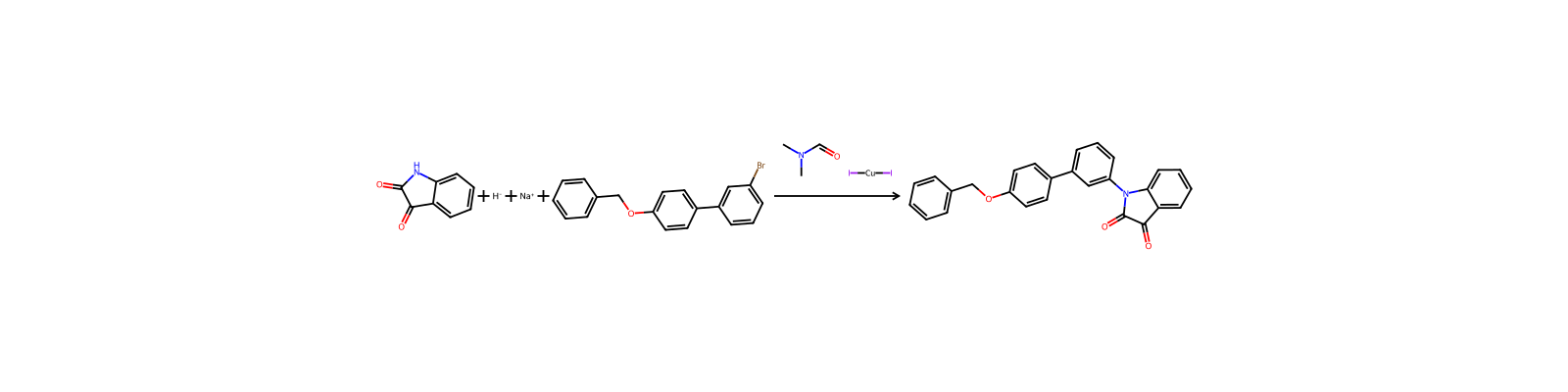
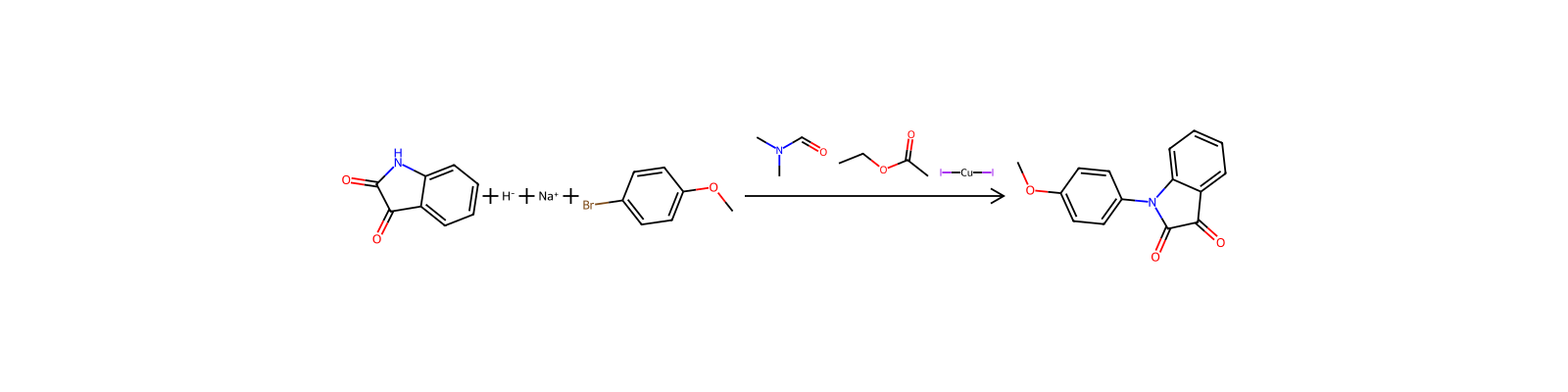
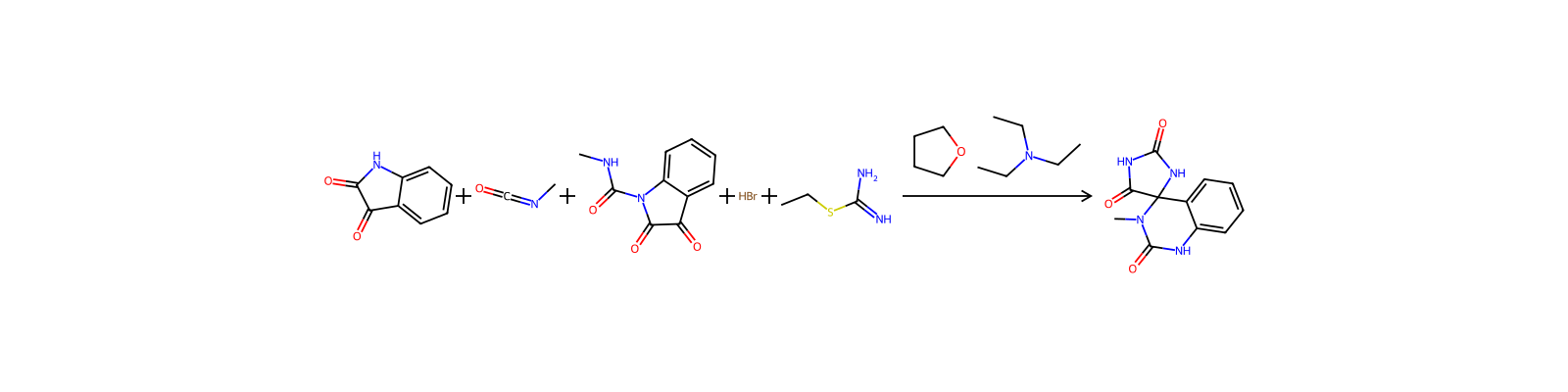
445 records




Compound notes
Loading…