Reaction equation
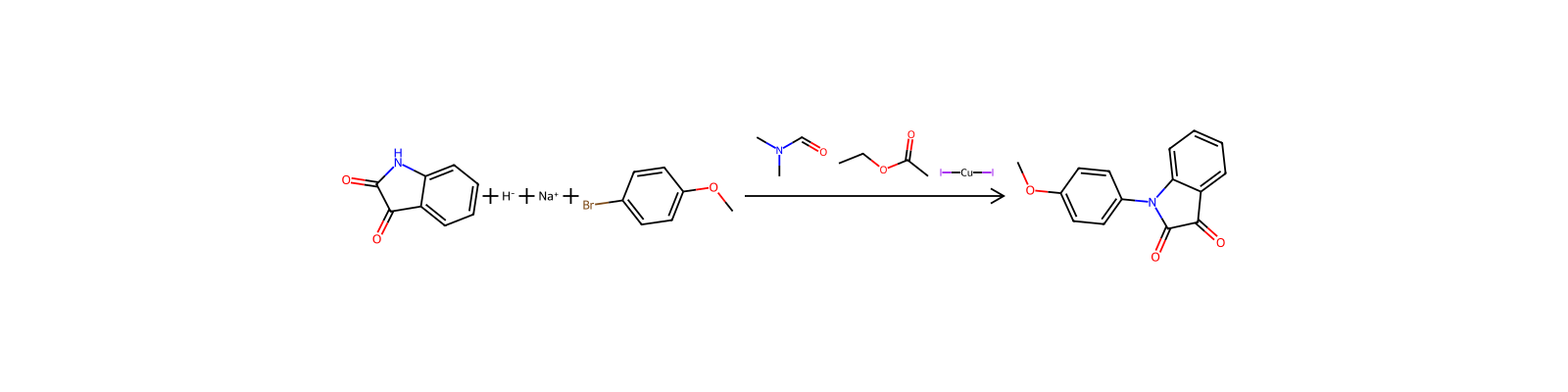
[NH:1]1[C:11]2[C:6](=[CH:7][CH:8]=[CH:9][CH:10]=2)[C:4](=[O:5])[C:2]1=[O:3].[H-].[Na+].Br[C:15]1[CH:20]=[CH:19][C:18]([O:21][CH3:22])=[CH:17][CH:16]=1>CN(C=O)C.C(OCC)(=O)C.[Cu](I)I>[CH3:22][O:21][C:18]1[CH:19]=[CH:20][C:15]([N:1]2[C:11]3[C:6](=[CH:7][CH:8]=[CH:9][CH:10]=3)[C:4](=[O:5])[C:2]2=[O:3])=[CH:16][CH:17]=1Participants





Conditions
- Temperature
- 0 °C
Procedure
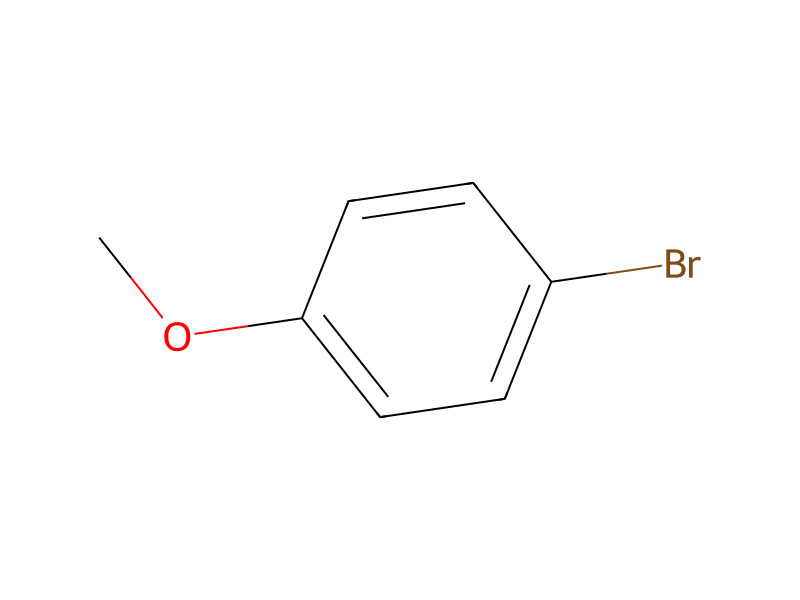
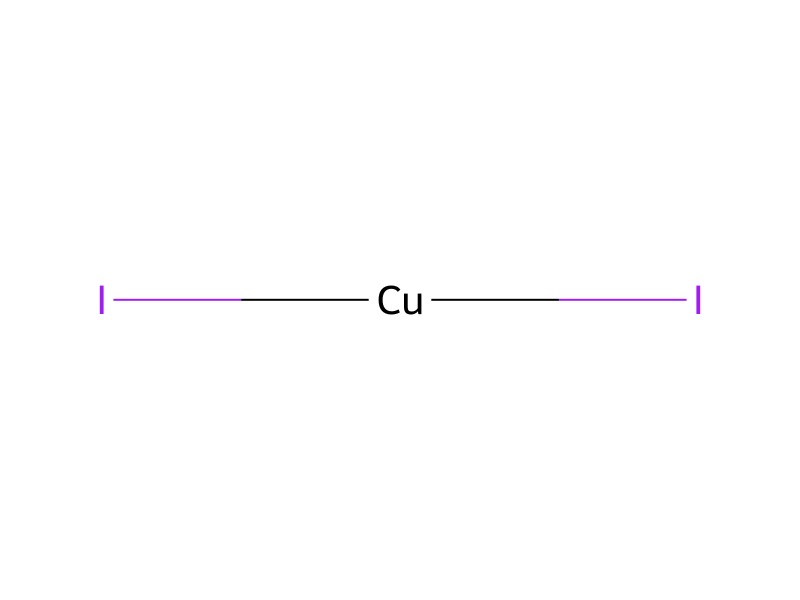
A solution of isatin (2.5 g, 0.017 mol) in anhydrous DMF (50 ml) was cooled to 0° C. under a nitrogen atmosphere and treated with sodium hydride (0.5 g, 1.2 equivalents). A purple solution was formed which was stirred at 0° C. for 30 minutes and then warmed to room temperature. 4-Bromoanisole (2.13 ml, 1 equivalent) was added followed by copper iodide (6.46 g, 2 equivalents). The reaction was heated in an oil-bath at 145° C. for 7 hours. The reaction was then cooled to room temperature and diluted with an equal volume of ethyl acetate. This suspension was filtered and the filtrate was evaporated to dryness. TLC (1:4, ethyl acetate:hexanes) indicated a very clean reaction; Rf (product)=0.5. The crude material was used as such for the next reaction.
Workup
- customA purple solution was formed which
- temperaturewarmed to room temperature
- temperatureThe reaction was heated in an oil-bath at 145° C. for 7 hours
- temperatureThe reaction was then cooled to room temperature
- filtrationThis suspension was filtered
- customthe filtrate was evaporated to dryness
- customa very clean reaction
- customsuch for the next reaction
Sources & evidence
- ORD record
- ord-e59131b79bd04d71ba5590af6c25b9b8
- Source dataset
- uspto-grants-2006_08
- Patent number
- US07097995B2
Linked notes
Loading…