Basic information
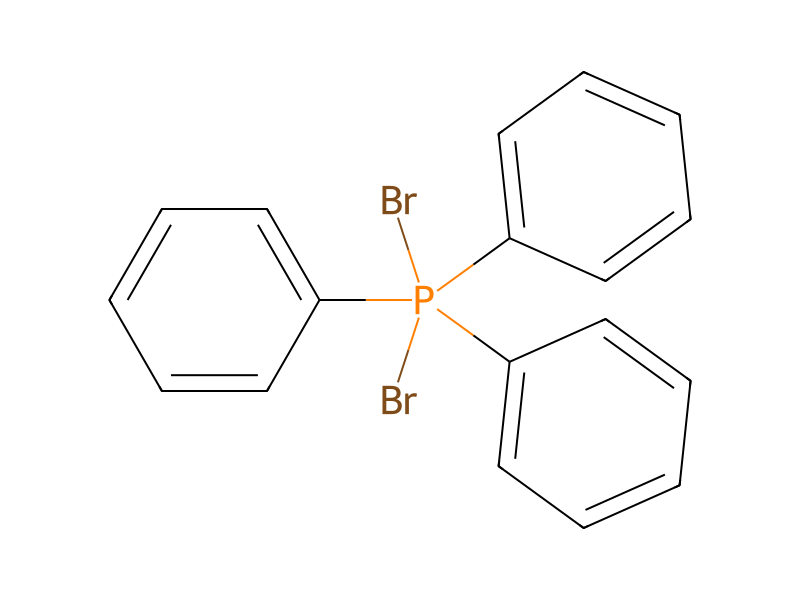
- Standard SMILES
BrP(Br)(c1ccccc1)(c1ccccc1)c1ccccc1- InChIKey
OCXGTPDKNBIOTF-UHFFFAOYSA-N- Molecular formula
- C18H15Br2P
- Average molar mass
- 422.1 g/mol
- Monoisotopic mass
- 419.92781131
Names & identifiers
- Preferred name
- Triphenylphosphine dibromide
- IUPAC
- dibromo(triphenyl)-λ5-phosphane
- English name
- TRIPHENYLPHOSPHINE DIBROMIDE
- Molecular formula
- C18H15Br2P
- Molecular weight
- 422.09
Names & synonyms
Triphenylphosphine dibromide1034-39-5DibromotriphenylphosphoraneTriphenyldibromophosphoranePhosphorane, dibromotriphenyl-Triphenylphosphonium dibromide7Y0J6R63JDEINECS 213-855-1NSC 87871NSC-87871DTXSID3061423TRIPHENYLPHOSPHINE DIBROMIDE [MI]
Show more names
SKL183phosphine dibromidedibromo(triphenyl)-dibromotriphenyl-phosphoranDIBROMO TRIPHENYL PHOSPHINETriphenylphosphane dibromide
RefChem:900015DTXCID6032803213-855-1dibromo(triphenyl)-lambda5-phosphaneMFCD00000054C18H15Br2PUNII-7Y0J6R63JDBromotriphenylphosphonium bromide
Database identifiers
- CAS
1034-39-5- PubChem CID
- 70579
- DTXSID
DTXSID3061423- UNII
- 7Y0J6R63JD
- EC Number
- 213-855-1
- Nikkaji
- J80.055D
Properties
Computed structural properties
- XLogP
- 6.5
- Topological polar surface area
- 0 Ų
- Hydrogen bond donors
- 0
- Hydrogen bond acceptors
- 0
- Rotatable bonds
- 3
- Heavy atoms
- 21
- Formal charge
- 0
- Complexity
- 285
Physicochemical properties
- Melting point
- 235 °C · 235 °C (dec.) (lit.)
- storage temp.
- Inert atmosphere,Room Temperature
- form
- Crystalline Powder
- color
- Light yellow to light pink
- Water Solubility
- Soluble in water, dichloromethane, acetonitrile, phenyl cyanide, dimethyl formamide, ether, chloroform, alcohol, carbon tetrachloride, acetic acid and carbon disulfide. Sparingly soluble in phenyl chloride, triphenylphosphine and phenyl hydride. Insoluble in aqueous bromine.
- Sensitive
- Moisture Sensitive
- BRN
- 917652 · 917652
- InChI
- InChI=1S/C18H15Br2P/c19-21(20,16-10-4-1-5-11-16,17-12-6-2-7-13-17)18-14-8-3-9-15-18/h1-15H
- InChIKey
- OCXGTPDKNBIOTF-UHFFFAOYSA-N
- SMILES
- P(Br)(Br)(C1=CC=CC=C1)(C1=CC=CC=C1)C1=CC=CC=C1
- CAS DataBase Reference
- 1034 · 1034-39-5(CAS DataBase Reference)
- FDA UNII
- 7 Y0J6R63JD · 7Y0J6R63JD
- EPA Substance Registry System
- Phosphorane, dibromotriphenyl- (1034-39-5)
- UNSPSC Code
- 12352101 · 12352101
- NACRES
- 22 · NA.22
- Symbol(GHS)
- 5 · GHS05
- Signal word
- Danger
- Hazard statements
- 314 · H314
- Precautionary statements
- 260 · P260-P280-P301+P330+P331-P303+P361+P353-P305+P351+P338
- PPE
- 3 · Eyeshields, Faceshields, Gloves, type P3 (EN 143) respirator cartridges
- Hazard Codes
- C
- Risk Statements
- 34 · 34
- Safety Statements
- 26 · 26-36/37/39-45
- RIDADR
- 3261 · UN 3261 8/PG 2
- WGK Germany
- 3 · 3
- F
- 3 · 3-10-21
- TSCA
- TSCA listed
- HazardClass
- 8 · 8
- PackingGroup
- II
- HS Code
- 29319019 · 29319019
- Storage Class
- 8 A · 8A - Combustible corrosive hazardous materials
- Hazard Classifications
- 1 B · Skin Corr. 1B
- Limited Quantities
- 1 Kg · 1 Kg (2.2 lbs) (solid)
- Excepted Quantities
- Max Inner Pack (30g or 30ml) and Max Outer Pack (500g or 500ml)
Safety & regulation
GHS classification
GHS Classification
Danger
H314 (100%): Causes severe skin burns and eye damage [Danger Skin corrosion/irritation]
P260, P264, P264+P265, P280, P301+P330+P331, P302+P361+P354, P304+P340, P305+P354+P338, P316, P317, P321, P363, P405, and P501 (click each P-code to see the statement)
Aggregated GHS information provided per 48 reports by companies from 5 notifications to the ECHA C&L Inventory. Each notification may be associated with multiple companies.
Hazard information
Regulatory InformationPhosphorane, dibromotriphenyl-: Does not have an individual approval but may be used under an appropriate group standard
Hazard Classes and CategoriesSkin Corr. 1B (100%)
Safety data
- F
- 3-10-21
- PPE
- Eyeshields, Faceshields, Gloves, type P3 (EN 143) respirator cartridges
- wgk
- 3
- tsca
- TSCA listed
- ridadr
- UN 3261 8/PG 2
- hs_code
- 29319019
- risk_code
- 34
- Signal word
- Danger
- Symbol(GHS)
- GHS05
- hazard_code
- C
- safety_code
- 26-36/37/39-45
- hazard_class
- 8
- Storage Class
- 8A - Combustible corrosive hazardous materials
- packing_group
- II
- Hazard statements
- H314
- Limited Quantities
- 1 Kg (2.2 lbs) (solid)
- Excepted Quantities
- Max Inner Pack (30g or 30ml) and Max Outer Pack (500g or 500ml)
- Hazard Classifications
- Skin Corr. 1B
- Precautionary statements
- P260-P280-P301+P330+P331-P303+P361+P353-P305+P351+P338
Chemistry & industry
Uses & manufacturing
General Manufacturing InformationPhosphorane, dibromotriphenyl-: ACTIVE
Applications
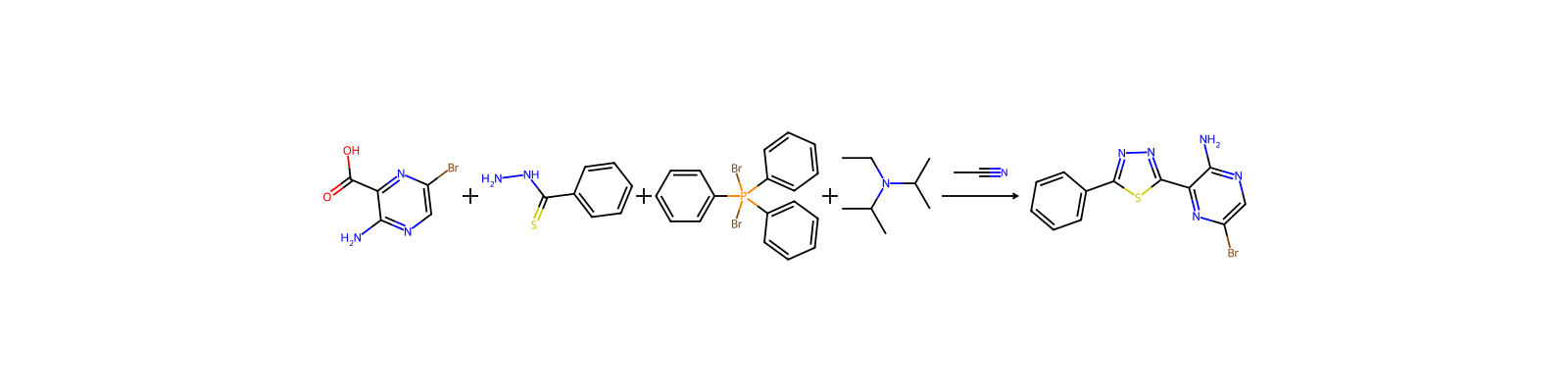
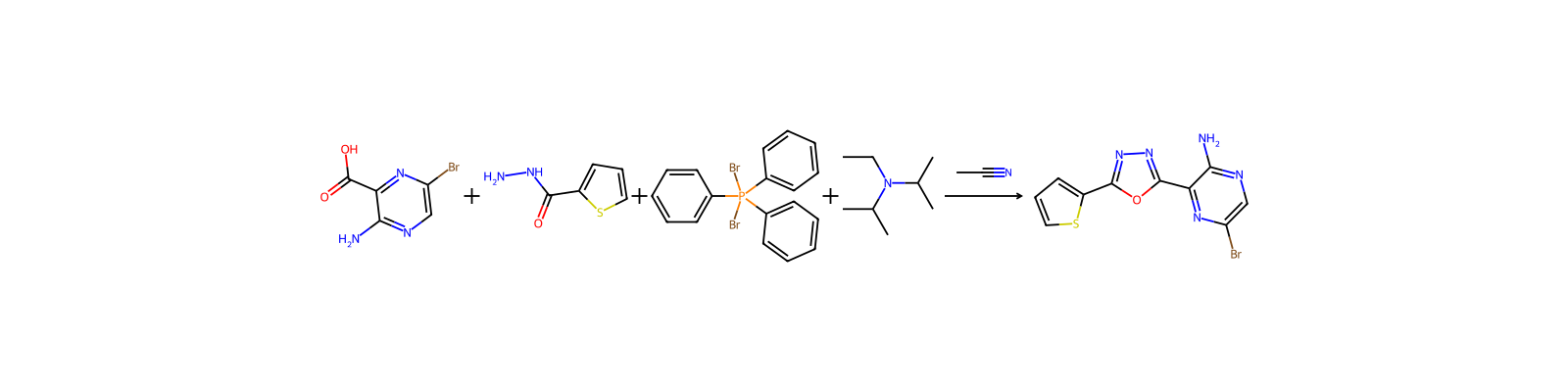
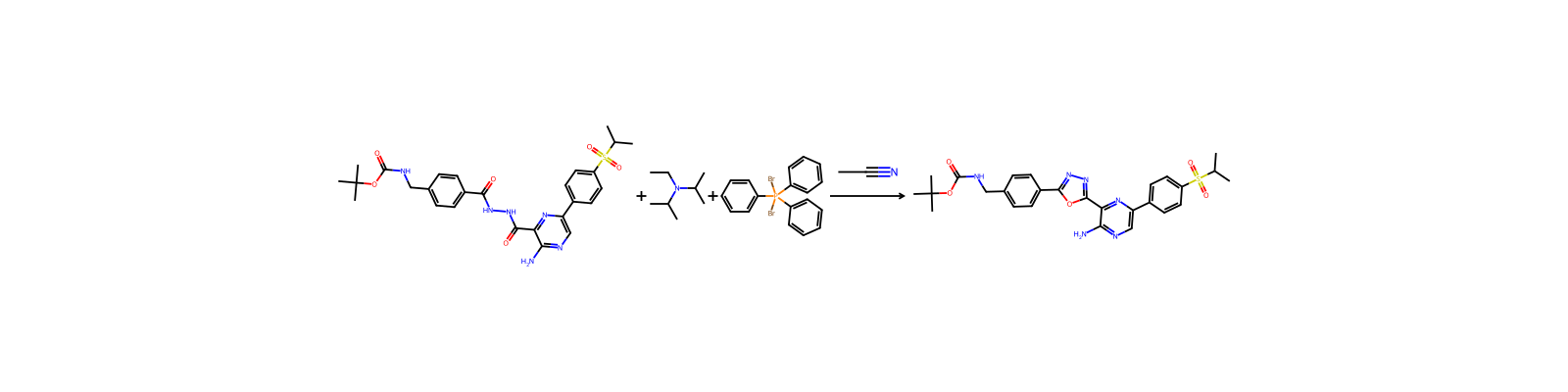
UsesTriphenylphosphine dibromide is used as a reagent for conversion of aldoximes into nitriles. It acts as a reagent for cleavage of acetals. It reacts with amines to give iminophosphoranes. Further, it serves as a reagent in the preparation of alkyl and aryl bromides from alcohols and phenols without rearrangement.
Upstream & downstream products
Upstream raw materials
Downstream products
Suppliers50 total
国药集团化学试剂有限公司86-21-63210123 · [email protected]
衢州润东化工有限公司0570-8789886 18892685668 · [email protected]
毕佳索(上海毕得医药科技股份有限公司)400-6005915 · [email protected]
湖北成丰化工有限公司13125175253 · [email protected]
INTATRADE GmbH+49 3493/605464 · [email protected]
河北创海生物科技有限公司+86-86-13131129325 · [email protected]
爱斯特(成都)生物制药股份有限公司+86-28-85122536 85324413 · [email protected]
Dayang Chem (Hangzhou) Co.,Ltd.+86-0571-88938639 17705817739 · [email protected]
Hebei Yanxi Chemical Co., Ltd.+86-17531190177 · [email protected]
郑州鸿晟医药科技有限公司0371-55695890 15637198702 · [email protected]
韶远科技(上海)有限公司021-50795510 4000665055 · [email protected]
上海钰源生物化学有限公司021-13814116 13814116708 · [email protected]
南京凯天化工有限公司+86 (25) 5860-8846 · [email protected]
Syntechem Co.,Ltd[email protected]
北京颖诺凯胜科技有限公司010-56541685 13070143590 · [email protected]
上海迈瑞尔生化科技有限公司4006356688 18621169109 · [email protected]
北京华威锐科化工有限公司0757-86329057 18934348241 · [email protected]
北京东华力拓科技发展有限公司010-88425576 · [email protected]
阿法埃莎(中国)化学有限公司400-6106006 · [email protected]
安耐吉化学&3A(安徽泽升科技股份有限公司)400-0056266 · [email protected]
上海瀚鸿科技股份有限公司021-54306202 13764082696 · [email protected]
上海钰康生物科技有限公司18939844854 · [email protected]
湖南汇百侍生物科技有限公司0731-85526065 13308475853 · [email protected]
艾科试剂4008-755-333 18080918076 · [email protected]
赛默飞世尔科技(中国)有限公司800-810-5118 · [email protected]
上海特伯化学科技有限公司+86-21-60341587 · [email protected]
江苏艾康生物医药研发有限公司025-66113011 13913916777 · [email protected]
上海健超生物科技有限公司150-2103-5486 18017383231 · [email protected]
安徽科迪达化工有限公司0554-2106669 · [email protected]
上海毕得医药科技股份有限公司400-164-7117 18317119277 · [email protected]
成都零六生物科技有限公司400-1166-196 13458535857 · [email protected]
北京福源坊科技有限公司010-57903446 15869909019 · [email protected]
湖南华腾制药有限公司400-8592883 · [email protected]
上海御略医药科技有限公司021-60345187 13671753212 · [email protected]
上海麦克林生化科技股份有限公司15221275939 15221275939 · [email protected]
上海有朋化工有限公司021-69005955 13701776567 · [email protected]
上海凯赛化工有限公司021-33516722 13701817765 · [email protected]
上海彤源化工有限公司021-021-69182866 13701855675 · [email protected]
上海容立化学科技有限公司021-69992220 13701886816 · [email protected]
上海康拓化工有限公司021-69185552 13701777608 · [email protected]
Sigma-Aldrich西格玛奥德里奇(上海)贸易有限公司021-61415566 800-8193336 · [email protected]
上海波以尔化工有限公司021-50182298 021-50180596 · [email protected]
杭州凯邦生物科技有限公司0571-88937695 88937835 13606537248 · [email protected]
西安美川生物科技有限公司029-89275612 +8618991951683 · [email protected]
厦门志信化学有限公司+86-5922680277 +86-13806087780 · [email protected]
嘉兴市德亿化工有限公司0573-85866609 13325730825 · [email protected]
上海玻尔化学试剂有限公司19102157732 · [email protected]
成都润泽本土化工有限公司028-88469284 18000562381 · [email protected]
科瑞希(天津)新材料技术有限公司022-83945173 18622315263 · [email protected]
石家庄斯迪亚诺精细化工有限公司0311-89250318 031166536426 · [email protected]
Related reactions
102 records




Linked notes
Loading…