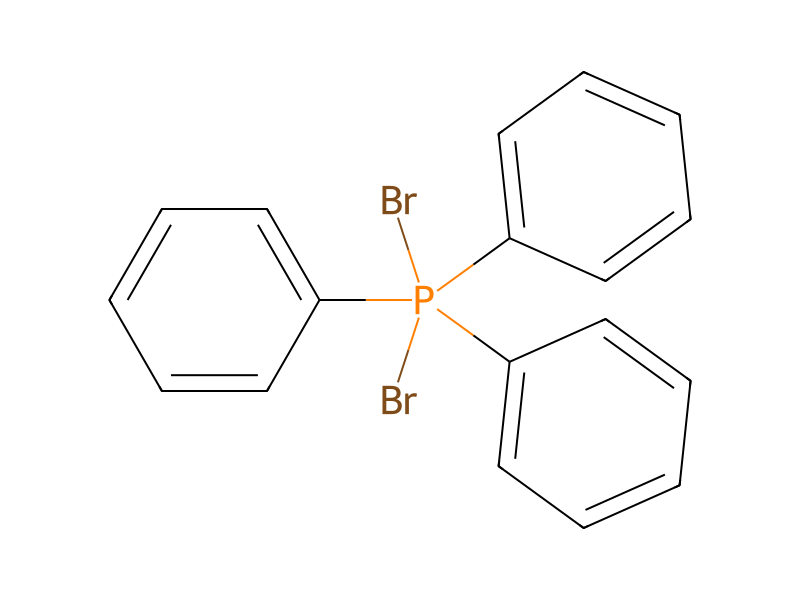
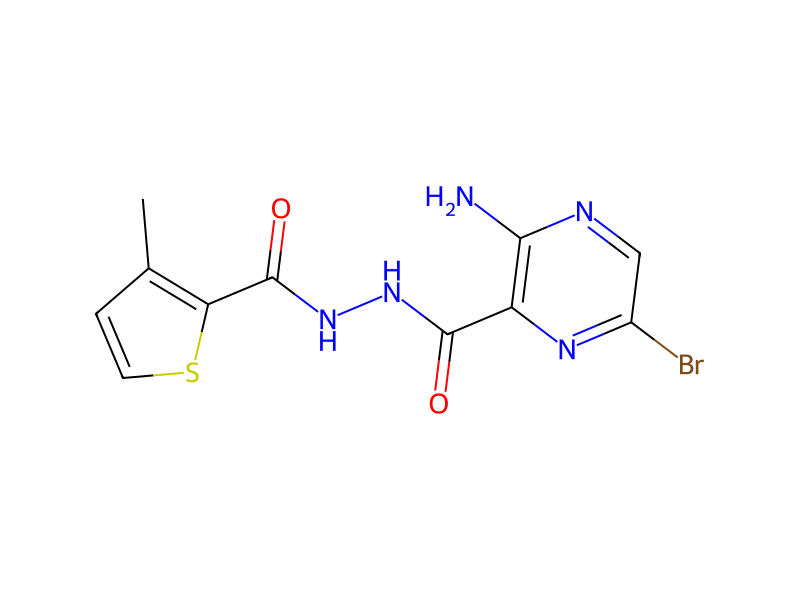
Triphenylphosphine dibromide → 5-Bromo-3-(5-(3-methylthiophen-2-yl)-1,3,4-oxadiazol-2-yl)pyrazin-2-amine
Reaction equation

[NH2:1][C:2]1[C:3]([C:9]([NH:11][NH:12][C:13]([C:15]2[S:16][CH:17]=[CH:18][C:19]=2[CH3:20])=[O:14])=O)=[N:4][C:5]([Br:8])=[CH:6][N:7]=1.CCN(C(C)C)C(C)C.BrP(Br)(C1C=CC=CC=1)(C1C=CC=CC=1)C1C=CC=CC=1>C(#N)C>[Br:8][C:5]1[N:4]=[C:3]([C:9]2[O:14][C:13]([C:15]3[S:16][CH:17]=[CH:18][C:19]=3[CH3:20])=[N:12][N:11]=2)[C:2]([NH2:1])=[N:7][CH:6]=1Participants
5