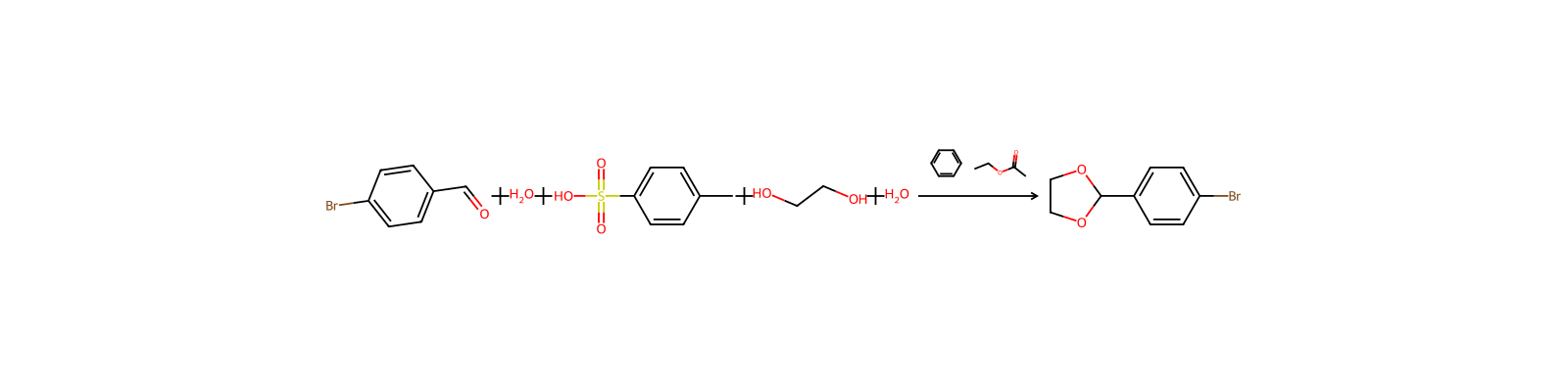
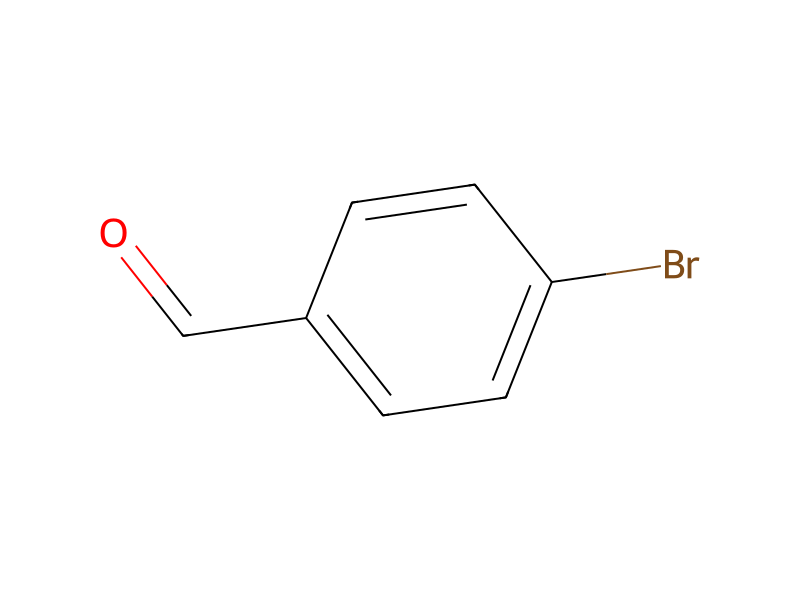
Basic information
- Standard SMILES
O=Cc1ccc(Br)cc1- InChIKey
ZRYZBQLXDKPBDU-UHFFFAOYSA-N- Molecular formula
- C7H5BrO
- Average molar mass
- 185.02 g/mol
- Monoisotopic mass
- 183.95238
Names & identifiers
- Preferred name
- 4-Bromobenzaldehyde
- IUPAC
- 4-bromobenzaldehyde
- English name
- 4-Bromobenzaldehyde
- Molecular formula
- C7H5BrO
- Molecular weight
- 185.02
Names & synonyms
4-Bromobenzaldehydep-BromobenzaldehydeBenzaldehyde, 4-bromo-Benzaldehyde, p-bromo-4-formylbromobenzene1-bromo-4-formylbenzene4-BrombenzaldehydBENZALDEHYDE,4-BROMOEINECS 214-365-0NSC 216384-FORMYLPHENYL BROMIDEUNII-4L8VM24F65
Show more names
Bromobenzaldehyde4-BBA4-bromo-benzaldehyd4-BROMOBENZYLALDEHYDE4-Bromobenzaldehyde99%BRBA1DK4844-BromobenzaL
DTXSID50615344L8VM24F65NSC-216384-FORMYL-1-BROMOBENZENEpBromobenzaldehydeBenzaldehyde, pbromoBenzaldehyde, 4bromoRefChem:98176
Database identifiers
- CAS
1122-91-4- PubChem CID
- 70741
- DTXSID
DTXSID5061534- ChEMBL
CHEMBL3753357- UNII
- 4L8VM24F65
- EC Number
- 214-365-0
- Nikkaji
- J30.727K
Properties
Computed structural properties
- XLogP
- 2.2
- Topological polar surface area
- 17.1 Ų
- Hydrogen bond donors
- 0
- Hydrogen bond acceptors
- 1
- Rotatable bonds
- 1
- Heavy atoms
- 9
- Formal charge
- 0
- Complexity
- 95
Experimental & physicochemical properties
Physical DescriptionWhite crystalline powder; [Alfa Aesar MSDS]
Kovats Retention Index1207.1;1216.5;1229
Physicochemical properties
- Melting point
- 55 · 55-58 °C(lit.)
- Boiling point
- 66 · 66-68°C 2mm
- Density
- 1.85 g/cm3 · 1.85 g/cm3
- bulk density
- 670 kg/m3 · 670kg/m3
- refractive index
- 1.5727 · 1.5727 (estimate)
- Flash point
- 228 °F · 228 °F
- storage temp.
- 30 °C · Store below +30°C.
- solubility
- Chloroform, Ethyl Acetate
- form
- Crystalline Solid
- color
- White
- Water Solubility
- INSOLUBLE
- Sensitive
- Air Sensitive
- BRN
- 507100 · 507100
- InChI
- 1S/C7H5BrO/c8-7-3-1-6(5-9)2-4-7/h1-5H
- InChIKey
- ZRYZBQLXDKPBDU-UHFFFAOYSA-N
- SMILES
- [H]C(=O)c1ccc(Br)cc1
- LogP
- 2.75 at · 2.75 at 25℃
- CAS DataBase Reference
- 1122 · 1122-91-4(CAS DataBase Reference)
- EWG's Food Scores
- 1 · 1
- FDA UNII
- 4 L8VM24F65 · 4L8VM24F65
- NIST Chemistry Reference
- 4 · Benzaldehyde, 4-bromo-(1122-91-4)
- EPA Substance Registry System
- 4 · Benzaldehyde, 4-bromo- (1122-91-4)
- UNSPSC Code
- 12352114 · 12352114
- NACRES
- 22 · NA.22
- Symbol(GHS)
- 7 · GHS07
- Signal word
- Warning
- Hazard statements
- 302 · H302-H315-H317-H319-H335
- Precautionary statements
- 261 · P261-P264-P280-P301+P312-P302+P352-P305+P351+P338
- target organs
- Respiratory system
- PPE
- 95 · dust mask type N95 (US), Eyeshields, Faceshields, Gloves
- Hazard Codes
- Xn,Xi
- Risk Statements
- 22 · 22-36/37/38-43
- Safety Statements
- 26 · 26-36/37-36/37/39-22
- RIDADR
- 2811 · 2811
- WGK Germany
- 2 · 2
- RTECS
- 4810000 · CU4810000
- Hazard Note
- Irritant/Harmful/Air Sensitive
- TSCA
- TSCA listed
- HazardClass
- 6.1 · 6.1(b)
- PackingGroup
- III
- HS Code
- 29130000 · 29130000
- Storage Class
- 11 · 11 - Combustible Solids
- Hazard Classifications
- 4 OralEye · Acute Tox. 4 OralEye Irrit. 2Skin Irrit. 2Skin Sens. 1STOT SE 3
- REACH Registrations
- Active
Safety & regulation
GHS classification
GHS Classification
This chemical does not meet GHS hazard criteria for 1.3% (1 of 78) of reports.
Danger
H302 (73.1%): Harmful if swallowed [Warning Acute toxicity, oral];H315 (98.7%): Causes skin irritation [Warning Skin corrosion/irritation];H319 (98.7%): Causes serious eye irritation [Warning Serious eye damage/eye irritation];H334 (48.7%): May cause allergy or asthma symptoms or breathing difficulties if inhaled [Danger Sensitization, respiratory];H335 (94.9%): May cause respiratory irritation [Warning Specific target organ toxicity, single exposure; Respiratory tract irritation]
P233, P260, P261, P264, P264+P265, P270, P271, P280, P284, P301+P317, P302+P352, P304+P340, P305+P351+P338, P319, P321, P330, P332+P317, P337+P317, P342+P316, P362+P364, P403, P403+P233, P405, and P501 (click each P-code to see the statement)
Aggregated GHS information provided per 78 reports by companies from 17 notifications to the ECHA C&L Inventory. Each notification may be associated with multiple companies.;Reported as not meeting GHS hazard criteria per 1 of 78 reports by companies.;There are 16 notifications provided by 77 of 78 reports by companies with hazard statement code(s).;Information may vary between notifications depending on impurities, additives, and other factors. The percentage value in parenthesis indicates the notified classification ratio from companies that provide hazard codes. Only hazard codes with percentage values above 10% are shown. For more detailed information, please visit ECHA C&L website.
Hazard information
Regulatory Information
Chemical: Benzaldehyde, 4-bromo-
Status: Active Update: 16-04-2020 https://echa.europa.eu/registration-dossier/-/registered-dossier/19372
4-Bromobenzaldehyde: Does not have an individual approval but may be used under an appropriate group standard
Hazards SummaryA skin and strong eye irritant; Harmful by ingestion; [Alfa Aesar MSDS]
Hazard Classes and CategoriesAcute Tox. 4 (73.1%);Skin Irrit. 2 (98.7%);Eye Irrit. 2A (98.7%);Resp. Sens. 1 (48.7%);STOT SE 3 (94.9%)
Regulatory information
Regulatory Information
Chemical: Benzaldehyde, 4-bromo-
Status: Active Update: 16-04-2020 https://echa.europa.eu/registration-dossier/-/registered-dossier/19372
4-Bromobenzaldehyde: Does not have an individual approval but may be used under an appropriate group standard
Safety data
- PPE
- dust mask type N95 (US), Eyeshields, Faceshields, Gloves
- wgk
- 2
- tsca
- TSCA listed
- rtecs
- CU4810000
- ridadr
- 2811
- hs_code
- 29130000
- risk_code
- 22-36/37/38-43
- Signal word
- Warning
- Symbol(GHS)
- GHS07
- hazard_code
- Xn,Xi
- hazard_note
- Irritant/Harmful/Air Sensitive
- safety_code
- 26-36/37-36/37/39-22
- hazard_class
- 6.1(b)
- Storage Class
- 11 - Combustible Solids
- packing_group
- III
- target organs
- Respiratory system
- Hazard statements
- H302-H315-H317-H319-H335
- REACH Registrations
- Active
- Hazard Classifications
- Acute Tox. 4 OralEye Irrit. 2Skin Irrit. 2Skin Sens. 1STOT SE 3
- Precautionary statements
- P261-P264-P280-P301+P312-P302+P352-P305+P351+P338
Chemistry & industry
Uses & manufacturing
General Manufacturing InformationBenzaldehyde, 4-bromo-: ACTIVE
Applications
UsesEmployed in palladium-catalyzed mono- and bis-arylation of 3,4-(ethylenedioxy)thiophenes. Also used in a cross-coupling study with potassium vinyltrifluoroborate.
Uses4-Bromobenzaldehyde is widely utilized as an intermediate for the preparation of agrochemicals, pharmaceuticals and other organic compounds. It is used as a precursor and reacts with sulfamethoxazole to prepare Schiffs base, 4-[(4-Bromo-benzylidene)-amino]-N-(5-methyl-isoxazol-3-yl)-benzene sulfonamide, which can be used for the photo stability of polyvinyl chloride (PVC). It plays an important role in palladium-catalyzed mono- and bis-arylation of 3,4-(ethylenedioxy)thiophenes. It is employed in a cross-coupling study with potassium vinyltrifluoroborate.
Preparation methods
Preparation4-Bromobenzaldehyde is prepared by 2-Iodoxy-5-Methylbenzenesulfonic Acid-Catalyzed Selective Oxidation of 4-Bromobenzyl Alcohol.
Upstream & downstream products
Upstream raw materials
Downstream products
Suppliers50 total
国药集团化学试剂有限公司86-21-63210123 · [email protected]
梯希爱(上海)化成工业发展有限公司021-67121386 · [email protected]
上海阿拉丁生化科技股份有限公司400-6206333 13167063860 · [email protected]
上海铂之泉科技有限公司13681726990 13681726990 · [email protected]
INTATRADE GmbH+49 3493/605464 · [email protected]
爱斯特(成都)生物制药股份有限公司+86-28-85122536 85324413 · [email protected]
山东兴润达化工有限公司0534-18615348689 18615348689
北京安司莫森技术有限公司010-82954736 13391601435 · [email protected]
韶远科技(上海)有限公司021-50795510 4000665055 · [email protected]
科瑞迪化学400-821-5857 021-64326257 · [email protected]
上海将来实业股份有限公司400-0066400 13621662912 · [email protected]
Syntechem Co.,Ltd[email protected]
上海迈瑞尔生化科技有限公司4006356688 18621169109 · [email protected]
Wuhan EnTai Technology Development Co,.Ltd86-27-82330560 · [email protected]
宁波亿诺化学品有限公司86-574-27787657 · [email protected]
阿法埃莎(中国)化学有限公司400-6106006 · [email protected]
上海德默医药科技有限公司400-021-7337 2355568890 · [email protected]
安耐吉化学&3A(安徽泽升科技股份有限公司)400-0056266 · [email protected]
武汉凯威斯科技有限公司86-027-67849912 · [email protected]
上海瀚鸿科技股份有限公司021-54306202 13764082696 · [email protected]
济南德信佳生物科技有限公司0531-82375886 13001715031 · [email protected]
上海景颜化工科技有限公司13817811078 · [email protected]
嘉兴市艾森化工有限公司0573-85285100 18627885956 · [email protected]
Pure Chemistry Scientific Inc.001-857-928-2050 or 1-888-588-9418 · [email protected]
上海攀鸿化工科技有限公司021-56491756 13512199871 · [email protected]
山东西亚化学有限公司13355009207 13355009207 · [email protected]
玛雅试剂+86 (573) 82222445 (0)18006601000 452520369 · [email protected]
四川库利南科技有限公司400-1166-196 18981987031 · [email protected]
上海耐士化工科技有限公司400-188-0725 +86 21 34310725 13611771617
天津希恩思生化科技有限公司400 638 7771 · [email protected]
南京维奥化工有限公司Please Send Email 18652950785 · [email protected]
上海慧川生物医药科技有限公司021-50728690 18101878792
常州创视电子科技有限公司+86 (519) 8829-2061 · [email protected]
河南多贝化工有限公司0370-2785118 17550508557 · [email protected]
艾科试剂4008-755-333 18080918076 · [email protected]
上海思域化工科技有限公司86-21-34053660 · [email protected]
苏州思变化学技术有限公司0512-65617459 18915409046 · [email protected]
赛默飞世尔科技(中国)有限公司800-810-5118 · [email protected]
北京伊诺凯科技有限公司400-810-7969 010-59572699 · [email protected]
阜新奥瑞凯精细化工有限公司(沈阳同元素)+86-024-83607930 18640359690 · [email protected]
TCI AMERICA800-4238616 · [email protected]
TOKYO CHEMICAL INDUSTRY CO., LTD.03-36680489 · [email protected]
TCI Europe320-37350700 · [email protected]
上海贤鼎生物科技有限公司4009209199 · [email protected]
深圳康特腾科技有限公司86-0755-86635001 · [email protected]
越林试剂021-62960152 · [email protected]
上海睿升化工科技有限公司+86-021-50935922
苏州安尼康药物研发有限公司0512-69369885 · [email protected]
无锡中坤生化科技有限公司+86 0510-85629785
上海宸香医药科技有限公司021-20960837 · [email protected]
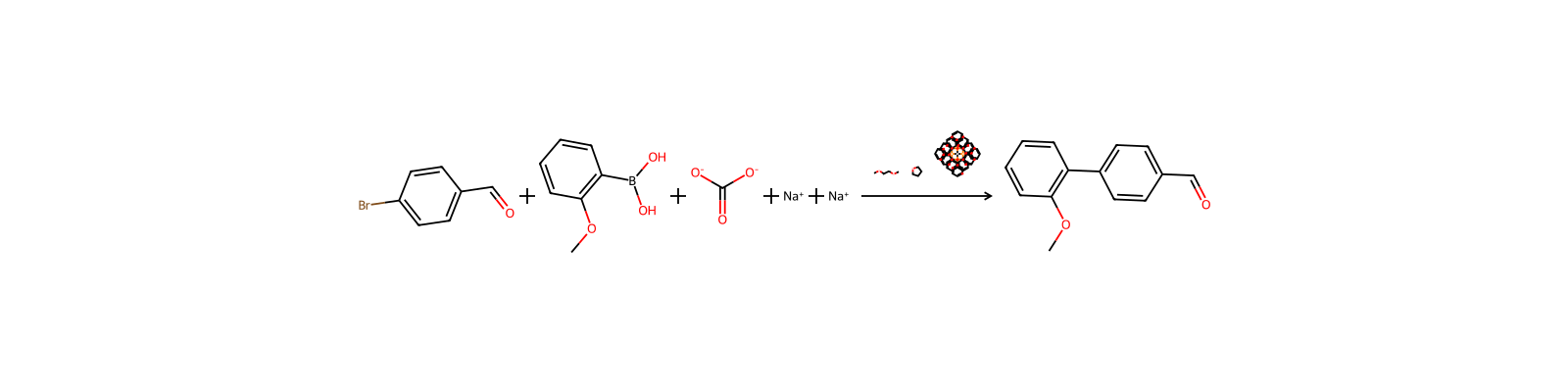
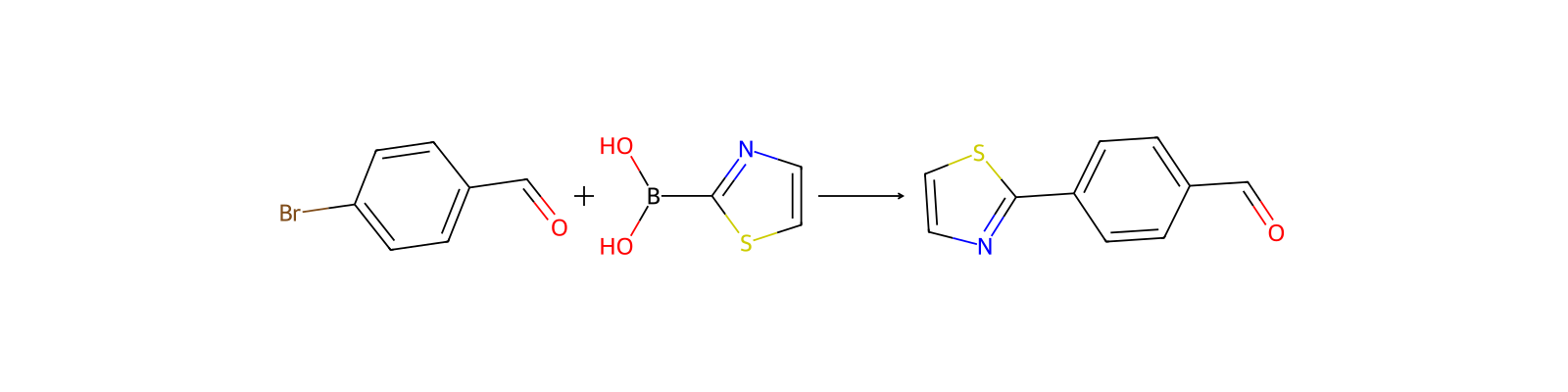
Related reactions
750 records




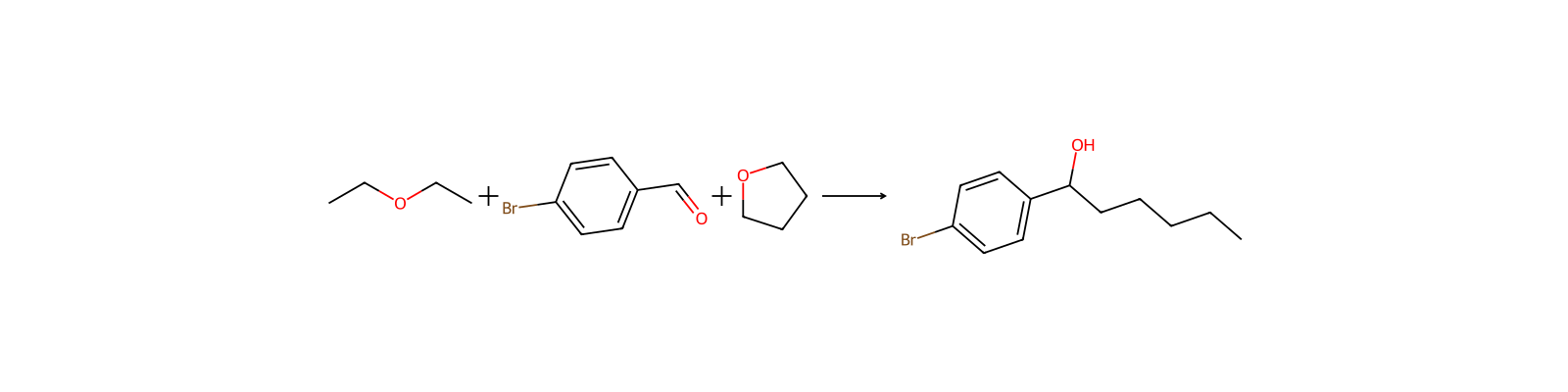
Linked notes
Loading…