
Basic information
- Standard SMILES
Cc1ccccc1NC=O- InChIKey
ZXTLGJAARBNQGK-UHFFFAOYSA-N- Molecular formula
- C8H9NO
- Average molar mass
- 135.16 g/mol
- Monoisotopic mass
- 135.06841391
Names & identifiers
- Preferred name
- Formamide, N-(2-methylphenyl)-
- IUPAC
- N-(2-methylphenyl)formamide
- English name
- 2-Methylformanilide
- Molecular formula
- C8H9NO
- Molecular weight
- 135.16
Names & synonyms
94-69-92'-MethylformanilideN-(2-METHYLPHENYL)FORMAMIDEFormamide, N-(2-methylphenyl)-N-Formyl-2-methylaniline2-MethylphenylformamideN-Formyl-o-toluidineAI3-01417EINECS 202-355-9DTXSID6059108RefChem:141210DTXCID7048906
Show more names
o-Formotoluidide.N-O-TOLYL-FORMAMIDEN-FORMYL-O-TOLUIDIDEN-(2-TOLYL)FORMAMIDEN-Methylenedianiline2-Methylformanilide,98%
202-355-9ZXTLGJAARBNQGK-UHFFFAOYSA-N2-MethylformanilideN-o-Tolylformamideo-Methylformanilideo-Formotoluidideo-Tolylformamideo-Methyl-N-formylaniline
Database identifiers
- CAS
94-69-9- PubChem CID
- 7202
- DTXSID
DTXSID6059108- EC Number
- 202-355-9
- Nikkaji
- J28.438F
Properties
Computed structural properties
- XLogP
- 0.9
- Topological polar surface area
- 29.1 Ų
- Hydrogen bond donors
- 1
- Hydrogen bond acceptors
- 1
- Rotatable bonds
- 1
- Heavy atoms
- 10
- Formal charge
- 0
- Complexity
- 114
Experimental & physicochemical properties
Kovats Retention Index1282;1283
Physicochemical properties
- Melting point
- 58 · 58-62 °C(lit.)
- Boiling point
- 287 · 287-289°C
- Density
- 1.086 · 1.0860
- refractive index
- 1.5589 · 1.5589 (estimate)
- Flash point
- 287 · 287-289°C
- pka
- 15.01 · 15.01±0.70(Predicted)
- form
- powder to crystal
- color
- White to Gray to Brown
- BRN
- 2205748 · 2205748
- CAS DataBase Reference
- 94 · 94-69-9(CAS DataBase Reference)
- EPA Substance Registry System
- Formamide, N-(2-methylphenyl)- (94-69-9)
- Symbol(GHS)
- 7 · GHS07,GHS08,GHS06
- Signal word
- Danger
- Hazard statements
- 302 · H302-H319-H334-H301-H315-H335
- Precautionary statements
- 280 a-P301+P310a-P405-P501a-P261-P305+P351+P338-P342+P311 · P280a-P301+P310a-P405-P501a-P261-P305+P351+P338-P342+P311
- Hazard Codes
- Xn
- Risk Statements
- 22 · 22-36-42/43
- Safety Statements
- 22 · 22-26-36/37-45
- WGK Germany
- 3 · 3
- TSCA
- TSCA listed
- HS Code
- 2924.29 · 2924.29.7790
Safety & regulation
GHS classification
GHS Classification
Danger
H302 (97.5%): Harmful if swallowed [Warning Acute toxicity, oral];H319 (100%): Causes serious eye irritation [Warning Serious eye damage/eye irritation];H334 (97.5%): May cause allergy or asthma symptoms or breathing difficulties if inhaled [Danger Sensitization, respiratory]
P233, P260, P264, P264+P265, P270, P271, P280, P284, P301+P317, P304+P340, P305+P351+P338, P330, P337+P317, P342+P316, P403, and P501 (click each P-code to see the statement)
Aggregated GHS information provided per 40 reports by companies from 2 notifications to the ECHA C&L Inventory. Each notification may be associated with multiple companies.;Information may vary between notifications depending on impurities, additives, and other factors. The percentage value in parenthesis indicates the notified classification ratio from companies that provide hazard codes. Only hazard codes with percentage values above 10% are shown. For more detailed information, please visit ECHA C&L website.
Hazard information
Hazard Classes and CategoriesAcute Tox. 4 (97.5%);Eye Irrit. 2 (100%);Resp. Sens. 1 (97.5%)
Safety data
- wgk
- 3
- tsca
- TSCA listed
- hs_code
- 2924.29.7790
- risk_code
- 22-36-42/43
- Signal word
- Danger
- Symbol(GHS)
- GHS07,GHS08,GHS06
- hazard_code
- Xn
- safety_code
- 22-26-36/37-45
- Hazard statements
- H302-H319-H334-H301-H315-H335
- Precautionary statements
- P280a-P301+P310a-P405-P501a-P261-P305+P351+P338-P342+P311
Chemistry & industry
Uses & manufacturing
General Manufacturing InformationFormamide, N-(2-methylphenyl)-: INACTIVE
Upstream & downstream products
Upstream raw materials
Downstream products
Suppliers38 total
梯希爱(上海)化成工业发展有限公司021-67121386 · [email protected]
上海阿拉丁生化科技股份有限公司400-6206333 13167063860 · [email protected]
阿法埃莎(中国)化学有限公司400-6106006 · [email protected]
安耐吉化学&3A(安徽泽升科技股份有限公司)400-0056266 · [email protected]
河南阿尔法化工有限公司0371-55013243 15324716602 · [email protected]
烟台正信新材料科技有限公司13854547682 13854547682 · [email protected]
TCI AMERICA800-4238616 · [email protected]
TOKYO CHEMICAL INDUSTRY CO., LTD.03-36680489 · [email protected]
TCI Europe320-37350700 · [email protected]
北京环宇世纪化学科技有限公司hysj_bj.com
Qingdao Dexin Chemical Co., Ltd+86-15553333686 · [email protected]
Labnetwork lnc.+86-27-50766799 +86-18062016861 · [email protected]
上海鑫圭生物科技有限公司15121041756 · [email protected]
阳谷荣科商贸有限公司15863541132 · [email protected]
江苏艾康生物医药研发有限公司025-66028182 17714375163 · [email protected]
郑州为易化工产品有限公司0371-88888888 qq272369594;2159423853qq · [email protected]
九鼎化学(上海)科技有限公司4009209199 · [email protected]
陕西缔都医药化工有限公司+86-29-81139210 +86-17392587031 · [email protected]
上海源叶生物科技有限公司13636370518 · [email protected]
菏泽星达医药科技有限公司13583079096 · [email protected]
山东西亚化学有限公司4009903999 13395398332 · [email protected]
广州市金华大化学试剂有限公司020-84383047 · [email protected]
烟台博运生物科技有限公司13793517650 13793517650 · [email protected]
药明览博(武汉)化学科技有限公司022-59987777 13552403979 · [email protected]
上海臻励生物科技有限公司021-16621358918; 18516310516;16621358918;13045646768 · [email protected]
厦门盈融达化工有限公司+86-0592-6210733 · [email protected]
北京迈瑞达科技有限公司010-82387566 · [email protected]
深圳聚合生化科技有限公司+86-400-002-6226 · [email protected]
TCI Chemicals (India) Pvt. Ltd.[email protected]
Aladdin Scientific[email protected]
XIAMEN AMITY INDUSTRY AND TRADE CO., LTD.+8618950047208 · [email protected]
上海凯为化学科技有限公司021-58461859 15821823057 · [email protected]
上海迈瑞尔生化科技有限公司18621169109 · [email protected]
山东煜昌药业有限公司531-87153728 13805401165 · [email protected]
北京百灵威科技有限公司18210857532 18210857532 · [email protected]
烟台盛凯伦化学科技有限公司开发区第一分公司13356901049 · [email protected]
江苏新素新材料有限公司0512-66387919 15251950002 · [email protected]
山东碳氢生物化工有限公司15508610597 15508610597 · [email protected]
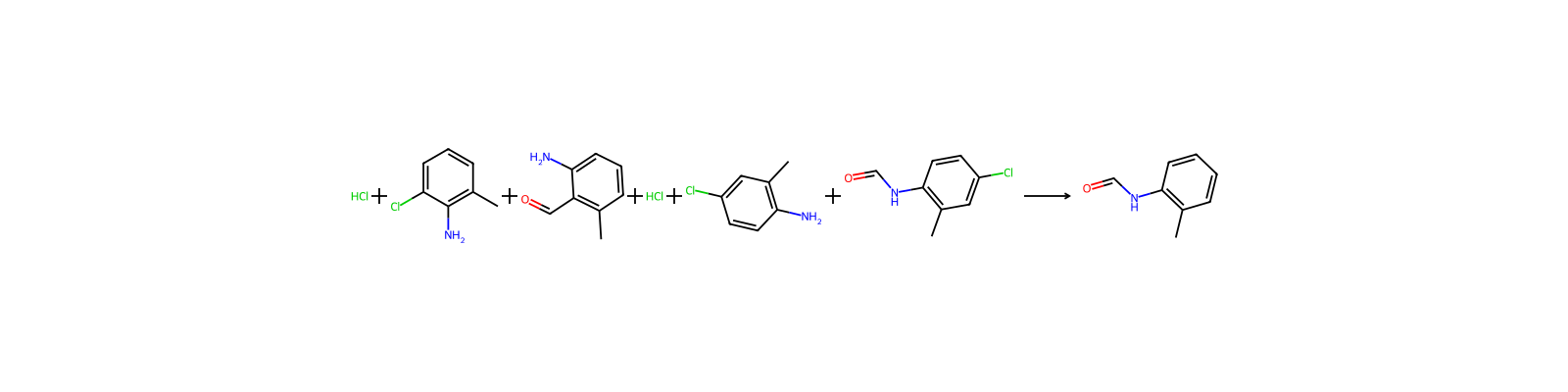
Related reactions
6 records


Linked notes
Loading…