
Isoflavone
Completing data — refresh the page later to see the latest
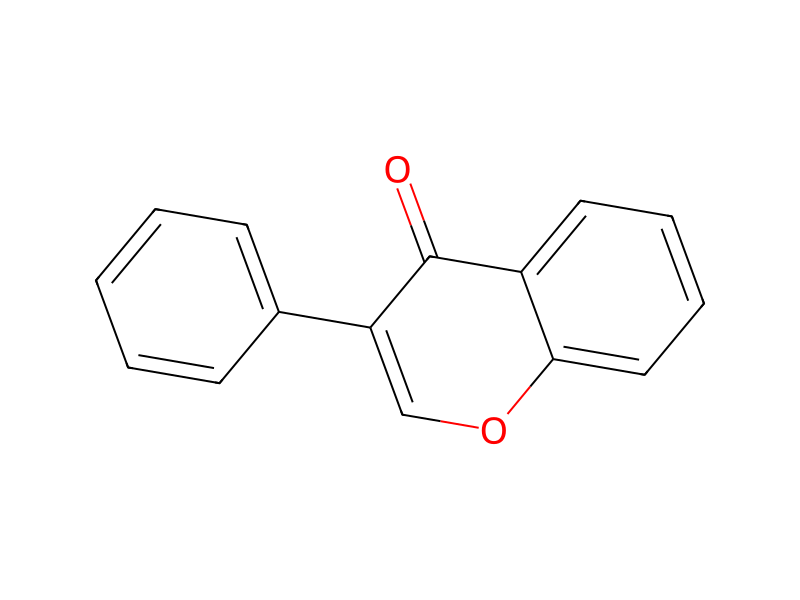
Basic information
- CAS
574-12-9- Standard SMILES
O=c1c(-c2ccccc2)coc2ccccc12- InChIKey
GOMNOOKGLZYEJT-UHFFFAOYSA-N- Molecular formula
- C15H10O2
- Average molar mass
- 222.24 g/mol
- Monoisotopic mass
- 222.06807956
Overview
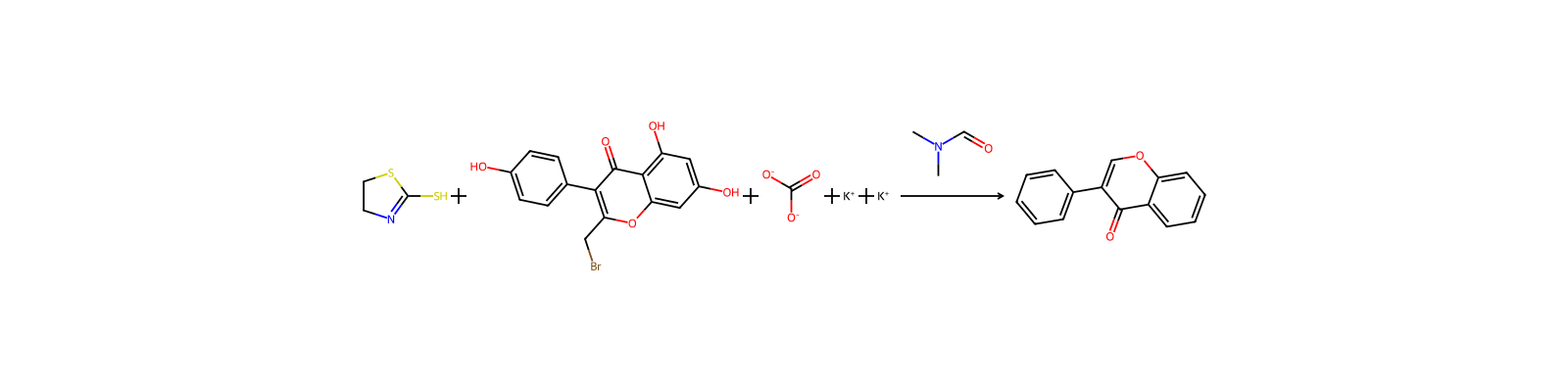
Isoflavone is a simplest member of the class of isoflavones that is 4H-chromen-4-one in which the hydrogen at position 3 is replaced by a phenyl group.
Names & identifiers
- Preferred name
- Isoflavone
- IUPAC
- 3-phenylchromen-4-one
- English name
- Isoflavone
- Molecular formula
- C15H10O2
- Molecular weight
- 222.24
Names & synonyms
Isoflavone574-12-93-Phenylchromone3-phenyl-4H-1-benzopyran-4-oneisoflavonOVO2KUW8H8NSC-135405NSC135405DTXSID90205986CHEBI:18220HomoisoflavoneIsoflavones
Show more names
BioaActive Soy Isoflavones4H-1-Benzopyran-4-one,3-phenyl-(1S,2R,3S,4R)-1,2,3,4,8-pentahydroxy-6-methoxy-3-methyl-2,4-dihydro-1H-anthracene-9,10-dioneIsoflavone,40%Isoflavone 60%Soy IsoflavioneIsoflavones In SoySoy Isoflavones P.E
Isoflavone DerivativeDerivative, Isoflavone3 Benzylchroman 4 One3 Benzylchroman 4 Ones3-Benzylchroman-4-Ones3 Benzylidene 4 Chromanone3 Benzylidene 4 Chromanones3-Benzylidene-4-Chromanones
Database identifiers
- CAS
574-12-9- PubChem CID
- 72304
- DTXSID
DTXSID90205986- ChEMBL
CHEMBL366460- ChEBI
CHEBI:18220- UNII
- OVO2KUW8H8
- EC Number
- 611-522-9
- Nikkaji
- J46.301I
Properties
Computed structural propertiesFilling in
- XLogP
- 3.2
- Topological polar surface area
- 26.3 Ų
- Hydrogen bond donors
- 0
- Hydrogen bond acceptors
- 2
- Rotatable bonds
- 1
- Heavy atoms
- 17
- Formal charge
- 0
- Complexity
- 326
Experimental & physicochemical properties
DrugsPharmaceuticals -> Listed in ZINC15
LipidsPolyketides [PK] -> Flavonoids [PK12] -> Isoflavonoids [PK1205]
SpringerMaterials PropertiesDiamagnetic susceptibility
Physicochemical properties
- Melting point
- 148 ° · 148°
- Boiling point
- 323.41 °C · 323.41°C (rough estimate)
- Density
- 1.1404 · 1.1404 (rough estimate)
- refractive index
- 1.66 · 1.6600 (estimate)
- storage temp.
- 2 · 2-8°C
- solubility
- Chloroform (Slightly), Methanol (Slightly)
- form
- Solid
- color
- Pale Yellow to Light Yellow
- InChI
- InChI=1S/C15H10O2/c16-15-12-8-4-5-9-14(12)17-10-13(15)11-6-2-1-3-7-11/h1-10H
Safety & regulation
Safety information is for reference only and does not replace the supplier’s Safety Data Sheet (SDS), applicable regulations, or professional assessment.
GHS classification
GHS Classification
This chemical does not meet GHS hazard criteria for 100% (52 of 52) of all reports.
Not Classified
Aggregated GHS information provided per 52 reports by companies from 1 notifications to the ECHA C&L Inventory.
Hazard information
Hazard Classes and CategoriesNot Classified
Safety data
- Signal word
- Warning
- Symbol(GHS)
- GHS07
- Hazard statements
- H315-H319-H335
- Precautionary statements
- P261-P264-P271-P280-P302+P352-P304+P340-P305+P351+P338-P312-P321-P362+P364-P332+P313-P337+P313-P403+P233-P405-P501
Chemistry & industry
Pharmacology
Protein BindingNo pharmacokinetic data available.
Pharmacodynamics
Isolated soy protein with isoflavones was shown to decrease LDL cholesterol levels in randomized trials assessed by the American Heart Association. In a study of postmenopausal women, daily dietary intake of 101 mg of aglycone isoflavones (indicating [DB01645] and [DB13182]) was associated with lowered LDL cholesterol and apolipoprotein B levels by 8% and reduced systolic and diastolic blood pressure by 6.8% in hypertensive women. In a meta-analysis of randomized controlled trials of menopausal women, soy isoflavones attenuated bone loss of the spine and decreased the levels of deoxypyridinoline, a bone resorption marker, while increasing serum bone-specific alkaline phosphatase, a bone formation marker. The findings from studies investigating the effects of soy consumption on menopausal symptoms, breast cancer, and prostate cancer remain somewhat controversial and inconclusive. Consumption of soy isoflavones may decrease the markers of cancer development and progression in prostate cells, including prostate-specific antigen (PSA), testosterone, and androgen receptor in patients with prostate cancer but not in normal subjects. Although epidemiologic data in Asian women demonstrate that high soy food intake is associated with protection against breast cancer, soy foods have little effect on intermediary markers of breast cancer risk and postmenopausal soy intake may not reduce the risk of developing breast cancer. However, preliminary studies show that soy food intake reduces tumor recurrence in breast cancer patients. Soy isoflavones reported to interfere with thyroid peroxidase, which are involved in the production of thyroid hormones.
Mechanism of Action
Isoflavones are selective estrogen receptor modulators that exert estrogenic-like effects under certain experimental conditions, as they are structurally similar to mammalian 17β-estradiol. They may bind to both α and β isoforms of estrogen receptor (ER), but with binding affinities to ERβ approximately 20 times higher than that to ERα. The role of isoflavones on estrogen-dependent cancer has been studied, since they may mediate antiestrogenic actions by blocking the binding of endogenous estrogens and their receptor signalling. In cell culture, [DB01645] inhibited the proliferation of MDA-MB-231 human breast cancer cells, probably by arresting the cell cycle progression at the G2–M transition. In addition, genistein was shown to induce apoptosis, modify eicosanoid metabolism, and inhibit angiogenesis. There is an evidence that soy isoflavones may act on androgen receptors to inhibit tyrosine kinase activity, thereby blocking the growth and proliferation of cancer cells. Isoflavones may not significantly contribute to the hypolipidemic effects of soy protein, but may exert coronary benefits by improving endothelial function; in clinical trials of postmenopausal women, isoflavones improved flow-mediated dilation in women with impaired endothelial function. Some observational data suggests that isoflavones improve endothelial function by increasing the number of circulating endothelial progenitor cells, which replace damaged endothelial cells. Isoflavone may modulate the key transcription factors involved in the regulation of lipid metabolism by acting on the peroxisome proliferator-activated receptors (PPAR) alpha and gamma, which are receptors that regulate the transcription of genes involved in lipid and glucose homeostasis and lipid metabolism. Multiple biological actions of isoflavones, such as favorable effect on the blood lipid profile and inhibition of LDL cholesterol oxidation, may lead to cardio protective effects. [DB01645] has been shown to have antioxidant properties on hydrogen peroxide production _in vitro_ and blocks the formation of oxygen free radicals. Studies also suggest that at micromolar concentrations, genistein increases glucose-stimulated insulin secretion in cell lines and mouse pancreatic islets via a cAMP-dependent protein kinase mechanism. Based on the findings of experimental studies, genistein may exert a positive effect on bone formation by decreasing osteoclastic resorption factor, such as collagen C-telopeptide, and increasing osteoblastic formation markers, such as bone-alkaline phosphatase. _In vitro_, it antagonized the catabolic effects of parathyroid hormone (PTH) in osteoblasts by reversing the PTH-induced increase in soluble receptor activator of nuclear factor-xB ligand and decrease in osteoprotegerin expression.
Related reactions
13 records



Compound notes
Loading…