Reaction equation

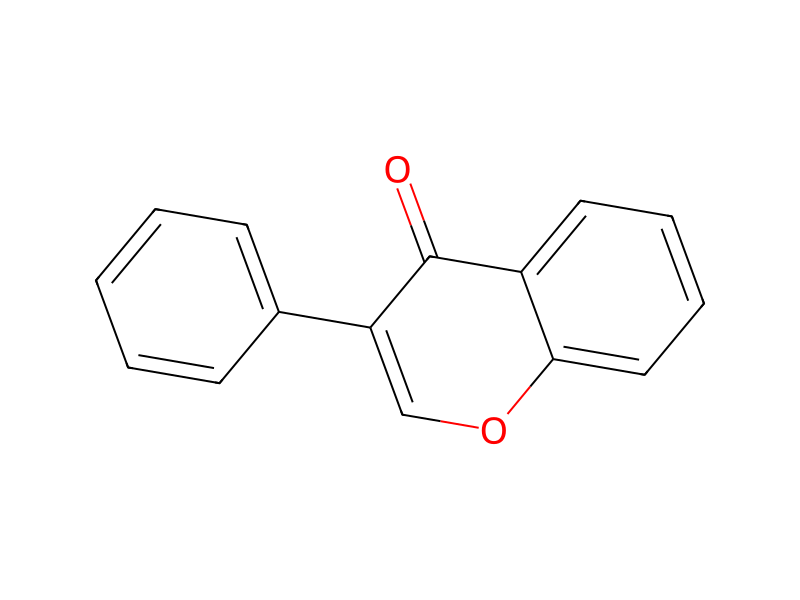
C(O[C:9]1[CH:26]=[CH:25][C:12]2[CH:13]=[C:14]([C:17]3[CH:22]=[CH:21][C:20](OC)=[CH:19][CH:18]=3)[CH2:15][O:16][C:11]=2[CH:10]=1)C1C=CC=CC=1.[O:27]1C2C(=CC=CC=2)C(O)CC1.ClC1C(=O)C(C#N)=C(C#N)C(=O)C=1Cl>O1CCOCC1>[O:16]1[C:11]2[C:12](=[CH:25][CH:26]=[CH:9][CH:10]=2)[C:13](=[O:27])[C:14]([C:17]2[CH:22]=[CH:21][CH:20]=[CH:19][CH:18]=2)=[CH:15]1Participants
5
Reactant 3


Product 1
Reagents, catalysts & solvents 1

Procedure
Using the general procedure of hydroboration-oxidation, compound 1 was converted into a chroman-4-ol (compound 4) at a yield of 60%. Compound 4 was treated with 2,3-dichloro-5,6-dicyanobenzoquinone (DDQ) in refluxing 1,4-dioxane to undergo oxidation-dehydrogenation to give an isoflavone (compound 5) at a yield of 78%. After the deprotection of compound 5 with AlCl3/EtSH, daidzein (compound 6a) was produced at a yield of 92%. On the other hand, compound 5 could be selectively debenzylated with Pearlman's reagent to give formononetin (compound 6b) at a yield of 94%,
Sources & evidence
- ORD record
- ord-5045789148ff4eb897b535c7708cd250
- Source dataset
- uspto-grants-2011_01
- Patent number
- US07875735B2
Linked notes
Loading…