
Basic information
- Standard SMILES
c1ccc(C2CO2)cc1- InChIKey
AWMVMTVKBNGEAK-UHFFFAOYSA-N- Molecular formula
- C8H8O
- Average molar mass
- 120.15 g/mol
- Monoisotopic mass
- 120.05751488
Overview
Styrene Oxide can cause cancer according to an independent committee of scientific and health experts.
Names & identifiers
- Preferred name
- Styrene Oxide
- IUPAC
- 2-phenyloxirane
- English name
- Styrene oxide
- Molecular formula
- C8H8O
- Molecular weight
- 120.15
Names & synonyms
Styrene oxide2-Phenyloxirane96-09-3PhenyloxiraneEpoxystyrenePhenylethylene oxide1,2-EpoxyethylbenzeneStyrene epoxideStyryl oxidePhenethylene oxide1-PhenyloxiraneStyrene 7,8-oxide
Show more names
STO(±)-Styrene oxide
(Epoxyethyl)benzenePhenyl oxiraneEpoxyethylbenzene1-Phenyl-1,2-epoxyethaneBenzene, (epoxyethyl)-STYRENE-7,8-OXIDE1,2-Epoxy-1-phenylethaneoxirane, 2-phenyl-
Database identifiers
- CAS
96-09-3- PubChem CID
- 7276
- DTXSID
DTXSID2021286- ChEMBL
CHEMBL1605493- ChEBI
CHEBI:17907- UNII
- 9QH06NGT6O
- EC Number
- 202-476-7
- Nikkaji
- J5.159D
Properties
Computed structural properties
- XLogP
- 1.6
- Topological polar surface area
- 12.5 Ų
- Hydrogen bond donors
- 0
- Hydrogen bond acceptors
- 1
- Rotatable bonds
- 1
- Heavy atoms
- 9
- Formal charge
- 0
- Complexity
- 94.7
Experimental & physicochemical properties
Chemical Classes
Hazardous Air Pollutants (HAPs)
Carcinogens
PolymersPlastics & Rubber -> Epoxides
LogP
log Kow = 1.61
1.61
1.84
OdorSweet, pleasant
Density
1.0523 at 61 °F (NTP, 1992) - Denser than water; will sink
1.0490 g/ cu cm at 25 °C
Styrene oxide (98 mole % pure) is available in USA with following specifications: density, 1.0490-1.0515 (25/25 °C); distillation range at 760 mm: fraction between 5 and 95% by vol shall boil within 3.0 °C range, which includes temp 194.1 °C; water, 0.25% by wt.
Relative density (water = 1): 1.05
1.0523
1.046 @25 °C
Viscosity1.99 cP at 20 °C
Color/FormColorless to pale straw-colored liquid
Solubility
less than 1 mg/mL at 67.1 °F (NTP, 1992)
Completely soluble in acetone, benzene, carbon tetrachloride, ethyl ether, heptane, methanol
0.3% wt in water
Solubility in water, g/100ml at 25 °C: 0.3 (poor)
Flash Point
175 °F (NTP, 1992)
76 °C
165 °F (74 °C) (Open cup)
76 °C c.c.
175 °F
Boiling Point
381 °F at 760 mmHg (NTP, 1992)
194.1 °C
194 °C
381 °F
194.2 °C @760 [mm Hg]
Melting Point
-35 °F (NTP, 1992)
-35.6 °C
-36.7 °C
-35 °F
-36.7 °C
Vapor Density
4.14 (NTP, 1992) - Heavier than air; will sink (Relative to Air)
4.30 (Air = 1)
Relative vapor density (air = 1): 4.30
4.14
Physicochemical properties
- Melting point
- -37 °C · -37 °C (lit.)
- Boiling point
- 194 °C · 194 °C (lit.)
- Density
- 1.054 g/mL · 1.054 g/mL at 25 °C (lit.)
- vapor density
- 4.14 · 4.14 (vs air)
- vapor pressure
- 1 mm · <1 mm Hg ( 20 °C)
- refractive index
- 20 · n20/D 1.535(lit.)
- Flash point
- 175 °F · 175 °F
- storage temp.
- 30 °C · Store below +30°C.
- solubility
- 3 g/l · 3g/l
- form
- Liquid
- color
- Clear colorless to slightly yellow
- biological source
- synthetic
- explosive limit
- 1.1 · 1.1-22%(V)
- Water Solubility
- 3 g/L · 3 g/L (20 ºC)
- BRN
- 108582 · 108582
- Henry's Law Constant
- 6.2 · 6.2×10-1 mol/(m3Pa) at 25℃, HSDB (2015)
- Stability
- Stability Unstable - polymerises readily with compounds possessing a labile hydrogen (such as acids and alcohols) in the presence of acids, bases or some salts. Combustible. Incompatible with strong oxidizing agents, acids, bases. Moisture sensitive.
- Major Application
- flavors and fragrances
- InChI
- 1S/C8H8O/c1-2-4-7(5-3-1)8-6-9-8/h1-5,8H,6H2
- InChIKey
- AWMVMTVKBNGEAK-UHFFFAOYSA-N
- SMILES
- C1OC1c2ccccc2
- LogP
- 1.61 · 1.61
- Indirect Additives used in Food Contact Substances
- STYRENE OXIDE
- FDA 21 CFR
- 175.3 · 175.300
- CAS DataBase Reference
- 96 · 96-09-3(CAS DataBase Reference)
- EWG's Food Scores
- 5 · 5
- FDA UNII
- 9 QH06NGT6O · 9QH06NGT6O
- Proposition 65 List
- Styrene Oxide
- NIST Chemistry Reference
- Oxirane, phenyl-(96-09-3)
- IARC
- 2 A · 2A (Vol. Sup 7, 60, 121) 2019
- EPA Substance Registry System
- Styrene oxide (96-09-3)
- UNSPSC Code
- 12352202 · 12352202
- NACRES
- 32 · NA.32
- Symbol(GHS)
- 6 · GHS06,GHS08
- Signal word
- Danger
- Hazard statements
- 311 · H311-H302-H315-H319-H361-H373-H317-H341-H350-H336-H401-H227
- Precautionary statements
- 501 · P501-P273-P272-P260-P270-P202-P210-P201-P271-P264-P280-P370+P378-P308+P313-P337+P313-P305+P351+P338-P361+P364-P333+P313-P301+P312+P330-P302+P352+P312-P304+P340+P312-P403+P233-P403+P235-P405
- PPE
- Eyeshields, Faceshields, Gloves, type ABEK (EN14387) respirator filter
- Hazard Codes
- T
- Risk Statements
- 45 · 45-21-36-43-36/38-20/21-46
- Safety Statements
- 53 · 53-45-36/37-26
- RIDADR
- 2810 · UN 2810 6.1/PG 3
- WGK Germany
- 3 · 3
- RTECS
- 9625000 · CZ9625000
- Autoignition Temperature
- 928 °F · 928 °F
- TSCA
- TSCA listed
- HazardClass
- 6.1 · 6.1
- PackingGroup
- III
- HS Code
- 29109000 · 29109000
- Storage Class
- 6.1 C · 6.1C - Combustible acute toxic Cat.3toxic compounds or compounds which causing chronic effects
- Hazard Classifications
- 3 InhalationAcute · Acute Tox. 3 InhalationAcute Tox. 4 DermalCarc. 1BEye Irrit. 2Muta. 1BSkin Irrit. 2Skin Sens. 1
- Hazardous Substances Data
- 96 · 96-09-3(Hazardous Substances Data)
- REACH Registrations
- Active
- Limited Quantities
- 5 L · 5.0 L (1.3 gallons) (liquid) or 5.0 kg (11 lbs) (solid)
- Excepted Quantities
- Max Inner Pack (30g or 30ml) and Max Outer Pack (1Kg or 1L)
Safety & regulation
GHS classification
GHS Classification
Danger
H312: Harmful in contact with skin [Warning Acute toxicity, dermal]
P203, P264+P265, P280, P302+P352, P305+P351+P338, P317, P318, P321, P337+P317, P362+P364, P405, and P501 (click each P-code to see the statement)
This chemical does not meet GHS hazard criteria for 4.3% (16 of 374) of reports.
Danger
H311 (15%): Toxic in contact with skin [Danger Acute toxicity, dermal]
Hazard information
Regulatory Information
Chemical: Oxirane, phenyl-
Hazard Traits - Carcinogenicity; Dermatotoxicity; Hepatotoxicity and Digestive System Toxicity; Neurotoxicity; Ocular Toxicity; Reproductive Toxicity; Respiratory Toxicity
Status: Active Update: 10-06-2020 https://echa.europa.eu/registration-dossier/-/registered-dossier/14585
Phenylethylene oxide: Does not have an individual approval but may be used under an appropriate group standard
The New Jersey Worker and Community Right to Know Act requires public and private employers to provide information about hazardous substances at their workplaces. (N.J.S.A. 34:5A-1 et. seq.)
Other Safety InformationIMAP assessments - Oxirane, phenyl-: Environment tier I assessment
DOT LabelPoison
Fire Hazards
This chemical is combustible. (NTP, 1992)
Combustible. Above 76 °C explosive vapour/air mixtures may be formed.
Fire Potential
On ... basis /of flash point/, it presents hazard of flammability similar to that encountered with ... o-cresol, o-dichlorobenzene, naphthalene, phenol, and dimethylaniline. Definite hazard exists whenever ... /it/ is heated to temperatures at and above the flash point.
Health Hazards
SYMPTOMS: Symptoms of exposure to this compound may include severe irritation of the skin and eyes, and skin sensitization. It can cause corrosion of tissues. Other symptoms may include burns, irritation of mucous membranes and upper respiratory tract, nausea, vomiting and headaches. Exposure may also cause central nervous system depression, hepatic lesions and pain to the eyes. Symptoms of exposure to a related compound include drying and cracking of the skin on contact, primary irritation to mucosal surfaces, fatigue, weakness, depression, unsteadiness, feeling of drunkenness, abnormal electroencephalograms and one case of toxic retrobulbar neuritis. Chronic exposure to a related compound has caused peripheral neuropathies (distal hypesthesia and decreased nerve conduction velocities).
Hazards Summary
Styrene oxide is used as a reactive plasticizer or diluent for epoxy resins and in the production of phenethyl alcohol and styrene glycol and its derivatives. Acute (short-term) exposure to styrene oxide causes skin and eye irritation in humans. Corneal injury, liver, and neurological effects have been reported in acutely exposed animals. No information is available on the chronic (long-term), reproductive, developmental, or carcinogenic effects of styrene oxide in humans. Maternal toxicity and increased fetal mortality have been observed in rats and rabbits exposed to styrene oxide by inhalation. Several studies have reported an increased incidence of forestomach tumors in rats and mice exposed via gavage (experimentally placing the chemical in the stomach). The International Agency for Research on Cancer (IARC) has classified styrene oxide as a Group 2A, a probable human carcinogen.
There are no data linking styrene oxide exposure to effects in humans, so the TLV-TWA is based on animal studies. TLV Basis = upper respiratory tract irritation and blood changes. [ACGIH, 2020] A skin and eye irritant; Inhalation of high concentrations may cause CNS depression; [ICSC] Toxic by ingestion and inhalation; [Hawley] Repeated exposure may lead to skin sensitization; [HSDB] May cause skin burns, sensitization, liver injury, and CNS depression; [CAMEO] An eye irritant and lachrymator; May cause CNS depression; Targets the CNS and liver; [MSDSonline]
The major hazards encountered in the use and handling of styrene-7,8-oxide stem from its toxicologic properties. Exposure to this sweet-smelling, colorless-to-pale straw-colored liquid may occur from its use in the manufacture of styrene glycol, beta-phenylethyl alcohol, surface coatings, and epoxy resins, and in the treatment of fibers and textiles. Effects from exposure may include skin, eye, and respiratory irritation, pulmonary edema, nausea, and central nervous system depression. Also, the International Agency for Research on Cancer (IARC) has classified styrene-7,8-oxide as a Group 2A carcinogen (defined as an agent that is probably carcinogenic to humans). Mechanical exhaust ventilation should be used to minimize exposure. In activities and situations where over-exposure may occur, wear chemical protective clothing and a self-contained breathing apparatus. Smoking, drinking, and eating should be prohibited in styrene-7,8-oxide work areas. Styrene-7,8-oxide must be moderately heated before ignition will occur. For fires involving styrene-7,8-oxide, extinguish with water spray, which acts by lowering the substance to below its flash point. Styrene-7,8-oxide should be stored in unbreakable, watertight containers, away from heat and sources of ignition. Before implementing land disposal of styrene-7,8-oxide waste, consult with environmental regulatory agencies for guidance.
Reactive GroupHydrocarbons, Aromatic
EC ClassificationSymbol: T; R: 45-21-36; S: 53-45; Note: E
Special Reports
Barale R; Mutat Res 257 (2): 107-26 (1991). The genetic toxicology of styrene and styrene oxide is reviewed.
National Toxicology Program. Eleventh Report on Carcinogens (2005). The Report on Carcinogens is an informational scientific and public health document that identifies and discusses substances (including agents, mixtures, or exposure circumstances) that may pose a carcinogenic hazard to human health. Styrene-7,8-oxide (96-09-3) is listed as reasonably anticipated to be a human carcinogen.[Available from, as of July 31, 2009: http://ntp.niehs.nih.gov/ntp/roc/eleventh/profiles/s165styr.pdf]
Reactivity AlertsPolymerizable
Reactivity Profile
STYRENE OXIDE is incompatible with oxidizing agents. Also incompatible with acids and bases. Reacts with 4-(4'-nitrobenzyl)pyridine. Polymerizes exothermally and reacts vigorously with compounds possessing a labile hydrogen (e.g. alcohols and amines) in the presence of catalysts such as acids, bases and certain salts (NTP, 1992).
Safety & protection
Fire Fighting
Fires involving this material can be controlled with a dry chemical, carbon dioxide or Halon extinguisher. A water spray may also be used. (NTP, 1992)
Use powder, foam, carbon dioxide. In case of fire: keep drums, etc., cool by spraying with water. NO direct contact with water.
First Aid Measures
Fresh air, rest.
Remove contaminated clothes. Rinse and then wash skin with water and soap.
First rinse with plenty of water for several minutes (remove contact lenses if easily possible), then refer for medical attention.
Rinse mouth. Refer for medical attention .
First Aid
EYES: First check the victim for contact lenses and remove if present. Flush victim's eyes with water or normal saline solution for 20 to 30 minutes while simultaneously calling a hospital or poison control center. Do not put any ointments, oils, or medication in the victim's eyes without specific instructions from a physician. IMMEDIATELY transport the victim after flushing eyes to a hospital even if no symptoms (such as redness or irritation) develop.
Safe StorageSeparated from acids, bases and food and feedstuffs. Ventilation along the floor.
Firefighting Hazards... /Styrene oxide/ is a corrosive chemical that reacts vigorously with water ... .
Storage Conditions
... PRECAUTIONS SHOULD BE TAKEN TO PREVENT EXCESSIVE PRESSURE UNDER STORAGE OR REACTION CONDITIONS & TO RELIEVE SUCH PRESSURE SHOULD IT OCCUR.
PRECAUTIONS FOR "CARCINOGENS": Storage site should be as close as practicable to lab in which carcinogens are to be used, so that only small quantities required for ... expt need to be carried. Carcinogens should be kept in only one section of cupboard, an explosion-proof refrigerator or freezer (depending on chemicophysical properties ...) that bears appropriate label. An inventory ... should be kept, showing quantity of carcinogen & date it was acquired ... Facilities for dispensing ... should be contiguous to storage area. /Chemical Carcinogens/
Cleanup Methods
PRECAUTIONS FOR "CARCINOGENS": A high-efficiency particulate arrestor (HEPA) or charcoal filters can be used to minimize amt of carcinogen in exhausted air ventilated safety cabinets, lab hoods, glove boxes or animal rooms ... Filter housing that is designed so that used filters can be transferred into plastic bag without contaminating maintenance staff is avail commercially. Filters should be placed in plastic bags immediately after removal ... The plastic bag should be sealed immediately ... The sealed bag should be labelled properly ... Waste liquids ... should be placed or collected in proper containers for disposal. The lid should be secured & the bottles properly labelled. Once filled, bottles should be placed in plastic bag, so that outer surface ... is not contaminated ... The plastic bag should also be sealed & labelled. ... Broken glassware ... should be decontaminated by solvent extraction, by chemical destruction, or in specially designed incinerators. /Chemical Carcinogens/
Nonfire Spill Response
SMALL SPILLS AND LEAKAGE: If you spill this chemical, FIRST REMOVE ALL SOURCES OF IGNITION. Then, use absorbent paper to pick up all liquid spill material. Your contaminated clothing and absorbent paper should be sealed in a vapor-tight plastic bag for eventual disposal. Solvent wash all contaminated surfaces with 60-70% ethanol followed by washing with a soap and water solution. Do not reenter the contaminated area until the Safety Officer (or other responsible person) has verified that the area has been properly cleaned.
Disposal Methods
SRP: The most favorable course of action is to use an alternative chemical product with less inherent propensity for occupational exposure or environmental contamination. Recycle any unused portion of the material for its approved use or return it to the manufacturer or supplier. Ultimate disposal of the chemical must consider: the material's impact on air quality; potential migration in soil or water; effects on animal, aquatic, and plant life; and conformance with environmental and public health regulations.
Incineration: Liquids should be atomized into an incinerator and combustion may be improved by mixing with a more flammable solvent (acetone or benzene). Solids should be combined with paper or other flammable material. An alternate procedure is to dissolve the solid in a flammable solvent and spray the soln into the fire chamber.
PRECAUTIONS FOR "CARCINOGENS": There is no universal method of disposal that has been proved satisfactory for all carcinogenic compounds & specific methods of chem destruction ... published have not been tested on all kinds of carcinogen-containing waste. ... summary of avail methods & recommendations ... /given/ must be treated as guide only. /Chemical Carcinogens/
PRECAUTIONS FOR "CARCINOGENS": ... Incineration may be only feasible method for disposal of contaminated laboratory waste from biological expt. However, not all incinerators are suitable for this purpose. The most efficient type ... is probably the gas-fired type, in which a first-stage combustion with a less than stoichiometric air:fuel ratio is followed by a second stage with excess air. Some ... are designed to accept ... aqueous & organic-solvent solutions, otherwise it is necessary ... to absorb soln onto suitable combustible material, such as sawdust. Alternatively, chem destruction may be used, esp when small quantities ... are to be destroyed in laboratory. /Chemical Carcinogens/
For more Disposal Methods (Complete) data for STYRENE-7,8-OXIDE (8 total), please visit the HSDB record page.
Spillage Disposal
Personal protection: chemical protection suit including self-contained breathing apparatus. Collect leaking liquid in covered containers. Absorb remaining liquid in sand or inert absorbent. Then store and dispose of according to local regulations.
Preventive Measures
PRECAUTIONS FOR "CARCINOGENS": Smoking, drinking, eating, storage of food or of food & beverage containers or utensils, & the application of cosmetics should be prohibited in any laboratory. All personnel should remove gloves, if worn, after completion of procedures in which carcinogens have been used. They should ... wash ... hands, preferably using dispensers of liq detergent, & rinse ... thoroughly. Consideration should be given to appropriate methods for cleaning the skin, depending on nature of the contaminant. No standard procedure can be recommended, but the use of organic solvents should be avoided. Safety pipettes should be used for all pipetting. /Chemical Carcinogens/
PRECAUTIONS FOR "CARCINOGENS": In animal laboratory, personnel should remove their outdoor clothes & wear protective suits (preferably disposable, one-piece & close-fitting at ankles & wrists), gloves, hair covering & overshoes. ... clothing should be changed daily but ... discarded immediately if obvious contamination occurs ... /also,/ workers should shower immediately. In chemical laboratory, gloves & gowns should always be worn ... however, gloves should not be assumed to provide full protection. Carefully fitted masks or respirators may be necessary when working with particulates or gases, & disposable plastic aprons might provide addnl protection. If gowns are of distinctive color, this is a reminder that they should not be worn outside of lab. /Chemical Carcinogens/
SRP: Contaminated protective clothing should be segregated in such a manner so that there is no direct personal contact by personnel who handle, dispose, or clean the clothing. Quality assurance to ascertain the completeness of the cleaning procedures should be implemented before the decontaminated protective clothing is returned for reuse by the workers. Contaminated clothing should not be taken home at end of shift, but should remain at employee's place of work for cleaning.
PRECAUTIONS FOR "CARCINOGENS": ... operations connected with synth & purification ... should be carried out under well-ventilated hood. Analytical procedures ... should be carried out with care & vapors evolved during ... procedures should be removed. ... Expert advice should be obtained before existing fume cupboards are used ... & when new fume cupboards are installed. It is desirable that there be means for decreasing the rate of air extraction, so that carcinogenic powders can be handled without ... powder being blown around the hood. Glove boxes should be kept under negative air pressure. Air changes should be adequate, so that concn of vapors of volatile carcinogens will not occur. /Chemical Carcinogens/
For more Preventive Measures (Complete) data for STYRENE-7,8-OXIDE (12 total), please visit the HSDB record page.
Isolation and EvacuationExcerpt from ERG Guide 153 [Substances - Toxic and/or Corrosive (Combustible)]:
Toxicology
Body BurdenStyrene oxide has been detected in the venous blood of 4 workers exposed to styrene of unspecified purity(1).
Interactions
Doses of 0.8 umol/egg styrene oxide (purity, 97%) dissolved in vegetable oil were injected into the air space of White-Leghorn "mittari" & SK 12 chicken eggs on day 3 of incubation. In addnl groups, 0.1 umol trichloropropylene oxide, an inhibitor of epoxide hydrolyase, was injected simultaneously with styrene oxide as a check on the effects of metabolism on embryotoxicity. Embryos were examined on day 14 of incubation. Styrene oxide treatment alone resulted in embryolethality & malformations; addition of trichloropropylene oxide to the styrene oxide treatment augmented these effects.
Ecotoxicity Values
EC50; Species: Scenedesmus abundans (Green algae, 10+4 cells/mL); Conditions: freshwater, static, 22 °C; Concentration: 32000 ug/L for 96 hr; Effect: growth, general /97.0% purity/
LC50; Species: Daphnia magna (Water flea, age <24 hr neonate); Conditions: freshwater, renewal, 23.7 (23-24.5) °C, pH 8.34 (7.67-8.63), hardness 287.2 mgL CaCO3 (168-437 mg/L), alkalinity 174.2 mg/L CaCO3 (104-261 mg/L), dissolved oxygen 82.6% (75.9-95.3%); Concentration: 11600 ug/L for 48 hr (95% confidence interval: 10200-13100 ug/L) /97% purity/
LC50; Species: Pimephales promelas (Fathead minnow, age 30 days, length 17 mm, weight 0.082 g); Conditions: freshwater, flow through, 23.3 (22.5-24.8) °C, pH 6.9 (6.75-7.04), hardness 53.4 mgL CaCO3 (51.9-53.9 mg/L), alkalinity 40.5 mg/L CaCO3 (40-42 mg/L), dissolved oxygen 85.5% (72.9-92.3%); Concentration: 4540 ug/L for 96 hr /97% purity/
LC50; Species: Pimephales promelas (Fathead minnow, age 30 days, length 17 mm, weight 0.074 g); Conditions: freshwater, static, 22.3 (22-22.6) °C, pH 6.82 (6.53-7.12), hardness 53.2 mgL CaCO3 (49.9-57.9 mg/L), alkalinity 38 mg/L CaCO3 (31-42 mg/L), conductivity 120 (118-120) umhos/cm, dissolved oxygen 59.4% (25.6-73%); Concentration: 10700 ug/L for 96 hr /97% purity/
Environmental Fate
TERRESTRIAL FATE: Based on a classification scheme(1), an estimated Koc value of 53(SRC), determined from a water solubility of 3,000 mg/L(2) and a regression-derived equation(3), indicates that styrene-7,8-oxide is expected to have very high mobility in soil(SRC). Volatilization of styrene-7,8-oxide from moist soil surfaces is expected(SRC) given an estimated Henry's Law constant of 1.6X10⁻⁶ atm-cu m/mole(SRC), derived from its vapor pressure, 0.3 mm Hg(2), and water solubility, 3,000 mg/L(2). Styrene-7,8-oxide is not expected to volatilize from dry soil surfaces(SRC) based upon a vapor pressure of 0.3 mm Hg(2). Hydrolytic half-lives of 0.17, 28 and 40.9 hours have been reported for styrene-7,8-oxide at pH 3, 7, and 9, respectively(4). Hydrolysis is likely to be a more important fate than volatilization from moist soil or transport through soils, particularly in acidic soils(SRC). Styrene-7,8-oxide (100 mg/L) reached 80-82% of its theoretical BOD in 2 weeks using an activated sludge inoculum (30 mg/L) in the Japanese MITI test(5), suggesting that biodegradation is likely to be an important fate process for styrene-7,8-oxide; however, the test results might be for the hydrolysis product, styrene glycol(SRC).
AQUATIC FATE: Based on a classification scheme(1), an estimated Koc value of 53(SRC), determined from a water solubility of 3,000 mg/L(2) and a regression-derived equation(3), indicates that styrene-7,8-oxide is not expected to adsorb to suspended solids and sediment(SRC). Volatilization from water surfaces is expected for styrene-7,8-oxide(3) based upon an estimated Henry's Law constant of 1.6X10⁻⁵ atm-cu m/mole(SRC), derived from its vapor pressure, 0.3 mm Hg(2), and water solubility, 3,000 mg/L(2). Using this Henry's Law constant and an estimation method(3), volatilization half-lives for a model river and model lake are 64 hours and 23 days, respectively(SRC). According to a classification scheme(4), an estimated BCF of 3.5(SRC), from its log Kow of 1.61(5) and a regression-derived equation(6), suggests the potential for bioconcentration in aquatic organisms is low(SRC). Hydrolytic half-lives of 0.17, 28 and 40.9 hours have been reported for styrene-7,8-oxide at pH 3, 7, and 9, respectively(7). Hydrolysis is likely to be a more important fate than volatilization from water or bioconcentration in aquatic organisms, particularly in acidic water(SRC). Styrene-7,8-oxide (100 mg/L) reached 80-82% of its theoretical BOD in 2 weeks using an activated sludge inoculum (30 mg/L) in the Japanese MITI test(8), suggesting that biodegradation is likely to be an important fate process for styrene-7,8-oxide; however, the test results might be for the hydrolysis product, styrene glycol(SRC).
ATMOSPHERIC FATE: According to a model of gas/particle partitioning of semivolatile organic compounds in the atmosphere(1), styrene-7,8-oxide, which has a vapor pressure of 0.3 mm Hg at 20 °C(2), is expected to exist solely as a vapor in the ambient atmosphere. Vapor-phase styrene-7,8-oxide is degraded in the atmosphere by reaction with photochemically-produced hydroxyl radicals(SRC); the half-life for this reaction in air is estimated to be 3.2 days(SRC), calculated from its rate constant of 5.1X10⁻¹² cu cm/molecule-sec at 25 °C(SRC) that was derived using a structure estimation method(3). Styrene-7,8-oxide does not contain chromophores that absorb at wavelengths >290 nm(4) and therefore is not expected to be susceptible to direct photolysis by sunlight(SRC).
Adverse EffectsNeurotoxin - Other CNS neurotoxin
Exposure RoutesThe substance can be absorbed into the body by inhalation, through the skin and by ingestion.
Signs and Symptoms
Dizziness. Drowsiness. Unconsciousness. Vomiting.
Redness. Pain.
Redness. Pain.
Abdominal pain. Further see Inhalation.
Ongoing Test Status
The following link will take the user to the National Toxicology Program (NTP) Test Agent Search Results page, which tabulates all of the "Standard Toxicology & Carcinogenesis Studies", "Developmental Studies", and "Genetic Toxicity Studies" performed with this chemical. Clicking on the "Testing Status" link will take the user to the status (i.e., in review, in progress, in preparation, on test, completed, etc.) and results of all the studies that the NTP has done on this chemical.[Available from: http://ntp-apps.niehs.nih.gov/ntp_tox/index.cfm?fuseaction=ntpsearch.searchresults&searchterm=96-09-3]
Effluent Concentrations
In a comprehensive survey of wastewater from 4000 industrial and publicly owned treatment works (POTWs) sponsored by the Effluent Guidelines Division of the US EPA, styrene-7,8-oxide was identified in one discharge of the rubber processing industry at a level of 46.2 ppb(1). Styrene-7,8-oxide was also identified in effluent from a latex manufacturing plant in Louisville, KY and chemical manufacturing plants in Louisville and Memphis, TN(2).
Medical Surveillance
PRECAUTIONS FOR "CARCINOGENS": Whenever medical surveillance is indicated, in particular when exposure to a carcinogen has occurred, ad hoc decisions should be taken concerning ... /cytogenetic and/or other/ tests that might become useful or mandatory. /Chemical Carcinogens/
Soil Adsorption/Mobility
The Koc of styrene-7,8-oxide is estimated as 53(SRC), using a water solubility of 3,000 mg/L(1) and a regression-derived equation(2). According to a classification scheme(3), this estimated Koc value suggests that styrene-7,8-oxide is expected to have very high mobility in soil. Hydrolytic half-lives of 0.17, 28 and 40.9 hours have been reported for styrene-7,8-oxide at pH 3, 7, and 9, respectively(4). Hydrolysis is likely to be a more important fate than transport through soils, particularly in acidic soils(SRC).
Atmospheric Concentrations
Styrene-7,8-oxide has been tentatively detected, but not quantified, in air samples in the Los Angeles Basin as well as other, unspecified areas of the USA(1).
SOURCE DOMINATED: Concentrations of styrene-7,8-oxide ranging from <0.2 to 190 ppb were reported in air from various polymerization facilities(1).
Regulatory information
Atmospheric Standards
Listed as a hazardous air pollutant (HAP) generally known or suspected to cause serious health problems. The Clean Air Act, as amended in 1990, directs EPA to set standards requiring major sources to sharply reduce routine emissions of toxic pollutants. EPA is required to establish and phase in specific performance based standards for all air emission sources that emit one or more of the listed pollutants. Styrene-7,8-oxide is included on this list.
CERCLA Reportable Quantities
Persons in charge of vessels or facilities are required to notify the National Response Center (NRC) immediately, when there is a release of this designated hazardous substance, in an amount equal to or greater than its reportable quantity of 100 lb or 45.4 kg. The toll free number of the NRC is (800) 424-8802. The rule for determining when notification is required is stated in 40 CFR 302.4 (section IV. D.3.b).
Safety data
- PPE
- Eyeshields, Faceshields, Gloves, type ABEK (EN14387) respirator filter
- wgk
- 3
- tsca
- TSCA listed
- rtecs
- CZ9625000
- ridadr
- UN 2810 6.1/PG 3
- hs_code
- 29109000
- risk_code
- 45-21-36-43-36/38-20/21-46
- Signal word
- Danger
- Symbol(GHS)
- GHS06,GHS08
- hazard_code
- T
- safety_code
- 53-45-36/37-26
- hazard_class
- 6.1
- Storage Class
- 6.1C - Combustible acute toxic Cat.3toxic compounds or compounds which causing chronic effects
- packing_group
- III
- Hazard statements
- H311-H302-H315-H319-H361-H373-H317-H341-H350-H336-H401-H227
- Limited Quantities
- 5.0 L (1.3 gallons) (liquid) or 5.0 kg (11 lbs) (solid)
- Excepted Quantities
- Max Inner Pack (30g or 30ml) and Max Outer Pack (1Kg or 1L)
- REACH Registrations
- Active
- Hazard Classifications
- Acute Tox. 3 InhalationAcute Tox. 4 DermalCarc. 1BEye Irrit. 2Muta. 1BSkin Irrit. 2Skin Sens. 1
- Autoignition Temperature
- 928 °F
- Precautionary statements
- P501-P273-P272-P260-P270-P202-P210-P201-P271-P264-P280-P370+P378-P308+P313-P337+P313-P305+P351+P338-P361+P364-P333+P313-P301+P312+P330-P302+P352+P312-P304+P340+P312-P403+P233-P403+P235-P405
- Hazardous Substances Data
- 96-09-3(Hazardous Substances Data)
Chemistry & industry
Pharmacology
Mechanism of Action
The measurement of primary DNA damage caused by oxirane chemicals can be confounded by apoptotic-generated DNA autolysis. The apoptogenic potential of oxiranes requires knowledge of the relationship between the apoptotic threshold dose and cytotoxic dose for interpretation of DNA damage assays. This research determined the relationship between cytotoxic and apoptotic doses for seven simple oxiranes of varying structure. This relationship between cytotoxic and apoptotic thresholds was determined simultaneously in in vitro cell culture. L929 cells in log-phase growth were exposed to the oxiranes for 24 hr in 25 sq cm and then assayed fluorometrically in 96-well plates for Caspase 3. Viability was assessed using Trypan Blue exclusion and loss of Caspase 3 activity. Ranked apoptotic potency was: diepoxybutane (DEB)>styrene oxide (SO)>phenyl glycidyl ether (PGE)>epichlorhydrin (EPI)>glycidol (GLY)>epoxybutane (EB)>epoxycyclohexane (ECH). Relative cytotoxicity was significantly correlated (r(s)=0.86, p=0.02) with potencies: DEB>EPI>PGE>SO>GLY>EB>ECH. These structurally-diverse, simple oxiranes were all capable of inducing apoptosis at doses several-fold below their cytotoxic concentrations. Difunctionality and aromaticity were key predictors of potency for both. Caspase 3 activity was an accurate indicator of necrosis which correlated with Trypan Blue results.
Styrene oxide-DNA adducts have been found in several organs in mice and in cultured mammalian cells exposed to styrene oxide ... . A study of workers in a boat-making facility where styrene concentrations ranged from 1 to 235 mg/cu m (mean of 65.6 mg/cu m, or 13.3 ppm) found elevated levels of styrene oxide-DNA adducts in mononuclear cells ... . DNA adducts in rodents and humans appear to be similar. ... DNA and albumin adducts were found in the blood of plastics workers exposed to styrene oxide ... . Low levels of covalent binding of styrene oxide to DNA were observed in the stomachs of rats given styrene oxide orally ... .
Metabolism/Metabolites
Urine of rats dosed with styrene (240 mg/kg), R-, S- and racemic styrene oxide (150 mg/kg) was analysed for mandelic acid enantiomers and for regioisomers and diastereomers of mercapturic acids by NMR spectrometry. ... R- and S-styrene oxide yielded predominantly R- and S-mandelic acid, respectively, racemic styrene oxide gave predominantly the R-enantiomer whereas styrene yielded almost racemic mandelate. The regioselectivity of mercapturic acid formation was very similar for styrene, R- and S-styrene oxide. These three species yielded a 2:1 mixture of N-acetyl-S-(1-phenyl-2-hydroxyethyl)cysteine (MA1) and N-acetyl-S-(2-phenyl-2-hydroxyethyl)cysteine (MA2). R-Styrene oxide gave higher conversion to mercapturic acids (28%) than the S-isomer (19% of the dose). However, R-styrene oxide yielded stereospecifically S,R-MA1 and R,R-MA2 whereas S-styrene oxide gave R,R-MA1 and S,R-MA2. Styrene yielded a mixture of diastereomeric mercapturic acids. The ratios of R,R-/S,R-isomers were 80:20 and 15:85 for MA1 and MA2, respectively. These data suggest that styrene is metabolized stereoselectively to S-styrene oxide as a major enantiomer in rat in vivo. This enantiomer has been reported to be less mutagenic than R-styrene oxide in vitro.
The major metabolic route for styrene in rats, mice, and humans involves conversion to styrene-7,8-oxide (SO). The purpose of this study was to evaluate blood SO, SO-hemoglobin (SO-Hb) adducts, and urinary metabolites in styrene-exposed human volunteers and to compare these results with data previously obtained for rodents. Four healthy male volunteers were exposed for 2 hr during light physical exercise to 50 ppm (13)C(8)-styrene vapor via a face mask. Levels and time profiles of styrene in exhaled air, blood, and urine (analyzed by GC) and urinary excretion patterns of mandelic acid and phenylglyoxylic acid in urine (analyzed by HPLC) were comparable to previously published volunteer studies. Maximum levels of SO in blood (measured by GC-MS) of 2.5-12.2 (average 6.7) nM were seen after 2 hr, i.e., in the first sample collected after exposure had ended. The styrene blood level in humans was about 1.5 to 2 times higher than in rats and 4 times higher than in mice for equivalent styrene exposures. In contrast the SO levels in human blood was approximately fourfold lower than in mice. The level of hydroxyphenethylvaline (determined by GC-MS-MS) in pooled blood collected after exposure was estimated as 0.3 pmol/g globin corresponding to a SO-Hb adduct increment of about 0.003 pmol/g and ppm hr. NMR analyses of urine showed that a major portion (> 95%) of the excreted (13)C-derived metabolites was derived from hydrolysis of SO, while only a small percentage of the excreted metabolites (< 5%) was derived from metabolism via phenylacetaldehyde. Signals consistent with metabolites derived from other pathways of styrene metabolism in rodents (such as glutathione conjugation with SO or ring epoxidation) were not detected.
The styrene-7,8-oxide (SO) burden in isolated lungs of male Sprague-Dawley rats and in-situ prepared lungs of male B6C3F1 mice ... /were investigated/. ... Styrene (ST) exposures ranged from 50 to 980 ppm (rats) and from 40 to 410 ppm (mice). SO was quantified from the effluent perfusate. Lungs of both species metabolized ST to SO. After a mathematical translation of the ex-vivo data to ventilation and perfusion conditions as they are occurring in vivo, a species comparison was carried out. At ST concentrations of up to 410 ppm, mean SO levels in mouse lungs ranged up to 0.45 nmol/g lung, about 2 times higher than in rat lungs at equal conditions of ST exposure. ... The species difference in the SO lung burden /appeared/ too small to consider the genotoxicity of SO as sufficient for explaining the fact that only mice developed lung tumors when exposed to ST. ...
... Understanding the relationship of the metabolism of styrene to its toxicity depends upon knowing the balance between the bioactivation of styrene to the epoxide by cytochromes P-450 and the detoxication of the oxide to the glycol by microsomal epoxide hydrolase. When hepatic and pulmonary microsomal preparations from non-Swiss albino (NSA) and Swiss (CD-1) mice were compared for their abilities to metabolize racemic, S- and R-styrene oxide to styrene glycol, enzymic activities were higher in liver than in lung. R-Styrene glycol formation was favored with racemic styrene oxide as the substrate. Only minor strain differences were found that could not account for the differences in reported susceptibility to styrene-induced toxicity. While the oxidation of styrene to styrene oxide was similar in male and female NSA mice, male hepatic microsomes were more active in the metabolism of the oxide to the glycol. Hepatic metabolism of styrene oxide to styrene glycol was inducible by butylated hydroxyanisole, whereas pulmonary metabolism was not. The data indicate that strain differences in susceptibility cannot be accounted for by this detoxication step, and there are sex differences in this reaction.
For more Metabolism/Metabolites (Complete) data for STYRENE-7,8-OXIDE (16 total), please visit the HSDB record page.
Styrene 7,8-oxide is a known human metabolite of styrene.
MeSH Pharmacological Classification
Substances that increase the risk of NEOPLASMS in humans or animals. Both genotoxic chemicals, which affect DNA directly, and nongenotoxic chemicals, which induce neoplasms by other mechanism, are included.
Chemical agents that increase the rate of genetic mutation by interfering with the function of nucleic acids. A clastogen is a specific mutagen that causes breaks in chromosomes.
Absorption, Distribution and Excretion
Rodent species show marked differences in the distribution and regional density of Clara cells within the respiratory tract, as well as in their capacity to produce and eliminate styrene 7,8-oxide (SO)SO. A mode of action-based physiologically based pharmacokinetic (PBPK) model was developed to predict the concentration of ST and SO in blood, liver, and the respiratory-tract tissues, particularly in terminal bronchioles (target tisue), in order to conduct interspecies extrapolations and determine the extent to which there is a pharmacokinetic basis for the observed species specificity. This PBPK model has a multicompartment description of the respiratory tract and incorporates species-specific quantitative information on respiratory-tract physiology, cellular composition, and metabolic capacity. The model is validated against multiple data sets, including blood, liver, and whole lung tissue concentration of styrene (ST) and SO following multiple routes of exposure. The trend in neoplastic incidences in mice correlated well with model-estimated SO concentration in the terminal bronchioles. The PBPK model predicts a 10-fold lower SO concentration in the terminal bronchioles in rats compared to mice, which is consistent with the observed species sensitivity to the development of respiratory-tract neoplasms. The model-based analysis suggests that humans would be expected to be 100-fold less sensitive to ST-inducted lung tumors than mice, based on pharmacokinetic differences. Pharmacodynamic factors are also expected to contribute to species sensitivity, potentially augmenting pharmacokinetics-based differences.
When male rats were injected ip with 460 umol of styrene oxide with radioactive label, liver, brain, kidney, and duodenal contents of styrene oxide were higher than that in blood, lungs, and spinal cord, while ... /amount/ in CNS was small. Removal of injected compound was slow, between 3 and 6 hr after injection ... .
MAIN ROUTE OF EXCRETION OF STYRENE OXIDE METABOLITES IN ANIMALS IS BY WAY OF KIDNEY; IN RABBITS, ABOUT 80% OF SINGLE ORAL DOSE WAS EXCRETED IN URINE. ... /WHEN/ ... INJECTED IP OR INCUBATED IN VITRO /IT/ BINDS COVALENTLY TO MICROSOMES, PROTEIN & NUCLEIC ACID FRACTIONS OF RAT LIVER.
IT IS ABSORBED SLOWLY THROUGH SKIN.
For more Absorption, Distribution and Excretion (Complete) data for STYRENE-7,8-OXIDE (8 total), please visit the HSDB record page.
Uses & manufacturing
Uses
Styrene oxide is used as a reactive plasticizer or diluent for epoxy resins; in the production of styrene glycol and its derivatives; as a raw material for the production of phenethyl alcohol used in perfumes; as a chemical intermediate for cosmetics, surface coatings, and agricultural and biological chemicals; and in the treatment of fibers and textiles.
Used as a reactive diluent for epoxy resins, a curing agent for polyesters and polyurethanes, a stabilizer (hydraulic fluids, chlorinated cleaning compounds, petroleum distillates, dielectric fluids, and acid-sensitive polymers and copolymers), and a lubricant for acetal polymers; [HSDB]
Plastic Composites Manufacturing [Category: Industry]
Highly reactive organic intermediate.
Used largely as intermediate in production of styrene glycol and its derivatives.
REACTIVE DILUENT FOR EPOXY RESINS; CHEM INTERMED FOR COSMETICS, SURFACE COATINGS, TREATMENT OF FIBERS & TEXTILES, AGRICULTURAL & BIOLOGICAL CHEMICALS
U.S. Production
(1972) PROBABLY GREATER THAN 4.54X10+5 G
(1976) GREATER THAN 4.54X10+5 G
NO DATA (1992)
Production volumes for non-confidential chemicals reported under the Inventory Update Rule. [Table#4116]
Oxirane, phenyl- is listed as a High Production Volume (HPV) chemical (65FR81686). Chemicals listed as HPV were produced in or imported into the U.S. in >1 million pounds in 1990 and/or 1994. The HPV list is based on the 1990 Inventory Update Rule. (IUR) (40 CFR part 710 subpart B; 51FR21438).
Consumption Patterns(1976) It is estimated that 240,000 kg of beta-phenethyl alcohol were made from styrene oxide.
Methods of Manufacturing
... /Styrene oxide/ is produced commercially either by the chlorhydrin route or by epoxidation of styrene with peroxyacetic acid.
It is prepared either via the chlorohydrin route or catalytically with hydrogen peroxide.
Formulations/PreparationsTypical product specifications are for 99% minimal purity and 01.-0.2% maximal water content
General Manufacturing Information
Oxirane, 2-phenyl-: ACTIVE
Styrene oxide has been identified as an impurity in commercial samples of styrene chlorohydrin.
The commerial product is a racemic mixture of two optical isomers
Applications
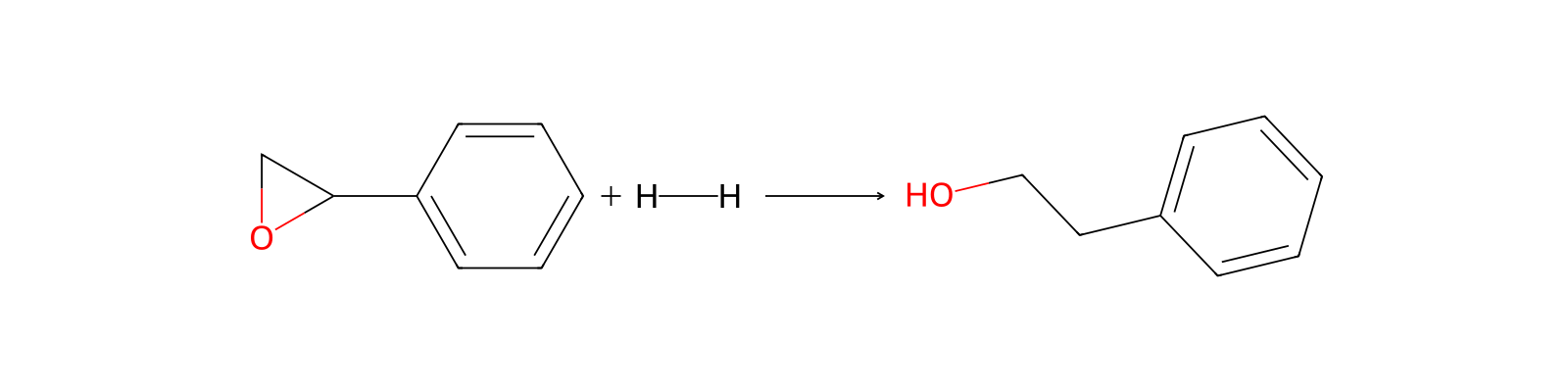
UsesStyrene oxide is is an important intermediate for organic synthesis and is widely used in organic synthesis, pharmaceutical preparation, and perfume production. For example, styrene oxide is added to hydrogen to produce monophenylethanol under the action of a catalyst. Styrene oxide has a wide range of uses, and can be used in floral fragrances for daily use, as well as in food. Styrene oxide is also an important intermediate for the synthesis of levamisole hydrochloride. L-imidazole hydrochloride is a broad-spectrum intestinal repellent that can be used by humans and animals.
UsesUsed as an intermediate in the production of styrene glycol and its derivatives; as a reactive dilutent in the epoxy resin industry; as a chemical intermediate for making bphenethyl alcohol, a fragrance material.
UsesA major (toxic) metabolite of Styrene (S687790), catalyzed by epoxide hydrolase.
General DescriptionStyrene oxide is a clear colorless straw-colored liquid with a sweet pleasant odor. (NTP, 1992)
Upstream & downstream products
Upstream raw materials
Downstream products
Suppliers50 total
国药集团化学试剂有限公司86-21-63210123 · [email protected]
梯希爱(上海)化成工业发展有限公司021-67121386 · [email protected]
阿诺西(上海)生物技术有限公司400-1107768 15058188853 · [email protected]
上海阿拉丁生化科技股份有限公司400-6206333 13167063860 · [email protected]
Shandong chuangyingchemical Co., Ltd.18853181302 · [email protected]
广州弗尔博生物科技有限公司19513720913 · [email protected]
武汉尚恩生物技术有限公司17764018385 · [email protected]
武汉欣扬瑞和化学科技有限公司13720274133 · [email protected]
邹平创新药业有限公司13561560789 · [email protected]
武汉欣扬瑞和化学科技有限公司153-07155313 15307155313 · [email protected]
河北展药生物科技有限公司15369953316 +8615369953316 · [email protected]
Dayang Chem (Hangzhou) Co.,Ltd.+86-0571-88938639 17705817739 · [email protected]
武汉绿景丰华生物科技有限公司19972070065 · [email protected]
Syntechem Co.,Ltd[email protected]
上海迈瑞尔生化科技有限公司4006356688 18621169109 · [email protected]
江苏普乐司生物科技有限公司0513-66017706 18551496367 · [email protected]
武汉市聚舜化工有限公司027-02783261126 18971318572 · [email protected]
阿法埃莎(中国)化学有限公司400-6106006 · [email protected]
安耐吉化学&3A(安徽泽升科技股份有限公司)400-0056266 · [email protected]
上海瀚鸿科技股份有限公司021-54306202 13764082696 · [email protected]
上海毕楷科技有限公司18516304666
山东西亚化学有限公司13355009207 13355009207 · [email protected]
玛雅试剂+86 (573) 82222445 (0)18006601000 452520369 · [email protected]
武汉吉业升化工有限公司027-13545242311 13545242311 · [email protected]
斯百全化学(上海)有限公司021-021-021-67601398-809-809-809 15221380277 · [email protected]
上海思域化工科技有限公司86-21-34053660 · [email protected]
赛默飞世尔科技(中国)有限公司800-810-5118 · [email protected]
北京伊诺凯科技有限公司400-810-7969 010-59572699 · [email protected]
上海特伯化学科技有限公司+86-21-60341587 · [email protected]
江苏艾康生物医药研发有限公司025-66113011 13913916777 · [email protected]
TCI AMERICA800-4238616 · [email protected]
TOKYO CHEMICAL INDUSTRY CO., LTD.03-36680489 · [email protected]
TCI Europe320-37350700 · [email protected]
武汉卡诺斯科技有限公司153-37111468 15337111468 · [email protected]
上海睿升化工科技有限公司+86-021-50935922
上海倍卓生物科技有限公司021-61119791,13386096464 · [email protected]
湖北鑫源顺医药化工有限公司13971561712, 13995564702, 027-50664929 · [email protected]
上海将来实业股份有限公司021-61552785 · [email protected]
日照力德士化工有限公司010-51268198 · [email protected]
美岚实业(上海)有限公司021-58958189 · [email protected]
上海爱蝶实业有限公司021-58957966 18930537195 · [email protected]
成都零六生物科技有限公司400-1166-196 13458535857 · [email protected]
广拓化学(上海)有限公司021-60899189-8001 18918189673 · [email protected]
雷丁试剂0510-85629785 18013409632 · [email protected]
上海麦克林生化科技股份有限公司15221275939 15221275939 · [email protected]
康迪斯化工(湖北)有限公司13125172151 · [email protected]
上海洽凡生化科技有限公司+86-021-61654350 · [email protected]
上海有朋化工有限公司021-69005955 13701776567 · [email protected]
上海凯赛化工有限公司021-33516722 13701817765 · [email protected]
上海彤源化工有限公司021-021-69182866 13701855675 · [email protected]
Additional notes
DefinitionChEBI: Styrene oxide is an epoxide that is oxirane in which one of the hydrogens has been replaced by a phenyl group. It has a role as a human xenobiotic metabolite. It derives from a hydride of a styrene.
Related reactions
248 records

Linked notes
Loading…