HomeMCPWorkbenchSkills
HomeWorkbenchNotificationsMe
llms.txt · MCP GuidePrivacy Policy · Terms of Service · Supportv1.8.3
  1. Home
  2. /Compound

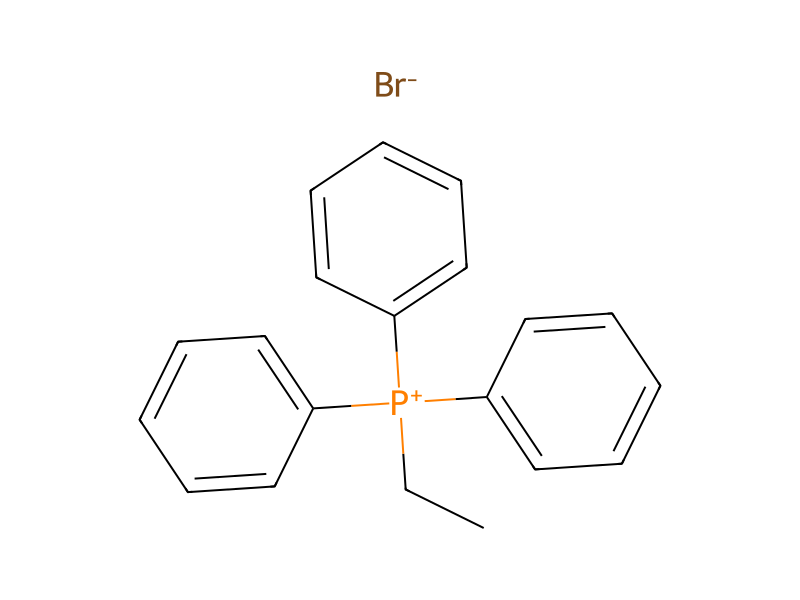
Phosphonium, ethyltriphenyl-, bromide (1:1)

HCID 73727
New reaction
Print
Basic informationNames & identifiersPropertiesSafety & regulationChemistry & industryRelated reactionsCompound notes
Substructure searchFind similar structures

Basic information

CAS
1530-32-1
Standard SMILES
CC[P+](c1ccccc1)(c1ccccc1)c1ccccc1.[Br-]
InChIKey
JHYNXXDQQHTCHJ-UHFFFAOYSA-M
Molecular formula
C20H20BrP
Average molar mass
371.2 g/mol
Monoisotopic mass
370.0486

Names & identifiers

Preferred name
Phosphonium, ethyltriphenyl-, bromide (1:1)
IUPAC
ethyl(triphenyl)phosphanium bromide
English name
Ethyltriphenylphosphonium bromide
Molecular formula
C20H20BrP
Molecular weight
371.25

Names & synonyms

Ethyltriphenylphosphonium bromide1530-32-1Triphenylethylphosphonium bromidePhosphonium, ethyltriphenyl-, bromideEthyltriphenylfosfonium bromidePhosphonium, ethyltriphenyl-, bromide (1:1)R85V84UL5Vethyl(triphenyl)phosphonium bromideEINECS 216-223-3TEP (ONIUM COMPOUND)NSC-60660DTXSID90883687
Show more names
TEPETPPBEthyl triphenyl phosphine bromideethyltriphenylphosphanium bromideAD182tbepbETPPBREthyl triphenyl phoAntioxidants Impurity 15
EC 216-223-3NSC 60660J237.373DRefChem:862303DTXCID501023191216-223-3Ethyl triphenyl phosphonium bromideC20H20BrP

Database identifiers

CAS
1530-32-1
PubChem CID
73727
DTXSID
DTXSID90883687
ChEMBL
CHEMBL353497
UNII
R85V84UL5V
EC Number
216-223-3

Properties

Computed structural properties

Topological polar surface area
0 Ų
Hydrogen bond donors
0
Hydrogen bond acceptors
1
Rotatable bonds
4
Heavy atoms
22
Formal charge
0
Complexity
247

Experimental & physicochemical properties

Physical DescriptionDry Powder

Physicochemical properties

Melting point
203 · 203-205 °C(lit.)
Boiling point
240 ℃[at · 240℃[at 101 325 Pa]
Density
1.38 · 1.38[at 20℃]
vapor pressure
0 · 0-0.1Pa at 20-25℃
Flash point
200 °C · 200 °C
storage temp.
Inert atmosphere,Room Temperature
solubility
174 g/l · 174g/l soluble
form
Crystalline Powder
color
White to off-white
Water Solubility
120 g/L · 120 g/L (23 ºC)
Sensitive
Hygroscopic
BRN
3599630 · 3599630
InChI
1S/C20H20P.BrH/c1-2-21(18-12-6-3-7-13-18,19-14-8-4-9-15-19)20-16-10-5-11-17-20;/h3-17H,2H2,1H3;1H/q+1;/p-1
InChIKey
JHYNXXDQQHTCHJ-UHFFFAOYSA-M
SMILES
[Br-].CC[P+](c1ccccc1)(c2ccccc2)c3ccccc3
LogP
-0.69 · -0.69--0.446 at 35℃
CAS DataBase Reference
1530 · 1530-32-1(CAS DataBase Reference)
FDA UNII
85 V84UL5V · R85V84UL5V
EPA Substance Registry System
Phosphonium, ethyltriphenyl-, bromide (1530-32-1)
UNSPSC Code
12352002 · 12352002
NACRES
22 · NA.22
Symbol(GHS)
5 · GHS05,GHS06
Signal word
Danger
Hazard statements
301 · H301-H318-H412
Precautionary statements
264 · P264-P270-P273-P280-P301+P310-P305+P351+P338
PPE
95 · dust mask type N95 (US), Eyeshields, Faceshields, Gloves
Hazard Codes
Xn,N,Xi
Risk Statements
22 · 22-51/53-36/37/38-21/22
Safety Statements
61 · 61-36/37/39-26-36
RIDADR
3077 · UN 3077 9/PG 3
WGK Germany
2 · 2
TSCA
TSCA listed
HazardClass
6.1 · 6.1
PackingGroup
III
HS Code
2931900090 · 2931900090
Storage Class
6.1 D · 6.1D - Non-combustible acute toxic Cat.3toxic hazardous materials or hazardous materials causing chronic effects
Hazard Classifications
3 OralAquatic · Acute Tox. 3 OralAquatic Chronic 3Eye Dam. 1
REACH Registrations
Active
Limited Quantities
5 kg · 5.0 kg (11 lbs) (solid)
Excepted Quantities
Max Inner Pack (30g or 30ml) and Max Outer Pack (1Kg or 1L)

Safety & regulation

Safety information is for reference only and does not replace the supplier’s Safety Data Sheet (SDS), applicable regulations, or professional assessment.

GHS classification

GHS Classification · 5 items

This chemical does not meet GHS hazard criteria for 1% (6 of 577) of reports.

Danger

H301 (46.4%): Toxic if swallowed [Danger Acute toxicity, oral]

P260, P261, P264, P264+P265, P270, P271, P273, P280, P301+P316, P301+P317, P302+P352, P304+P340, P305+P351+P338, P305+P354+P338, P317, P319, P321, P330, P332+P317, P337+P317, P362+P364, P391, P403+P233, P405, and P501 (click each P-code to see the statement)

Aggregated GHS information provided per 577 reports by companies from 29 notifications to the ECHA C&L Inventory. Each notification may be associated with multiple companies.

Hazard information

Regulatory Information · 4 items

Phosphonium, ethyltriphenyl-, bromide (1:1) is listed on the EPA's Chemical Data Reporting (CDR) system. Manufacturers and importers of Phosphonium, ethyltriphenyl-, bromide (1:1) are required to report information about their production and use of this chemical to the EPA under the Toxic Substances Control Act (TSCA). (40 eCFR Part 711)

PMN - indicates a commenced PMN (Pre-Manufacture Notices) substance.

REACH registered substance: Ethyltriphenylfosfonium bromide (EC: 216-223-3)

Ethyltriphenylphosphonium bromide: Does not have an individual approval but may be used under an appropriate group standard

Hazard Classes and CategoriesAcute Tox. 3 (46.4%)

Safety data

PPE
dust mask type N95 (US), Eyeshields, Faceshields, Gloves
wgk
2
tsca
TSCA listed
ridadr
UN 3077 9/PG 3
hs_code
2931900090
risk_code
22-51/53-36/37/38-21/22
Signal word
Danger
Symbol(GHS)
GHS05,GHS06
hazard_code
Xn,N,Xi
safety_code
61-36/37/39-26-36
hazard_class
6.1
Storage Class
6.1D - Non-combustible acute toxic Cat.3toxic hazardous materials or hazardous materials causing chronic effects
packing_group
III
Hazard statements
H301-H318-H412
Limited Quantities
5.0 kg (11 lbs) (solid)
Excepted Quantities
Max Inner Pack (30g or 30ml) and Max Outer Pack (1Kg or 1L)
REACH Registrations
Active
Hazard Classifications
Acute Tox. 3 OralAquatic Chronic 3Eye Dam. 1
Precautionary statements
P264-P270-P273-P280-P301+P310-P305+P351+P338

Chemistry & industry

Uses & manufacturing

U.S. Production2023: <75,000 lb
Industry UsesOther
General Manufacturing Information · 2 items

Plastics Material and Resin Manufacturing

Phosphonium, ethyltriphenyl-, bromide (1:1): ACTIVE

Applications · 4 items

Usessuzuki reaction

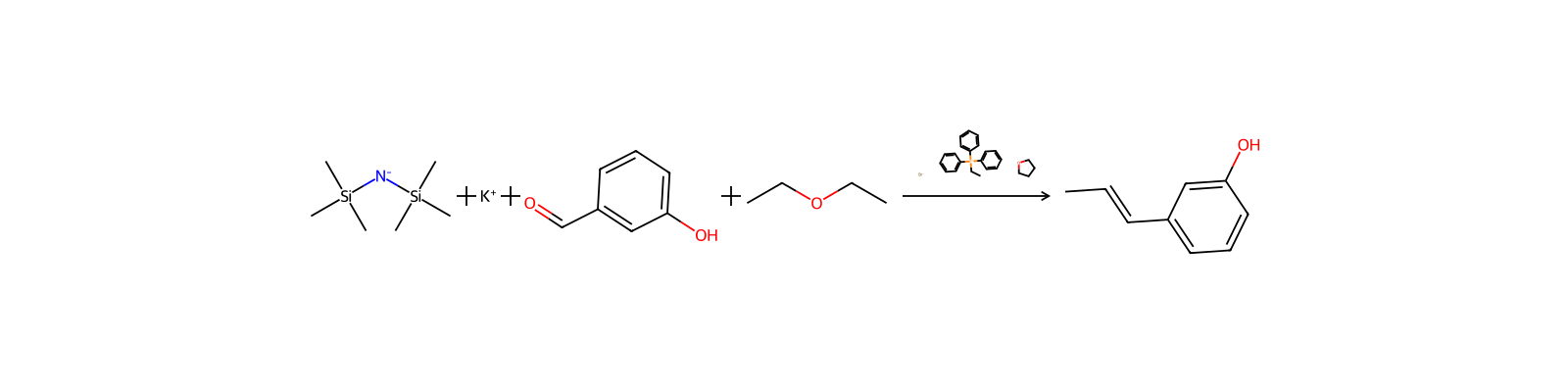
UsesEthyltriphenylphosphonium Bromide is used as a wittig reagent. Ethyltriphenylphosphonium Bromide and other phosphonium salts show antiviral activity.

UsesEthyltriphenylphosphonium Bromide (ETPB) is a phase transfer catalyst, used to accelerate the cure of phenolic-based epoxy resins, certain fluoroelastomer resins and thermosetting powder coatings. It is also used as catalysts in the synthesis of certain organic compounds and as a pharmaceutical intermediate. Ethyltriphenylphosphonium bromide acts as a reactant in the synthesis of D-amino acids from L-cysteine-derived thiazolidines, Leiodolide A through aldol reactions and Horner-Wadsworth-Emmons olefination. It is also used in the preparation of cycloalkanoindolines through diastereoselective intramolecular inimo-ene reactions. it is used as a reagent in solid-state metathesis polycondensation to prepare alkyl-dipropenylthiophene monomers. Mizoroki-Heck cyclization and cascading Tsuji-Trost cyclization reactions.

UsesPTC catalyst

Upstream & downstream products

Upstream raw materials

BromoethaneTriphenylphosphine

Downstream products

(Z)-2-methoxy-4-(prop-1-enyl)phenol4-trans-propenylveratroleIsoeugenylmethyletherBenzene,(1-methyl-1-propenyl)Phenol, 4-(1E)-1-propenyl-1-Benzyl-4-vinylpiperidine

Related reactions

151 records
New reaction record
HRID 8343 reaction equation
HRID 8343As catalyst
HRID 24700 reaction equation
HRID 24700As catalyst
HRID 35722 reaction equation
HRID 35722As catalyst
HRID 73534 reaction equation
HRID 73534As catalyst
HRID 129807 reaction equation
HRID 129807As catalyst
HRID 247683 reaction equation
HRID 247683As catalyst
HRID 275509 reaction equation
HRID 275509As catalyst
HRID 326602 reaction equation
HRID 326602As catalyst
PreviousPage 1 of 19

Compound notes

On this pageBasic informationNames & identifiersPropertiesSafety & regulationChemistry & industryRelated reactionsCompound notes