HomeMCPWorkbenchSkills
HomeWorkbenchNotificationsMe
llms.txt · MCP GuidePrivacy Policy · Terms of Service · Supportv1.8.3
  1. Home
  2. /Reaction

Hydrochloric Acid → 1-Allyl-3-nitrobenzene

HRID 326602
Print

Reaction equation

HRID 326602 reaction equation
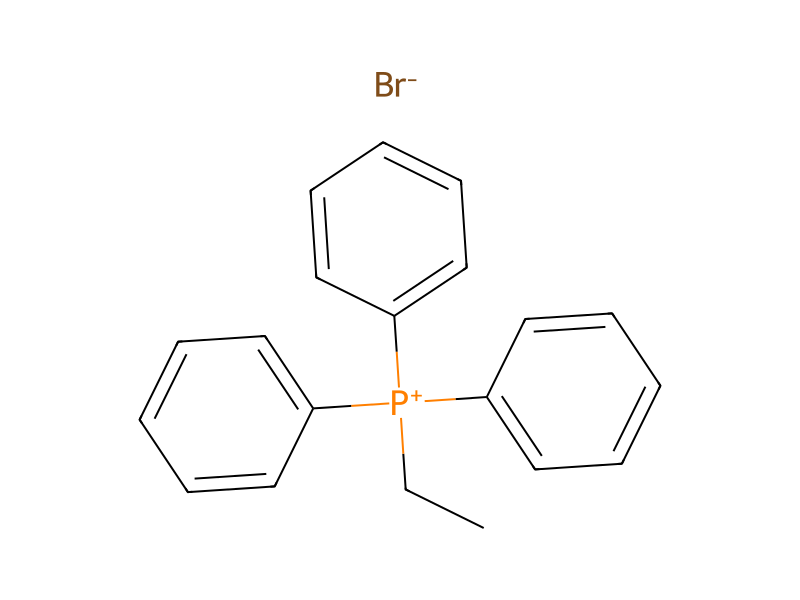
C([Li])CCC.[CH3:6][CH2:7][CH2:8][CH2:9][CH2:10][CH3:11].[N+:12]([C:15]1[CH:16]=C(C=C[CH:22]=1)C=O)([O-:14])=[O:13].Cl>[Br-].C([P+](C1C=CC=CC=1)(C1C=CC=CC=1)C1C=CC=CC=1)C.O1CCCC1.C(OCC)(=O)C>[CH2:8]([C:9]1[CH:22]=[C:15]([N+:12]([O-:14])=[O:13])[CH:16]=[CH:11][CH:10]=1)[CH:7]=[CH2:6]
ParticipantsProcedureWorkupSources & evidenceReaction notes

Participants

8

Reactant 4

HCID 313Hydrochloric AcidHCID 74493-NitrobenzaldehydeHCID 8058HexaneHCID 178418339Butyllithium

Product 1

HCID 101978411-Allyl-3-nitrobenzeneYield 70.6%

Reagents, catalysts & solvents 3

HCID 73727
Phosphonium, ethyltriphenyl-, bromide (1:1)
Catalyst
HCID 8028TetrahydrofuranSolvent2×
HCID 8857Ethyl AcetateSolvent

Procedure

To a suspension of ethyltriphenylphosphonium bromide (22 g) in tetrahydrofuran (150 ml) at -78° C. was added dropwise a solution of n-butyllithium in hexane (59.3 mmol). The mixture was left to warm to room temperature over 30 minutes, then cooled to -78° C. and a solution of 3-nitrobenzaldehyde (7.5 g) in tetrahydrofuran (50 ml) was added dropwise. The reaction was left to warm to room temperature over 1 hour, poured into 2M hydrochloric acid (100 ml) and ethyl acetate (100 ml). The separated aqueous layer was extracted with ethyl acetate, the organic layers were combined and washed with water, saturated sodium bicarbonate (2×50 ml), brine (2×50 ml) and dried over magnesium sulphate. The solvent was removed under reduced pressure and the crude product purified by column chromatography to give 3-(2-propenyl)nitrobenzene (5.72 g). δ(60 MHz, CDCl3) 1.9 (3H,2d, CH3), 5.9 (1 H, m, =CH--CH3), 6.3 (1H, 2d, AR--CH) and 7.3-8.1 (4H, m, ArH). To a solution of the above 3-(2-propenyl)-nitrobenzene (5.7 g) in ethyl acetate (20 ml) was added 10% palladium on carbon (0.57 g). This mixture was hydrogenated at 50 psi for 2 hours at room temperature, filtered through Hyflo and solvent evaporated to yield the crude product which was purified by column chromatography to give 3-propylaniline (4.7 g), δ (60 MHz, CDCl3) 0.9 (3H, t, CH3), 1.5 (2H, m, CH2CH3), 2.4 (2H, t, CH2CH2CH3), 3.4 (2H, bs, NH2) and 6.1 to 7.0 (4H, m, ArH).


Workup

  1. waitThe mixture was left
  2. temperaturecooled to -78° C.
  3. waitThe reaction was left
  4. temperatureto warm to room temperature over 1 hour
  5. extractionThe separated aqueous layer was extracted with ethyl acetate
  6. washwashed with water, saturated sodium bicarbonate (2×50 ml), brine (2×50 ml)
  7. dry with materialdried over magnesium sulphate
  8. customThe solvent was removed under reduced pressure
  9. customthe crude product purified by column chromatography

Sources & evidence

ORD record
ord-ad0b0bf431894523a613bccfdc04948d
Source dataset
uspto-grants-1993_12
DOI
10.6084/m9.figshare.5104873.v1
Patent number
US05270309

Reaction notes

On this pageParticipantsProcedureWorkupSources & evidenceReaction notes