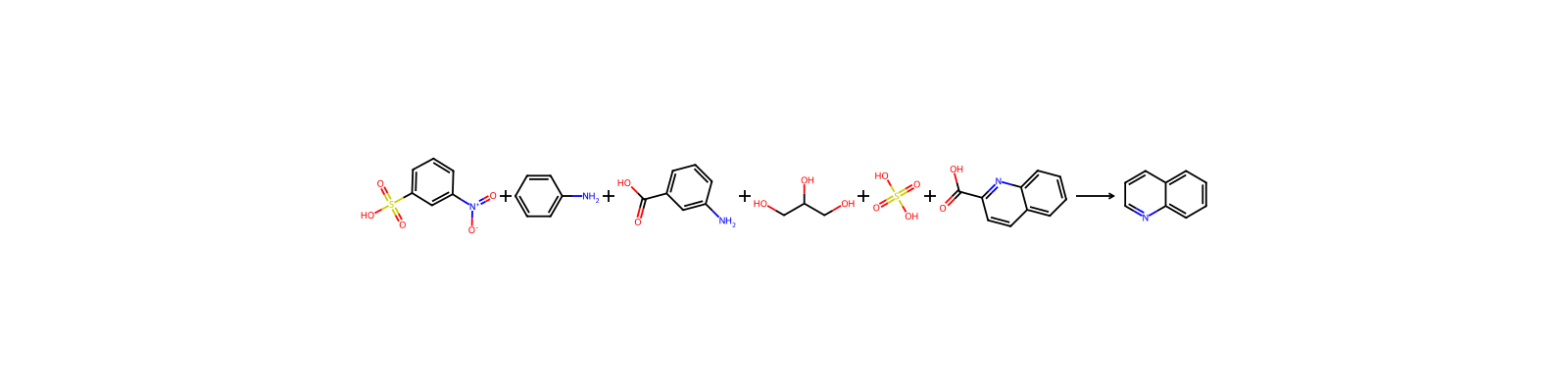
3-Nitrobenzenesulfonic acid

Basic information
- CAS
98-47-5- Standard SMILES
O=[N+]([O-])c1cccc(S(=O)(=O)O)c1- InChIKey
ONMOULMPIIOVTQ-UHFFFAOYSA-N- Molecular formula
- C6H5NO5S
- Average molar mass
- 203.17 g/mol
- Monoisotopic mass
- 202.98884326
Overview
RN for 3-nitrobenzenesulfonic acid
Names & identifiers
- Preferred name
- 3-Nitrobenzenesulfonic acid
- IUPAC
- 3-nitrobenzenesulfonic acid
- English name
- 3-Nitrobenzenesulfonic acid
- Molecular formula
- C6H5NO5S
- Molecular weight
- 203.17
Names & synonyms
3-NITROBENZENESULFONIC ACID98-47-5DTXSID3048079RefChem:95021DTXCID8028050202-671-7m-Nitrobenzenesulfonic acidBenzenesulfonic acid, 3-nitro-3-Nitrobenzenesulphonic acidm-Nitrobenzensulfonic acidKyselina 3-nitrobenzensulfonovaBenzenesulfonic acid, m-nitro-
Show more names
NSC 1662843-nitrophenylsulfonicacidm-nitro-benzenesulfonicacim-Nitrophenylsulfonic acid3-nitro-benzenesulfonicaci3-nitrobenzenesulphonicacidMETA-NITROBENZENESULPHONICACID
3-nitrobenzene-1-sulfonic acidKyselina nitrobenzen-m-sulfonovaMFCD000643833-Nitrophenylsulfonic acidCCRIS 3131EINECS 202-671-7m-nitrobenzene sulfonic acidBRN 0647983
Database identifiers
- CAS
98-47-5- PubChem CID
- 7387
- DTXSID
DTXSID3048079- ChEMBL
CHEMBL3306825- EC Number
- 202-671-7
- Nikkaji
- J54.506F、J877.310F
Properties
Computed structural properties
- XLogP
- 0
- Topological polar surface area
- 109 Ų
- Hydrogen bond donors
- 1
- Hydrogen bond acceptors
- 5
- Rotatable bonds
- 1
- Heavy atoms
- 13
- Formal charge
- 0
- Complexity
- 287
Experimental & physicochemical properties
Chemical ClassesNitrogen Compounds -> Nitrobenzesulfonic Acids
Physical DescriptionCrystalline powder; [TCI America MSDS]
Ionization Efficiency
Negative
0.8
10.5
Agilent 6495
Electrospray ionization
ammonia (10nM)
Physicochemical properties
- Melting point
- 103 · 103-104℃
- Density
- 1.637 · 1.637
- refractive index
- 1.538 · 1.5380 (estimate)
- Water Solubility
- Completely soluble in water
- form
- solid
- pka
- -1.21 · -1.21±0.18(Predicted)
- color
- White to Light yellow
- CAS DataBase Reference
- 98 · 98-47-5(CAS DataBase Reference)
- EWG's Food Scores
- 1 · 1
- EPA Substance Registry System
- 3 · Benzenesulfonic acid, 3-nitro- (98-47-5)
- Symbol(GHS)
- 5 · GHS05
- Signal word
- Danger
- Hazard statements
- 314 · H314
- Precautionary statements
- 260 · P260-P280-P301+P330+P331
- Risk Statements
- 34 · 34
- Safety Statements
- 26 · 26-36/37/39
- RIDADR
- 2305 · 2305
- RTECS
- 7190000 · DB7190000
- TSCA
- TSCA listed
- HazardClass
- 8 · 8
- PackingGroup
- II
- HS Code
- 2904990090 · 2904990090
Safety & regulation
Safety information is for reference only and does not replace the supplier’s Safety Data Sheet (SDS), applicable regulations, or professional assessment.
GHS classification
GHS Classification
Danger
H314 (66.7%): Causes severe skin burns and eye damage [Danger Skin corrosion/irritation]
P260, P264, P264+P265, P280, P301+P330+P331, P302+P361+P354, P304+P340, P305+P351+P338, P305+P354+P338, P316, P317, P321, P337+P317, P363, P405, and P501 (click each P-code to see the statement)
Aggregated GHS information provided per 3 reports by companies from 3 notifications to the ECHA C&L Inventory. Each notification may be associated with multiple companies.
Hazard information
Hazards SummaryA mild skin and severe eye irritant; [RTECS] Causes burns; Inhalation may cause corrosive injuries to upper respiratory tract; [TCI America MSDS] See Trinitrobenzenesulfonic acid. See Sodium 3-nitrobenzenesulfonate.
Hazard Classes and CategoriesSkin Corr. 1B (66.7%)
Toxicology
Adverse EffectsDermatotoxin - Skin burns.
Safety data
- tsca
- TSCA listed
- rtecs
- DB7190000
- ridadr
- 2305
- hs_code
- 2904990090
- risk_code
- 34
- Signal word
- Danger
- Symbol(GHS)
- GHS05
- safety_code
- 26-36/37/39
- hazard_class
- 8
- packing_group
- II
- Hazard statements
- H314
- Precautionary statements
- P260-P280-P301+P330+P331
Chemistry & industry
Uses & manufacturing
General Manufacturing InformationBenzenesulfonic acid, 3-nitro-: ACTIVE
Applications
UsesOrganic synthesis. The sodium salt is a protective antireduction agent.
Uses3-Nitrobenzenesulfonic acid is used primarily as a mild oxidizing agent or as a precursor for colorant intermediates. In the former case it is used in processing certain anthraquinone intermediates (e.g., amination of anthraquinone-1-sulfonic acid to give 1- aminoanthraquinone) or as a dye-printing auxiliary to obtain resist effects with, for example, vat dyes. Reduction of 3-nitrobenzenesulfonic acid (usually as a liquor) to the important metanilic acid is achieved with iron or by catalytic hydrogenation. The alternative reduction with zinc and alkali or with sodium amalgam yields hydrazobenzene-3,3'-disulfonic acid, which rearranges to benzidine-2,2' - disulfonic acid [117-61-3] on treatment with acid.
Upstream & downstream products
Downstream products
Related reactions
27 records


Compound notes
Loading…