HomeMCPWorkbenchSkills
HomeWorkbenchNotificationsMe
llms.txt · MCP GuidePrivacy Policy · Terms of Service · Supportv1.8.0
  1. Home
  2. /Compound

4-Toluenesulfonyl chloride

HCID 7397
New noteNew reactionRequest quotes
Print preview

Completing data — refresh the page later to see the latest

Basic informationOverviewNames & identifiersPropertiesSafety & regulationChemistry & industryRelated reactionsCompound notes
Substructure searchFind similar structures

Basic information

CAS
98-59-9
Standard SMILES
Cc1ccc(S(=O)(=O)Cl)cc1
InChIKey
YYROPELSRYBVMQ-UHFFFAOYSA-N
Molecular formula
C7H7ClO2S
Average molar mass
190.65 g/mol
Monoisotopic mass
189.9855283

Overview

P-toluene sulfonylchloride appears as a white to gray powdered solid with a distinctive odor. Insoluble in water and denser than water. Contact may irritate skin, eyes and mucous membranes. May be toxic by ingestion, inhalation and skin absorption. Used to make other chemicals.

Names & identifiers

Preferred name
4-Toluenesulfonyl chloride
IUPAC
4-methylbenzenesulfonyl chloride
English name
Tosyl chloride
Molecular formula
C7H7ClO2S
Molecular weight
190.65

Names & synonyms

4-Toluenesulfonyl chlorideRefChem:169391P-TOLUENESULFONYL CHLORIDE98-59-9Tosyl chloride4-Methylbenzenesulfonyl chloridep-Tosyl chloride4-methylbenzene-1-sulfonyl chloridep-Toluenesulphonyl chloridep-Tolylsulfonyl chloridep-Toluenesulfochloridep-Toluenesulfonic acid chloride
Show more names
TsClTOS-CLPTSCPARA TOLUENE SULFONYL CHLORIDEp-toluenesulfonyl
tosylchloridep-Methylbenzenesulfonyl chloridepara-Toluenesulfonyl chloride4-Tosyl chlorideBenzenesulfonyl chloride, 4-methyl-4-toluene sulfonyl chloridep-Toluene sulphonyl chlorideToluenesulfonyl chloride

Database identifiers

CAS
98-59-9
PubChem CID
7397
DTXSID
DTXSID1052660
UNII
027KYN78B4
EC Number
202-684-8
Nikkaji
J3.580G

Properties

Computed structural propertiesFilling in

XLogP
3
Topological polar surface area
42.5 Ų
Hydrogen bond donors
0
Hydrogen bond acceptors
2
Rotatable bonds
1
Heavy atoms
11
Formal charge
0
Complexity
209

Experimental & physicochemical properties

Chemical ClassesToxic Gases & Vapors -> Acid Halides
SpringerMaterials PropertiesSchoenflies notation
LogP · 2 items

3.49

3.25

Density · 2 items

1.3 g/cm³

1.33 @25 °C

Color/Form · 2 items

CRYSTALS

TRICLINIC CRYSTALS FROM ETHER OR PETROLEUM ETHER

Solubility · 2 items

INSOL IN WATER; FREELY SOL IN ALCOHOL, BENZENE, ETHER

Solubility in water: reaction

Flash Point128 °C c.c.
Boiling Point146 °C @ 15 MM HG
Melting Point · 2 items

69-71 °C

69-71 °C

Vapor Density

Safety & regulation

Safety information is for reference only and does not replace the supplier’s Safety Data Sheet (SDS), applicable regulations, or professional assessment.

GHS classification

GHS Classification · 5 items

This chemical does not meet GHS hazard criteria for 5.7% (53 of 926) of reports.

Danger

H290 (20%): May be corrosive to metals [Warning Corrosive to Metals]

P234, P260, P261, P264, P264+P265, P271, P272, P280, P301+P330+P331, P302+P352, P302+P361+P354, P304+P340, P305+P354+P338, P316, P317, P319, P321, P332+P317, P333+P317, P362+P364, P363, P390, P403+P233, P405, P406, and P501 (click each P-code to see the statement)

Aggregated GHS information provided per 926 reports by companies from 25 notifications to the ECHA C&L Inventory. Each notification may be associated with multiple companies.

Hazard information

Regulatory Information · 3 items

Chemical: Benzenesulfonyl chloride, 4-methyl-

REACH registered substance: Tosyl chloride (EC: 202-684-8)

4-Toluenesulphonyl chloride: Does not have an individual approval but may be used under an appropriate group standard

DOT LabelCorrosive
Fire Hazards · 2 items

Excerpt from ERG Guide 154 [Substances - Toxic and/or Corrosive (Non-Combustible)]:

Combustible. Gives off irritating or toxic fumes (or gases) in a fire.

Health HazardsExcerpt from ERG Guide 154 [Substances - Toxic and/or Corrosive (Non-Combustible)]:
Hazards Summary · 1 item

A skin, eye, and respiratory tract irritant; [HSDB] Reacts violently with water evolving hydrochloric acid; A corrosive substance that can cause injury to the skin, eyes, and respiratory tract; Inhalation may cause chemical pneumonitis; [MSDSonline] Slowly hydrolyzes to strong acids (HCl and p-toluenesulfonic acid); Severely irritating to skin and eyes in animal testing; [AIHA] Contact dermatitis documented in a chemist; [Kanerva, p. 1841]

Chemistry & industry

Uses & manufacturing

Uses · 2 items

Used to make other organic chemicals; [Hawley] Used to make food additives, foaming agents for plastics and rubber, riboflavin, antithrombotic drugs, and dye condensing agents; [eChemPortal: SIDSUNEP]

ORGANIC SYNTHESIS

Methods of ManufacturingMADE BY TREATING TOLUENE WITH CHLOROSULFONIC ACID.
General Manufacturing Information · 2 items

Benzenesulfonyl chloride, 4-methyl-: ACTIVE

10 OF 16 MERCURATED SULFONAMIDES TESTED AS BACTERICIDES & FUNGICIDES AGAINST E COLI, RHIZOCTONIA SOLANI, S AUREUS, A NIGER, & CHETOMIUM GLOBOSSUM WERE MORE TOXIC THAN ZINEB. SULFONAMIDES PREPD BY CONDENSING ANILINE BASE WITH P-TOLUENESULFONYL CHLORIDE IN PRESENCE OF PYRIDINE + BENZENE.

Applications · 2 items

UsesTosyl chloride (also known as p-Toluenesulfonyl chloride), is used as a precursor in the production of dyes and saccharin. It acts as a dehydrating agent in the conversion of urea to carbodiimide and converts alcohols into the corresponding toluenesulfonate esters. It is also employed as a flow-promoting agent for paints, an adhesive, nitrocellulose, coating material and as a plasticizer for polyamides. Furthermore, it serves as an antistatic agent, as a gloss enhancer in plastic film preparations and as a basic material of electroplating solutions.

General DescriptionTosyl chloride is a white to gray powdered solid with a distinctive odor. It can be used in organic synthesis, to make nitriles, isocyanides and diimides.

Preparation methods · 1 item

PreparationTosyl chloride is a by-product from the production of ortho-toluenesulfonyl chloride (a precursor for the synthesis of the common food additive and catalyst saccharin), via the chlorosulfonation of toluene:CH3C6H5+ SO2Cl2→ CH3C6H4SO2Cl + HCl

Related reactions

7,091 records
New reaction record
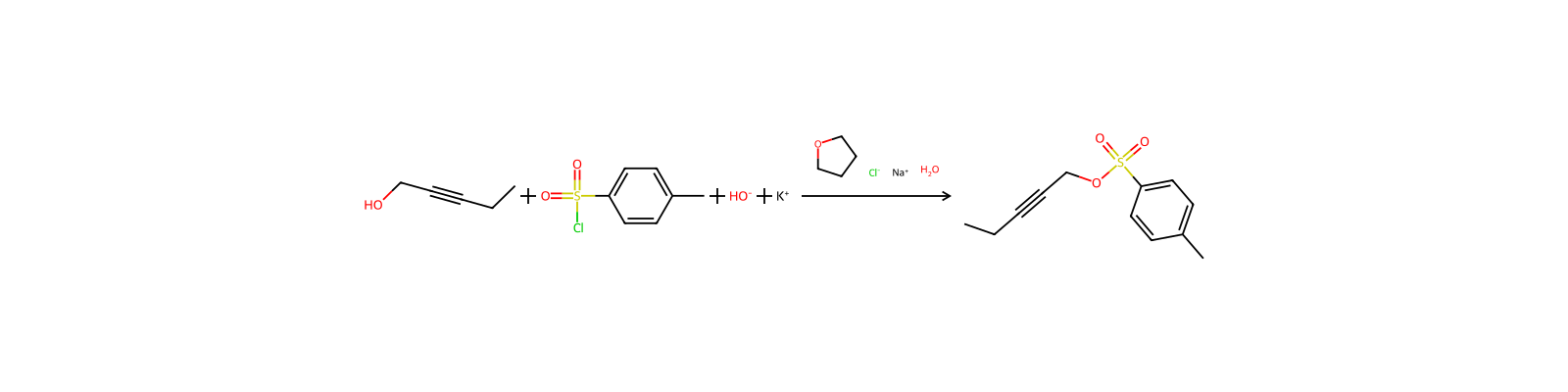
HRID 853 reaction equation
HRID 853As reactantuspto-grants-1998_03
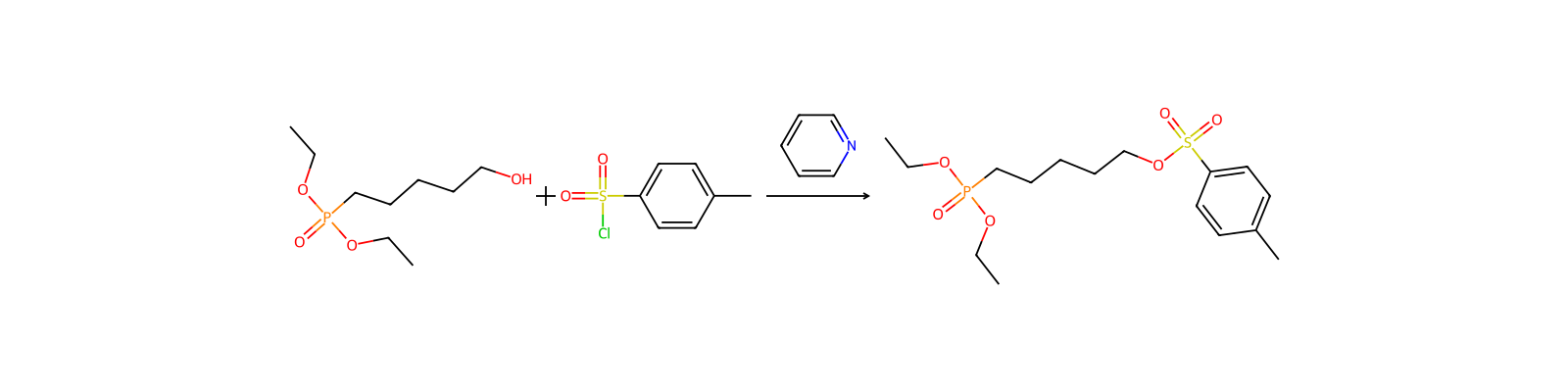
HRID 1890 reaction equation
HRID 1890As reactantuspto-grants-1998_03
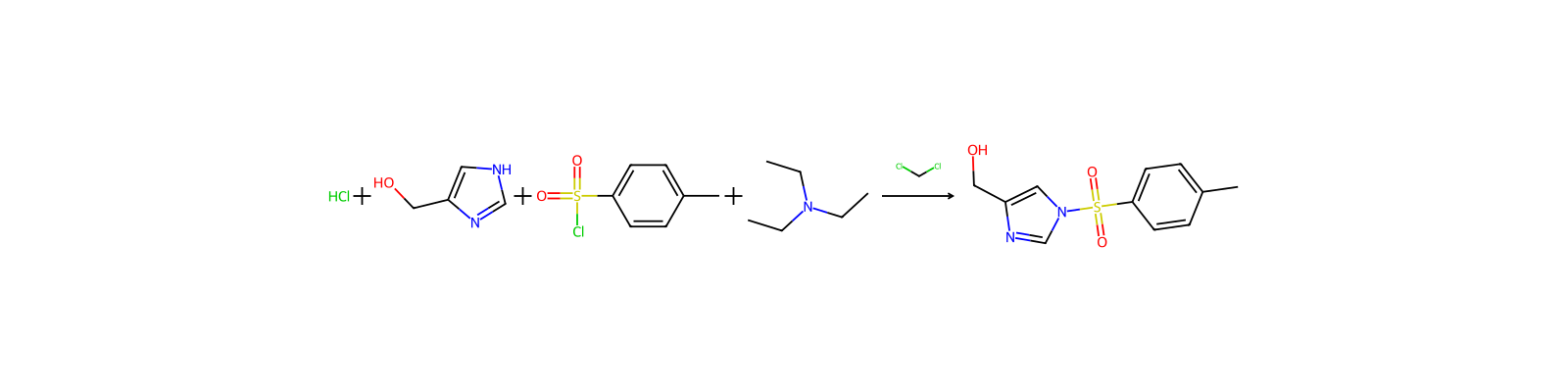
HRID 1935 reaction equation
HRID 1935As reactantuspto-grants-1998_03
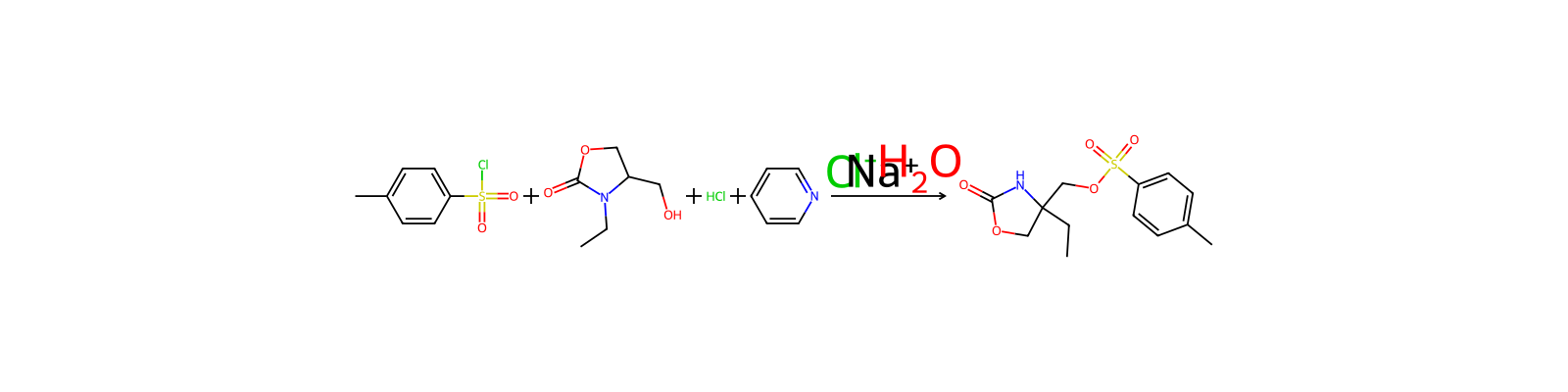
HRID 1936 reaction equation
HRID 1936As reactantuspto-grants-1998_03
HRID 1987 reaction equation
HRID 1987As reactantuspto-grants-1998_03
HRID 2010 reaction equation
HRID 2010As reactantuspto-grants-1998_03
HRID 2063 reaction equation
HRID 2063As reactantuspto-grants-1998_03
HRID 2211 reaction equation
HRID 2211As reactantuspto-grants-1998_03
Page 1 of 500

Compound notes

Loading…

On this pageBasic informationOverviewNames & identifiersPropertiesSafety & regulationChemistry & industryRelated reactionsCompound notes
More actions
New noteNew reactionRequest quotes
Relative vapor density (air = 1): 6.6
Vapor Pressure · 2 items

Vapor pressure, Pa at 25 °C: 0.16

1 [mm Hg] @88 °C

Physical Description · 3 items

P-toluene sulfonylchloride appears as a white to gray powdered solid with a distinctive odor. Insoluble in water and denser than water. Contact may irritate skin, eyes and mucous membranes. May be toxic by ingestion, inhalation and skin absorption. Used to make other chemicals.

A white to gray solid; [CAMEO] Hygroscopic; [eChemPortal: SIDSUNEP] White or light yellow crystalline solid; [MSDSonline]

COLOURLESS-TO-YELLOW HYGROSCOPIC CRYSTALS WITH PUNGENT ODOUR.

Physicochemical properties

Melting point
65 · 65-69 °C(lit.)
Boiling point
134 °C10 · 134 °C10 mm Hg(lit.)
Density
1 · 1,006 g/cm3
bulk density
800 kg/m3 · 800kg/m3
vapor pressure
1 mm · 1 mm Hg ( 88 °C)
RTECS
8929000 · DB8929000
Flash point
128 °C · 128 °C
storage temp.
30 °C · Store below +30°C.
solubility
0.2 g/mL, · methylene chloride: 0.2 g/mL, clear
form
Crystalline Powder
color
White
Water Solubility
hydrolyses
Sensitive
Moisture Sensitive
Merck
14 · 14,9534
BRN
607898 · 607898
Henry's Law Constant
1 · 1.0×100 mol/(m3Pa) at 25℃, Zhang et al. (2010)
Stability
Stable. Substances to be avoided include strong bases and strong oxidizing agents and water. Moisture sensitive.
InChI
1S/C7H7ClO2S/c1-6-2-4-7(5-3-6)11(8,9)10/h2-5H,1H3
InChIKey
YYROPELSRYBVMQ-UHFFFAOYSA-N
SMILES
Cc1ccc(cc1)S(Cl)(=O)=O
CAS DataBase Reference
98 · 98-59-9(CAS DataBase Reference)
FDA UNII
27 KYN78B4 · 027KYN78B4
NIST Chemistry Reference
4 · Benzenesulfonyl chloride, 4-methyl-(98-59-9)
EPA Substance Registry System
p-Toluenesulfonyl chloride (98-59-9)
UNSPSC Code
12352106 · 12352106
NACRES
22 · NA.22
Symbol(GHS)
5 · GHS05
Signal word
Danger
Hazard statements
314 · H314-H402-H290
Precautionary statements
501 · P501-P273-P260-P234-P264-P280-P390-P303+P361+P353-P301+P330+P331-P363-P304+P340+P310-P305+P351+P338+P310-P406-P405
PPE
3 · Eyeshields, Faceshields, Gloves, type P3 (EN 143) respirator cartridges
Hazard Codes
C,Xi
Risk Statements
34 · 34-29-41-38
Safety Statements
26 · 26-36/37/39-45-27-39
RIDADR
3261 · UN 3261 8/PG 2
WGK Germany
1 · 1
F
9 · 9-21
Hazard Note
Corrosive
TSCA
TSCA listed
HazardClass
8 · 8
PackingGroup
II
HS Code
29049020 · 29049020
Storage Class
8 A · 8A - Combustible corrosive hazardous materials
Hazard Classifications
1 Met · Eye Dam. 1Met. Corr. 1Skin Irrit. 2Skin Sens. 1
Hazardous Substances Data
98 · 98-59-9(Hazardous Substances Data)
Toxicity
50 orally · LD50 orally in Rabbit: 4680 mg/kg
REACH Registrations
Active
Limited Quantities
1 Kg · 1 Kg (2.2 lbs) (solid)
Excepted Quantities
Max Inner Pack (30g or 30ml) and Max Outer Pack (500g or 500ml)
Reactive GroupAcyl Halides, Sulfonyl Halides, and Chloroformates
UN ClassificationUN Hazard Class: 8; UN Pack Group: II
Chemical DangersDecomposes on heating. This produces toxic and corrosive fumes including sulfur oxides and hydrogen chloride. Reacts with water and moist air. This produces hydrogen chloride (see ICSC 0163).
Packaging and LabellingUnbreakable packaging. Put breakable packaging into closed unbreakable container.
Air and Water ReactionsInsoluble in water.
Hazard Classes and CategoriesMet. Corr. 1 (20%)

Safety & protection

Fire Fighting · 2 items

Excerpt from ERG Guide 154 [Substances - Toxic and/or Corrosive (Non-Combustible)]:

Use dry powder, carbon dioxide. NO water. NO foam.

First Aid Measures · 4 items

Fresh air, rest.

Remove contaminated clothes. Rinse skin with plenty of water or shower.

Rinse with plenty of water (remove contact lenses if easily possible). Refer immediately for medical attention.

Rinse mouth. Give one or two glasses of water to drink. Refer for medical attention .

First AidExcerpt from ERG Guide 154 [Substances - Toxic and/or Corrosive (Non-Combustible)]:
Safe StorageDry. Well closed. Store in an area without drain or sewer access.
Nonfire Spill ResponseExcerpt from ERG Guide 154 [Substances - Toxic and/or Corrosive (Non-Combustible)]:
Spillage Disposal · 1 item

Personal protection: filter respirator for organic gases and particulates adapted to the airborne concentration of the substance. Do NOT let this chemical enter the environment. Sweep spilled substance into containers. Carefully collect remainder. Then store and dispose of according to local regulations.

Isolation and EvacuationExcerpt from ERG Guide 154 [Substances - Toxic and/or Corrosive (Non-Combustible)]:
Eye PreventionWear safety goggles or eye protection in combination with breathing protection if powder.
Fire PreventionNO open flames.
Inhalation RiskA harmful concentration of airborne particles can be reached quickly when dispersed, especially if powdered.
Skin PreventionProtective gloves.
Exposure PreventionPREVENT DISPERSION OF DUST!

Toxicology

Adverse EffectsDermatotoxin - Skin burns.
Signs and Symptoms · 4 items

Cough.

Redness. Pain.

Redness. Pain.

Sore throat.

ICSC Environmental DataThe substance is harmful to aquatic organisms.
Human Toxicity Excerpts · 3 items

...PRODUCE SEVERE PRIMARY IRRITATION OF EYES, SKIN, OR RESP TRACT. DELAYED VESICATION IS NOT UNCOMMON. SENSITIZATION MAY ALSO OCCUR... /ACID HALIDES/

STRONG IRRITANT & VESICANT. /FROM TABLE/

WHILE CUMULATIVE TOXIC EFFECTS ARE THEORETICALLY POSSIBLE IF ORIGINAL ORG ACID IS ALSO KNOWN TO BE CUMULATIVE IN ACTION...IRRITANT PROPERTIES OF THE HALIDE PREVENT VOLUNTARY EXPOSURE TO SIGNIFICANT AMOUNTS... /ACID HALIDES/

Non-Human Toxicity Excerpts · 1 item

REMSEN FAHLBERG SACCHARIN & ITS CONTAMINANTS (O-TOLUENE SULFONAMIDE (OTS), P-TOLUENE SULFONAMIDE (PTS), O-SULFAMOYL BENZOIC ACID, P-SULFAMOYL BENZOIC ACID) WERE TESTED FOR MUTAGENICITY. CONTAMINANTS OTS & ITS ISOMER PTS WERE MUTAGENIC IN AMES TEST & BASC TEST IN DROSOPHILA.

Safety data

F
9-21
PPE
Eyeshields, Faceshields, Gloves, type P3 (EN 143) respirator cartridges
wgk
1
tsca
TSCA listed
ridadr
UN 3261 8/PG 2
hs_code
29049020
Toxicity
LD50 orally in Rabbit: 4680 mg/kg
risk_code
34-29-41-38
Signal word
Danger
Symbol(GHS)
GHS05
hazard_code
C,Xi
hazard_note
Corrosive
safety_code
26-36/37/39-45-27-39
hazard_class
8
Storage Class
8A - Combustible corrosive hazardous materials
packing_group
II
Hazard statements
H314-H402-H290
Limited Quantities
1 Kg (2.2 lbs) (solid)
Excepted Quantities
Max Inner Pack (30g or 30ml) and Max Outer Pack (500g or 500ml)
REACH Registrations
Active
Hazard Classifications
Eye Dam. 1Met. Corr. 1Skin Irrit. 2Skin Sens. 1
Precautionary statements
P501-P273-P260-P234-P264-P280-P390-P303+P361+P353-P301+P330+P331-P363-P304+P340+P310-P305+P351+P338+P310-P406-P405
Hazardous Substances Data
98-59-9(Hazardous Substances Data)

Upstream & downstream products

Upstream raw materials

O-TOLUENESULFONYL CHLORIDETolueneChlorosulfonic acidBenzenesulfonyl chloride

Downstream products

ACID RED 114ACID ORANGE 632-CHLOROETHYL P-TOLUENESULFONATEAMITRAZ METABOLITE HYDROCHLORIDETracid Brilliant Red BDodecyl 4-methylbenzenesulfonate(4S)-4-hydroxy-3-methyl-2-prop-2-ynyl-cyclopent-2-en-1-oneMethyl 3-amino-4-phenylthiophene-2-carboxylateN,N'-BIS(ETHYLENE)-P-TOLUENESULFONAMIDETracid Brilliant Red 10b1-Isoquinolinecarbonitrile1-[(4-METHYLPHENYL)SULFONYL]-1H-INDOLE-3-CARBALDEHYDELevamisole1-[(4-Methylphenyl)sulfonyl]-1H-imidazoleFAST RED B SALTN-(p-Tolylsulphonyl)-L-glutamic acidBENPROPERINENORMEPERIDINE1-(3-Dimethylaminopropyl)-3-ethylcarbodiimideAcid Orange 67Boc-L-beta-HomoprolineBenzo-15-crown-5P-TOLUENESULFONIC ACID N-OCTADECYL ESTER5-Methyl-L-tryptophanN,N-BIS(2-CHLOROETHYL)-P-TOLUENESULFONAMIDE4-Methylphenylsulfonylurea4-Methylbenzenesulfonhydrazide1,5-Diazabicyclo[4.3.0]non-5-eneBENZYL GLYCIDYL ETHER4-phenyl-1-(p-tolylsulphonyl)piperidine-4-carboxylic acidCHLORDIMEFORM2-Fluoroethyl 4-methylbenzenesulfonateN-Methyl-N-nitrosotoluene-4-sulphonamideEthyl p-toluenesulfonate(3R)-(+)-3-(DIMETHYLAMINO)PYRROLIDINEAcid Red 1112,2-DIMETHYL-1,3-DIOXOLAN-4-YLMETHYL P-TOLUENESULFONATEACID YELLOW 76 (C.I. 18850)Methyl p-toluenesulfonateN-Ethyl-p-toluenesulfonamide