HomeMCPWorkbenchSkills
HomeWorkbenchNotificationsMe
llms.txt · MCP GuidePrivacy Policy · Terms of Service · Supportv1.8.3
  1. Home
  2. /Compound

Tetrabutylammonium Bromide

HCID 74236
New reaction
Print
Basic informationOverviewNames & identifiersPropertiesSafety & regulationChemistry & industryRelated reactionsCompound notes
Substructure searchFind similar structures

Basic information

CAS
1643-19-2
Standard SMILES
CCCC[N+](CCCC)(CCCC)CCCC.[Br-]
InChIKey
JRMUNVKIHCOMHV-UHFFFAOYSA-M
Molecular formula
C16H36N.Br
Average molar mass
322.37 g/mol
Monoisotopic mass
321.20311

Overview

Tetrabutylammonium bromide is a tetrabutylammonium salt with bromide as the anionic counterpart. It is an organic bromide salt and a tetrabutylammonium salt.

Names & identifiers

Preferred name
Tetrabutylammonium Bromide
IUPAC
tetrabutylazanium bromide
English name
Tetrabutylammonium bromide
Molecular formula
C16H36BrN
Molecular weight
322.37

Names & synonyms

Tetrabutylammonium bromide1643-19-21-Butanaminium, N,N,N-tributyl-, bromide (1:1)N,N,N-tributylbutan-1-aminium bromide1-Butanaminium, N,N,N-tributyl-, bromideDTXSID4044400TBAB SUMQUAT 6065VJZ168I98RBu(4)NBrDTXCID2024400CHEBI:51993RefChem:6293
Show more names
TBABrBu4NBrTABA1-butanaminiumTetrabutylALIQUAT(R) 100
216-699-2Tetra-N-butylammonium bromideTBABTetrabutyl ammonium bromidetetrabutylazanium bromideTetrabutyl-ammonium bromideTetrabutylammoniumbromideN,N,N-Tributyl-1-butanaminium bromide

Database identifiers

CAS
1643-19-2
PubChem CID
74236
DTXSID
DTXSID4044400
ChEMBL
CHEMBL60696
ChEBI
CHEBI:51993
UNII
VJZ168I98R
EC Number
216-699-2

Properties

Computed structural properties

Topological polar surface area
0 Ų
Hydrogen bond donors
0
Hydrogen bond acceptors
1
Rotatable bonds
12
Heavy atoms
18
Formal charge
0
Complexity
116

Experimental & physicochemical properties

Chemical ClassesNitrogen Compounds -> Quaternary Amines
CosmeticsAntistatic; Antimicrobial
Physical Description · 2 items

Liquid; Dry Powder

Hygroscopic solid; [Sigma-Aldrich MSDS]

Physicochemical properties

Melting point
102 · 102-106 °C(lit.)
Boiling point
102 °C · 102 °C
Density
1.039 g/mL · 1.039 g/mL at 25 °C
bulk density
700 kg/m3 · 700kg/m3
vapor pressure
0 Pa · 0Pa at 25℃
refractive index
20 · n20/D 1.422
Flash point
100 ℃ · 100℃
storage temp.
30 °C · Store below +30°C.
solubility
2 O: · H2O: 0.1 g/mL, clear, colorless
form
Crystalline Powder

Safety & regulation

Safety information is for reference only and does not replace the supplier’s Safety Data Sheet (SDS), applicable regulations, or professional assessment.

GHS classification

GHS Classification · 6 items

This chemical does not meet GHS hazard criteria for 13.7% (70 of 511) of reports.

Warning

H302 (43.2%): Harmful if swallowed [Warning Acute toxicity, oral]

P203, P261, P264, P264+P265, P270, P271, P273, P280, P301+P317, P302+P352, P304+P340, P305+P351+P338, P318, P319, P321, P330, P332+P317, P337+P317, P362+P364, P391, P403+P233, P405, and P501 (click each P-code to see the statement)

Aggregated GHS information provided per 511 reports by companies from 35 notifications to the ECHA C&L Inventory. Each notification may be associated with multiple companies.

Warning

Hazard information

Regulatory Information · 4 items

Chemical: 1-Butanaminium, N,N,N-tributyl-, bromide

1-Butanaminium, N,N,N-tributyl-, bromide (1:1) is listed on the EPA's Chemical Data Reporting (CDR) system. Manufacturers and importers of 1-Butanaminium, N,N,N-tributyl-, bromide (1:1) are required to report information about their production and use of this chemical to the EPA under the Toxic Substances Control Act (TSCA). (40 eCFR Part 711)

REACH registered substance: Tetrabutylammonium bromide (EC: 216-699-2)

Tetrabutylammonium bromide: Does not have an individual approval but may be used under an appropriate group standard

Other Safety InformationIMAP assessments - Tetrabutylammonium salts: Human health tier II assessment
Hazards SummaryA skin and strong eye irritant; [Sigma-Aldrich MSDS]
Hazard Classes and Categories · 2 items

Acute Tox. 4 (43.2%)

Acute toxicity (ingestion) - category 4

Safety & protection

Chemistry & industry

Pharmacology

MeSH Pharmacological Classification · 1 item

Purifying or cleansing agents, usually salts of long-chain aliphatic bases or acids, that exert cleansing (oil-dissolving) and antimicrobial effects through a surface action that depends on possessing both hydrophilic and hydrophobic properties.

Uses & manufacturing

U.S. Production2023: 250,000 - <550,000 lb
Industry UsesOther
Use ClassificationCosmetics -> Antistatic; Antimicrobial
General Manufacturing Information · 2 items

Pesticide, Fertilizer, and Other Agricultural Chemical Manufacturing

1-Butanaminium, N,N,N-tributyl-, bromide (1:1): ACTIVE

Applications · 3 items

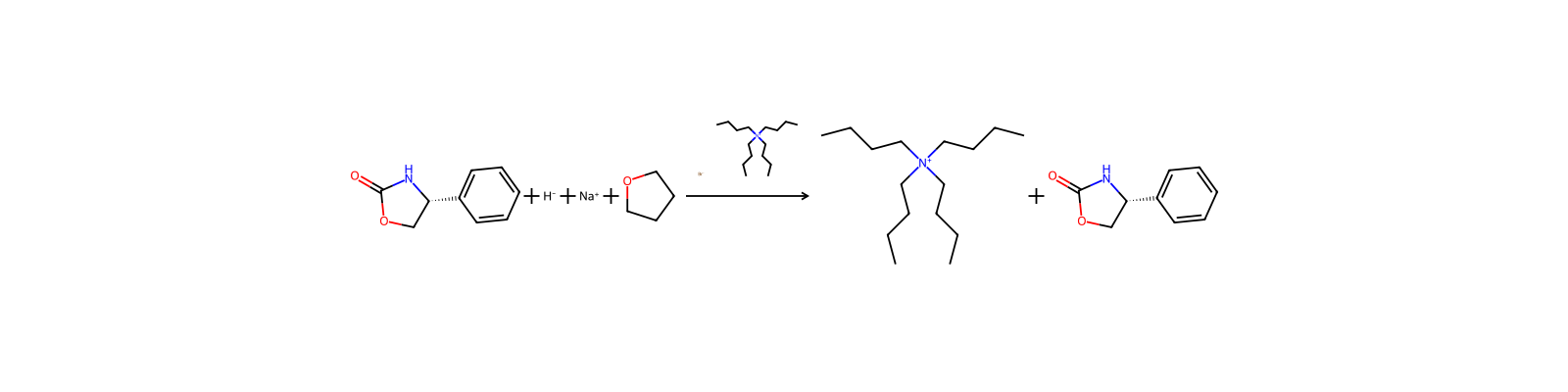
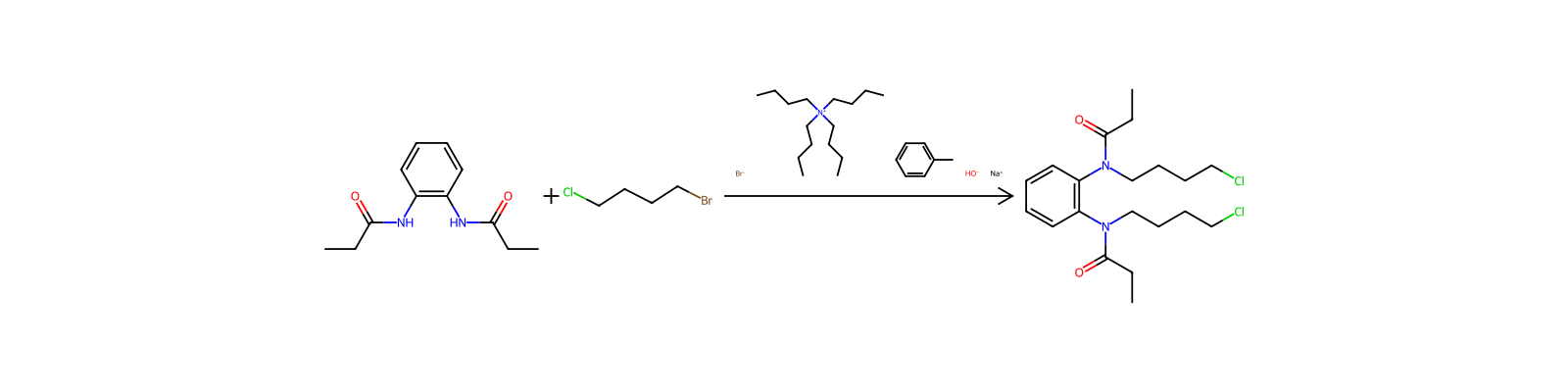
UsesTetrabutylammonium bromide (TBAB) is a quaternary ammonium compound. It is the most widely used phase transfer catalyst. Its interfacial properties have been studied in case of hydroxide initiated reactions. This may be applied in understanding the mechanism of phase transfer reactions. TBAB is reported to decrease retention time and remove peak tailing by acting as an ion pair reagent during the chromatographic analysis of quaternary ammonium compounds. In the molten state TBAB behaves like an ionic liquid which is a promising green alternative to organic solvents in organic synthesis. Its molar heat capacity, entropy and free energy function have been determined.Recently, molten tetrabutylammonium bromide (TBAB) was used as a low toxic and cost-effective IL in a number of constructive synthetic transformations.Tetrabutylammonium bromide (TBAB) may be used in the molten state in the following processes:Synthesis of (2S)-5-(3-phenyl-2-phthalimidylpropanoylamino)isophthalic acid.Synthesis of alkyl-substituted pyrroles in the absence of catalyst and organic solvent.Synthesis of dithioacetals from acetals by transthioacetalisation in a solvent free environment.Synthesis of polyamides (PAs) by the polymerization of terephthalic acid and diisocyanates.Catalyze the addition of thiols to conjugated alkenes.Dehydrochlorination of poly(vinyl chloride).

Related reactions

3,034 records
New reaction record
HRID 1097 reaction equation
HRID 1097As catalyst

HRID 1188 reaction equation
HRID 1188As catalyst
HRID 1322 reaction equation
HRID 1322As catalyst
HRID 2324 reaction equation
HRID 2324As catalyst
HRID 5677 reaction equation
HRID 5677As catalyst
HRID 6186 reaction equation
HRID 6186As catalyst
HRID 6336 reaction equation
HRID 6336As catalyst
HRID 6583 reaction equation
HRID 6583As catalyst
PreviousPage 1 of 380

Compound notes

On this pageBasic informationOverviewNames & identifiersPropertiesSafety & regulationChemistry & industryRelated reactionsCompound notes
pka
0 · 0[at 20 ℃]
Specific Gravity
1.007 · 1.007
color
White to slightly cream
Odor
Amine like
PH
3.5 to · 3.5 to 7.0 (50 g/L, 25 ℃)
Water Solubility
600 g/L · 600 g/L (20 ºC)
Sensitive
Hygroscopic
λmax
240 nm · λ: 240 nm Amax: 0.04λ: 250 nm Amax: 0.03λ: 260 nm Amax: 0.02λ: 500 nm Amax: 0.02
BRN
3570983 · 3570983
Stability
Stable. Incompatible with strong oxidizing agents. Protect from moisture.
Cosmetics Ingredients Functions
ANTIMICROBIALANTISTATIC
InChI
1S/C16H36N.BrH/c1-5-9-13-17(14-10-6-2,15-11-7-3)16-12-8-4;/h5-16H2,1-4H3;1H/q+1;/p-1
InChIKey
JRMUNVKIHCOMHV-UHFFFAOYSA-M
SMILES
[Br-].CCCC[N+](CCCC)(CCCC)CCCC
LogP
0.839 at · 0.839 at 25℃
CAS DataBase Reference
1643 · 1643-19-2(CAS DataBase Reference)
FDA UNII
168 I98R · VJZ168I98R
NIST Chemistry Reference
Tetra-N-butylammonium bromide(1643-19-2)
EPA Substance Registry System
Tetrabutylammonium bromide (1643-19-2)
UNSPSC Code
12352111 · 12352111
NACRES
21 · NB.21
Symbol(GHS)
7 · GHS07
Signal word
Warning
Hazard statements
302 · H302-H315-H319-H412
Precautionary statements
264 · P264-P270-P273-P301+P312-P302+P352-P305+P351+P338
PPE
95 · dust mask type N95 (US), Eyeshields, Gloves
Hazard Codes
Xi,Xn
Risk Statements
36 · 36/37/38-22
Safety Statements
26 · 26-36-37/39
WGK Germany
3 · 3
F
3 · 3
Hazard Note
Irritant
TSCA
TSCA listed
HS Code
29239000 · 29239000
Storage Class
11 · 11 - Combustible Solids
Hazard Classifications
4 OralAquatic · Acute Tox. 4 OralAquatic Chronic 3Eye Irrit. 2Repr. 2Skin Irrit. 2
REACH Registrations
Active
Protective Action Criteria (PAC) · 3 items

12 [mg/m3]

130 [mg/m3]

790 [mg/m3]

Safety data

F
3
PPE
dust mask type N95 (US), Eyeshields, Gloves
wgk
3
tsca
TSCA listed
hs_code
29239000
risk_code
36/37/38-22
Signal word
Warning
Symbol(GHS)
GHS07
hazard_code
Xi,Xn
hazard_note
Irritant
safety_code
26-36-37/39
Storage Class
11 - Combustible Solids
Hazard statements
H302-H315-H319-H412
REACH Registrations
Active
Hazard Classifications
Acute Tox. 4 OralAquatic Chronic 3Eye Irrit. 2Repr. 2Skin Irrit. 2
Precautionary statements
P264-P270-P273-P301+P312-P302+P352-P305+P351+P338

UsesTetrabutylammonium Bromide is used in the synthesis of polymer solar cells. Also used in the synthesis of single component green-light emitting electrochemical cells.

General DescriptionTetrabutylammonium bromide, a quaternary ammonium compound widely used as a phase transfer catalyst. TBAB decreases the retention time and removes peak tailing by acting as an ion pair reagent during the chromatographic analysis of quaternary ammonium compounds. In the molten state, TBAB behaves like an ionic liquid, which is a promising green alternative to organic solvents in polymer synthesis.

Upstream & downstream products

Downstream products

Venlafaxine hydrochloride3-AminobiphenylAlbendazole4-(tert-Butyl)benzyl mercaptanCYCLANILIDE5-Bromobenzo[c]thiophene3-Phenylbenzylaminecintofen1-Phenylcyclopentanecarboxylic acid2-[2-(Diphenylphosphino)ethyl]pyridine2-(4-Ethoxyphenyl)-2-methyl propionitrile1-Benzothiophene-5-carbonitrile5-bromo-1H-indazoleIsocarbophos1-Benzothiophene-5-carboxylic acidOlaquindoxPiperonyl aldehydeH-Gly-AMC HBrLevetiracetam4-Bromo-7-azaindoleTetrabutylammonium borohydridealpha-butyl-alpha-phenyl-1H-imidazole-1-propiononitrilePhenyl vinyl sulfoneMyclobutanilEthyl 4-ethoxyphenylacetate1,1-Cyclopropanedicarboxylic acid dimethyl esterN-(4-Thiophen-2-yl-phenyl)-acetamide4-Pyridin-2-ylisoxazol-5-amineFenothiocarb(R)-(-)-2,2-Dimethyl-1,3-dioxolane-4-methanolZeolite1-(3-Aminopropyl)piperidineGlyceryl monostearate6-BromopurineTetrabutylammonium hexafluorophosphateDIOCTYL ETHERThianaphthene-2-carboxylic acid2 -phenyl-HexanenitrileSisthsneMethyl 3,4,5-trimethoxybenzoate

Additional notes

DefinitionChEBI: Tetrabutylammonium bromide is a tetrabutylammonium salt with bromide as the anionic counterpart. It is an organic bromide salt and a tetrabutylammonium salt.