
HRID 199239As reactant

99-62-7CC(C)c1cccc(C(C)C)c1UNEATYXSUBPPKP-UHFFFAOYSA-N1,3-Diisopropylbenzene is an alkylbenzene.
99-62-7DTXSID8026640CHEMBL31352CHEBI:1895700.8559 @ 20 °C/4 °C
0.856 @25 °C
INSOL IN WATER
Sol in all proportions of alcohol, ether, acetone, benzene.
0.0425 mg/mL at 25 °C
203.2 °C @ 760 MM HG
203.2 °C @760 [mm Hg]
-61 °C
-63.7 °C
-61 °C
0.39 [mmHg]
1 mm Hg at 34.7 °C
1 [mm Hg] @34.700000000000003 °C
Safety information is for reference only and does not replace the supplier’s Safety Data Sheet (SDS), applicable regulations, or professional assessment.
This chemical does not meet GHS hazard criteria for 2.5% (3 of 119) of reports.
Danger
H304 (87.4%): May be fatal if swallowed and enters airways [Danger Aspiration hazard]
P273, P301+P316, P331, P391, P405, and P501 (click each P-code to see the statement)
Aggregated GHS information provided per 119 reports by companies from 4 notifications to the ECHA C&L Inventory. Each notification may be associated with multiple companies.
Warning
Chemical: Benzene, 1,3-bis(1-methylethyl)-
Benzene, 1,3-bis(1-methylethyl)- is listed on the EPA's Chemical Data Reporting (CDR) system. Manufacturers and importers of Benzene, 1,3-bis(1-methylethyl)- are required to report information about their production and use of this chemical to the EPA under the Toxic Substances Control Act (TSCA). (40 eCFR Part 711)
REACH registered substance: 1,3-diisopropylbenzene (EC: 202-773-1)
Benzene, 1,3-bis(1-methylethyl)-: Does not have an individual approval but may be used as a component in a product covered by a group standard. It is not approved for use as a chemical in its own right.
Asp. Tox. 1 (87.4%)
Flammable liquids - Category 4
Used as a solvent; chemical intermediate; [HSDB]
SOLVENT; INTERMEDIATE
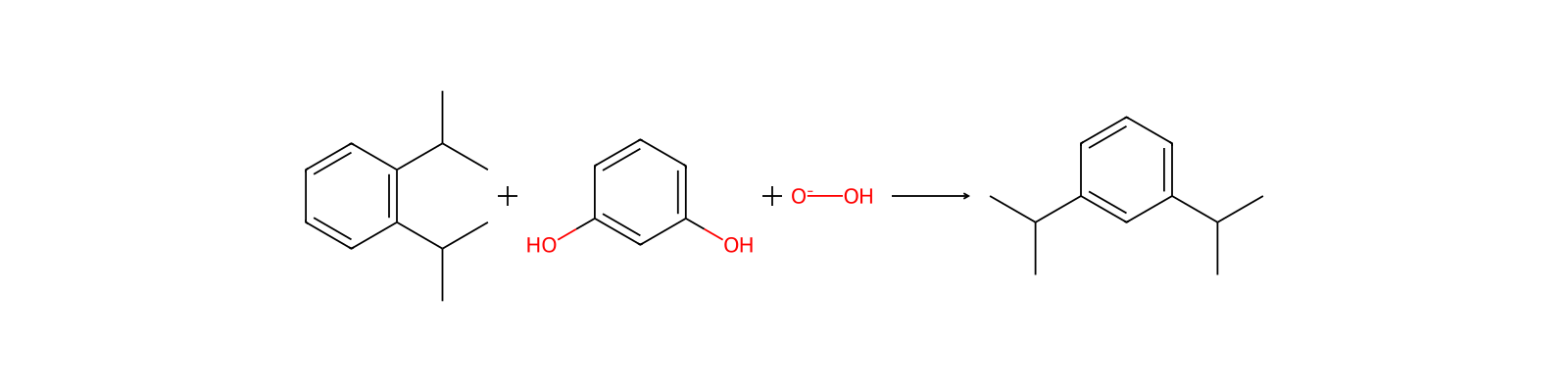
CHEM INT FOR RESORCINOL & ACETONE
SOLVENT
(1980) 3.48X10+5 GRAMS (PRINCPL CUSTMS DISTS)
(1982) 8.51X10+5 GRAMS (PRINCPL CUSTMS DISTS)
2023: 8,500,000 - <10,000,000 lb
(1979) AT LEAST 2.27X10+6 G-UNSPECIFIED ISOMER
(1981) AT LEAST 2.27X10+6 G-UNSPECIFIED ISOMER
Petroleum Refineries
Benzene, 1,3-bis(1-methylethyl)-: ACTIVE
Uses1,3-Diisopropylbenzene was used in the synthesis of benzene-1,3,5-triphosphonic acid.


Liquid
Colorless liquid; [HSDB]
Liquid
22 [mg/m3]
240 [mg/m3]
1500 [mg/m3]
RATS WERE EXPOSED TO FUMES IN CONCN OF 0.2 MG/LITER AND 1 MG/LITER 5 HR DAILY 5 TIMES A WK FOR 5 MO. SEXUAL CYCLE WAS DISTURBED. CAPACITY FOR CONCEPTION WAS DECR. AVERAGE NUMBER OF OFFSPRING DECR AS WELL AS THEIR WT.
EXPOSURE OF FEMALE MICE OR RATS TO VAPORS @ 1-3 MG/LITER FOR 30 DAYS DECR FERTILITY OF ANIMALS AND CAUSED MISCARRIAGES & INHIBITION OF GROWTH IN PROGENY.
Diisopropylbenzene occurs in three isomeric forms, namely as the ortho, the meta, and the para derivatives ... . Orally, they are of very low toxicity. Of 10 rats dosed with 5.0 ml/kg, no deaths for the meta, and one death for the ortho and the para isomers occurred. ... Rats and rabbits exposed to 0.2 to 1.0 mg/l (30 to 150 ppm) for 90 minutes daily for 5 weeks developed vascular hyperemia, hemorrhaging in most major organs, and fatty and protein dystrophy in the liver, kidney, and heart, and hyperplasia of the bone marrow. meta-Diisopropylbenzene caused decreased fertility in the rat and mouse at 1 to 3 mg/l for 30 days.
Diisopropylbenzene rated 1 on rabbit eyes /on a scale of 1 to 10 with 10 being the most severe/. /Diisopropylbenzene/
General Description1,3-Diisopropylbenzene undergoes anodic oxidation in methanol to yield dimethoxy-functionalized product.
DefinitionChEBI: 1,3-Diisopropylbenzene is an alkylbenzene.