Safety information is for reference only and does not replace the supplier’s Safety Data Sheet (SDS), applicable regulations, or professional assessment.
GHS classification
GHS Classification · 4 items
Danger
H314 (100%): Causes severe skin burns and eye damage [Danger Skin corrosion/irritation]
P260, P264, P280, P301+P330+P331, P302+P361+P354, P304+P340, P305+P354+P338, P316, P321, P363, P405, and P501 (click each P-code to see the statement)
Aggregated GHS information provided per 49 reports by companies from 4 notifications to the ECHA C&L Inventory.
Hazard information
Regulatory Information · 2 items
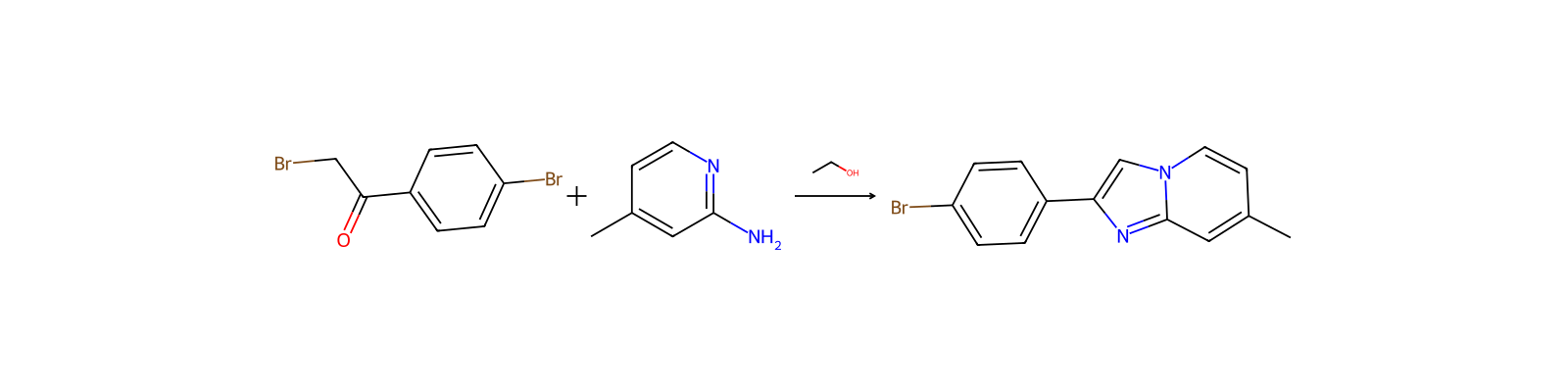
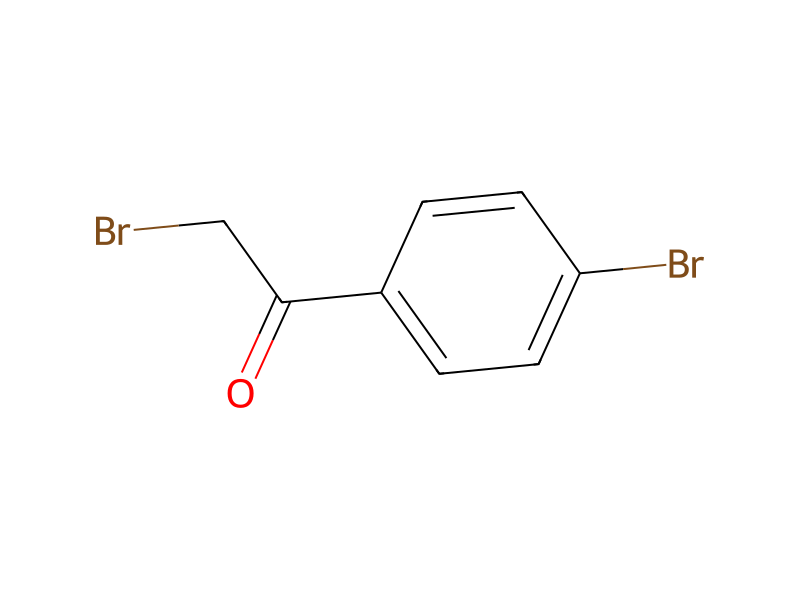
Chemical: Ethanone, 2-bromo-1-(4-bromophenyl)-
2,4'-Dibromoacetophenone: Does not have an individual approval but may be used under an appropriate group standard
Hazards SummaryCauses burns and lachrymation; Inhalation may cause corrosive injuries to upper respiratory tract and lungs; [Alfa Aesar MSDS] See alpha-Chloroacetophenone.
Hazard Classes and CategoriesSkin Corr. 1C (100%)
Toxicology
Adverse EffectsDermatotoxin - Skin burns.
Safety data
F
19-21
PPE
Eyeshields, Faceshields, Gloves, type P3 (EN 143) respirator cartridges
wgk
2
tsca
TSCA listed
rtecs
AM6950000
ridadr
UN 3261 8/PG 2
Chemistry & industry
Pharmacology
MeSH Pharmacological Classification · 2 items
Miscellaneous agents found useful in the symptomatic treatment of diarrhea. They have no effect on the agent(s) that cause diarrhea, but merely alleviate the condition.
Compounds or agents that combine with an enzyme in such a manner as to prevent the normal substrate-enzyme combination and the catalytic reaction.
General Manufacturing InformationEthanone, 2-bromo-1-(4-bromophenyl)-: ACTIVE
Applications · 4 items
UsesIdentification of carboxylic acids.
UsesUndergoes condensation reactions with aldehydes in the presence of SnCl21 or SmI32 to afford α,β-unsaturated ketones. Also useful in the esterification of carboxylic acids.3
Uses2,4'-Dibromoacetophenone is used as a reagent for analysis of fatty acids by HPLC as 4-bromophenacyl esters, for use in the protection of phenols and carboxylic acids. It undergoes condensation reactions with aldehydes in the presence of SnCl2 or SmI3 to afford α,β-unsaturated ketones. It is also useful in the esterification of carboxylic acids.
General DescriptionA phenyl α-bromomethyl ketone compound that acts as a cell-permeable, and non-ATP competitive inhibitor of GSK-3β (IC50 = 0.5 μM). This reactive alkylating agent is selective towards GSK-3β and does not affect PKA activity even at concentrations as high as 100 μM.