HomeMCPWorkbenchSkills
HomeWorkbenchNotificationsMe
llms.txt · MCP GuidePrivacy Policy · Terms of Service · Supportv1.8.0
  1. Home
  2. /Compound

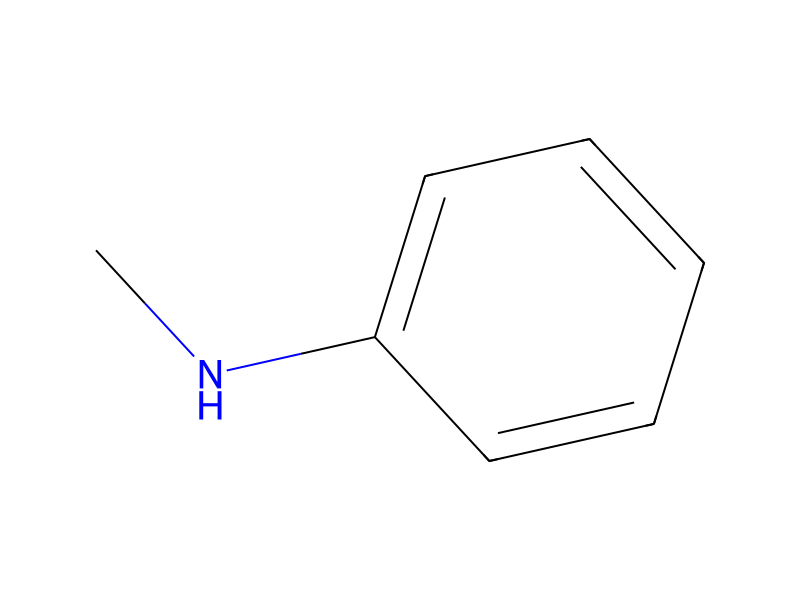
N-Methylaniline

HCID 7515
New noteNew reactionRequest quotes
Print preview
Basic informationOverviewNames & identifiersPropertiesSafety & regulationChemistry & industryRelated reactionsCompound notes
Substructure searchFind similar structures

Basic information

CAS
100-61-8
Standard SMILES
CNc1ccccc1
InChIKey
AFBPFSWMIHJQDM-UHFFFAOYSA-N
Molecular formula
C7H9N
Average molar mass
107.15 g/mol
Monoisotopic mass
107.07349929

Overview

N-methylaniline appears as a colorless to brown viscous liquid. Insoluble in water and denser than water. Contact may irritate skin, eyes and mucous membranes. May be toxic by ingestion. Used to make other chemicals.

Names & identifiers

Preferred name
N-Methylaniline
IUPAC
N-methylaniline
English name
N-Methylaniline
Molecular formula
C7H9N
Molecular weight
107.15

Names & synonyms

N-METHYLANILINE100-61-8MethylanilineMonomethylanilineBenzenamine, N-methyl-MethylphenylamineN-MethylbenzenamineN-MonomethylanilineN-Methyl anilineAnilinomethaneAniline, N-methyl-N-Phenylmethylamine
Show more names
N-Methylaniline (NMA)
N-Methylaminobenzene(Methylamino)benzeneN-MethylphenylamineMonomethyl anilineBenzeneamine, N-methyl-DTXSID9021841N-Methyl-N-phenylamineTH45GK410O

Database identifiers

CAS
100-61-8
PubChem CID
7515
DTXSID
DTXSID9021841
ChEMBL
CHEMBL170781
ChEBI
CHEBI:15733
UNII
TH45GK410O
EC Number
202-870-9
Nikkaji
J3.591B

Properties

Computed structural properties

XLogP
1.7
Topological polar surface area
12 Ų
Hydrogen bond donors
1
Hydrogen bond acceptors
1
Rotatable bonds
1
Heavy atoms
8
Formal charge
0
Complexity
55.4

Experimental & physicochemical properties

Chemical Classes · 3 items

Nitrogen Compounds -> Amines, Aromatic

Flammable agents - 2nd degree

Dye

SpringerMaterials Properties13C nuclear magnetic resonance spectrum
LogP · 3 items

Log kow = 1.66

1.7

1.69

OdorWeak, ammonia-like odor.
Density · 6 items

0.989 at 68 °F (USCG, 1999) - Less dense than water; will float

0.989 @ 20 °C/4 °C

Relative density (water = 1): 0.99

0.989

0.99 @ 20°C

0.99

Viscosity2.568 cP @ 15 °C; 1.766 cP @ 30 °C
Color/Form · 2 items

COLORLESS OR SLIGHTLY YELLOW LIQ

Yellow to light brown liquid.

Solubility · 5 items

1 to 5 mg/mL at 70.7 °F (NTP, 1992)

SOL IN ETHANOL, ETHER, CARBON TETRACHLORIDE

5624 mg/l @ 25 °C

Safety & regulation

Safety information is for reference only and does not replace the supplier’s Safety Data Sheet (SDS), applicable regulations, or professional assessment.

GHS classification

GHS Classification · 6 items

Danger

H301: Toxic if swallowed [Danger Acute toxicity, oral]

P260, P261, P262, P264, P270, P271, P273, P280, P301+P316, P302+P352, P304+P340, P316, P319, P321, P330, P361+P364, P391, P403+P233, P405, and P501 (click each P-code to see the statement)

Danger

H301 (100%): Toxic if swallowed [Danger Acute toxicity, oral]

P260, P261, P262, P264, P264+P265, P270, P271, P273, P280, P301+P316, P302+P352, P304+P340, P305+P351+P338, P316, P319, P321, P330, P337+P317, P361+P364, P391, P403+P233, P405, and P501 (click each P-code to see the statement)

Hazard information

Regulatory Information · 5 items

Chemical: Benzenamine, N-methyl-

Benzenamine, N-methyl- is listed on the EPA's Chemical Data Reporting (CDR) system. Manufacturers and importers of Benzenamine, N-methyl- are required to report information about their production and use of this chemical to the EPA under the Toxic Substances Control Act (TSCA). (40 eCFR Part 711)

REACH registered substance: N-methylaniline (EC: 202-870-9)

Methylaniline: Does not have an individual approval but may be used under an appropriate group standard

The New Jersey Worker and Community Right to Know Act requires public and private employers to provide information about hazardous substances at their workplaces. (N.J.S.A. 34:5A-1 et. seq.)

DOT LabelPoison
Fire Hazards · 3 items

Special Hazards of Combustion Products: Toxic vapors are generated when heated. (USCG, 1999)

· Combustible material: may burn but does not ignite readily.

Combustible. Gives off irritating or toxic fumes (or gases) in a fire. Above 79.5 °C explosive vapour/air mixtures may be formed.

Health Hazards · 2 items

Chemistry & industry

Pharmacology

Metabolism/Metabolites · 4 items

N-METHYLANILINE YIELDS ANILINE IN RABBIT; IN RAT. IT YIELDS P-METHYLAMINOPHENOL IN RABBIT. /FROM TABLE/

N-METHYLANILINE YIELDS N,N-DIMETHYLANILINE IN MYCOBACTERIUM. /FROM TABLE/

THE METABOLISM OF N-METHYLANILINE WAS STUDIED IN VITRO IN SEVERAL TISSUES OF THE IMMATURE HUMAN FETUS AND IN THE HUMAN PLACENTA. THE HIGHEST METABOLIZING ACTIVITY WAS OBSERVED IN THE LIVER. COMPARED TO ADULT RAT LIVER THE RANGE OF HEPATIC METABOLIC ACTIVITY VARIED FROM 5 TO APPROX 50% IN SOME FETUSES FOR N-METHYLANILINE DEMETHYLASE. ADRENAL GLAND HOMOGENATES HAD MEASURABLE N-METHYLANILINE METABOLIZING ACTIVITIES. IN THE GI TRACT, BRAIN, KIDNEYS, AND LUNGS THERE WAS NEGLIGIBLE OR NO ACTIVITY. IN ONE OF FIVE PLACENTAS STUDIED, ENZYME ACTIVITY COMPARABLE TO THAT IN THE LIVER WAS DETECTED. COFACTOR REQUIREMENTS OF THIS ENZYME INDICATED THAT IT WAS A DRUG-METABOLIZING MIXED-FUNCTION OXIDASE. IT WAS INHIBITED IN VITRO BY COMPOUNDS KNOWN TO BE SUBSTRATES OF LIVER MICROSOMAL DRUG METABOLIZING ENZYMES. THE LEVEL OF GLUCOSE-6-PHOSPHATE DEHYDROGENASE ACTIVITY IN THE FETAL LIVER WAS THE SAME OR HIGHER THAN IN ADULT RAT OR HUMAN LIVER.

N-Methylaniline is a known human metabolite of N,N-Dimethylaniline.

Absorption, Distribution and ExcretionN-METHYLANILINE IS DISTRIBUTED IN THE LIVER, KIDNEY, LUNG, SMALL INTESTINE, BRAIN, & BLADDER TISSUE.

Uses & manufacturing

Uses · 3 items

Used as a solvent and in organic synthesis; [ACGIH] Solvent for organic reactions and for nitrocellulose; [HSDB]

ORGANIC SYNTHESIS, SOLVENT, ACID ACCEPTOR

SOLVENT FOR ORGANIC REACTIONS & FOR NITROCELLULOSE

U.S. Imports(1975) 4.43X10+7 GRAMS (PRINCPL CUSTMS DISTS)
U.S. Production · 3 items

2023: <50,000 lb

(1972) PROBABLY GREATER THAN 4.54X10+5 GRAMS

(1975) PROBABLY GREATER THAN 4.54X10+5 GRAMS

Methods of Manufacturing

Related reactions

577 records
New reaction record
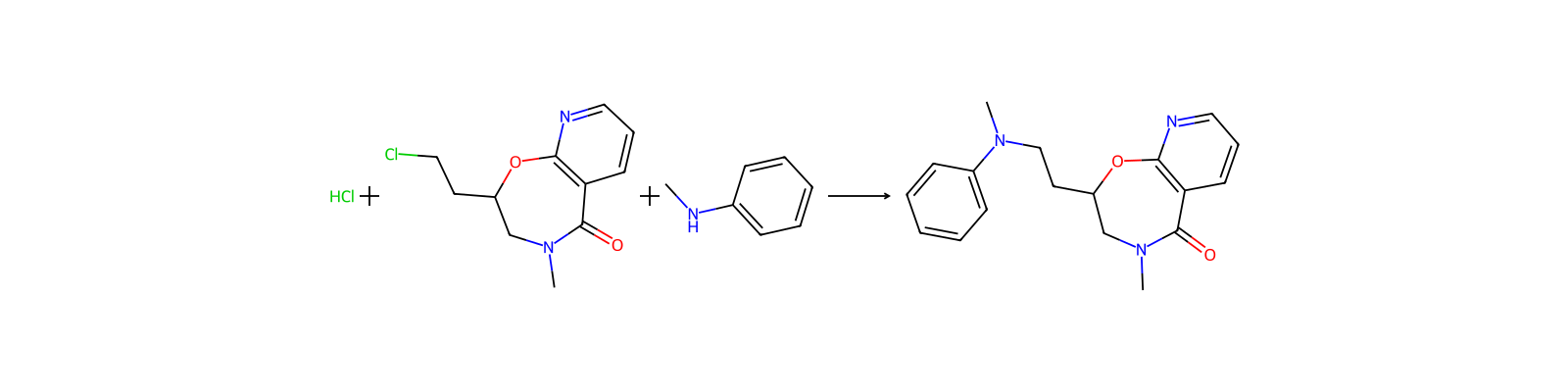
HRID 4837 reaction equation
HRID 4837As reactantuspto-grants-1988_02
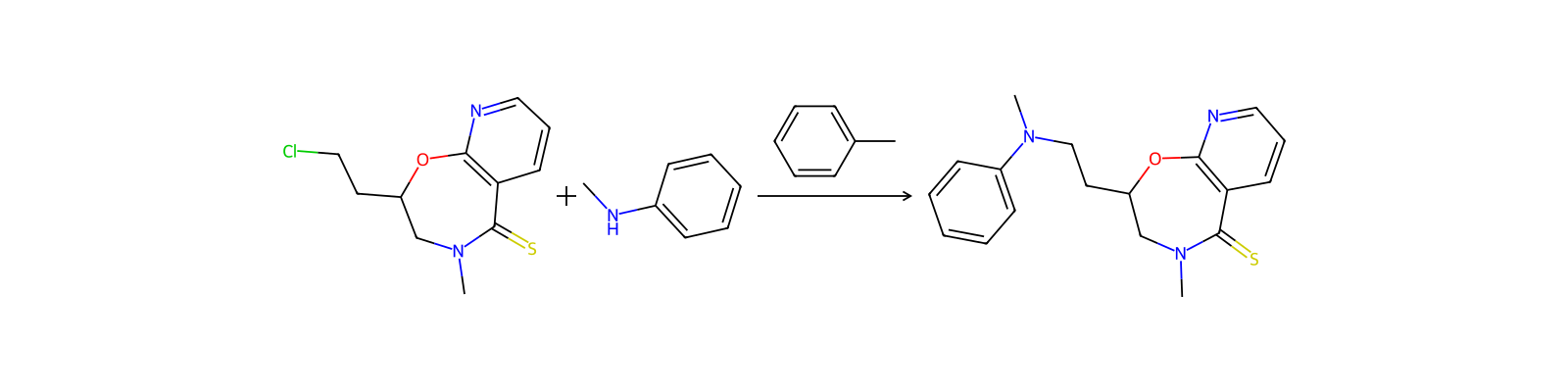
HRID 4845 reaction equation
HRID 4845As reactantuspto-grants-1988_02
HRID 12083 reaction equation
HRID 12083As reactantuspto-grants-2010_06
HRID 16183 reaction equation
HRID 16183As reactantuspto-grants-2010_06
HRID 46431 reaction equation
HRID 46431As reactantuspto-grants-1979_11
HRID 57044 reaction equation
HRID 57044As reactantuspto-grants-2016_09
HRID 63613 reaction equation
HRID 63613As reactantuspto-grants-2016_09
HRID 63649 reaction equation
HRID 63649As reactantuspto-grants-2016_09
Page 1 of 73

Compound notes

Loading…

On this pageBasic informationOverviewNames & identifiersPropertiesSafety & regulationChemistry & industryRelated reactionsCompound notes
More actions
New noteNew reactionRequest quotes

Solubility in water: none

Insoluble

Flash Point · 6 items

175 °F (NTP, 1992)

175 °F

175 °F CC

79.5 °C c.c.

175 °F

175 °F

Boiling Point · 6 items

385.3 °F at 760 mmHg (NTP, 1992)

196.25 °C

194-196 °C

385.3 °F

196.2 °C @760 [mm Hg]

384 °F

DecompositionWHEN HEATED TO DECOMP, IT EMITS HIGHLY TOXIC FUMES OF /NITROGEN OXIDES/.
Melting Point · 6 items

-71 °F (NTP, 1992)

-57 °C

-57 °C

-71 °F

-57 °C

-71 °F

Physicochemical properties

Melting point
57 °C · −57 °C (−71 °F; 216 K)
Boiling point
194 to · 194 to 196 °C (381 to 385 °F; 467 to 469 K)
Density
0.99 g/mL · 0.99 g/mL
vapor pressure
0.5 hPa · 0.5 hPa (20 °C)
refractive index
1.57 · 1.57
Flash point
79 °C; · 79 °C; 175 °F; 353 K
storage temp.
30 °C · Store below +30°C.
solubility
30 g/L · water: slightly soluble30g/L
pka
4.84 · 4.84(at 25℃)
form
liquid
color
colorless
Odor
Moderate aniline-type.
PH
7.6 · 7.6 (1g/l, H2O, 20℃)
Water Solubility
30 g/L · 30 g/L
Specific Heat Capacity
1.93 J/ · Cp(liquid): 1.93 J/(g·K), at 25℃
Sensitive
Air Sensitive
Merck
14 · 14,6019
BRN
741982 · 741982
Henry's Law Constant
(x 10-5 atmm3/mol): 1.19 at 25 °C (approximate - calculated from water solubility and vapor pressure)
Exposure limits
0.5 ppm · ACGIH:TLV-TWA 0.5 ppm (2.2 mg/m3)OSHA:PEL-TWA 2 ppm (9 mg/m3)NIOSH:REL-TWA 0.5 ppm
Dielectric constant
6 · 6.0(22℃)
Stability
Incompatible with strong oxidizing agents. Discolours upon exposure to air.
InChI
1S/C7H9N/c1-8-7-5-3-2-4-6-7/h2-6,8H,1H3
InChIKey
AFBPFSWMIHJQDM-UHFFFAOYSA-N
SMILES
CNc1ccccc1
LogP
1.66 at · 1.66 at 20℃
CAS DataBase Reference
100 · 100-61-8(CAS DataBase Reference)
EWG's Food Scores
1 · 1
FDA UNII
45 GK410O · TH45GK410O
NIST Chemistry Reference
Aniline, N-methyl-(100-61-8)
EPA Substance Registry System
N-Methylaniline (100-61-8)
UNSPSC Code
41116107 · 41116107
NACRES
24 · NA.24
Symbol(GHS)
6 · GHS06,GHS08,GHS09
Signal word
Danger
Hazard statements
301 · H301+H311+H331-H315-H319-H371-H372-H370-H335-H410-H227
Precautionary statements
501 · P501-P273-P270-P260-P210-P271-P264-P280-P370+P378-P391-P337+P313-P305+P351+P338-P308+P311-P361+P364-P332+P313-P301+P310+P330-P302+P352+P312-P304+P340+P311-P403+P233-P403+P235-P405
target organs
Liver,spleen,Bone marrow
PPE
Eyeshields, Faceshields, Gloves, type ABEK (EN14387) respirator filter
Hazard Codes
T,N
Risk Statements
23 · 23/24/25-33-50/53
Safety Statements
28 · 28-36/37-45-60-61-28A
OEB
B
OEL
0.5 ppm · TWA: 0.5 ppm (2 mg/m3) [skin]
RIDADR
2294 · UN 2294
WGK Germany
3 · 3
RTECS
4550000 · BY4550000
F
8 · 8
Autoignition Temperature
500 °C · 500 °C
TSCA
TSCA listed
HazardClass
6.1 · 6.1
PackingGroup
III
HS Code
29214200 · 29214200
Storage Class
6.1 C · 6.1C - Combustible acute toxic Cat.3toxic compounds or compounds which causing chronic effects
Hazard Classifications
3 DermalAcute · Acute Tox. 3 DermalAcute Tox. 3 InhalationAcute Tox. 3 OralAquatic Acute 1Aquatic Chronic 1Eye Irrit. 2STOT RE 2 Oral
Hazardous Substances Data
100 · 100-61-8(Hazardous Substances Data)
Toxicity
0.28 orally; · LD in rabbits (g/kg): 0.28 orally; in rabbits, cats (mg/kg): 24, 24 i.v. (Treon)
IDLA
100 ppm · 100 ppm
REACH Registrations
Active
Limited Quantities
5 L · 5.0 L (1.3 gallons) (liquid) or 5.0 kg (11 lbs) (solid)
Excepted Quantities
Max Inner Pack (30g or 30ml) and Max Outer Pack (1Kg or 1L)

Inhalation causes dizziness and headache. Ingestion causes blush discoloration (cyanosis) of lips, ear lobes, and fingernail beds. Liquid irritates eyes. Absorption through skin produces same symptoms as for ingestion. (USCG, 1999)

· TOXIC and/or CORROSIVE; inhalation, ingestion or skin contact with material may cause severe injury or death.

Hazards Summary · 1 item

Methemoglobinemia and liver injury occur in animals exposed to high concentrations over a period of weeks and months. There are no reports of human poisoning by monomethyl aniline. Listed in table of Industrial Chemicals for Which Methemoglobin Formation is the Principal Cause of Toxicity; [ACGIH] Can induce methemoglobinemia; [ICSC]

DOT ID and Guide · 2 items

2294 153

2294 153

Reactive GroupAmines, Aromatic
EC ClassificationSymbol: T, N; R: 23/24/25-33-50/53; S: (1/2)-28-36/37-45-60-61
UN ClassificationUN Hazard Class: 6.1; UN Pack Group: III
OSHA Standards · 2 items

Permissible Exposure Limit: Table Z-1 8-hr Time-Weighted Avg: 2 ppm (9 mg/cu m). Skin Designation.

Vacated 1989 OSHA PEL TWA 0.5 ppm (2 mg/cu m), skin designation, is still enforced in some states.

Reactivity Profile · 1 item

N-METHYLANILINE is an aryl an amine. Neutralizes acids in exothermic reactions to form salts plus water. May be incompatible with isocyanates, halogenated organics, peroxides, phenols (acidic), epoxides, anhydrides, and acid halides. Flammable gaseous hydrogen is generated in combination with strong reducing agents, such as hydrides.

Chemical DangersDecomposes on heating and on burning. This produces toxic fumes including nitrogen oxides and aniline. Reacts violently with strong acids and oxidants.

Safety & protection

Fire Fighting · 2 items

Excerpt from ERG Guide 153 [Substances - Toxic and/or Corrosive (Combustible)]:

Use water spray, powder, foam, carbon dioxide.

First Aid Measures · 4 items

Fresh air, rest. Refer for medical attention.

Remove contaminated clothes. Rinse and then wash skin with water and soap. Refer for medical attention .

Rinse with plenty of water for several minutes (remove contact lenses if easily possible).

Rinse mouth. Give a slurry of activated charcoal in water to drink. Refer for medical attention .

Accidental Release Measures · 2 items

· CALL 911. Then call emergency response telephone number on shipping paper. If shipping paper not available or no answer, refer to appropriate telephone number listed on the inside back cover.

· ELIMINATE all ignition sources (no smoking, flares, sparks or flames) from immediate area.

First Aid · 3 items

EYES: First check the victim for contact lenses and remove if present. Flush victim's eyes with water or normal saline solution for 20 to 30 minutes while simultaneously calling a hospital or poison control center. Do not put any ointments, oils, or medication in the victim's eyes without specific instructions from a physician. IMMEDIATELY transport the victim after flushing eyes to a hospital even if no symptoms (such as redness or irritation) develop.

General First Aid:

(General first aid procedures)

Safe StorageSeparated from strong oxidants, strong acids and food and feedstuffs. Keep in a well-ventilated room. Store in an area without drain or sewer access.
Exposure Control and Personal Protection · 3 items

· Wear positive pressure self-contained breathing apparatus (SCBA).

Biological Exposure Indices (BEI) [ACGIH] - Methemoglobin in blood = 1.5% of hemoglobin during or at end of shift. [ACGIH]

0.5 [ppm]

Storage Conditions · 1 item

IN GENERAL, MATERIALS WHICH ARE TOXIC AS STORED OR WHICH CAN DECOMP INTO TOXIC COMPONENTS...SHOULD BE STORED IN A COOL, WELL-VENTILATED PLACE, OUT OF DIRECT RAYS OF THE SUN, AWAY FROM AREAS OF HIGH FIRE HAZARD, & SHOULD BE PERIODICALLY INSPECTED... INCOMPATIBLE MATERIALS SHOULD BE ISOLATED FROM EACH OTHER.

Nonfire Spill ResponseExcerpt from ERG Guide 153 [Substances - Toxic and/or Corrosive (Combustible)]:
Disposal Methods · 1 item

SRP: At the time of review, criteria for land treatment or burial (sanitary landfill) disposal practices are subject to significant revision. Prior to implementing land disposal of waste residue (including waste sludge), consult with environmental regulatory agencies for guidance on acceptable disposal practices.

Spillage Disposal · 1 item

Personal protection: chemical protection suit including self-contained breathing apparatus. Do NOT let this chemical enter the environment. Collect leaking liquid in sealable containers. Absorb remaining liquid in sand or inert absorbent. Then store and dispose of according to local regulations.

Preventive Measures · 3 items

SRP: Local exhaust ventilation should be applied wherever there is an incidence of point source emissions or dispersion of regulated contaminants in the work area. Ventilation control of the contaminant as close to its point of generation is both the most economical and safest method to minimize personnel exposure to airborne contaminants.

The worker should immediately wash the skin when it becomes contaminated.

Work clothing that becomes wet or significantly contaminated should be removed and replaced.

Isolation and Evacuation · 2 items

Excerpt from ERG Guide 153 [Substances - Toxic and/or Corrosive (Combustible)]:

Immediate precautionary measure

Toxicology

InteractionsMONOMETHYL ANILINE (1.95 G/KG OF FOOD) & SODIUM NITRITE (1.0 G/L WATER) FED TO MICE CAUSED LUNG ADENOMAS & MALIGNANT LYMPHOMAS.
Target Organsrespiratory system, liver, kidneys, blood, central nervous system
Environmental Fate · 3 items

TERRESTRIAL FATE: N-Methylaniline has low adsorptivity to soil(2) and if released on soil may leach, especially in sandy soil. It may photodegrade on the soil surface(3). Some N-methylaniline may also volatilize from the soil surface. When N-methylaniline was applied to land in sludge and the sludge allowed to dry and then tilled into the soil to a depth 6 inches within 5 days, N-methylaniline degraded fairly rapidly(1). The avg concn of N-methylaniline over 3 plots in 0-6 inch cores was 511, 138, and 16 ppb, 5, 122 and 241 days after sludge application, respectively. While 82 ppb of N-methylaniline was found in 9-15 inch cores, 5 days after application, none was found at later sampling dates. While N-methylaniline biodegrades in screening studies and may therefore be expected to biodegrade in soil, it is also known to slowly react with humic material in soil(4). It is easily oxidized(5) and may react with natural oxidants in soil(SRC).

AQUATIC FATE: The Henry's Law constant is estimated to be 1.14X10⁻⁵ atm-cu m/mol(SRC), from its vapor pressure, 0.453 mm Hg(1), and water solubility, 5624 mg/L(2). Using this Henry's Law constant, its half-life in a model river and model lake is estimated to be 3.5 and 28 days, respectively(3,SRC). N-Methylaniline is sensitive to photooxidation and may photodegrade in surface water(4). It is sensitive to oxidation(5) and may be oxidized by naturally-occurring oxidants in the water body(SRC). N-Methylaniline has a low Koc(6) and BCF(7) would not be expected to adsorb to sediment or bioconcentrate in fish(SRC).

ATMOSPHERIC FATE: According to its vapor pressure, 0.453 mm Hg at 25 °C(2), N-methylaniline should exist in the atmosphere as a vapor(4). It will react with photochemically-produced hydroxyl radicals with an estimated half-life of 8.8 hr(3,SRC). It may also photolyze or oxidize while in the vapor phase or in aerosols. The rates of vapor phase photolysis are unknown. N-Methylaniline is fairly soluble in water, 5624 mg/L(1), and therefore should be scavenged by rain(SRC).

Food Survey Values · 1 item

Samples of fresh vegetables containing N-methylaniline include (vegetable, concn): spinach, 3.4 ppm; red cabbage, 0.3 ppm; carrots, 0.8 ppm; celery, 0.5 ppm(1). No N-methylaniline was found in cabbage, cauliflower, kale, white beet, swede, red beet, large radish and red radish(1). Samples of pickled vegetables containing N-methylaniline include (vegetable, concn): paprika, 13.1 ppm; cucumber, 13.8 ppm; cucumber with mustard, 6.1 ppm; onion, 6.8 ppm; celery, 7 ppm(1). Tilsiter cheese and brown bread contained 37.9 and 0.7 ppm of N-methylaniline, but the chemical was not found in various forms of herring, cod roe and camembert and limburger cheese(1).

Adverse EffectsOccupational hepatotoxin - Secondary hepatotoxins: the potential for toxic effect in the occupational setting is based on cases of poisoning by human ingestion or animal experimentation.
Exposure Routes · 2 items

The substance can be absorbed into the body by inhalation of its vapour, by inhalation of its aerosol, through the skin and by ingestion.

inhalation, skin absorption, ingestion, skin and/or eye contact

Plant ConcentrationsN-Methylaniline was detected, but not quantified in cold-pressed Valencia orange oil from Florida(1).
Signs and Symptoms · 4 items

Blue lips, fingernails and skin. Cough. Dizziness. Headache. Laboured breathing. Sore throat.

MAY BE ABSORBED! Further see Inhalation.

Abdominal pain. Blue lips, fingernails and skin. Dizziness. Headache. Laboured breathing. Nausea.

lassitude (weakness, exhaustion), dizziness, headache; dyspnea (breathing difficulty), cyanosis; methemoglobinemia; pulmonary edema; liver, kidney damage

Effluent Concentrations · 1 item

In a comprehensive survey of wastewater from 4000 industrial and publicly owned treatment works (POTWs) sponsored by the Effluent Guidelines Division of the U.S. EPA, N-methylaniline was identified in discharges of the following industrial category (positive occurrences, median concn in ppb): petroleum refining (1; 161.3), printing and publishing (1; 9.8), pharmaceuticals (2; 1022), foundries (1; 2.2), aluminum (1; 6.1), organic chemicals (5; 18.5), publicly owned treatment works (2; 39.8)(1). The highest effluent concn was 1736 ppb in the pharmaceuticals industry(1). N-Methylaniline was detected in the effluent of one of three New Jersey publicly-owned treatment works (POTWs) at 13-17 ppb(2). It was detected, but not quantified, in wastewater from the Kashima petrochemical complex (includes organic chemicals factory) in Japan(3). Sludge from the Muskegon County (MI) Wastewater Treatment System contained 310 ppb of N-methylaniline which was applied to land(4).

ICSC Environmental DataThe substance is harmful to aquatic organisms.
Soil Adsorption/Mobility · 1 item

Since the pKa of N-methylaniline is 4.848(2), N-methylaniline will be partially ionized at acidic environmental pHs and its adsorption to soil would be expected to be pH-dependent(SRC). The Koc for N-methylaniline predicted from molecular structure is 65(3). According to a suggested classification scheme(5), this estimated Koc suggests that N- methylaniline will be highly mobile in soil(SRC). Batch equilibrium studies used to determine the adsorption isotherms for N-methylaniline to a Podzol (4.85% OC pH 2.8), an Alfisol (1.25% OC, pH 6.7) and a sediment (1.58% OC, pH 7.1) yielded the results (soil, Freundlich adsorption constants (Kf), Freundlich exponent (1/n), Koc): Podzol, 22.29, 0.89, 460; Alfisol, 0.59, 0.78, 47; Sediment, 1.12, 0.77, 71(1). N-Methylaniline will be almost completely ionized at the pH of the Podzol and therefore ionic interactions may be dominant(1,SRC). N-Methylaniline reacts slowly with humates possibly by adding to quinoidal structures in the humic substances(4). Covalent bond formation is inferred by the lack of extractability of the aniline from the humic material as well as reactions with model compounds(4).

Natural Pollution SourcesN-Methylaniline is produced in nature, being found in fresh vegetables, such as spinach, red cabbage, carrots, and celery(1), and fruits, such as orange rind(2).

Safety data

F
8
OEB
B
OEL
TWA: 0.5 ppm (2 mg/m3) [skin]
PPE
Eyeshields, Faceshields, Gloves, type ABEK (EN14387) respirator filter
wgk
3
IDLA
100 ppm
tsca
TSCA listed
rtecs
BY4550000
ridadr
UN 2294
hs_code
29214200
Toxicity
LD in rabbits (g/kg): 0.28 orally; in rabbits, cats (mg/kg): 24, 24 i.v. (Treon)
risk_code
23/24/25-33-50/53
Signal word
Danger
Symbol(GHS)
GHS06,GHS08,GHS09
hazard_code
T,N
safety_code
28-36/37-45-60-61-28A
hazard_class
6.1
Storage Class
6.1C - Combustible acute toxic Cat.3toxic compounds or compounds which causing chronic effects
packing_group
III
target organs
Liver,spleen,Bone marrow
Hazard statements
H301+H311+H331-H315-H319-H371-H372-H370-H335-H410-H227
Limited Quantities
5.0 L (1.3 gallons) (liquid) or 5.0 kg (11 lbs) (solid)
Excepted Quantities
Max Inner Pack (30g or 30ml) and Max Outer Pack (1Kg or 1L)
REACH Registrations
Active
Hazard Classifications
Acute Tox. 3 DermalAcute Tox. 3 InhalationAcute Tox. 3 OralAquatic Acute 1Aquatic Chronic 1Eye Irrit. 2STOT RE 2 Oral
Autoignition Temperature
500 °C
Precautionary statements
P501-P273-P270-P260-P210-P271-P264-P280-P370+P378-P391-P337+P313-P305+P351+P338-P308+P311-P361+P364-P332+P313-P301+P310+P330-P302+P352+P312-P304+P340+P311-P403+P233-P403+P235-P405
Hazardous Substances Data
100-61-8(Hazardous Substances Data)
· 2 items

REACTION OF ANILINE & METHANOL IN THE PRESENCE OF A COPPER-ALUMINA CATALYST

MADE BY HEATING ANILINE CHLORIDE & METHYL ALCOHOL UNDER PRESSURE

Formulations/PreparationsTechnical
General Manufacturing InformationBenzenamine, N-methyl-: ACTIVE
Applications · 4 items

DescriptionN-Methylaniline is a yellow to light brown oily liquid with a weak, ammonia-like odor. Turns reddishbrown if left standing. The odor threshold is 1.7 ppm. Molecular weight= 107.17; Specific gravity (H2O:1)= 0.99;Boiling point=195.6℃; Freezing/Melting point=57.2℃; Vapor pressure= 0.3 mmHg at 20℃; Flash point=79.4℃. Hazard Identification (based on NFPA-704 M Rating System): Health 2, Flammability 2, Reactivity 0. Practically insoluble in water.

UsesN-Methylaniline is used as a solvent and in organic synthesis. It is used in the production of cationic brilliant red FG, cationic pink B, reactive yellow brown KGR, etc. in the dye industry. N-methylaniline is an intermediate in the synthesis of the insecticide buprofezin and the herbicide mefenacet.

UsesN-methylaniline was used as raw material, and metal-organic skeleton material CAU-10pydc was used as catalyst to catalyze the reaction of CO2 with n-methylaniline to produce N-methyl-N-phenylformamide in mild conditions and green solvent acetonitrile[1]. Poly (N-methylaniline) (PNMA) was prepared by the electrooxidation of N-methylaniline in acidic aqueous solution. PNMA prepared in acidic aqueous solution with different organic solvents and anions had different conductivity. Such as the experimental group added acetonitrile, N, N-dimethylformamide and dimethylsulfoxide, and the experimental group which adding dimethylsulfoxide had the strongest conductivity[2].References:[1] Zhiqiang Wang, Chenghua Deng, Xiao Liu, Wenmin Wang, Highly efficient conversion of CO2 into N-formamides catalyzed by a noble-metal-free aluminum-based MOF under mild conditions, 2023, 52, 11163-11167.[2] Jun YANO , Hiroko YOSHIKAWA , Tomomi MUKAI , Sumio YAMASAKI , Akira KITANI, Effect of Anions and Added Organic Solvents of Polymerizing Solutions on the Conductivity of Poly (N-methylaniline), 2006, 74, 42-48.

General DescriptionChemical oxidation of N-methylaniline with dichromate (oxidant) has been studied by Raman spectroscopy.

Preparation methods · 1 item

PreparationN-methylaniline was synthesized by the reaction of aniline with dimethyl sulfate. Dimethyl sulfate was added dropwise to the mixed solution of aniline and water below 10°C, stirred for 1 h, and then added dropwise with 30% sodium hydroxide solution. The upper layer is the organic phase, and the lower layer is extracted with benzene. After the benzene is recovered from the extract, the obtained oil Chemicalbook-like substance is combined with the organic phase to obtain a mixture of aniline, N-methylaniline and N,N-dimethylaniline. The mixture was treated with sulfuric acid, and the aniline formed sulfate crystals which were filtered off. N,N-dimethylaniline can be converted to N-methylaniline by the following reaction.

Upstream & downstream products

Upstream raw materials

WaterPhosphorus trichlorideN,N-DimethylanilineAnilineMethanolDimethyl etherDimethyl sulfate

Downstream products

ASTRAZON PINK FG2-Chloro-N-(2,6-dimethylphenyl)acetamideMalachite Green4-(Trimethyl-ureido)-benzenesulfonyl chlorideN-(2-Hydroxyethyl)-N-methylanilineN-Methyl-N-phenylcarbamoyl chlorideRibityl-3,4-xylidine*Basic Blue 54REACTIVE BLUE 4Michler's ketoneBenzothiazole1H-Pyrrolo[2,3-b]pyridine, 2-methyl-Crystal VioletMethyl OrangeHexamethyldisiloxaneN-Methyl-N-benzylaniline4-(Dimethylamino)phenyl thiocyanateMethylene BlueN-Chloromethyl-N-phenylaminoformyl chlorideBuprofezin4-DimethylaminobenzaldehydeASTRAZON BRILLIANT RED 4GN-Methyl-N-phenyl-2-piperazin-1-ylacetamideN-2,4-Dimethylphenyl-N'-methylformamidine5-Azaindoleo-Acetoacetaniside5-FluorocytosineAcid Yellow 1272-Amino-4,6-dimethoxypyrimidineVanillin2,6-Dimethylaniline4-(Dimethylamino)benzophenone1-Methyl-1-phenylhydrazineLidocaineMefenacet1,2-Diphenylvinylene carbonate

Additional notes

DefinitionChEBI: N-methylaniline is a methylaniline that is aniline carrying a methyl substituent at the nitrogen atom. It is a phenylalkylamine, a secondary amine and a methylaniline. It derives from an aniline.