N-Methylaniline → 2,3-Dihydro-4-methyl-2-[2-(methylphenylamino)ethyl]pyrido[3,2-f][1,4]oxazepine-5(4H)-thione
Reaction equation
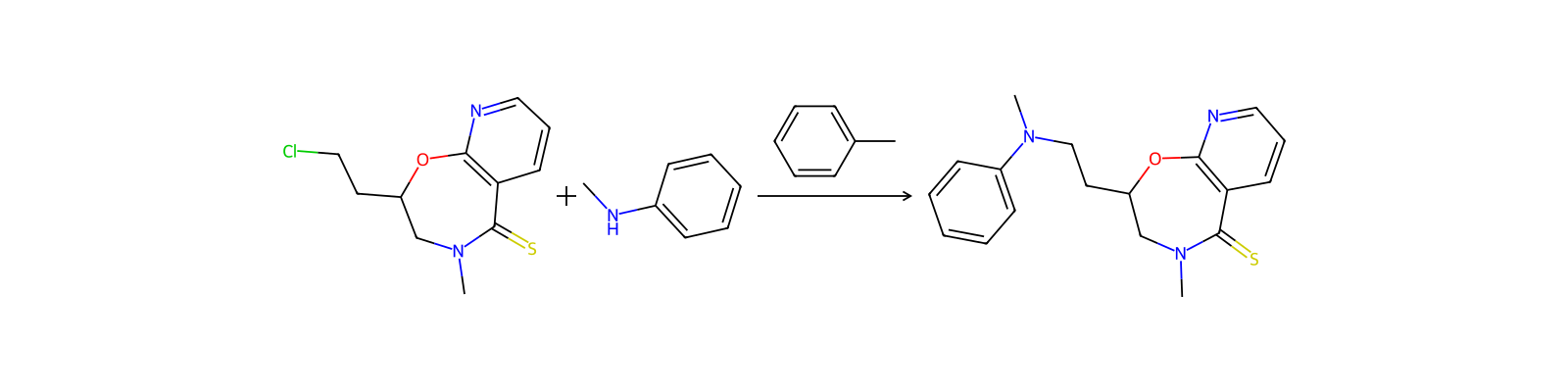
Cl[CH2:2][CH2:3][CH:4]1[CH2:10][N:9]([CH3:11])[C:8](=[S:12])[C:7]2[CH:13]=[CH:14][CH:15]=[N:16][C:6]=2[O:5]1.[CH3:17][NH:18][C:19]1[CH:24]=[CH:23][CH:22]=[CH:21][CH:20]=1>C1(C)C=CC=CC=1>[CH3:11][N:9]1[C:8](=[S:12])[C:7]2[CH:13]=[CH:14][CH:15]=[N:16][C:6]=2[O:5][CH:4]([CH2:3][CH2:2][N:18]([CH3:17])[C:19]2[CH:24]=[CH:23][CH:22]=[CH:21][CH:20]=2)[CH2:10]1Participants
4


Procedure
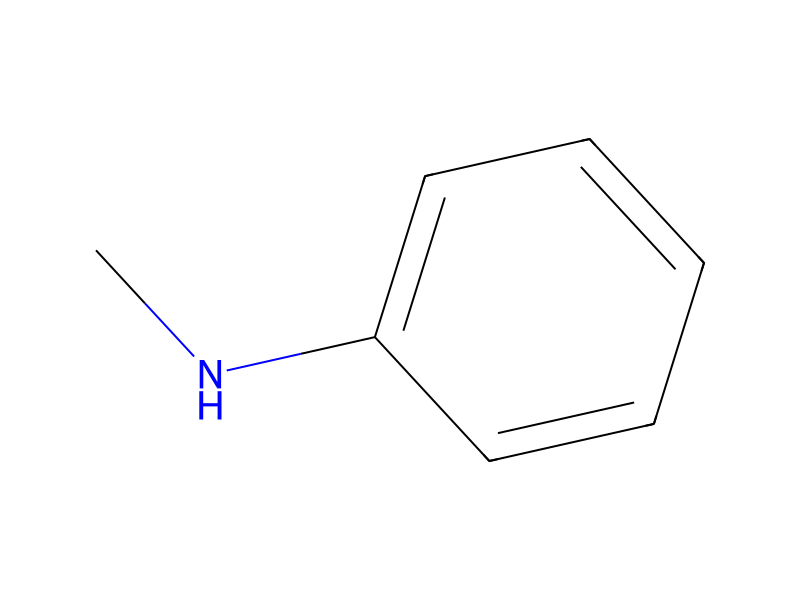
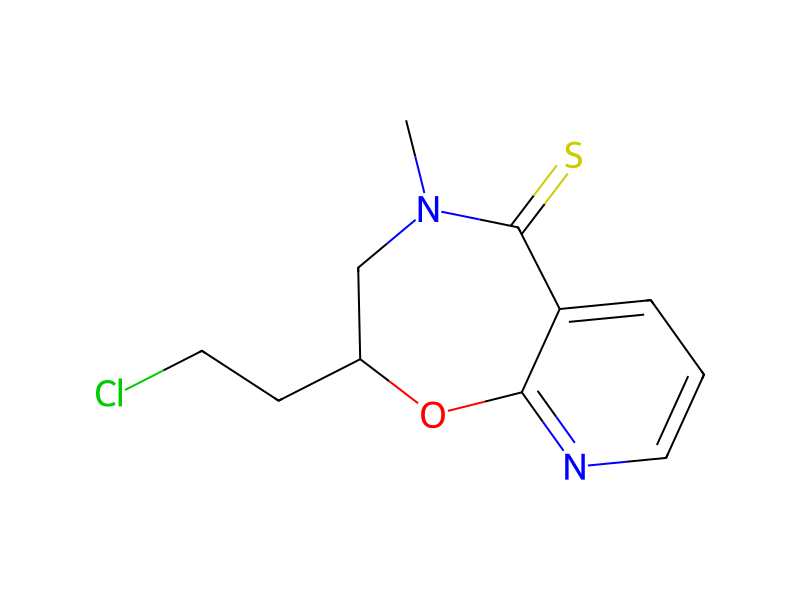
To a suspension of 2-(2-chloroethyl)-2,3-dihydro-4-methylpyrido[3,2-f][1,4]oxazepine-5(4H)-thione in 100 ml of toluene was added 11.49 g (0.11 mole) N-methylaniline and the mixture heated to reflux with stirring for 2 days (after approx. 6 hr, 23.0 g (0.22 mole) additional N-methylaniline was added). Toluene was removed by rotary evaporation (90° C., water aspirator). The N-methylaniline was removed also by rotary evaporation (90° C., vacuum pump). The residue was taken up in 100 ml of chloroform and washed with 3×30 ml dilute aqueous sodium hydroxide. The organic layer was dried over anhydrous sodium sulfate, filtered and concentrated by rotary evaporation (80° C., water aspirator). More N-methylaniline was removed with the vacuum pump at 90° C. for several hours. To the residue was added 150 ml of ethyl acetate at which point some product crystallized out. However, since much remained in solution, preparative HPLC on a silica gel column eluting with 60% hexane/40% ethyl acetate was effected. After concentrating the flasks containing the product, crystallization was effected induced by seeding. The chromatographed product was recrystallized from ethyl acetate/isopropyl alcohol and amounted to 1.1 g m.p. 164°-5° C. Approximately 2 g additional was collected by recrystallization of crude product, m.p. 163°-4° C. The combined yield was 3.1 g (26%).