HomeMCPWorkbenchSkills
HomeWorkbenchNotificationsMe
llms.txt · MCP GuidePrivacy Policy · Terms of Service · Supportv1.8.0
  1. Home
  2. /Compound

Diphenylmethane

HCID 7580
New noteNew reactionRequest quotes
Print preview

Completing data — refresh the page later to see the latest

Basic informationOverviewNames & identifiersPropertiesSafety & regulationChemistry & industryRelated reactionsCompound notes
Substructure searchFind similar structures

Basic information

CAS
101-81-5
Standard SMILES
c1ccc(Cc2ccccc2)cc1
InChIKey
CZZYITDELCSZES-UHFFFAOYSA-N
Molecular formula
C13H12
Average molar mass
168.23 g/mol
Monoisotopic mass
168.09390038

Overview

Diphenylmethane is a diarylmethane that is methane substituted by two phenyl groups.

Names & identifiers

Preferred name
Diphenylmethane
IUPAC
benzylbenzene
English name
Diphenylmethane
Molecular formula
C13H12
Molecular weight
168.23

Names & synonyms

Diphenylmethane101-81-5BenzylbenzeneDitanDitaneBenzene, 1,1'-methylenebis-Diphenyl methaneMethane, diphenyl-1,1'-Dimethylenebis(benzene)Benzene, (phenylmethyl)-1,1'-METHYLENEBISBENZENEDTXSID1041891
Show more names
diphenyl-methanBENZYLPHENYLDipheny Methane1,1’-methylenebis-benzenBenaylbenzene
AI3-28021-XK3E387I0BCAI3-00748NSC-4708DTXCID9021891CHEBI:38884RefChem:57702,4-dibromo-6-((2,3-dibromo-4,5-dihydroxyphenyl)methyl)benzene-1,3,5-triol

Database identifiers

CAS
101-81-5
PubChem CID
7580
DTXSID
DTXSID1041891
ChEMBL
CHEMBL1796022
ChEBI
CHEBI:38884
UNII
K3E387I0BC
EC Number
202-978-6
Nikkaji
J3.597A

Properties

Computed structural propertiesFilling in

XLogP
4.1
Topological polar surface area
0 Ų
Hydrogen bond donors
0
Hydrogen bond acceptors
0
Rotatable bonds
2
Heavy atoms
13
Formal charge
0
Complexity
111

Experimental & physicochemical properties

Chemical ClassesOther Classes -> Aromatic Hydrocarbons
PolymersPolycyclic aromatic hydrocarbon
CosmeticsSolvent
SpringerMaterials Properties13C nuclear magnetic resonance spectrum
FragrancesFragrance Ingredient (Diphenylmethane) -> IFRA transparency List
LogP · 2 items

log Kow = 4.14

4.22

Odor · 2 items

Odor of oranges

Harsh herbaceous odor reminiscent of geranium leaves

Density · 2 items

1.3421 at 10 °C/4 °C (solid); 1.0008 at 26 °C/4 °C (liquid)

1.008 @25 °C

Color/Form · 3 items

Orthorhombic needles

Long, colorless needles

Liquid

Safety & regulation

Safety information is for reference only and does not replace the supplier’s Safety Data Sheet (SDS), applicable regulations, or professional assessment.

GHS classification

GHS Classification · 5 items

This chemical does not meet GHS hazard criteria for 2.2% (37 of 1665) of reports.

Warning

H400 (93.4%): Very toxic to aquatic life [Warning Hazardous to the aquatic environment, acute hazard]

P273, P391, and P501 (click each P-code to see the statement)

Aggregated GHS information provided per 1665 reports by companies from 11 notifications to the ECHA C&L Inventory. Each notification may be associated with multiple companies.

Hazard information

Regulatory Information · 5 items

Chemical: Benzene, 1,1'-methylenebis-

Commission Regulation (EC) No 1565/2000 (Repealed by Com. Implementing Reg. (EU) No 872/2012)

Benzene, 1,1'-methylenebis- is listed on the EPA's Chemical Data Reporting (CDR) system. Manufacturers and importers of Benzene, 1,1'-methylenebis- are required to report information about their production and use of this chemical to the EPA under the Toxic Substances Control Act (TSCA). (40 eCFR Part 711)

Status: Active Update: 07-03-2018 https://echa.europa.eu/registration-dossier/-/registered-dossier/21882

Diphenylmethane: Does not have an individual approval but may be used under an appropriate group standard

Fire PotentialDIPHENYL AND ITS DERIVATIVES ARE MODERATELY FLAMMABLE ... DANGER OF FIRE IS NEGLIGIBLE @ AMBIENT TEMP BUT INCR @ HIGH TEMP, WHEN MATERIAL IS DISPERSED IN AIR. /DIPHENYL & DERIVATIVES/
Hazards SummaryMay cause irritation; No other information available about toxicity in humans; Oral LD50 (rat) = 2250 mg/kg; [MSDSonline]
NFPA Hazard Classification · 3 items

1 - Materials that, under emergency conditions, can cause significant irritation.

1 - Materials that must be preheated before ignition can occur. Materials require considerable preheating, under all ambient temperature conditions, before ignition and combustion can occur.

Chemistry & industry

Pharmacology

Metabolism/Metabolites · 5 items

Urine and feces, and two-hour bile samples from adult male rats dosed with (14)C-diphenylmethane were analyzed for benzhydrol and 2- and 4-hydroxydiphenyl-methane by silica gel GF t.l.c. and (14)C-determination. Mean values of 48.4% and 17.7% of the administered (14)C were present in 24 hr urine and feces, respectively. Benzhydrol and 2- and 4-hydroxydiphenylmethane comprised 3.7%, 0.3% and 4.8% respectively of the (14)C isolated from urine and 3.1%, 0.8%, and 4.8% respectively of the (14)C isolated from feces. Bile samples (2 hr) contained 3.2% of the administered radioactivity. After treatment with beta-glucuronidase/aryl sulphatase, 71.9% of the recovered biliary radioactivity was identified as benzhydrol (37.5%) and 4-hydroxydiphenylmethane (34.4%).

CONVERSION OF DIPHENYLMETHANE TO P-HYDROXYDIPHENYLMETHANE WAS DEMONSTRATED IN RATS GIVEN 900 MG/KG IP; 24 HR URINE CONTAINED 0.37 MMOL OF UNCONJUGATED & 0.06 MMOL OF CONJUGATED P-HYDROXYDIPHENYLMETHANE. FECES CONTAINED 0.06 MMOL MIXT OF CONJUGATED & UNCONJUGATED.

DIPHENYLMETHANE WAS CONVERTED TO P-HYDROXYDIPHENYLMETHANE, DIPHENYLMETHANOL, & DIPHENYL KETONE BY RAT LIVER MICROSOMES.

A STRAIN OF HYDROGENOMONAS WAS ISOLATED BY ELECTIVE CULTURE IN A SOLN CONTAINING DIPHENYLMETHANE (DDT ANALOG) AS SOLE CARBON SOURCE. CONSTITUTIVE ENZYMES EFFECTED OXIDATION & FISSION OF ONE BENZENE RING OR DIPHENYLMETHANE, AND PHENYLACETIC ACID WAS FOUND AS A MAJOR DEGRADATION PRODUCT. SMALL AMOUNTS OF PHENYLGLYOXYLIC ACID & BENZOIC ACID WERE ALSO GENERATED.

Diphenylmethane is hydroxylated in the rabbit and some 15% of the dose is excreted as 4-hydroxydiphenylmethane, which is largely (80-90%) in the free state. Neither the hydrocarbon nor its metabolite is estrogenic. This reaction also occurs in the dog.

Uses & manufacturing

Uses · 5 items

Used for organic synthesis; in dyes; in fragrances, flavor compounds, and perfumery; in solvents for cellulose lacquers; in the manufacture of hexachlorophene, benzophenone, and pharmaceuticals; [HSDB] Used in fragrances, dyes, polyesters, and jet fuels; [Ullmann]

Diphenylmethane is used in the fragrance industry both as a fixative and in scenting soaps. It can serve as a synergist for pyrethrin in pesticides and insecticides. Diphenylmethane is recommended as a plasticizer to improve the dyeing properties, as a solvent for dyes, and as a dye carrier for printing with disperse dyes. The addition of diphenylmethane to saturated, linear polyesters improves their thermal stability, and its addition to jet fuels increases their stability and lubricating properties.

Related reactions

101 records
New reaction record
HRID 21852 reaction equation
HRID 21852As reactantuspto-grants-1995_06
HRID 31360 reaction equation
HRID 31360As reactantuspto-grants-2008_09
HRID 86948 reaction equation
HRID 86948As reactantTraining data from https://doi.org/10.1039/C8SC04228D (2/10)
HRID 117916 reaction equation
HRID 117916As productTraining data from https://doi.org/10.1039/C8SC04228D (2/10)
HRID 137037 reaction equation
HRID 137037As reactantTraining data from https://doi.org/10.1039/C8SC04228D (9/10)
HRID 191944 reaction equation
HRID 191944As reactantTraining data from https://doi.org/10.1039/C8SC04228D (6/10)
HRID 261000 reaction equation
HRID 261000As reactantuspto-grants-1996_06
HRID 283539 reaction equation
HRID 283539As productTraining data from https://doi.org/10.1039/C8SC04228D (8/10)
Page 1 of 13

Compound notes

Loading…

On this pageBasic informationOverviewNames & identifiersPropertiesSafety & regulationChemistry & industryRelated reactionsCompound notes
More actions
New noteNew reactionRequest quotes
Solubility · 4 items

In water, 14.1 mg/L at 25 °C

In water, 14.5 mg/L

Freely soluble in alcohol, ether, chloroform, hexane, benzene; insoluble in liquid ammonia

>10% in both ethyl ether, ethanol and chloroform.

Flash Point · 2 items

130 °C

266 °F (130 °C) (CLOSED CUP)

Boiling Point · 2 items

264.5 °C

264.5 °C @760 [mm Hg]

Physicochemical properties

Melting point
22 · 22-24 °C (lit.)
Boiling point
264 °C · 264 °C (lit.)
Density
1.006 g/mL · 1.006 g/mL at 25 °C (lit.)
bulk density
1006 kg/m3 · 1006kg/m3
vapor density
5.79 · 5.79 (vs air)
vapor pressure
1 mm · <1 mm Hg ( 77 °C)
refractive index
20 · n20/D 1.577(lit.)
Flash point
230 °F · >230 °F
storage temp.
30 °C · Store below +30°C.
solubility
Soluble in ethanol, ether, benzene and chloroform.
pka
33.5 · 33.5(at 25℃)
form
Low Melting Solid
color
Colorless to pale yellow
Specific Gravity
1.006 · 1.006
Odor
10 % · at 10.00 % in dipropylene glycol. sweet green wet plastic geranium
Odor Type
green
explosive limit
0.69 · 0.69-8.66%(V)
Water Solubility
14.1 mg/L · 14.1mg/L(25 ºC)
FreezingPoint
24 to · 24.0 to 26.0 ℃
Merck
14 · 14,3328
BRN
1904982 · 1904982
Henry's Law Constant
7.7 · 7.7×10-2 mol/(m3Pa) at 25℃, Duchowicz et al. (2020)
Dielectric constant
2.6 · 2.6(26℃)
Cosmetics Ingredients Functions
SOLVENTFRAGRANCE
InChI
1S/C13H12/c1-3-7-12(8-4-1)11-13-9-5-2-6-10-13/h1-10H,11H2
InChIKey
CZZYITDELCSZES-UHFFFAOYSA-N
SMILES
C(c1ccccc1)c2ccccc2
LogP
4.14 · 4.140
CAS DataBase Reference
101 · 101-81-5(CAS DataBase Reference)
FDA UNII
3 E387I0BC · K3E387I0BC
NIST Chemistry Reference
Diphenylmethane(101-81-5)
EPA Substance Registry System
Diphenylmethane (101-81-5)
UNSPSC Code
12352100 · 12352100
NACRES
22 · NA.22
Symbol(GHS)
9 · GHS09
Signal word
Warning
Hazard statements
410 · H410
Precautionary statements
273 · P273-P391-P501
PPE
95 · dust mask type N95 (US), Eyeshields, Gloves
Hazard Codes
Xn
Risk Statements
22 · 22
Safety Statements
24 · 24/25-58-54-44-29
RIDADR
3077 · UN3077
WGK Germany
2 · 2
RTECS
4976500 · DA4976500
Autoignition Temperature
905 °F · 905 °F
TSCA
TSCA listed
HazardClass
9 · 9
PackingGroup
III
HS Code
29029090 · 29029090
Storage Class
10 · 10 - Combustible liquids
Hazard Classifications
1 Aquatic · Aquatic Acute 1Aquatic Chronic 1
Hazardous Substances Data
101 · 101-81-5(Hazardous Substances Data)
Toxicity
50 orally · LD50 orally in Rabbit: 2250 mg/kg LD50 dermal Rabbit > 5000 mg/kg
REACH Registrations
Active

0 - Materials that in themselves are normally stable, even under fire conditions.

Hazard Classes and CategoriesAquatic Acute 1 (93.4%)
Critical Temperature and PressureCritical temperature: 760 deg K; critical pressure: 2.71X10+6 Pa
Hazardous Reactivities and Incompatibilities... Can react with oxidizing material.

Safety & protection

Fire Fighting Procedures/Use/ carbon dioxide /or/ dry chemical /to extinguish fire/.
Storage Conditions/DIPHENYL AND ITS DERIVATIVES/ ... MUST BE STORED IN COOL, WELL-VENTILATED PLACE, FAR FROM OPEN FLAMES & AREAS WHERE DANGER OF FIRE EXISTS. /DIPHENYL & DERIVATIVES/
Disposal Methods · 2 items

SRP: The most favorable course of action is to use an alternative chemical product with less inherent propensity for occupational harm/injury/toxicity or environmental contamination. Recycle any unused portion of the material for its approved use or return it to the manufacturer or supplier. Ultimate disposal of the chemical must consider: the material's impact on air quality; potential migration in soil or water; effects on animal and plant life; and conformance with environmental and public health regulations.

SRP: Wastewater from contaminant suppression, cleaning of protective clothing/equipment, or contaminated sites should be contained and evaluated for subject chemical or decomposition product concentrations. Concentrations shall be lower than applicable environmental discharge or disposal criteria. Alternatively, pretreatment and/or discharge to a permitted wastewater treatment facility is acceptable only after review by the governing authority and assurance that "pass through" violations will not occur. Due consideration shall be given to remediation worker exposure (inhalation, dermal and ingestion) as well as fate during treatment, transfer and disposal. If it is not practicable to manage the chemical in this fashion, it must be evaluated in accordance with EPA 40 CFR Part 261, specifically Subpart B, in order to determine the appropriate local, state and federal requirements for disposal.

Preventive Measures · 1 item

SRP: Contaminated protective clothing should be segregated in such a manner so that there is no direct personal contact by personnel who handle, dispose, or clean the clothing. The completeness of the cleaning procedures should be considered before the decontaminated protective clothing is returned for reuse by the workers. Contaminated clothing should not be taken home at the end of shift, but should remain at employee's place of work for cleaning.

Protective Action Criteria (PAC) · 3 items

6.8 [mg/m3]

74 [mg/m3]

450 [mg/m3]

Personal Protective Equipment (PPE) · 1 item

IN EVENT OF SPILLAGE OR LEAKAGE OF HOT FLUIDS, APPROVED CHEM CARTRIDGE RESPIRATORS OR MASKS SHOULD BE WORN FOR PROTECTION AGAINST VAPORS. SKIN CONTACT WITH TERPHENYLS AND POSSIBLY WITH DIPHENYL AND DERIVATIVES SHOULD BE AVOIDED BY PROPER HANDLING PROCEDURES. CONTAMINATED CLOTHING MUST BE LAUNDERED BEFORE USE. EYE PROTECTION SHOULD BE WORN IF EYE HAZARD EXISTS. /DIPHENYL & DERIVATIVES/

Toxicology

Ecotoxicity ValuesLC50; Species: Leuciscus idus ssp. melanotus (Carp); Concentration: 7500 ug/L for 48 hr /Conditions of bioassay not specified in source examined/ /formulation/
Environmental Fate · 3 items

TERRESTRIAL FATE: Based on a classification scheme(1), an estimated Koc value of 9160(SRC), determined from a structure estimation method(2), indicates that 1,1'-methylenebisbenzene is expected to be immobile in soil(SRC). Volatilization of 1,1'-methylenebisbenzene from moist soil surfaces may be an important fate process(SRC) given an estimated Henry's Law constant of 1.3X10⁻⁴ atm-cu m/mole(SRC), derived from its vapor pressure, 8.61X10⁻³ mm Hg(3), and water solubility, 14.1 mg/L(4). However, adsorption to soil is expected to attenuate volatilization(SRC). Biodegradation is expected to be an important fate process in soil. 1,1'-Methylenebisbenzene has been shown to biodegrade readily in river die-away tests(5) and in soil inoculum studies following acclimation(6). A 0% of theoretical BOD using activated sludge in a 2-week Japanese MITI test(7) suggests that biodegradation is not an important environmental fate process in soil(SRC).

AQUATIC FATE: Based on a classification scheme(1), an estimated Koc value of 9160(SRC), determined from a structure estimation method(2), indicates that 1,1'-methylenebisbenzene is expected to adsorb to suspended solids and sediment(SRC). Volatilization from water surfaces is expected(3) based upon an estimated Henry's Law constant of 1.3X10⁻⁴ atm-cu m/mole(SRC), derived from its vapor pressure, 8.61X10⁻³ mm Hg(4), and water solubility, 14.1 mg/L(5). Using this Henry's Law constant and an estimation method(3), volatilization half-lives for a model river and model lake are 13 hours and 8 days, respectively(SRC). However, volatilization from water surfaces is expected to be attenuated by adsorption to suspended solids and sediment in the water column. The estimated volatilization half-life from a model pond is 116 days if adsorption is considered(6). According to a classification scheme(7), a measured BCF range of 452 to 1190 in catfish(8), suggests bioconcentration in aquatic organisms is high to very high(SRC). Biodegradation is expected to be an important fate process in water. 1,1'-Methylenebisbenzene has been shown to biodegrade readily in river die-away tests(9) and in soil inoculum studies following acclimation(10). A 0% of theoretical BOD using activated sludge in a 2-week Japanese MITI test(8) suggests that biodegradation is not an important environmental fate process in water(SRC). Hydrolysis is not expected to be an important environmental fate process(SRC) since this compound lacks functional groups that hydrolyze under environmental conditions(3).

ATMOSPHERIC FATE: According to a model of gas/particle partitioning of semivolatile organic compounds in the atmosphere(1), 1,1'-methylenebisbenzene, which has a vapor pressure of 8.21X10⁻³ mm Hg at 25 °C(2), is expected to exist solely as a vapor in the ambient atmosphere. However, monitoring data indicates that 1,1'-methylenebisbenzene is found on particulate matter in the ambient atmosphere(3); the source of atmospheric particulate matter containing 1,1'-methylenebisbenzene may be fly ash from municipal incinerators(4,5). Vapor-phase 1,1'-methylenebisbenzene is degraded in the atmosphere by reaction with photochemically-produced hydroxyl radicals(SRC); the half-life for this reaction in air is estimated to be 1.5 days(SRC), calculated from its rate constant of 1.1X10⁻¹¹ cu cm/molecule-sec at 25 °C(SRC) that was derived using a structure estimation method(6). Particulate-phase 1,1'-methylenebisbenzene may be removed from the air by wet and dry deposition(SRC). 1,1'-Methylenebisbenzene has a UV absorption band that extends beyond 290 nm(7), therefore, it may be susceptible to direct photolysis by sunlight(SRC).

Food Survey Values1,1'-Methylenebisbenzene has been detected in the volatile component of baked potato(1).
Effluent Concentrations · 1 item

In a comprehensive survey of wastewater from 4000 industrial and publicly owned treatment works (POTWs) sponsored by the Effluent Guidelines Division of the US EPA, 1,1'-methylenebisbenzene was identified in discharges of the following industrial category (frequency of occurrence, median concentration in ppb): timber products (1; 70.9), paint and ink (3; 34.8), printing and publishing (1; 38.5), coal mining (2; 75.7), organics and plastics (10; 356.6), plastics and synthetics (1; 28.6), rubber processing (1; 207.1), pesticides manufacture (1; 281.4), pharmaceuticals (6; 204.7), explosives (2; 40.6), electronics (1; 43.8), oil and gas extraction (1; 43.8), organic chemicals (3; 1183.3), publicly owned treatment works (20; 18.2). The highest effluent concentration was 29,554 ppb in the paint and ink industry(1).

Soil Adsorption/Mobility · 1 item

Using a structure estimation method based on molecular connectivity indices(1), the Koc of 1,1'-methylenebisbenzene can be estimated to be 9160(SRC). According to a classification scheme(2), this estimated Koc value suggests that 1,1'-methylenebisbenzene is expected to be immobile in soil.

Natural Pollution Sources1,1'-Methylenebisbenzene has been identified as a component in crude oils(1).
Atmospheric ConcentrationsSOURCE DOMINATED: A 1,1'-methylenebisbenzene concentration of 0.59 ng/cu m was detected in the ambient particulate material collected from the atmosphere near the highly industrialized Xigu District, Lanzhou China in March 2003(1).
Human Toxicity Excerpts · 2 items

/HUMAN EXPOSURE STUDIES/ A maximization test was carried out on 25 volunteers. The material was tested at a concn of 8% in petrolatum and produced no sensitization.

/SIGNS AND SYMPTOMS/ PROBABLE IRRITANT & CNS DEPRESSION HIGH CONCN.

Fish/Seafood Concentrations1,1'-Methylenebisbenzene was identified, but not quantified, in fish in the Great Lakes(1).
Artificial Pollution Sources · 1 item

1,1'-Methylenebisbenzene's production and use in organic synthesis and dyes(1) and in the fragrance industry as both a fixative and scenting agent in soaps(2) may result in its release to the environment through various waste streams(SRC). 1,1'-Methylenebisbenzene is emitted from municipal incinerators in fly ash and may leach from the fly ash in landfills(3).

Environmental Biodegradation · 1 item

AEROBIC: When seeded with a soil inoculum, 1,1'-methylenebisbenzene underwent extensive degradation in 40 days, following a 30 day lag(1). 1,1'-Methylenebisbenzene was completely degraded within 5 days in a river die-away test(2); the study found that, in general, 1,1'-methylenebisbenzene compunds having an unsubstituted phenyl ring undergo rapid primary biodegradation(2). 1,1'-Methylenebisbenzene is degraded by microorganisms isolated from sewage, water, soil, and leaves(3-5). Three metabolic pathways have been identified leading to the initial metabolic product 1,1,1',1'-tetraphenyldimethyl ether, phenylacetic acid, and benzhydrol(3). 1,1'-Methylenebisbenzene, present at 100 mg/L, reached 0% of its theoretical BOD in 2 weeks using an activated sludge inoculum at 30 mg/L in the Japanese MITI test(6).

Environmental Bioconcentration · 1 item

Using catfish which were exposed over an 8-week period to 1,1'-methylenebisbenzene concentrations of 0.01 mg/L and 0.1 mg/L, 1,1'-methylenebisbenzene BCF values were measured that ranged from 452 to 1190(1). According to a classification scheme(3), this BCF range suggests the potential for bioconcentration in aquatic organisms is high to very high(SRC).

Safety data

PPE
dust mask type N95 (US), Eyeshields, Gloves
wgk
2
tsca
TSCA listed
rtecs
DA4976500
ridadr
UN3077
hs_code
29029090
Toxicity
LD50 orally in Rabbit: 2250 mg/kg LD50 dermal Rabbit > 5000 mg/kg
risk_code
22
Signal word
Warning
Symbol(GHS)
GHS09
hazard_code
Xn
safety_code
24/25-58-54-44-29
hazard_class
9
Storage Class
10 - Combustible liquids
packing_group
III
Hazard statements
H410
REACH Registrations
Active
Hazard Classifications
Aquatic Acute 1Aquatic Chronic 1
Autoignition Temperature
905 °F
Precautionary statements
P273-P391-P501
Hazardous Substances Data
101-81-5(Hazardous Substances Data)

Organic synthesis

As a component of solvents for cellulose lacquers.

In the manufacturing of hexachlorophene.

U.S. Production · 5 items

2023: 58,140 lb

(1977) PROBABLY GREATER THAN 2.72X10+6 GRAMS

(1979) PROBABLY GREATER THAN 2.72X10+6 GRAMS

Production volumes for non-confidential chemicals reported under the Inventory Update Rule.[Table#5191]

Production volume for non-confidential chemicals reported under the 2006 Inventory Update Rule. Chemical: Phenol, Benzene, 1,1'-methylenebis-. Aggregated National Production Volume: 1 to < 10 million pounds.

Consumption PatternsUse in fragrances in the USA amounts to less than 4000 lb/yr. Concentration in final product (%): soap: usual 0.03, max 0.2; detergent: usual 0.005, max 0.05; creams, lotions: usual 0.01, max 0.1; perfume: usual 0.05, max 0.8.
Consumer UsesHeat transferring agent
Industry UsesIntermediate
Methods of Manufacturing · 2 items

The Friedel-Craft reaction of benzyl chloride with benzene in the presence of aluminum chloride is an important method for production of diphenylmethane ... Other known catalysts of this process are elemental aluminum, iron(III) chloride, antimony pentachloride, zinc chloride-hydrogen chloride and boron fluoride dihydrate. When sulfuric acid is used as a condensation agent diphenylmethane yields are 83% and with polyphosphoric acid yields are over 90%. Condensation of benzene with formaldehyde in presence of 85% sulfuric acid yields 79% diphenylmethane.

Prepared from methylene chloride and benzene with aluminum chloride as catalyst.

Formulations/PreparationsCommercial diphenylmethane should be at least 97% pure. It must be free of halogens and have a minimum melting point of 24 °C.
Use Classification · 2 items

Fragrance Ingredients

Cosmetics -> Solvent

General Manufacturing Information · 2 items

All Other Chemical Product and Preparation Manufacturing

Benzene, 1,1'-methylenebis-: ACTIVE

Applications · 3 items

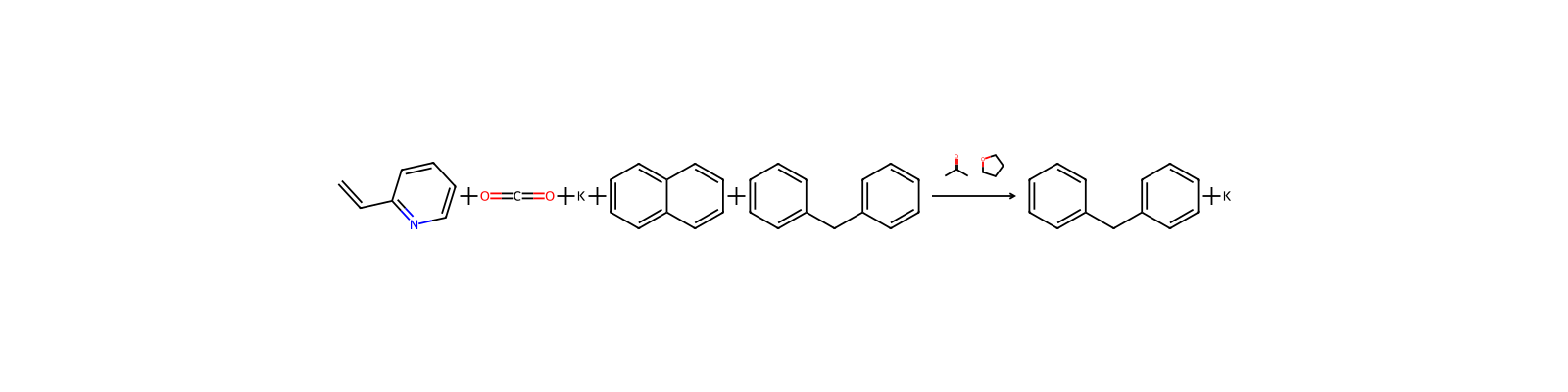
UsesDiphenylmethane is widely used in the synthesis of luminogens for aggregation-induced emission (AIE). It is used in the preparation of a polymerization initiator, diphenylmethyl potassium (DPMK). It is one of the precursors in the synthesis of a dendrimeric polycyclic aromatic hydrocarbon (PAH), hexakis[4-(1,1,2-triphenyl-ethenyl)phenyl]benzene.

OccurrenceHas apparently not been reported to occur in nature.

UsesDiphenylmethane, is used as an adhesive chemical composition for making flexible laminates for use in food packaging.

Preparation methods

PreparationBy interaction of benzyl chloride and benzene in the presence of an acid cata lyst.

Upstream & downstream products

Upstream raw materials

amalgamZinc chlorideAluminum chlorideChlorodiphenylmethaneBenzene, 1-(1,1-dimethylethyl)-4-(phenylmethyl)-3-Ethyl-2,4-pentanedione

Downstream products

β-Estradiolα-phenyl-2-p-tolylethylamineBLASTICIDIN S2-(4-Chlorophenyl)-3-methylbutyronitrileAzelastinePolymethylene polyphenyl polyisocyanateBromodiphenylmethane2,2-Diphenylacetic aciddiphenylmethyllithium4-Fluoro-4'-nitrobenzophenone4,4'-DDM2-Methyl-1,3-cyclopentanedione1,1'-(Methylene-di-4,1-phenylene)bis[2-hydroxy-2-methyl-1-propanone](2-(4-vinylphenyl)ethene-1,1,2-triyl)tribenzeneDiphenylmethane-4,4'-dicarboxylic acid
Additional notes · 2 items

DefinitionDiphenylmethane is an organic compound with the formula (C6H5)2CH2 (often abbreviated CH2Ph2). The compound consists of methane wherein two hydrogen atoms are replaced by two phenyl groups. Diphenylmethane is a common skeleton in organic chemistry. The diphenylmethyl group is also known as benzhydryl, and it is prepared by the Friedel–Crafts alkylation of benzyl chloride with benzene in the presence of a Lewis acid such as aluminium chloride.

DefinitionChEBI: A diarylmethane that is methane substituted by two phenyl groups.