Reaction equation

[C:1]1([OH:7])[CH:6]=[CH:5][CH:4]=[CH:3][CH:2]=1.C1(CC2C=CC=CC=2)C=CC=CC=1.[PH2](O)=O.[C:24](Cl)(Cl)=[O:25].[C:28](Cl)([Cl:30])=[O:29].[C:32]1([OH:38])[CH:37]=[CH:36][CH:35]=[CH:34][CH:33]=1>>[C:24](=[O:25])([O:38][C:32]1[CH:37]=[CH:36][CH:35]=[CH:34][CH:33]=1)[O:7][C:1]1[CH:6]=[CH:5][CH:4]=[CH:3][CH:2]=1.[C:1]1([O:7][C:28]([Cl:30])=[O:29])[CH:6]=[CH:5][CH:4]=[CH:3][CH:2]=1.[C:1]1([OH:7])[CH:6]=[CH:5][CH:4]=[CH:3][CH:2]=1Participants
8




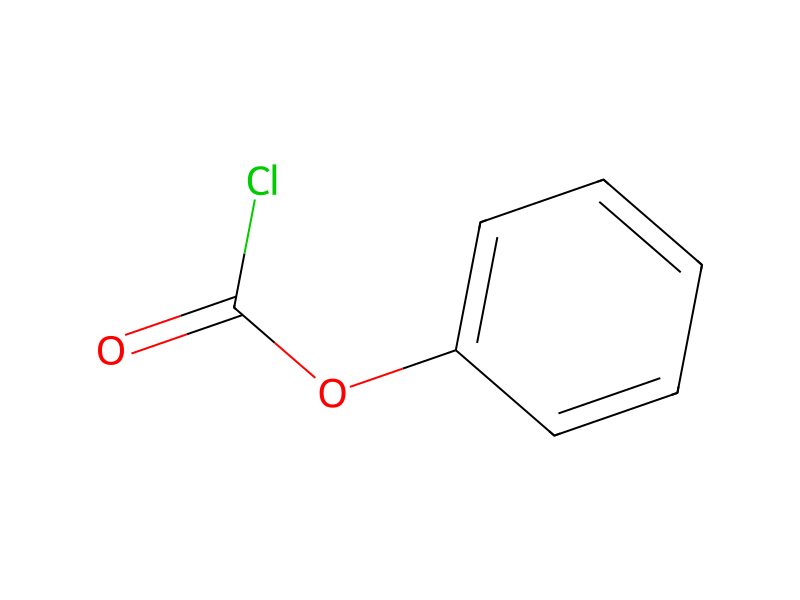
Conditions
- Temperature
- 120 °C
Procedure
The reactor of Example 1 is charged with phenol (319.0 g, 3.390 mol), diphenylmethane as an internal GC standard (3.0723 g), and 50 weight percent hypophosphorous acid (7.046 g). Phosgene (64.6 g, 0.65 mol) is passed into the reactor for 90 min. Phosgene/phenol molar ratio is 0.19. After heating at 120° C. an additional 4 hr the reactor is cooled to ambient temperature. Analysis by GC yields diphenyl carbonate (29.1 mmol), phenylchloroformate (156.7 mmol) and phenol (2.96 mol). Selectivity to phenylchloroformate is 36 mole percent based on phenol, 24 mole percent based on phosgene. Part of the phenol is consumed in a reaction with hypophosphorous acid to yield triphenyl phosphate.
Workup
- temperatureis cooled to ambient temperature
Sources & evidence
- ORD record
- ord-076d81faa0854800bc12fb85d8d57f50
- Source dataset
- uspto-grants-1995_06
- Patent number
- US05424473
Linked notes
Loading…