
HRID 3482As reactant
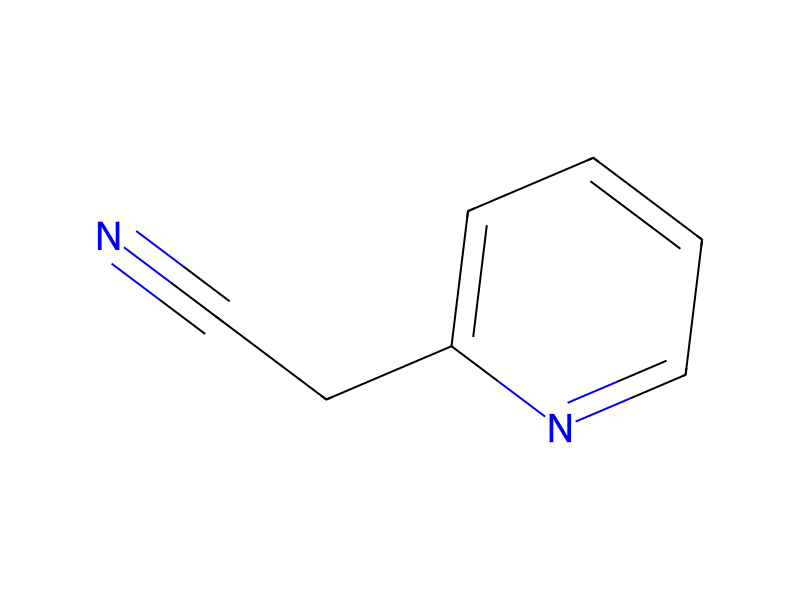
2739-97-1N#CCc1ccccn1UKVQBONVSSLJBB-UHFFFAOYSA-N2739-97-1DTXSID30181816CHEMBL4630648Safety information is for reference only and does not replace the supplier’s Safety Data Sheet (SDS), applicable regulations, or professional assessment.
Danger
H301 (89.8%): Toxic if swallowed [Danger Acute toxicity, oral]
P261, P262, P264, P264+P265, P270, P271, P280, P301+P316, P302+P352, P304+P340, P305+P351+P338, P316, P319, P321, P330, P332+P317, P337+P317, P361+P364, P362+P364, P403+P233, P405, and P501 (click each P-code to see the statement)
Aggregated GHS information provided per 49 reports by companies from 8 notifications to the ECHA C&L Inventory. Each notification may be associated with multiple companies.
Uses2-Pyridineacetonitrile is used as a pharmaceutical intermediate. It is also used as an important raw material and intermediate used in organic Synthesis, pharmaceuticals, agrochemicals and dyestuff.
General Description2-Pyridylacetonitrile undergoes coupling with aromatic diazonium salts to yield arylhydrazones. It also undergoes condensation with active malonic esters to yield 1-cyano-3-substituted 2-hydroxyquinolizin-4-ones. Acylation reaction of 2-pyridylacetonitrile with hot acetic anhydride has been reported.


