
Basic information
- Standard SMILES
[C-]#[N+]c1c(C)cccc1C- InChIKey
DNJLFZHMJDSJFN-UHFFFAOYSA-N- Molecular formula
- C9H9N
- Average molar mass
- 131.17 g/mol
- Monoisotopic mass
- 131.07349929
Overview
binds to myoglobin
Names & identifiers
- Preferred name
- 2,6-Dimethylphenyl isocyanide
- IUPAC
- 2-isocyano-1,3-dimethylbenzene
- English name
- 2,6-Dimethylphenyl isocyanide
- Molecular formula
- C9H9N
- Molecular weight
- 131.17
Names & synonyms
2,6-Dimethylphenyl isocyanide2769-71-32,6-Dimethylphenylisonitrile2,6-XyleneisonitrileBenzene, 2-isocyano-1,3-dimethyl-TD977ELU5RNSC-1416902,6-xylyl isonitrileDTXSID10182048DIMPI cpdRefChem:833372,6-DIMPI
Show more names
HANSA ISN-0083m-xylyl isocyanideRARECHEM AQ BD 00272,6-Xylene isonitrileVIC-M-XYLYL ISOCYANIDE2,6-Dimethylisocyanobenzene
DTXCID20104539220-459-22-isocyano-1,3-dimethylbenzene2,6-Xylyl isocyanide2,6-DimethylphenylisocyanideMFCD000134792-isocyano-1,3-dimethyl-benzenevic.-m-Xylyl isocyanide
Database identifiers
- CAS
2769-71-3- PubChem CID
- 76009
- DTXSID
DTXSID10182048- UNII
- TD977ELU5R
- EC Number
- 220-459-2
- Nikkaji
- J1.923.624B、J100.427A
Properties
Computed structural properties
- XLogP
- 2.4
- Topological polar surface area
- 4.4 Ų
- Hydrogen bond donors
- 0
- Hydrogen bond acceptors
- 1
- Rotatable bonds
- 0
- Heavy atoms
- 10
- Formal charge
- 0
- Complexity
- 143
Physicochemical properties
- Melting point
- 72 · 72-75 °C
- Boiling point
- 50 · 50-53℃ (0.01 Torr)
- storage temp.
- 2 · 2-8°C
- form
- Crystalline
- Appearance
- White to off-white Solid
- Water Solubility
- Insoluble in water.
- BRN
- 3541909 · 3541909
- Exposure limits
- 25 mg/m3 · NIOSH: IDLH 25 mg/m3
- InChI
- 1S/C9H9N/c1-7-5-4-6-8(2)9(7)10-3/h4-6H,1-2H3
- InChIKey
- DNJLFZHMJDSJFN-UHFFFAOYSA-N
- SMILES
- Cc1cccc(C)c1[N+]#[C-]
- CAS DataBase Reference
- 2769 · 2769-71-3(CAS DataBase Reference)
- FDA UNII
- 977 ELU5R · TD977ELU5R
- UNSPSC Code
- 12352100 · 12352100
- NACRES
- 22 · NA.22
- Symbol(GHS)
- 7 · GHS07
- Signal word
- Warning
- Hazard statements
- 302 · H302+H312+H332
- Precautionary statements
- 261 · P261-P264-P280-P301+P312-P302+P352+P312-P304+P340+P312
- PPE
- 95 · dust mask type N95 (US), Eyeshields, Gloves
- Hazard Codes
- Xn
- Risk Statements
- 20 · 20/21/22
- Safety Statements
- 22 · 22-36
- RIDADR
- 2811 · UN2811
- WGK Germany
- 3 · 3
- HazardClass
- 6.1 · 6.1
- PackingGroup
- III
- HS Code
- 2929900090 · 2929900090
- Storage Class
- 11 · 11 - Combustible Solids
- Hazard Classifications
- 4 Oral · Acute Tox. 4 Oral
Safety & regulation
GHS classification
GHS Classification
Danger
H301 (13.3%): Toxic if swallowed [Danger Acute toxicity, oral]
P260, P261, P262, P264, P270, P271, P280, P284, P301+P316, P301+P317, P302+P352, P304+P340, P316, P317, P320, P321, P330, P361+P364, P362+P364, P403+P233, P405, and P501 (click each P-code to see the statement)
Aggregated GHS information provided per 45 reports by companies from 4 notifications to the ECHA C&L Inventory. Each notification may be associated with multiple companies.
Hazard information
Hazard Classes and CategoriesAcute Tox. 3 (13.3%)
Safety data
- PPE
- dust mask type N95 (US), Eyeshields, Gloves
- wgk
- 3
- ridadr
- UN2811
- hs_code
- 2929900090
- risk_code
- 20/21/22
- Signal word
- Warning
- Symbol(GHS)
- GHS07
- hazard_code
- Xn
- safety_code
- 22-36
- hazard_class
- 6.1
- Storage Class
- 11 - Combustible Solids
- packing_group
- III
- Hazard statements
- H302+H312+H332
- Hazard Classifications
- Acute Tox. 4 Oral
- Precautionary statements
- P261-P264-P280-P301+P312-P302+P352+P312-P304+P340+P312
Chemistry & industry
Applications
Uses2,6-Dimethylphenyl isocyanate is used in the preparation of homoleptic metallaamidine complex, derivatized bets-cyclodextrins. It is used as chiral stationary phase in normal-phase liquid chromatography. It is also involved in the preparation of tris( 2,6-dimethylphenylimido)methylrhenium (VII) and 1-(2-isopropylphenyl)-3-(2,6-dimethylphenyl)urea.
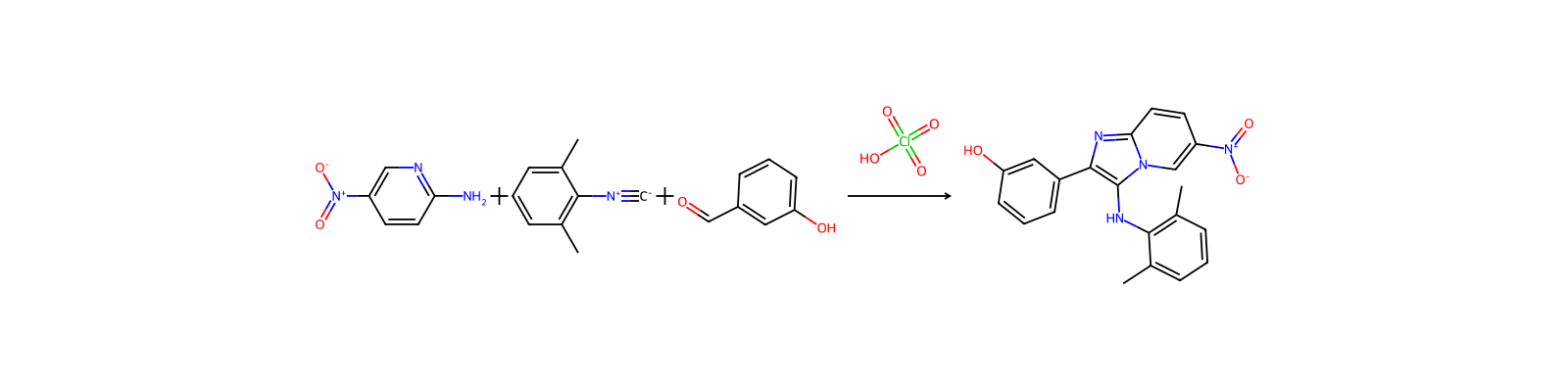
Uses2,6-Dimethylphenyl isocyanide may be employed for the synthesis of homoleptic metallaamidine complex, Mo(η2-Me2NCN-2,6-C6H3)4, via reaction with Mo(NMe2)4.
Upstream & downstream products
Downstream products
Suppliers50 total
上海康恩博医药科技有限公司17510465506 · [email protected]
郑州阿尔法化工有限公司+86-18530059196 · [email protected]
毕佳索(上海毕得医药科技股份有限公司)400-6005915 · [email protected]
上海麦克林生化科技股份有限公司021-50706066 15221275939 · [email protected]
杭州鼎燕化工有限公司13588754826 13588754826 · [email protected]
南京林叶化学试剂有限公司13376084917 13376082704 · [email protected]
湖北科乐精细化工有限公司027-59101668 19945030958 · [email protected]
Syntechem Co.,Ltd[email protected]
北京索莱宝科技有限公司010-50973130 17801761073 · [email protected]
上海辅欣医药科技有限公司+86-021-021-50872116 · [email protected]
Hangzhou Sage Chemical Co., Ltd.+86057186818502 13588463833 · [email protected]
阿法埃莎(中国)化学有限公司400-6106006 · [email protected]
安耐吉化学&3A(安徽泽升科技股份有限公司)400-0056266 · [email protected]
常州科化生物科技有限公司0519-68985668 13685222090 · [email protected]
上海瀚鸿科技股份有限公司021-54306202 13764082696 · [email protected]
上海瀚香生物科技有限公司177-54423994 17754423994 · [email protected]
烟台正信新材料科技有限公司13854547682 13854547682 · [email protected]
山东西亚化学有限公司13355009207 13355009207 · [email protected]
北京泰亚杰科技有限公司021-33690831-8001 13552411790;18616022633 · [email protected]
成都海品信医药科技有限公司85114309 18982182443 · [email protected]
越林试剂021-62960152 · [email protected]
上海毕得医药科技股份有限公司400-164-7117 18317119277 · [email protected]
武汉壹加壹生物科技有限公司027-027-16602739303 16602739303 · [email protected]
陕西缔都医药化工有限公司029-81024372 17792795018 · [email protected]
Sigma-Aldrich西格玛奥德里奇(上海)贸易有限公司021-61415566 800-8193336 · [email protected]
上海阿拉丁生化科技股份有限公司6206333 13167063860 · [email protected]
南京世洲生物科技有限公司025-85563444 18351873721 · [email protected]
上海源叶生物科技有限公司13636370518 · [email protected]
上海修时生物医药有限公司15002184385 15021598081 15002184385 · [email protected]
郑州艾克姆化工有限公司0371-0371-55629727 13323845623 · [email protected]
烟台盛凯伦化学科技有限公司13356901049 · [email protected]
郑州汇聚化工有限公司0371-55900031 18137872243 · [email protected]
山东小野化学股份有限公司0539-6362799 20)
上海贤鼎生物科技有限公司021-021-52271985 17721149837 · [email protected]
烟台博运生物科技有限公司13793517650 13793517650 · [email protected]
南京泽峰生物医药科技有限公司18851912129 18851912129 · [email protected]
江苏艾康生物医药研发有限公司025-58859352 15955137747 · [email protected]
上海易恩化学技术有限公司400-400-1332688 18019345275 · [email protected]
厦门盈融达化工有限公司+86-0592-6210733 · [email protected]
career henan chemical co+86-0371-86658258 · [email protected]
艾览(上海)化工科技有限公司400-668-9898 · [email protected]
ATK CHEMICAL COMPANY LIMITED+undefined-21-51877795 · [email protected]
Zjartspharm Co., Ltd15068876005 · [email protected]
上海瀚香生物科技有限公司17754423994 · [email protected]
北京迈瑞达科技有限公司010-82387566 · [email protected]
成都福瑞斯特科技发展有限公司028-87925786 18010564218 · [email protected]
爱诗伦生物科技(上海)有限公司021-50676523 18019098996 · [email protected]
海蔚化学86-21-51086038 · [email protected]
上海杰瑞兴生物医药科技有限公司17521512546 17721492509 · [email protected]
Aladdin Scientific[email protected]
Related reactions
16 records


Linked notes
Loading…