HomeMCPWorkbenchSkills
HomeWorkbenchNotificationsMe
llms.txt · MCP GuidePrivacy Policy · Terms of Service · Supportv1.8.0
  1. Home
  2. /Compound

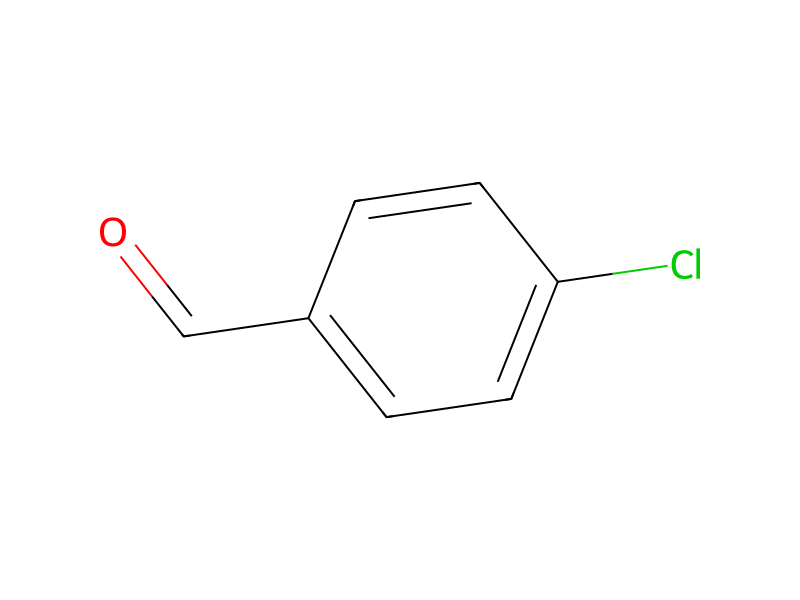
4-Chlorobenzaldehyde

HCID 7726
New noteNew reactionRequest quotes
Print preview

Completing data — refresh the page later to see the latest
Basic informationNames & identifiersPropertiesSafety & regulationChemistry & industryRelated reactionsCompound notes
Substructure searchFind similar structures

Basic information

CAS
104-88-1
Standard SMILES
O=Cc1ccc(Cl)cc1
InChIKey
AVPYQKSLYISFPO-UHFFFAOYSA-N
Molecular formula
C7H5ClO
Average molar mass
140.56 g/mol
Monoisotopic mass
140.0028925

Names & identifiers

Preferred name
4-Chlorobenzaldehyde
IUPAC
4-chlorobenzaldehyde
English name
4-Chlorobenzaldehyde
Molecular formula
C7H5ClO
Molecular weight
140.57

Names & synonyms

4-Chlorobenzaldehyde104-88-1P-CHLOROBENZALDEHYDEBenzaldehyde, 4-chloro-Benzaldehyde, p-chloro-p-ChlorobenzenecarboxaldehydePARA-CHLOROBENZALDEHYDEDTXSID2021860E67727UP9ZNSC-2078DTXCID501860RefChem:98544
Show more names
AQUEOUS AMMONIAAMMONIA WATERAMMONIA GASAMMONIUM ION CHROMATOGRAPHY STANDARDorobenzaLAMMONIA NO 1AMMONIA NO 2
203-247-44-chloro-benzaldehyde4-Chlorobenzenaldehyde4-chloro benzaldehydeMFCD000033794-ChlorbenzaldehydCCRIS 857PCAD

Database identifiers

CAS
104-88-1
PubChem CID
7726
DTXSID
DTXSID2021860
ChEMBL
CHEMBL1474
UNII
E67727UP9Z
EC Number
203-247-4
Nikkaji
J96.206F

Properties

Computed structural propertiesFilling in

XLogP
2.1
Topological polar surface area
17.1 Ų
Hydrogen bond donors
0
Hydrogen bond acceptors
1
Rotatable bonds
1
Heavy atoms
9
Formal charge
0
Complexity
95

Experimental & physicochemical properties

Density1.196 at 142 °F (NTP, 1992) - Denser than water; will sink
Solubilityless than 1 mg/mL at 67.1 °F (NTP, 1992)
Flash Point190 °F (NTP, 1992)
Boiling Point415 to 417 °F at 760 mmHg (NTP, 1992)
Melting Point111 to 117 °F (NTP, 1992)
Vapor Pressure0.18 [mmHg]
Physical Description · 2 items

4-chlorobenzaldehyde appears as colorless to yellow powder or white crystalline solid. Pungent odor. (NTP, 1992)

Colorless to yellow solid with a pungent odor; [CAMEO] Beige crystalline solid; [Sigma-Aldrich MSDS]

Kovats Retention Index1116;1122.6;1113.2;1137;1107

Physicochemical properties

Safety & regulation

Safety information is for reference only and does not replace the supplier’s Safety Data Sheet (SDS), applicable regulations, or professional assessment.

GHS classification

GHS Classification · 6 items

Warning

H302 (100%): Harmful if swallowed [Warning Acute toxicity, oral];H315 (99.6%): Causes skin irritation [Warning Skin corrosion/irritation];H317 (76.7%): May cause an allergic skin reaction [Warning Sensitization, Skin];H319 (99.6%): Causes serious eye irritation [Warning Serious eye damage/eye irritation];H335 (17.2%): May cause respiratory irritation [Warning Specific target organ toxicity, single exposure; Respiratory tract irritation];H411 (81.5%): Toxic to aquatic life with long lasting effects [Hazardous to the aquatic environment, long-term hazard]

P261, P264, P264+P265, P270, P271, P272, P273, P280, P301+P317, P302+P352, P304+P340, P305+P351+P338, P319, P321, P330, P332+P317, P333+P317, P337+P317, P362+P364, P391, P403+P233, P405, and P501 (click each P-code to see the statement)

Aggregated GHS information provided per 227 reports by companies from 11 notifications to the ECHA C&L Inventory. Each notification may be associated with multiple companies.;Information may vary between notifications depending on impurities, additives, and other factors. The percentage value in parenthesis indicates the notified classification ratio from companies that provide hazard codes. Only hazard codes with percentage values above 10% are shown. For more detailed information, please visit ECHA C&L website.

Hazard information

Regulatory Information · 3 items

Chemical: Benzaldehyde, 4-chloro-

Status: Active Update: 13-09-2022 https://echa.europa.eu/registration-dossier/-/registered-dossier/2167;Status: Active Update: 30-11-2012 https://echa.europa.eu/registration-dossier/-/registered-dossier/8298

4-Chlorobenzaldehyde: Does not have an individual approval but may be used under an appropriate group standard

DOT LabelPoison
Fire HazardsThis chemical is combustible. (NTP, 1992)

Chemistry & industry

Uses & manufacturing

UsesUsed as an intermediate for dyes, pharmaceuticals, and other organic compounds; [NTP] Used as an intermediate in chemical manufacturing; [ExPub: ECHA REACH Registrations]
General Manufacturing InformationBenzaldehyde, 4-chloro-: ACTIVE

Applications

Uses4-Chlorobenzaldehyde is used as an intermediate for the manufacture of dyestuffs, optical brighteners, pharmaceuticals, agricultural chemicals and metal finishing products.

General DescriptionColorless to yellow powder or white crystalline solid. Pungent odor.

Preparation methods · 1 item

Preparation4-Chlorobenzaldehyde can be obtained by chlorinated hydrolysis of p-chlorotoluene: add p-chlorotoluene and phosphorus trichloride to the reaction pot, raise the temperature to 155°C under light and pass chlorine. Control the temperature at 160-170℃ and pass chlorine to the calculated amount to obtain the chlorination solution. Add it to concentrated sulfuric acid with stirring, and stir for 5h at room temperature. let it stand and stratify, take the lower layer into ice water to crystallize, and filter it when it is cold to below 5℃. The filter cake was washed with ice water to obtain the crude product, distilled under reduced pressure and collected 108-111℃ (3.33kPa) fraction to obtain p-chlorobenzaldehyde.

Upstream & downstream products

Upstream raw materials

BENZAL CHLORIDEAIBNManganese dioxideChlorine

Related reactions

837 records
New reaction record
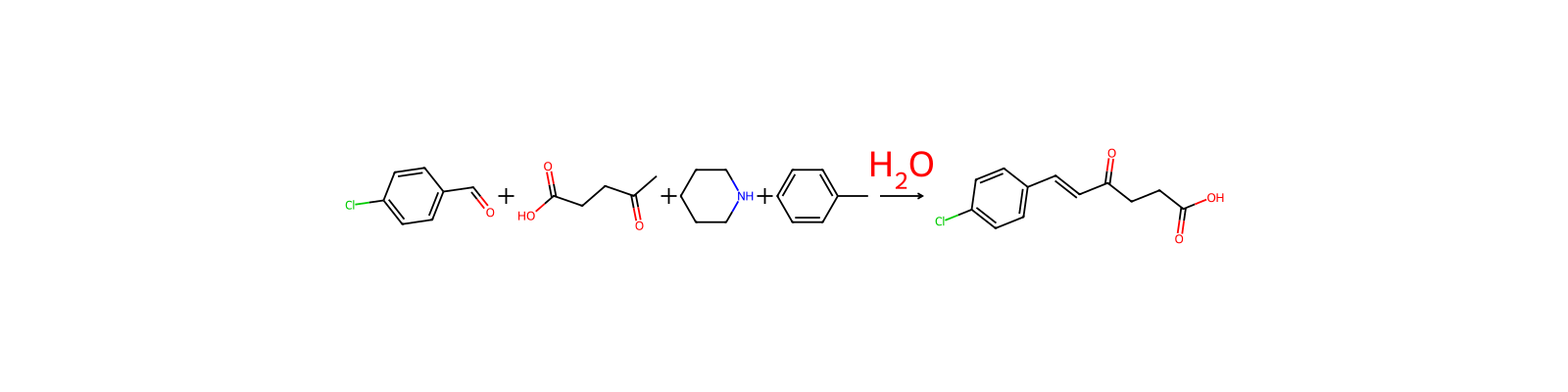
HRID 1516 reaction equation
HRID 1516As reactantuspto-grants-1998_03
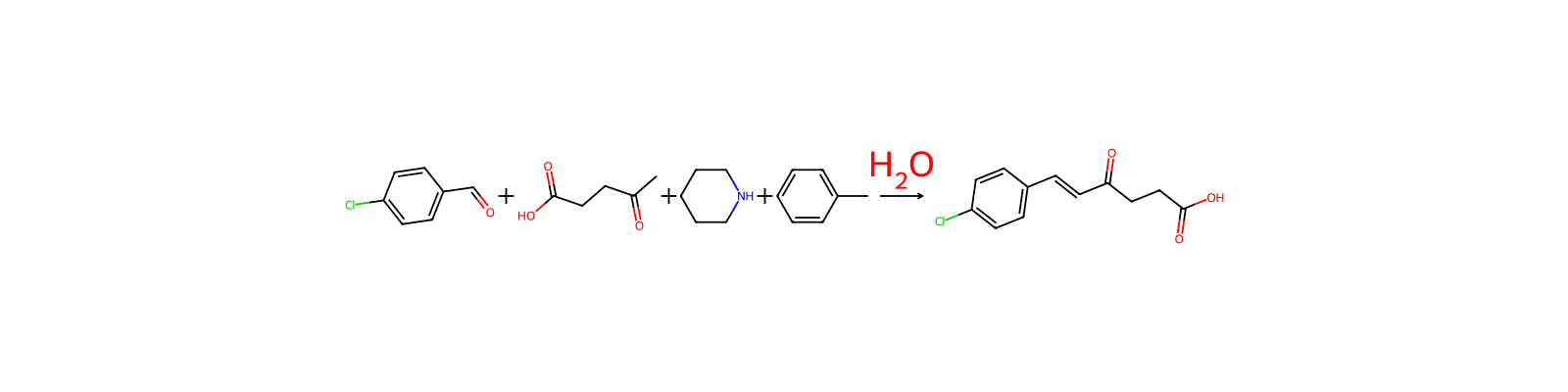
HRID 1585 reaction equation
HRID 1585As reactantuspto-grants-1998_03
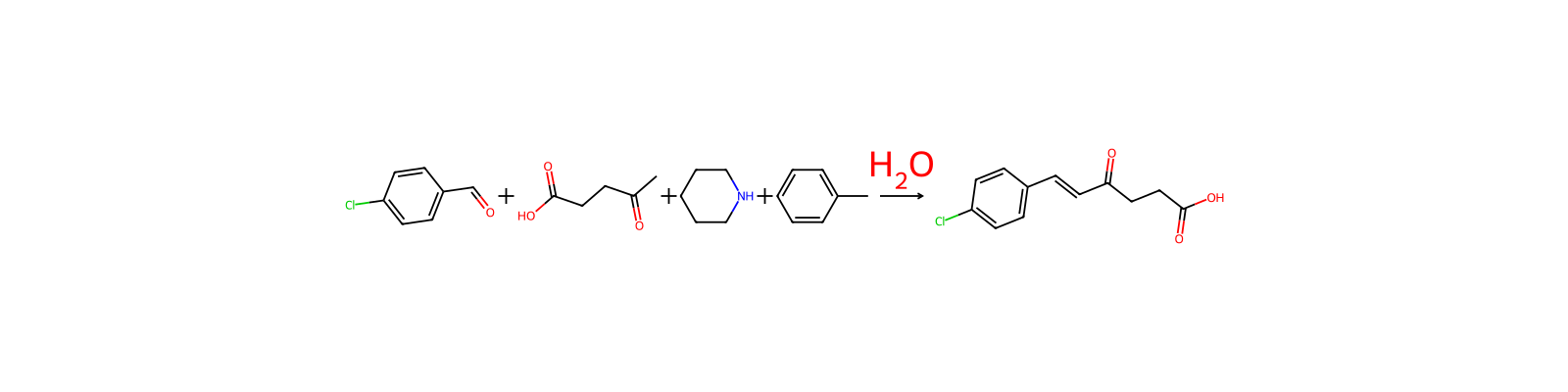
HRID 2090 reaction equation
HRID 2090As reactantuspto-grants-1998_03
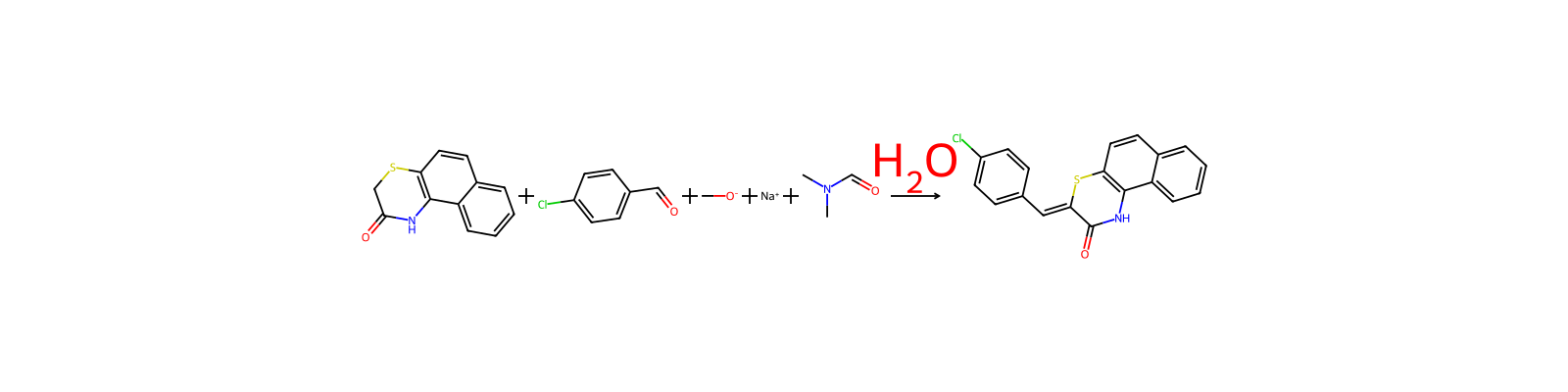
HRID 2131 reaction equation
HRID 2131As reactantuspto-grants-1998_03
HRID 2189 reaction equation
HRID 2189As reactantuspto-grants-1998_03
HRID 5833 reaction equation
HRID 5833As reactantuspto-grants-1993_09
HRID 5922 reaction equation
HRID 5922As reactantuspto-grants-1993_09
HRID 5933 reaction equation
HRID 5933As reactantuspto-grants-1993_09
Page 1 of 105

Compound notes

Loading…

On this pageBasic informationNames & identifiersPropertiesSafety & regulationChemistry & industryRelated reactionsCompound notes
More actions
New noteNew reactionRequest quotes
Melting point
46 °C · 46 °C
Boiling point
213 · 213-214℃
Density
1.196 · 1.196
vapor density
0.6 · 0.6 (vs air)
vapor pressure
8.75 atm · 8.75 atm ( 21 °C)
refractive index
1.555 · 1.5550 (estimate)
Flash point
52 °F · 52 °F
storage temp.
30 °C · Store below +30°C.
solubility
935 mg/l · 935mg/l
form
Liquid
color
White to pale yellow
Water Solubility
935 mg/L · 935 mg/L (20 ºC)
Sensitive
Air Sensitive
BRN
385858 · 385858
Dielectric constant
72 · 72(0.0℃)
Stability
Stable, but air and light-sensitive. Incompatible with strong bases, strong reducing agents, strong oxidizing agents.
InChI
1S/C7H5ClO/c8-7-3-1-6(5-9)2-4-7/h1-5H
InChIKey
AVPYQKSLYISFPO-UHFFFAOYSA-N
SMILES
[H]C(=O)c1ccc(Cl)cc1
LogP
2.34 at · 2.34 at 25℃ and pH7
CAS DataBase Reference
104 · 104-88-1(CAS DataBase Reference)
EWG's Food Scores
1 · 1
FDA UNII
67727 UP9Z · E67727UP9Z
NIST Chemistry Reference
4 · Benzaldehyde, 4-chloro-(104-88-1)
EPA Substance Registry System
p-Chlorobenzaldehyde (104-88-1)
UNSPSC Code
12352114 · 12352114
NACRES
22 · NA.22
Symbol(GHS)
7 · GHS07,GHS09
Signal word
Warning
Hazard statements
302 · H302-H315-H317-H319-H411
Precautionary statements
261 · P261-P273-P280-P301+P312-P302+P352-P305+P351+P338
PPE
95 · dust mask type N95 (US), Eyeshields, Gloves
Hazard Codes
F,C,N,Xn,Xi
Risk Statements
22 · 22-36/37/38-51/53-36/38
Safety Statements
26 · 26-61-37/39-36
RIDADR
1219 · UN 1219 3/PG 2
WGK Germany
2 · 2
RTECS
5076000 · CU5076000
F
8 · 8-9
Autoignition Temperature
302 °C · 302 °C
TSCA
TSCA listed
HazardClass
9 · 9
PackingGroup
III
HS Code
29130000 · 29130000
Storage Class
11 · 11 - Combustible Solids
Hazard Classifications
4 OralAquatic · Acute Tox. 4 OralAquatic Chronic 2Eye Irrit. 2Skin Irrit. 2Skin Sens. 1
Toxicity
50 orally · LD50 orally in Rabbit: 840 mg/kg LD50 dermal Rat 5000 mg/kg
REACH Registrations
Active
Health Hazards · 1 item

SYMPTOMS: Symptoms of exposure to this compound include irritation of the skin, eyes and mucous membranes.;ACUTE/CHRONIC HAZARDS: This chemical may be harmful by inhalation, ingestion or skin absorption. It is an irritant of the skin, eyes and mucous membranes. When heated to decomposition it emits toxic fumes of carbon monoxide, carbon dioxide and hydrogen chloride gas. (NTP, 1992)

Hazards Summary · 1 item

No mortalities observed in rats exposed by inhalation to 321 mg/m3 for 4 hours or 250 mg/m3 for 7 hours; Causes mild to severe skin and mild eye irritation in rabbits; [IUCLID] Causes altered sleep time (including change in righting reflex), somnolence, and excitement in oral lethal-dose studies of mice and rats; [RTECS] A skin, eye, and mucous membrane irritant; [NTP] A skin and strong eye irritant; Harmful by ingestion; [Sigma-Aldrich MSDS]

Reactive GroupAldehydes;Hydrocarbons, Aromatic;Aryl Halides
Reactivity Profile4-CHLOROBENZALDEHYDE is sensitive to exposure to air. It is also sensitive to light. REACTIVITY: This chemical is incompatible with strong bases, strong oxidizers and strong reducing agents. (NTP, 1992)
Air and Water ReactionsThis chemical is sensitive to exposure to air. Insoluble in water.
Hazard Classes and Categories · 2 items

Acute Tox. 4 (100%);Skin Irrit. 2 (99.6%);Skin Sens. 1 (76.7%);Eye Irrit. 2A (99.6%);STOT SE 3 (17.2%);Aquatic Chronic 2 (81.5%)

Acute toxicity (Oral) - Category 4;Skin corrosion/irritation - Category 2;Serious eye damage/eye irritation - Category 2B;Specific target organ toxicity - Single exposure - Category 2 (central nervous system);Hazardous to the aquatic environment (Acute) - Category 2;Hazardous to the aquatic environment (Long-term) - Category 2

CSL Reaction Information · 6 items

CSL00161

Chlorosulfonic acid + 4-Chlorobenzaldehyde

Reaction resulted in an explosion.

Explosive

Not Available

User Reported

Safety & protection

Fire FightingFires involving this material can be controlled with a dry chemical, carbon dioxide or Halon extinguisher. A water spray may also be used. (NTP, 1992)
First Aid · 1 item

EYES: First check the victim for contact lenses and remove if present. Flush victim's eyes with water or normal saline solution for 20 to 30 minutes while simultaneously calling a hospital or poison control center. Do not put any ointments, oils, or medication in the victim's eyes without specific instructions from a physician. IMMEDIATELY transport the victim after flushing eyes to a hospital even if no symptoms (such as redness or irritation) develop.;SKIN: IMMEDIATELY flood affected skin with water while removing and isolating all contaminated clothing. Gently wash all affected skin areas thoroughly with soap and water. If symptoms such as redness or irritation develop, IMMEDIATELY call a physician and be prepared to transport the victim to a hospital for treatment.;INHALATION: IMMEDIATELY leave the contaminated area; take deep breaths of fresh air. If symptoms (such as wheezing, coughing, shortness of breath, or burning in the mouth, throat, or chest) develop, call a physician and be prepared to transport the victim to a hospital. Provide proper respiratory protection to rescuers entering an unknown atmosphere. Whenever possible, Self-Contained Breathing Apparatus (SCBA) should be used; if not available, use a level of protection greater than or equal to that advised under Protective Clothing.;INGESTION: DO NOT INDUCE VOMITING. If the victim is conscious and not convulsing, give 1 or 2 glasses of water to dilute the chemical and IMMEDIATELY call a hospital or poison control center. Be prepared to transport the victim to a hospital if advised by a physician. If the victim is convulsing or unconscious, do not give anything by mouth, ensure that the victim's airway is open and lay the victim on his/her side with the head lower than the body. DO NOT INDUCE VOMITING. IMMEDIATELY transport the victim to a hospital. (NTP, 1992)

Nonfire Spill Response · 1 item

SMALL SPILLS AND LEAKAGE: Should a spill occur while you are handling this chemical, FIRST REMOVE ALL SOURCES OF IGNITION, then you should dampen the solid spill material with 60-70% ethanol and transfer the dampened material to a suitable container. Use absorbent paper dampened with 60-70% ethanol to pick up any remaining material. Seal the absorbent paper, and any of your clothes, which may be contaminated, in a vapor-tight plastic bag for eventual disposal. Solvent wash all contaminated surfaces with 60-70% ethanol followed by washing with a soap and water solution. Do not reenter the contaminated area until the Safety Officer (or other responsible person) has verified that the area has been properly cleaned.;STORAGE PRECAUTIONS: You should protect this chemical from exposure to light. Keep the container tightly closed under an inert atmosphere, and store under refrigerated temperatures. (NTP, 1992)

Isolation and Evacuation · 1 item

Excerpt from ERG Guide 154 [Substances - Toxic and/or Corrosive (Non-Combustible)]:;IMMEDIATE PRECAUTIONARY MEASURE: Isolate spill or leak area in all directions for at least 50 meters (150 feet) for liquids and at least 25 meters (75 feet) for solids.;SPILL: Increase the immediate precautionary measure distance, in the downwind direction, as necessary.;FIRE: If tank, rail tank car or highway tank is involved in a fire, ISOLATE for 800 meters (1/2 mile) in all directions; also, consider initial evacuation for 800 meters (1/2 mile) in all directions. (ERG, 2024)

Personal Protective Equipment (PPE) · 1 item

RECOMMENDED RESPIRATOR: Where the neat test chemical is weighed and diluted, wear a NIOSH-approved half face respirator equipped with an organic vapor/acid gas cartridge (specific for organic vapors, HCl, acid gas and SO2) with a dust/mist filter. (NTP, 1992)

Toxicology

Toxicity DataLC (rat) > 473 mg/m3/4hr

Regulatory information

Regulatory Information · 3 items

Chemical: Benzaldehyde, 4-chloro-

Status: Active Update: 13-09-2022 https://echa.europa.eu/registration-dossier/-/registered-dossier/2167;Status: Active Update: 30-11-2012 https://echa.europa.eu/registration-dossier/-/registered-dossier/8298

4-Chlorobenzaldehyde: Does not have an individual approval but may be used under an appropriate group standard

Safety data

F
8-9
PPE
dust mask type N95 (US), Eyeshields, Gloves
wgk
2
tsca
TSCA listed
rtecs
CU5076000
ridadr
UN 1219 3/PG 2
hs_code
29130000
Toxicity
LD50 orally in Rabbit: 840 mg/kg LD50 dermal Rat 5000 mg/kg
risk_code
22-36/37/38-51/53-36/38
Signal word
Warning
Symbol(GHS)
GHS07,GHS09
hazard_code
F,C,N,Xn,Xi
safety_code
26-61-37/39-36
hazard_class
9
Storage Class
11 - Combustible Solids
packing_group
III
Hazard statements
H302-H315-H317-H319-H411
REACH Registrations
Active
Hazard Classifications
Acute Tox. 4 OralAquatic Chronic 2Eye Irrit. 2Skin Irrit. 2Skin Sens. 1
Autoignition Temperature
302 °C
Precautionary statements
P261-P273-P280-P301+P312-P302+P352-P305+P351+P338
4-Chlorobenzyl chloride
Metallic oxides
4-Chlorotoluene

Downstream products

Homopiperonylamine4-Chlorocinnamic acidAcid Blue 832-Amino-2-phenylacetic acidRobenidine hydrochlorideCyromazineα-phenyl-2-p-tolylethylamine2,4-DinitroanilineAMMONIUM O,O-DIISOPROPYLTHIOPHOSPHATEAmmonium L-tartrate3-(4-CHLORO-PHENYL)-PROPIONALDEHYDE4-Chlorobenzyl pinacolone1-amino-9,10-dihydro-9,10-dioxo-2-anthracenecarboxylicaci4-CHLORO-ALPHA-(METHYLAMINO)BENZENE ACETIC ACIDAceglutamideChlorfenapyrUNICONAZOLE(4-CHLORO-BENZYL)-METHYL-AMINEUniconazoleUniconazole wettable powder5-chloro-alpha,alpha-bis(3,5-dichloro-2-hydroxyphenyl)-2-toluenesulfonic4-Chloro-3-nitrobenzaldehydeDithizoneDodecylamineTetrabutyl titanateNEOCUPFERRON2,5-Dihydro-2,5-dimethoxyfuranFelbamate3-ETHYLSULFONYL-2-PYRIDINESULFONAMIDE2-(4-CHLOROPHENYL)-3-METHYL-TETRAHYDRO-1,3-THIAZINE-4-ONEPropionamideAnilinoacetic acidChlormezanoneBaclofenN-[(4-CHLOROPHENYL)METHYLENE]METHANAMINESynthetic greasing agent1,3-diisopropyl-2-isothiocyanato-5-phenoxybenzeneOxcarbazepineBoron nitride1H-Benzotriazol-1-yloxytris(dimethylamino)phosphonium Hexafluorophosphate