Reaction equation
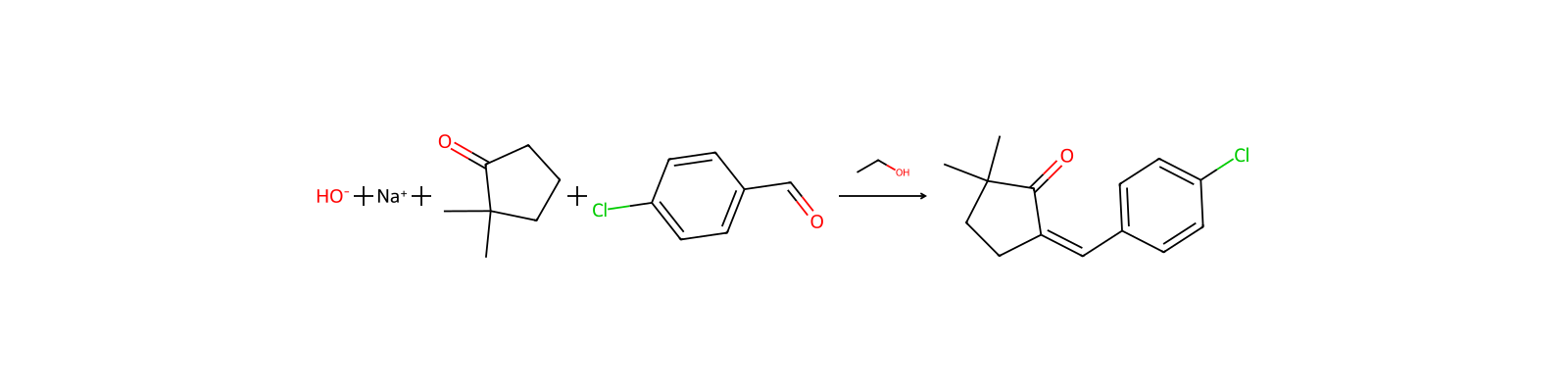
[OH-].[Na+].[CH3:3][C:4]1([CH3:10])[CH2:8][CH2:7][CH2:6][C:5]1=[O:9].[Cl:11][C:12]1[CH:19]=[CH:18][C:15]([CH:16]=O)=[CH:14][CH:13]=1>C(O)C>[CH3:3][C:4]1([CH3:10])[CH2:8][CH2:7][C:6](=[CH:16][C:15]2[CH:18]=[CH:19][C:12]([Cl:11])=[CH:13][CH:14]=2)[C:5]1=[O:9]Participants
Reactant 3

Product 1

Reagents, catalysts & solvents 1

Procedure
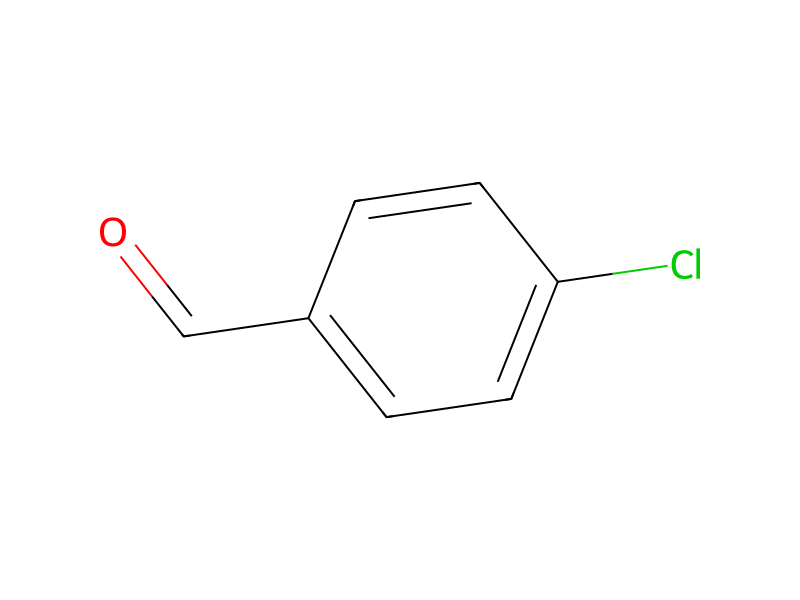
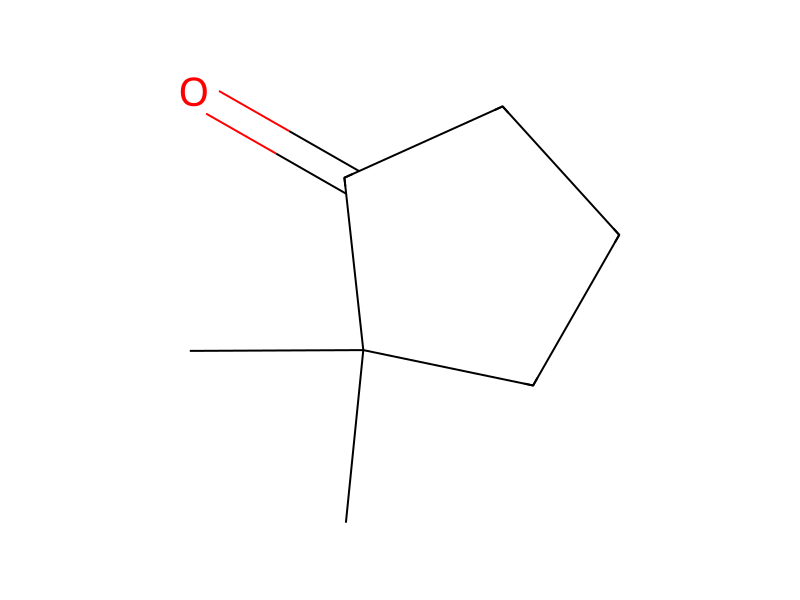
100 ml of a 10% aqueous solution of sodium hydroxide were added to a mixture of 10 g of 2,2-dimethylcyclopentanone and 13.8 g of 4-chlorobenzaldehyde in 100 ml of ethanol at 0° C. After 30 minutes, a thick slurry was filtered off and the solid washed and then dried. 12.5 g of 2,2-dimethyl-5-(4-chlorobenzylidene)-1-cyclopentanone with a melting point of 120° C. were obtained. This compound, dissolved in 50 ml of THF, was added to a solution formed in the following manner: 1.9 g of sodium hydride (80% dispersion in mineral oil) in 50 ml of anhydrous DMSO were heated to 80° C. until complete dissolution of the solid. The solution was then diluted with 100 ml of THF, then cooled to -10° C. A solution of 11.5 g of trimethylsulphonium iodide in 80 ml of dimethyl sulphoxide were added to the mixture in the course of ten minutes and the mixture was stirred for 15 minutes at -10° C. A solution of 11.8 g of 2,2-dimethyl-4-chloro-5-(4-chlorobenzylidene)-1-cyclopentanone was then added in 100 ml of THF.
Workup
- filtrationa thick slurry was filtered off
- washthe solid washed
- customdried
Sources & evidence
- ORD record
- ord-f7c11daffec247348ae0459b122a7bd7
- Source dataset
- uspto-grants-1993_09
- Patent number
- US05246954
Linked notes
Loading…