

Basic information
- CAS
3964-52-1- Standard SMILES
Nc1ccc(O)c(Cl)c1- InChIKey
ZYZQSCWSPFLAFM-UHFFFAOYSA-N- Molecular formula
- C6H6ClNO
- Average molar mass
- 143.57 g/mol
- Monoisotopic mass
- 143.01379149
Names & identifiers
- Preferred name
- 4-Amino-2-chlorophenol
- IUPAC
- 4-amino-2-chlorophenol
- English name
- 3-Chloro-4-hydroxyaniline
- Molecular formula
- C6H6ClNO
- Molecular weight
- 143.57
Names & synonyms
4-Amino-2-chlorophenol3964-52-13-Chloro-4-hydroxyanilinePhenol, 4-amino-2-chloro-2Z6ZT3B98UDTXSID10192743RefChem:93430DTXCID50115234609-733-62-CHLORO-4-AMINOPHENOL4-Amino-2-chloro-phenolMFCD00128891
Show more names
2 CAP4-Amino-2-chLTIMTEC-BB SBB0041363-Chloro-4-hydroxyan2-Chloro-4-aminopheno2-Chloro-4-hydroxyaniline
UNII-2Z6ZT3B98U2-chloro-p-aminophenolLenvatinib Impurity 76salzsaurem p-Aminophenol3-chloro4-hydroxyanilineo-Chloro-p-aminophenol4-Amino-2-chlorophenol; (3-Chloro-4-hydroxyphenyl)amine; 2-Chloro-4-aminophenol; 2-Chloro-p-aminophenol; 3-Chloro-4-hydroxyaniline; m-Chloro-p-hydroxyaniline4 -amino-2
Database identifiers
- CAS
3964-52-1- PubChem CID
- 77578
- DTXSID
DTXSID10192743- ChEMBL
CHEMBL4079998- UNII
- 2Z6ZT3B98U
- EC Number
- 609-733-6
- Nikkaji
- J79.890H
Properties
Computed structural properties
- XLogP
- 1.8
- Topological polar surface area
- 46.3 Ų
- Hydrogen bond donors
- 2
- Hydrogen bond acceptors
- 2
- Rotatable bonds
- 0
- Heavy atoms
- 9
- Formal charge
- 0
- Complexity
- 99.1
Physicochemical properties
- Melting point
- 150 · 150-153 °C(lit.)
- Boiling point
- 292.7 · 292.7±25.0 °C(Predicted)
- Density
- 1.406 · 1.406±0.06 g/cm3(Predicted)
- storage temp.
- Keep in dark place,Sealed in dry,Room Temperature
- solubility
- DMSO (Slightly), Methanol (Slightly)
- pka
- 8.75 · 8.75±0.18(Predicted)
- form
- Solid
- color
- Dark Brown
- Stability
- Stable. Incompatible with strong oxidizing agents.
- InChI
- InChI=1S/C6H6ClNO/c7-5-3-4(8)1-2-6(5)9/h1-3,9H,8H2
- InChIKey
- ZYZQSCWSPFLAFM-UHFFFAOYSA-N
- SMILES
- C1(O)=CC=C(N)C=C1Cl
- CAS DataBase Reference
- 3964 · 3964-52-1(CAS DataBase Reference)
- FDA UNII
- 2 Z6ZT3B98U · 2Z6ZT3B98U
- UNSPSC Code
- 12352100 · 12352100
- NACRES
- 22 · NA.22
- Symbol(GHS)
- 7 · GHS07
- Signal word
- Warning
- Hazard statements
- 302 · H302+H312+H332-H315-H319-H335
- Precautionary statements
- 261 · P261-P280-P301+P312-P302+P352+P312-P304+P340+P312-P305+P351+P338
- target organs
- Respiratory system
- PPE
- 95 · dust mask type N95 (US), Eyeshields, Gloves
- Hazard Codes
- Xn
- Risk Statements
- 20 · 20/21/22-36/37/38
- Safety Statements
- 26 · 26-36
- WGK Germany
- 3 · 3
- HS Code
- 29222900 · 29222900
- Storage Class
- 11 · 11 - Combustible Solids
- Hazard Classifications
- 4 DermalAcute · Acute Tox. 4 DermalAcute Tox. 4 InhalationAcute Tox. 4 OralEye Irrit. 2Skin Irrit. 2STOT SE 3
Safety & regulation
GHS classification
GHS Classification
Warning
H302 (97.8%): Harmful if swallowed [Warning Acute toxicity, oral]
P261, P264, P264+P265, P270, P271, P280, P301+P317, P302+P352, P304+P340, P305+P351+P338, P317, P319, P321, P330, P332+P317, P337+P317, P362+P364, P403+P233, P405, and P501 (click each P-code to see the statement)
Aggregated GHS information provided per 46 reports by companies from 6 notifications to the ECHA C&L Inventory. Each notification may be associated with multiple companies.
Hazard information
Regulatory InformationCommission Regulation No 844/2012
Hazard Classes and CategoriesAcute Tox. 4 (97.8%)
Safety data
- PPE
- dust mask type N95 (US), Eyeshields, Gloves
- wgk
- 3
- hs_code
- 29222900
- risk_code
- 20/21/22-36/37/38
- Signal word
- Warning
- Symbol(GHS)
- GHS07
- hazard_code
- Xn
- safety_code
- 26-36
- Storage Class
- 11 - Combustible Solids
- target organs
- Respiratory system
- Hazard statements
- H302+H312+H332-H315-H319-H335
- Hazard Classifications
- Acute Tox. 4 DermalAcute Tox. 4 InhalationAcute Tox. 4 OralEye Irrit. 2Skin Irrit. 2STOT SE 3
- Precautionary statements
- P261-P280-P301+P312-P302+P352+P312-P304+P340+P312-P305+P351+P338
Chemistry & industry
Applications
Uses4-Amino-2-chlorophenol may be used in the synthesis of the following compounds:N-(3-chloro-4-hydroxyphenyl)-N′,N′-dimethylurea1,4-diketo-3-((4-[N-(3-chloro-4-hydroxyphenyl)amino]sulfonyl)phenyl)-6-phenylpyrrolo[3,4-c]pyrrole, a novel fluorescent pH-indicator4-(4-aminophenoxy)-N-(4-(4-aminophenoxy) benzylidene)-3-chloroaniline 4-(4-amino-3-methylphenoxy)-N-(4-(4-amino-3-methylphenoxy)benzylidene)-3-chloroaniline4-(4-amino-2-methylphenoxy)-N-(4-(4-amino-2-methylphenoxy)benzylidene)-3-chloroaniline
General Description4-Amino-2-chlorophenol (4A2CP) is a chlorinated aniline. Nephrotoxic potential of 4-amino-2-chlorophenol and its comparison with 4-aminophenol, 4-amino-2-chlorophenol, 4-amino-3-chlorophenol and 4-amino-2,6-dichlorophenol using isolated renal cortical cells from male Fischer 344 rats has been investigated.
Upstream & downstream products
Upstream raw materials
Downstream products
Suppliers100 total
国药集团化学试剂有限公司86-21-63210123 · [email protected]
梯希爱(上海)化成工业发展有限公司021-67121386 · [email protected]
上海阿拉丁生化科技股份有限公司400-6206333 13167063860 · [email protected]
宁波君龙新材料有限公司0574 88552216 19032109277 · [email protected]
常州科益化工有限公司519-81882581 18602584369 · [email protected]
爱斯特(成都)生物制药股份有限公司+86-28-85122536 85324413 · [email protected]
Dayang Chem (Hangzhou) Co.,Ltd.+86-0571-88938639 17705817739 · [email protected]
科瑞迪化学400-821-5857 021-64326257 · [email protected]
上海将来实业股份有限公司400-0066400 13621662912 · [email protected]
上海迈瑞尔生化科技有限公司4006356688 18621169109 · [email protected]
北京华威锐科化工有限公司0757-86329057 18934348241 · [email protected]
阿法埃莎(中国)化学有限公司400-6106006 · [email protected]
上海德默医药科技有限公司400-021-7337 2355568890 · [email protected]
安耐吉化学&3A(安徽泽升科技股份有限公司)400-0056266 · [email protected]
常州安轩化工有限公司13912302692 · [email protected]
上海瀚鸿科技股份有限公司021-54306202 13764082696 · [email protected]
上海景颜化工科技有限公司13817811078 · [email protected]
杭州东帆化学有限公司86-0571-85151182
山东西亚化学有限公司13355009207 13355009207 · [email protected]
四川库利南科技有限公司400-1166-196 18981987031 · [email protected]
艾科试剂4008-755-333 18080918076 · [email protected]
赛默飞世尔科技(中国)有限公司800-810-5118 · [email protected]
北京伊诺凯科技有限公司400-810-7969 010-59572699 · [email protected]
上海特伯化学科技有限公司+86-21-60341587 · [email protected]
江苏艾康生物医药研发有限公司025-66113011 13913916777 · [email protected]
TCI AMERICA800-4238616 · [email protected]
TOKYO CHEMICAL INDUSTRY CO., LTD.03-36680489 · [email protected]
TCI Europe320-37350700 · [email protected]
上海贤鼎生物科技有限公司4009209199 · [email protected]
深圳振强药物研发有限公司0755-66853366 13670046396 · [email protected]
上海汇凯化学科技有限公司021-61995394 18916691159 · [email protected]
宁波台康化工有限公司0574-87365517 18074210286 · [email protected]
北京环宇世纪化学科技有限公司hysj_bj.com
上海将来实业股份有限公司400-0066400 13621662912 · [email protected]
上海将来实业股份有限公司021-61552785 · [email protected]
常州艾菲森化工科技有限公司18136598690 18136597130
HBCChem, Inc.+1-510-219-6317 · [email protected]
上海毕得医药科技股份有限公司400-164-7117 18317119277 · [email protected]
成都零六生物科技有限公司400-1166-196 13458535857 · [email protected]
杭州杰恒化工有限公司0571-87396432 · [email protected]
上海洽凡生化科技有限公司+86-021-61654350 · [email protected]
上海嵩爰化工科技有限公司010-1234567 18521000990 · [email protected]
上海有朋化工有限公司021-69005955 13701776567 · [email protected]
北京海力扬化学科技有限公司13718199399 · [email protected]
北京欣赛维化学科技有限公司010-56218822 13717722232 · [email protected]
四川海诺威科技有限公司13708085536 13708085536 · [email protected]
上海凯赛化工有限公司021-33516722 13701817765 · [email protected]
上海彤源化工有限公司021-021-69182866 13701855675 · [email protected]
无锡亚肽生物科技有限公司0510-83583050 13771062561 · [email protected]
北京华扬致成科技有限公司13716033033 · [email protected]
Related reactions
117 records


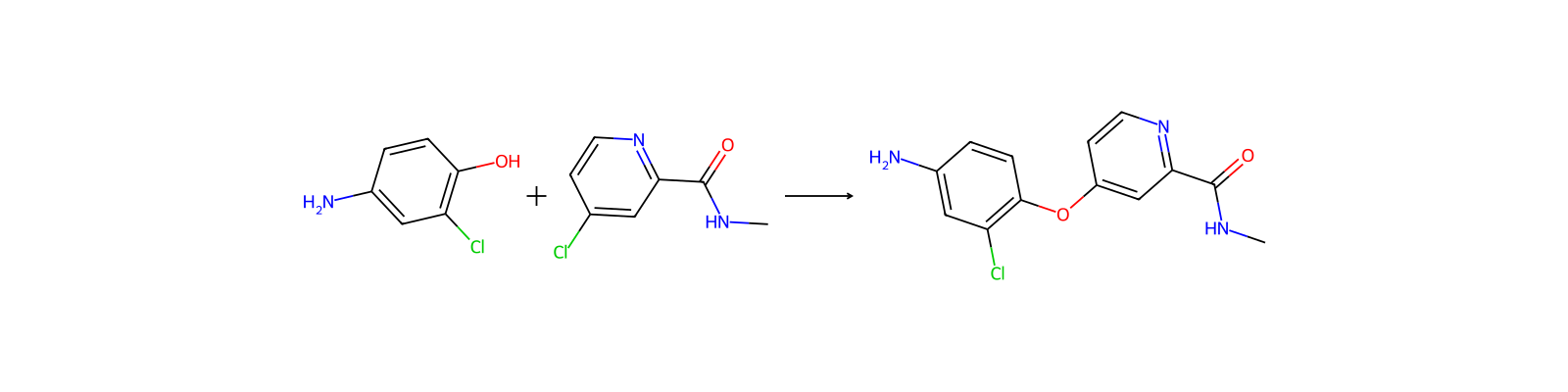
Compound notes
Loading…