Diethyl Carbonate
Completing data — refresh the page later to see the latest
Basic information
- CAS
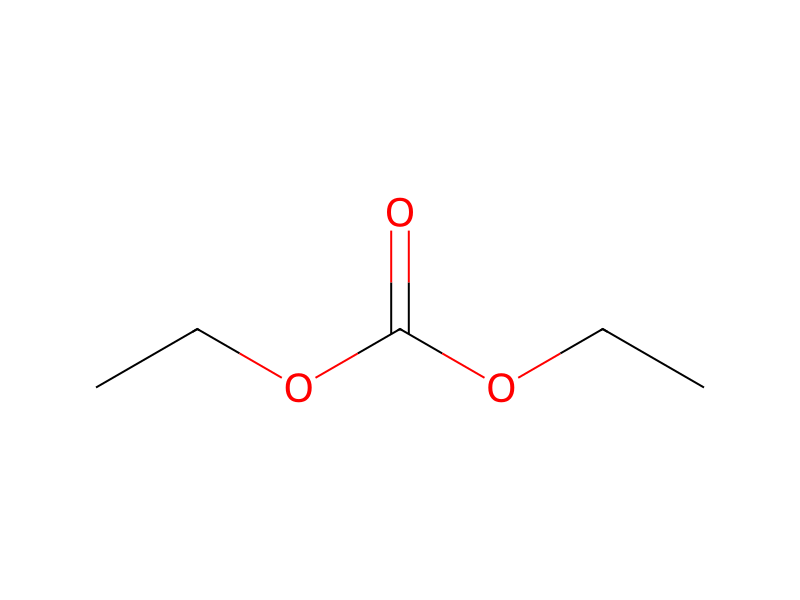
105-58-8- Standard SMILES
CCOC(=O)OCC- InChIKey
OIFBSDVPJOWBCH-UHFFFAOYSA-N- Molecular formula
- C5H10O3
- Average molar mass
- 118.13 g/mol
- Monoisotopic mass
- 118.06299418
Names & identifiers
- Preferred name
- Diethyl Carbonate
- IUPAC
- diethyl carbonate
- English name
- Diethyl carbonate
- Molecular formula
- C5H10O3
- Molecular weight
- 118.13
Names & synonyms
DIETHYL CARBONATE105-58-8Ethyl carbonateCarbonic acid diethyl esterEufinCarbonic acid, diethyl esterDiatolCarbonic etherDiaethylcarbonatDiethylkarbonatEthyl carbonate ((EtO)2CO)NCI-C60899
Show more names
DiethylcarbonatCED2-CHLORO-N,N-DIETHYLAMINE HYDROCHLORIDETGFBprogressiveDiethyl carbote2-DIETHYLAMINO ETHYLCHLORIDE HCL
Diethylester kyseliny uhliciteDTXSID30250413UA92692HGNSC-8849DTXCID105041RefChem:133406203-311-1diethylcarbonate
Database identifiers
- CAS
105-58-8、440671-47-6- PubChem CID
- 7766
- DTXSID
DTXSID3025041- ChEMBL
CHEMBL1533495- ChEBI
CHEBI:173463- UNII
- 3UA92692HG
- EC Number
- 203-311-1、803-728-4
- Nikkaji
- J5.045H
Properties
Computed structural propertiesFilling in
- XLogP
- 1.2
- Topological polar surface area
- 35.5 Ų
- Hydrogen bond donors
- 0
- Hydrogen bond acceptors
- 3
- Rotatable bonds
- 4
- Heavy atoms
- 8
- Formal charge
- 0
- Complexity
- 62
Physicochemical properties
- Melting point
- -43 °C · -43 °C (lit.)
- Boiling point
- 126 · 126-128 °C (lit.)
- Density
- 0.975 g/mL · 0.975 g/mL at 25 °C (lit.)
- vapor density
- 4.1 · 4.1 (vs air)
- vapor pressure
- 10 mm · 10 mm Hg ( 23.8 °C)
- refractive index
- 20 · n20/D 1.384(lit.)
- FLAVIS Number
- 9.481 · 09.481 | Diethyl carbonate
- Flash point
- 88 °F · 88 °F
- storage temp.
- no restrictions.
- solubility
- 18.8 mg/l · 18.8mg/l insoluble
- form
- Liquid
- color
- Clear
- Odor
- Pleasant, etheral; mild and nonresidual.
- PH
- 6.3 · 6.3 (1g/l, H2O)
- explosive limit
- 1.4 · 1.4-11.0%(V)
- biological source
Safety & regulation
Safety information is for reference only and does not replace the supplier’s Safety Data Sheet (SDS), applicable regulations, or professional assessment.
Safety data
- F
- 21
- PPE
- Eyeshields, Faceshields, Gloves, type ABEK (EN14387) respirator filter
- wgk
- 3
- tsca
- TSCA listed
- rtecs
- YE1050000
- ridadr
- UN 2366
- hs_code
- 2920 90 10
- Toxicity
- LD50 orally in Rabbit: > 4900 mg/kgLC50 (inhalation) > 21 mg/kg (mouse)TDL0 500 mg/kg (mouse)LD50 (s.c.) 8500 mg/kg (rat)
- risk_code
- 23/24/25-36/37/38-10
- Signal word
- Warning
- Symbol(GHS)
- GHS02,GHS07
- hazard_code
- T,Xi
- safety_code
- 26-36-45-16-23
- hazard_class
- 3
- Storage Class
- 3 - Flammable liquids
- packing_group
- III
- Hazard statements
- H319-H226
- Limited Quantities
- 5.0 L (1.3 gallons) (liquid)
- Excepted Quantities
- Max Inner Pack (30g or 30ml) and Max Outer Pack (1Kg or 1L)
- REACH Registrations
- Active
- Hazard Classifications
- Flam. Liq. 3
- Autoignition Temperature
- 445 °C
- Precautionary statements
- P501-P240-P210-P233-P243-P241-P242-P264-P280-P370+P378-P337+P313-P305+P351+P338-P303+P361+P353-P403+P235
- Hazardous Substances Data
- 105-58-8(Hazardous Substances Data)
Chemistry & industry
Applications
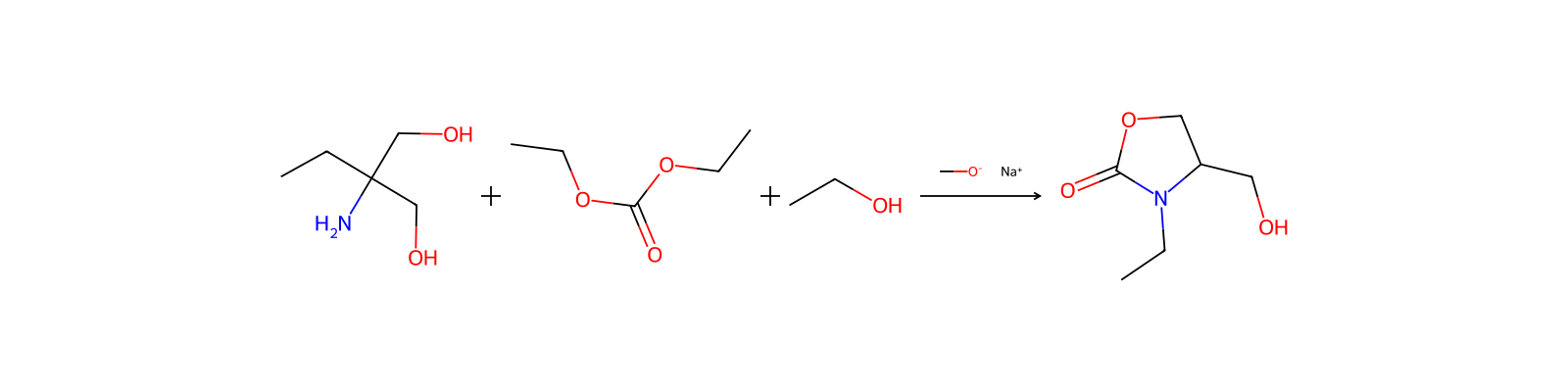
UsesDiethyl carbonate (DEC) is generally used in the C-alkoxycarbonylation of enolate anions, aryl and alkyl cyanides. It reacts with 1,2-amino alcohols to yield corresponding 2-oxazolidinones. Additionally, DEC is also used as a component of electrolyte solution in lithium ion batteries.
General DescriptionDiethyl carbonate appears as a colorless liquid with a mild pleasant odor. It is slightly less dense than water and insoluble in water.
Preparation methods
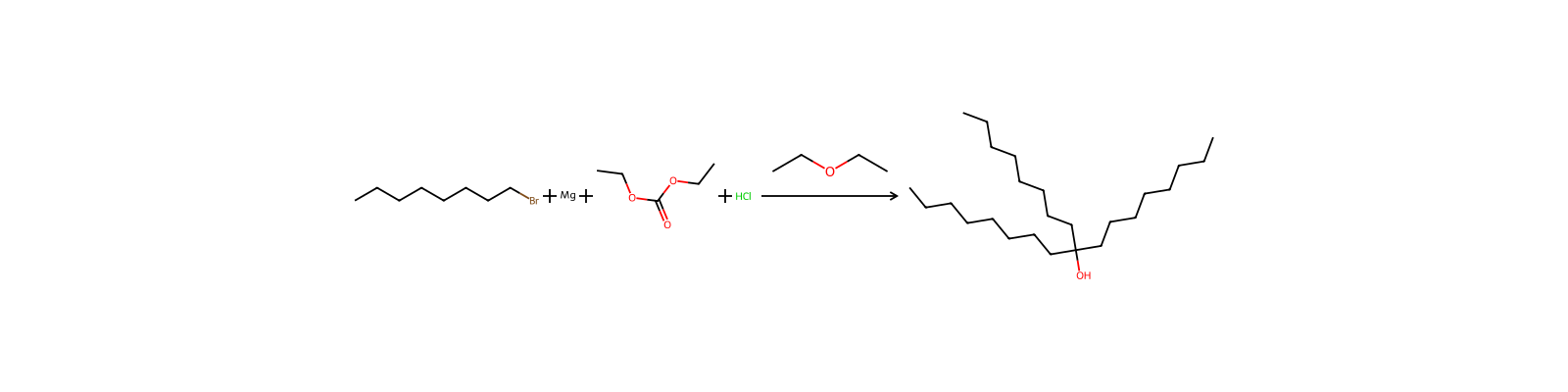
PreparationDiethyl carbonate is prepared by reaction of phosgene and ethyl alcohol to produce ethyl chlorocarbonate followed by reaction with anhydrous ethylalcohol at elevated temperatures. direct synthesis of diethyl carbonate (dec) by carboxylation of ethanol with co2 was investigated over ceria catalysts.
Upstream & downstream products
Upstream raw materials
Downstream products
Related reactions
642 records




Compound notes
Loading…