Basic information
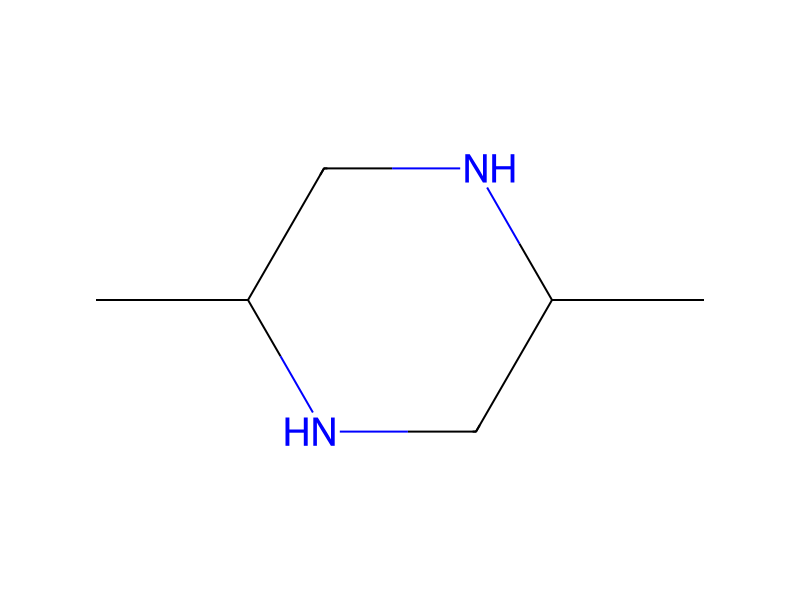
- Standard SMILES
CC1CNC(C)CN1- InChIKey
NSMWYRLQHIXVAP-UHFFFAOYSA-N- Molecular formula
- C6H14N2
- Average molar mass
- 114.19 g/mol
- Monoisotopic mass
- 114.11569845
Names & identifiers
- Preferred name
- 2,5-Dimethylpiperazine
- IUPAC
- 2,5-dimethylpiperazine
- English name
- 2,5-Dimethylpiperazine
- Molecular formula
- C6H14N2
- Molecular weight
- 114.19
Names & synonyms
2,5-DIMETHYLPIPERAZINEPiperazine, 2,5-dimethyl-EINECS 203-409-4BRN 00798851119702-25-8UNII-ZIZ1G1N25SZIZ1G1N25SDTXSID708617215-23-03-00304 (Beilstein Handbook Reference)RefChem:82970DTXCID60810607203-409-4
Show more names
Aids060673Aids-060673TIMTEC-BB SBB0043032,5-dimethyl-piperazin2,5-Dimethylpiperazine,c&t(2R,5S)-2,5-DiMethyl-piperazinecis-trans-2,5-Dimethyl piperazine2,5-Dimethylpiperazine ISO 9001:2015 REACH
818-483-9106-55-8MFCD000059552,5-dimethylpiperazine, trans6284-84-0(2R,5R)-2,5-DIMETHYL-PIPERAZINEPiperazine, 2,5-dimethyl-, cis-2,5-dimethyl piperazine
Database identifiers
- CAS
106-55-8、1119702-25-8- PubChem CID
- 7816
- DTXSID
DTXSID70861721- EC Number
- 203-409-4、818-483-9
- Nikkaji
- J39.129H
Properties
Computed structural properties
- XLogP
- 0
- Topological polar surface area
- 24.1 Ų
- Hydrogen bond donors
- 2
- Hydrogen bond acceptors
- 2
- Rotatable bonds
- 0
- Heavy atoms
- 8
- Formal charge
- 0
- Complexity
- 62.9
Physicochemical properties
- Melting point
- 113 · 113-118 °C
- Boiling point
- 162 · 162-165 °C
- Density
- 0.53 · 0.53
- refractive index
- 1.4628 · 1.4628 (estimate)
- Flash point
- 58 °C · 58 °C
- storage temp.
- 2 · 2-8°C
- pka
- 9.66 · 9.66(at 25℃)
- InChI
- InChI=1S/C6H14N2/c1-5-3-8-6(2)4-7-5/h5-8H,3-4H2,1-2H3
- InChIKey
- NSMWYRLQHIXVAP-UHFFFAOYSA-N
- SMILES
- N1CC(C)NCC1C
- CAS DataBase Reference
- 106 · 106-55-8(CAS DataBase Reference)
- EWG's Food Scores
- 1 · 1
- FDA UNII
- 1 G1N25S · ZIZ1G1N25S
- NIST Chemistry Reference
- 2 · Piperazine, 2,5-dimethyl-(106-55-8)
- EPA Substance Registry System
- 2 · Piperazine, 2,5-dimethyl- (106-55-8)
- Symbol(GHS)
- 2 · GHS02,GHS06
- Signal word
- Danger
- Hazard statements
- 228 · H228-H303-H311-H315-H319
- Precautionary statements
- 210 · P210-P240-P241-P264-P280-P302+P352+P312+P361+P364-P305+P351+P338+P337+P313-P312-P405-P501
- Hazard Codes
- C-F
- Risk Statements
- 34 · 34-21-11
- Safety Statements
- 45 · 45-36/37/39-26-16
- TSCA
- TSCA listed
- Toxicity
- 50 · rabbit,LD50,skin,800uL/kg (0.8mL/kg),AMA Archives of Industrial Hygiene and Occupational Medicine. Vol. 4, Pg. 119, 1951.
Safety & regulation
GHS classification
GHS Classification
Danger
H228 (50%): Flammable solid [Danger Flammable solids]
P210, P240, P241, P260, P262, P264, P270, P280, P301+P330+P331, P302+P352, P302+P361+P354, P304+P340, P305+P354+P338, P316, P321, P361+P364, P363, P370+P378, P405, and P501 (click each P-code to see the statement)
Aggregated GHS information provided per 2 reports by companies from 2 notifications to the ECHA C&L Inventory. Each notification may be associated with multiple companies.
Danger
H228 (100%): Flammable solid [Danger Flammable solids]
Hazard information
Regulatory Information
Chemical: Piperazine, 2,5-dimethyl-
Piperazine, 2,5-dimethyl-: Does not have an individual approval but may be used under an appropriate group standard
Hazard Classes and Categories
Flam. Sol. 1 (50%)
Flam. Sol. 1 (100%)
Safety data
- tsca
- TSCA listed
- Toxicity
- rabbit,LD50,skin,800uL/kg (0.8mL/kg),AMA Archives of Industrial Hygiene and Occupational Medicine. Vol. 4, Pg. 119, 1951.
- risk_code
- 34-21-11
- Signal word
- Danger
- Symbol(GHS)
- GHS02,GHS06
- hazard_code
- C-F
- safety_code
- 45-36/37/39-26-16
- Hazard statements
- H228-H303-H311-H315-H319
- Precautionary statements
- P210-P240-P241-P264-P280-P302+P352+P312+P361+P364-P305+P351+P338+P337+P313-P312-P405-P501
Chemistry & industry
Uses & manufacturing
General Manufacturing InformationPiperazine, 2,5-dimethyl-: ACTIVE
Applications
UsesTrans-2,5-dimethylpiperazine is primarily as a monomer for synthesizing a specific polyamide polymer, which is then used as a material for reverse osmosis membranes.[1]
Upstream & downstream products
Upstream raw materials
Downstream products
Suppliers50 total
常州帝通化工有限公司+86-0519-88298848 · [email protected]
湖北万得化工有限公司15377098680 15377098680 · [email protected]
普善实业(陕西)有限公司029-81310890 18165209495 · [email protected]
Dayang Chem (Hangzhou) Co.,Ltd.+86-0571-88938639 17705817739 · [email protected]
南通先行生物医药科技有限公司513-85982855 18921614129 · [email protected]
韶远科技(上海)有限公司021-50795510 4000665055 · [email protected]
广东元丰化学试剂有限公司0751-2829979 13318593351 · [email protected]
上海瀚鸿科技股份有限公司021-54306202 13764082696 · [email protected]
上海柯维化学技术有限公司021-64609169 18901607656 · [email protected]
海济医药科技(苏州)有限公司18012778619 · [email protected]
上海钰康生物科技有限公司+86-18930848214 +86-021-56762820 · [email protected]
天津林宸科技有限公司15122256084 15122256084 · [email protected]
上海比阳实业有限公司+86-15021878111 · [email protected]
武汉贝乐叶生物医药科技有限公司15871353653 18086118076 · [email protected]
广东元丰化学试剂有限公司0751-2829979 13376591640 · [email protected]
艾科试剂4008-755-333 18080918076 · [email protected]
上海遐瑞医药科技有限公司+86 21 61551611
上海丽康新材料有限公司+86-16631818819 +86-17736933208 · [email protected]
PT CHEM GROUP LIMITED+86-85511178; +86-85511178 · [email protected]
安徽科迪达化工有限公司0554-2106669 · [email protected]
Labnetwork lnc.+86-27-50766799 +86-18062016861 · [email protected]
成都零六生物科技有限公司400-1166-196 13458535857 · [email protected]
上海寰川实业有限公司021-61478794 · [email protected]
陕西缔都医药化工有限公司029-81024372 17792795018 · [email protected]
成都润泽本土化工有限公司13096311329 028-88469284 616445927 · [email protected]
深圳振强药物研发有限公司+86-0755-66853366 +86-13670046396 · [email protected]
安耐吉化学&3A(安徽泽升科技股份有限公司)400-0056266 · [email protected]
上海源叶生物科技有限公司13636370518 · [email protected]
广东翁江化学试剂有限公司0751-2886750 13927877953 · [email protected]
杭州洁汉化工有限公司+86-571-86217390; +8618058761490 · [email protected]
江苏艾康生物医药研发有限公司025-58859352 19370895928 · [email protected]
武汉峰耀同辉化学制品有限公司027-87466105 15377573527 · [email protected]
厦门盈融达化工有限公司+86-0592-6210733 · [email protected]
career henan chemical co+86-0371-86658258 · [email protected]
山东正兴新材料有限公司19100659316 19100659316
湖南秉航新材料有限公司0731-85567275 19313119732 · [email protected]
Accela ChemBio Inc.+1-858-6993322 +86-18019713315 · [email protected]
湖北摆渡化学有限公司027-59106051 13627137652 · [email protected]
陕西衡瀚新材料有限公司15719109892 · [email protected]
XIAMEN AMITY INDUSTRY AND TRADE CO., LTD.+8618950047208 · [email protected]
SHANGHAI KEAN TECHNOLOGY CO., LTD.+8613817748580 · [email protected]
山东正兴新材料有限公司15805316389; 15805316389
上海皓鸿生物医药科技有限公司400-8210725 4008210725 · [email protected]
Capot Chemical Co., Ltd+86 (0) 571 85 58 67 18
重庆卡兰医药有限公司[email protected]
Henan Allgreen Chemical Co.,LTD+86-37155567971 +86-13633837469 · [email protected]
Hebei Chuanghai Biotechnology Co., Ltd+86-15350571055 · [email protected]
JACS-郑州杰克斯化工产品有限公司0371-86259281 13223061139 · [email protected]
Hefei TNJ Chemical Industry Co.,Ltd.+86-0551-65418671 +86-189 4982 3763 · [email protected]
CD Chemical Group Limited+86-13651442114 · [email protected]
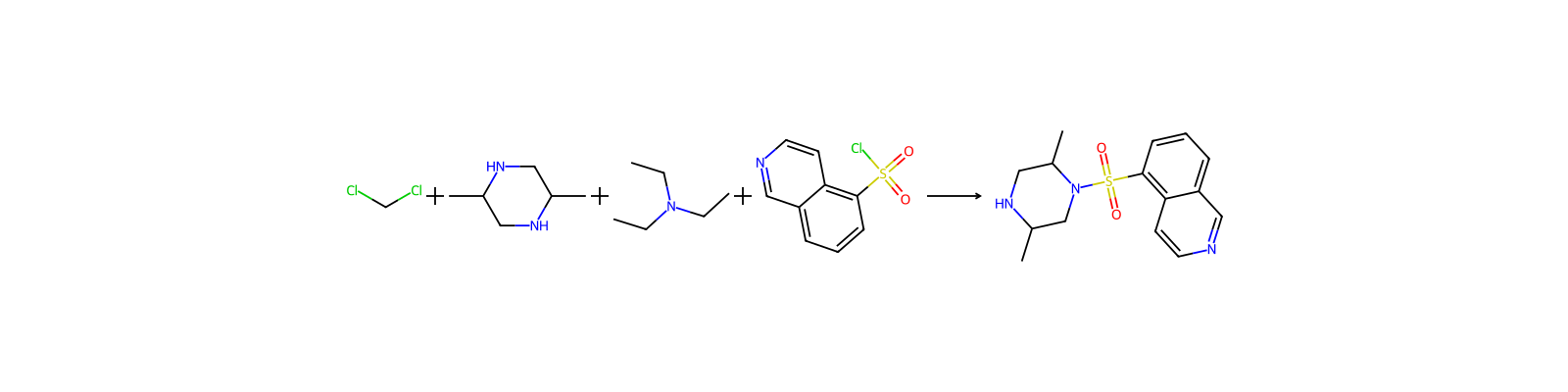
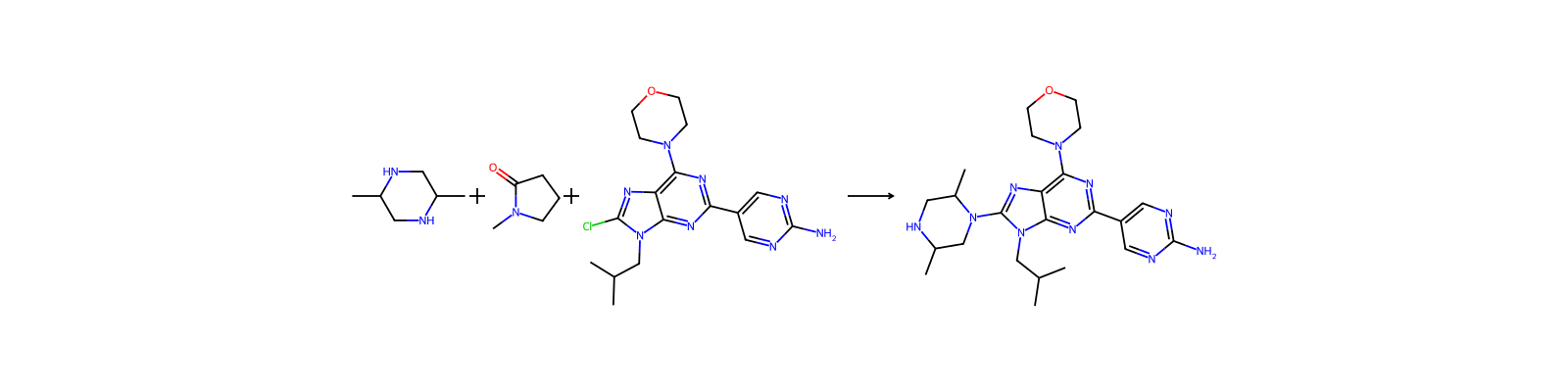
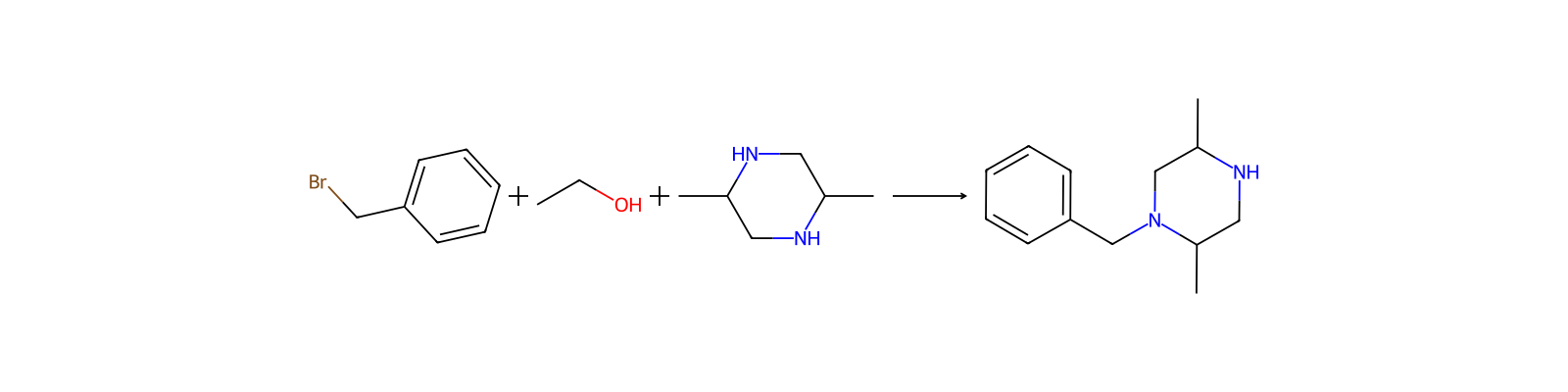
Related reactions
47 records
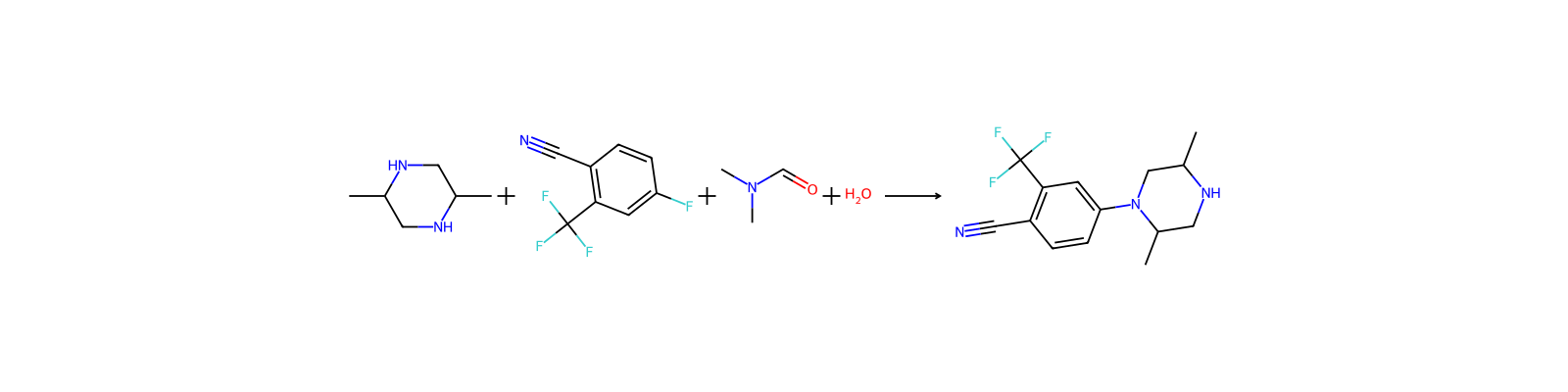
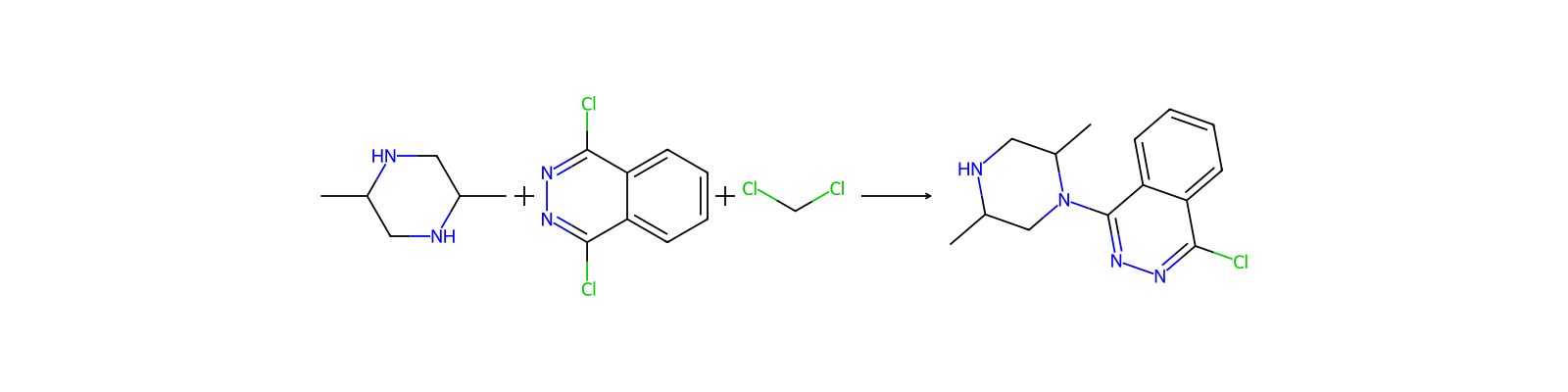
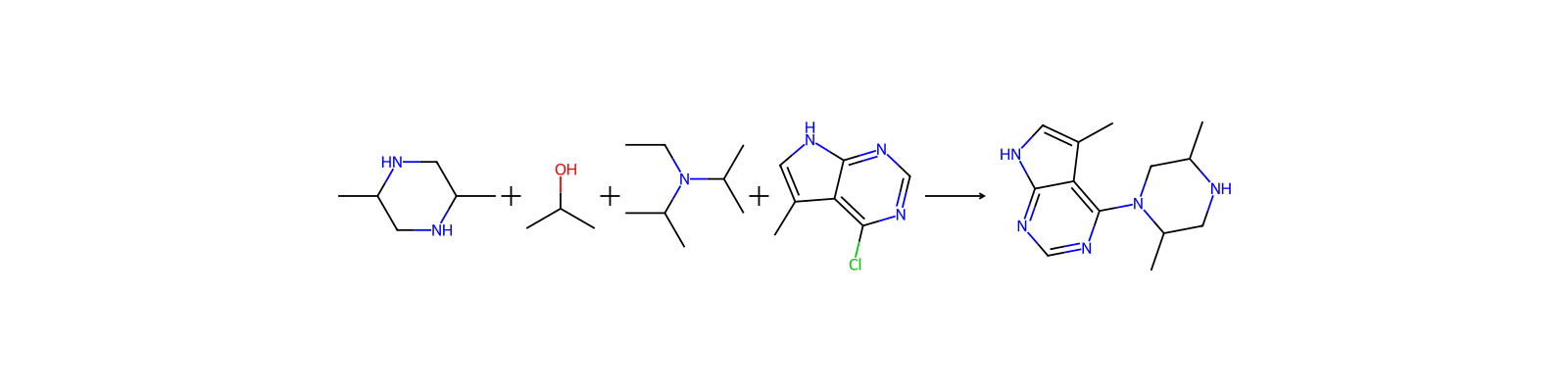
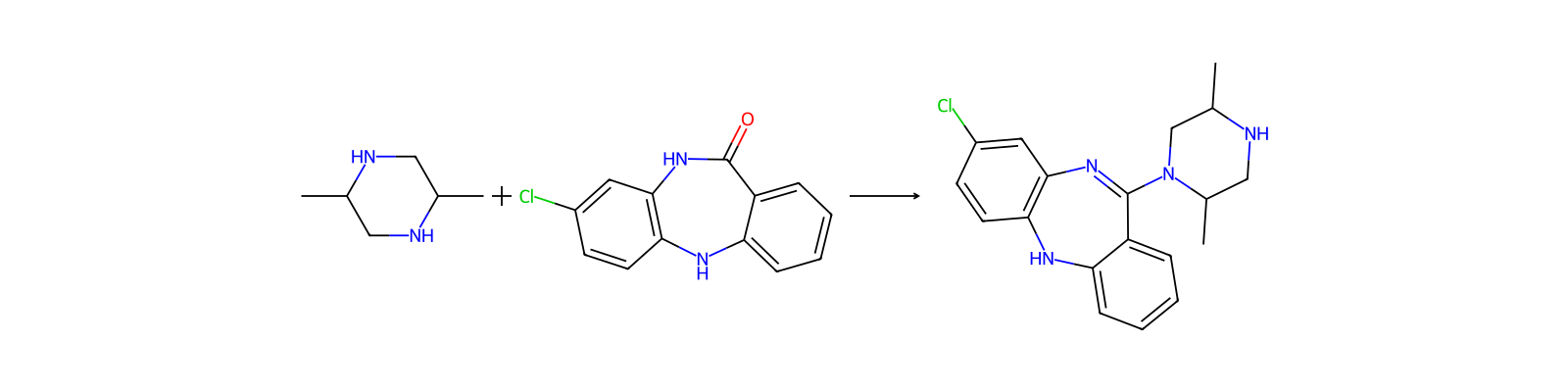

Linked notes
Loading…