HomeMCPWorkbenchSkills
HomeWorkbenchNotificationsMe
llms.txt · MCP GuidePrivacy Policy · Terms of Service · Supportv1.8.0
  1. Home
  2. /Compound

Hydroxylamine

HCID 787
New noteNew reactionRequest quotes
Print preview
Basic informationOverviewNames & identifiersPropertiesSafety & regulationChemistry & industryRelated reactionsCompound notes
Substructure searchFind similar structures

Basic information

CAS
11104-93-1
Standard SMILES
NO
InChIKey
AVXURJPOCDRRFD-UHFFFAOYSA-N
Molecular formula
H3NO
Average molar mass
33.03 g/mol
Monoisotopic mass
33.02146372

Overview

Hydroxylamine is an odorless white crystalline solid. Sinks and mixes with water. (USCG, 1999)

Names & identifiers

Preferred name
Hydroxylamine
IUPAC
hydroxylamine
English name
Hydroxylamine
Molecular formula
H3NO
Molecular weight
33.02992

Names & synonyms

hydroxylamine7803-49-8OxammoniumNH2OHazinous acid2FP81O2L9ZDTXSID7041043CHEBI:15429RefChem:5894DTXCID5021043232-259-2HYDROXYAMINE
Show more names
NitroxideOxyammoniaarninoalcoholhyroxylamineHydroxylamindihydridohydroxidonitrogenH3NOMFCD00044522

Database identifiers

CAS
11104-93-1、13408-29-2、7803-49-8
PubChem CID
787
DTXSID
DTXSID7041043
ChEMBL
CHEMBL1191361
ChEBI
CHEBI:15429
UNII
2FP81O2L9Z
EC Number
232-259-2
Nikkaji
J941E

Properties

Computed structural properties

XLogP
-1.2
Topological polar surface area
46.3 Ų
Hydrogen bond donors
2
Hydrogen bond acceptors
2
Rotatable bonds
0
Heavy atoms
2
Formal charge
0
Complexity
2

Experimental & physicochemical properties

Chemical Classes · 2 items

Nitrogen Compounds -> Other Nitrogen Compounds

Reactive agents - 3rd degree

DrugsPharmaceuticals -> Metabolite of Hydroxycarbamide
SpringerMaterials PropertiesSchoenflies notation
LogP-1.5
Density · 6 items

1.227 at 68 °F (USCG, 1999) - Denser than water; will sink

1.227

1.2 g/cm³

Relative density of the vapour/air-mixture at 20 °C (air = 1): 1.00

Density (at 20 °C): 1.12 g/cm³

1.227 @25 °C

Color/Form · 2 items

Colorless cyrstals

Large white flakes or white needles

Solubility · 3 items

Very sol in water, liq ammonia, methanol; sparingly sol in ether, benzene, carbon disulfide, chloroform

Soluble in alcohol, acids, and cold water

Solubility in water at 20 °C: freely soluble

Flash Point · 3 items

Safety & regulation

Safety information is for reference only and does not replace the supplier’s Safety Data Sheet (SDS), applicable regulations, or professional assessment.

GHS classification

GHS Classification · 6 items

Danger

H200: (Deleted) Unstable Explosive [Danger Explosives]

P201, P202, P203, P234, P260, P261, P264, P264+P265, P270, P271, P272, P273, P280, P281, P301+P317, P302+P352, P304+P340, P305+P354+P338, P317, P318, P319, P321, P330, P332+P317, P333+P317, P362+P364, P372, P373, P380, P390, P391, P401, P403+P233, P405, P406, and P501 (click each P-code to see the statement)

Danger

H290: May be corrosive to metals [Warning Corrosive to Metals]

P203, P234, P260, P261, P264, P264+P265, P270, P271, P272, P273, P280, P301+P317, P302+P352, P304+P340, P305+P354+P338, P317, P318, P319, P321, P330, P332+P317, P333+P317, P362+P364, P390, P391, P403+P233, P405, P406, and P501 (click each P-code to see the statement)

Hazard information

Regulatory Information · 5 items

Chemical: Hydroxylamine

Hydroxylamine is listed on the EPA's Chemical Data Reporting (CDR) system. Manufacturers and importers of Hydroxylamine are required to report information about their production and use of this chemical to the EPA under the Toxic Substances Control Act (TSCA). (40 eCFR Part 711)

REACH registered substance: Hydroxylamine (EC: 232-259-2)

Hydroxylamine: Does not have an individual approval but may be used under an appropriate group standard

The New Jersey Worker and Community Right to Know Act requires public and private employers to provide information about hazardous substances at their workplaces. (N.J.S.A. 34:5A-1 et. seq.)

Other Safety InformationIMAP assessments - Hydroxylamine and its salts: Human health tier II assessment
DOT LabelCorrosive
Fire Hazards · 3 items

Special Hazards of Combustion Products: Nitrogen oxides - toxic fumes - react with water or steam to produce heat and corrosive liquids - can react violently with reducing materials.

Chemistry & industry

Pharmacology

Tissue LocationsEpidermis
Cellular LocationsCytoplasm

Uses & manufacturing

Uses · 5 items

Used as a reducing agent, antioxidant, chemical intermediate, and termination agent in polymers; used in the photography, chemistry, textile, leather, paint, soap, rubber, and plastics industries; [HSDB] Hydroxylamine sulfate used in photography (color neutralizing bath); [www.ci.tucson.az.us/arthazards/medium.html]

Plastic Composites Manufacturing [Category: Industry]

As reducing agent in photography; in synthetic and analytical chemistry; to purify aldehydes and ketones; as antioxidant for fatty acids and soaps; as dehairing agent for hides

Over 95% of hydroxylamine produced is used for the production of cyclohexanone oxime or caprolactam.

CHEMICAL INTERMEDIATE FOR MISCELLANEOUS ORGANIC & INORGANIC CHEMICALS (IN LAB); REDUCING AGENT; CHEMICAL INTERMEDIATE (CAPTIVELY) FOR CAPROLACTAM USED IN NYLON 6; ABSORBENT FOR REMOVING NITROGEN DIOXIDE; TERMINATION AGENT IN PEROXIDE-CATALYZED POLYMERIZATIONS; AGENT IN DEVELOPERS FOR PHOTOGRAPHIC SILVER EMULSIONS

U.S. Production2023: 1,000,000 - <5,000,000 lb
Industry UsesReducing agent
Methods of Manufacturing · 2 items

Hurd, Inorg Syn 1: 87 (1939); Benson et al, J Am Chem Soc 78: 4202 (1956).

Semon, Org Syn 3: 61 (1923); Benson et al; J Am Chem Soc 78: 4202 (1956) /Hydroxylamine hydrochloride/

General Manufacturing Information · 3 items

All Other Chemical Product and Preparation Manufacturing

Hydroxylamine: ACTIVE

World production capacity of hydroxylamine is 800,000 tons annually.

Related reactions

4,635 records
New reaction record
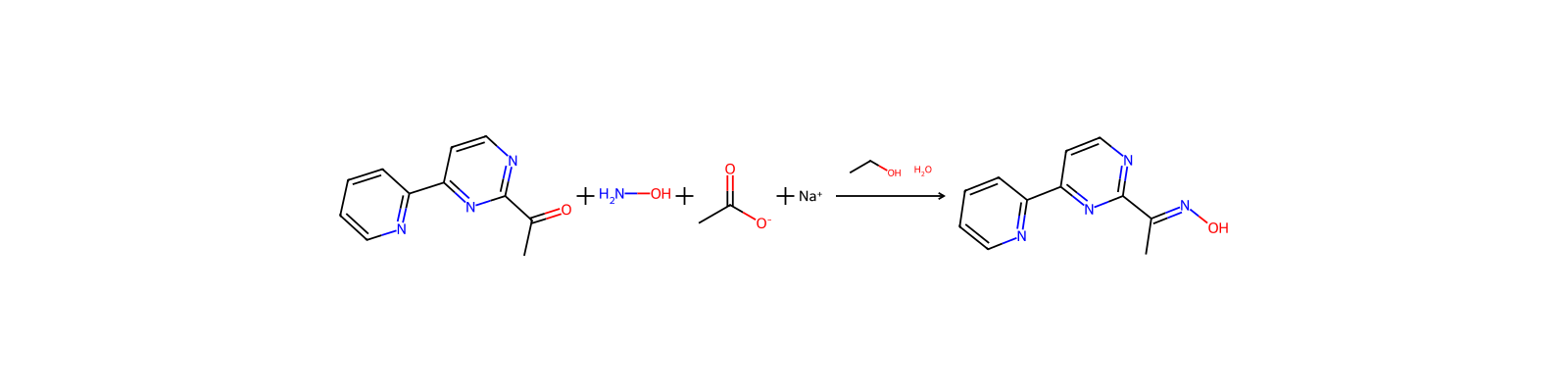
HRID 930 reaction equation
HRID 930As reactantuspto-grants-1998_03
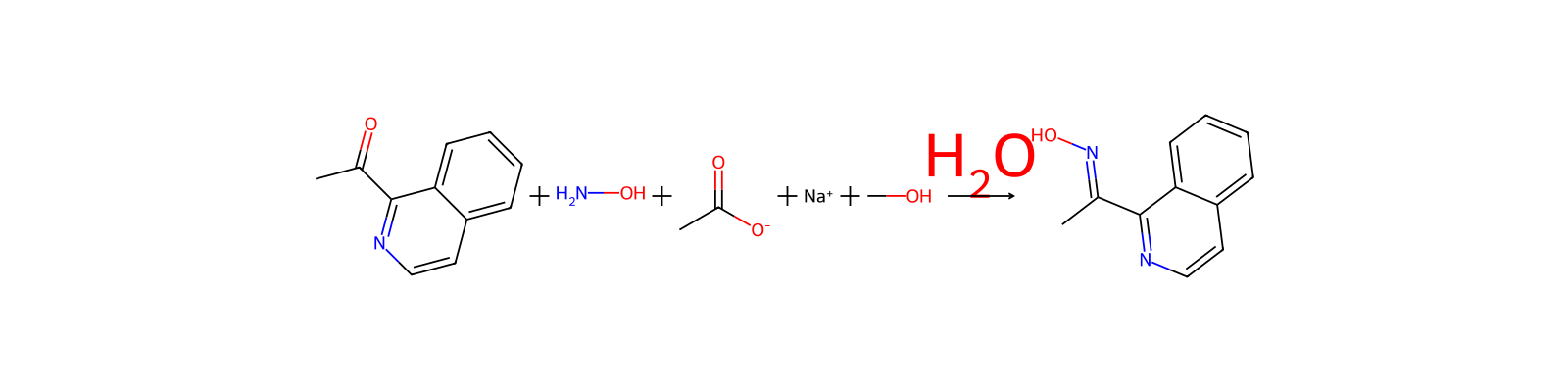
HRID 932 reaction equation
HRID 932As reactantuspto-grants-1998_03
HRID 933 reaction equation
HRID 933As reactantuspto-grants-1998_03
HRID 9930 reaction equation
HRID 9930As reactantuspto-grants-2006_08
HRID 9931 reaction equation
HRID 9931As reactantuspto-grants-2006_08
HRID 9932 reaction equation
HRID 9932As reactantuspto-grants-2006_08
HRID 13378 reaction equation
HRID 13378As reactantuspto-grants-2010_06
HRID 17877 reaction equation
HRID 17877As reactantuspto-grants-2010_06
Page 1 of 500

Compound notes

Loading…

On this pageBasic informationOverviewNames & identifiersPropertiesSafety & regulationChemistry & industryRelated reactionsCompound notes
More actions
New noteNew reactionRequest quotes

265 °F (USCG, 1999)

[ICSC] 265 °F

explodes at 129 °C

Boiling Point · 4 items

133.7 °F 22 mm 158 °F 60 mm (USCG, 1999)

70 °C at 60 mm Hg

107 °C

58 °C @760 [mm Hg]

Decomposition · 2 items

When heated to decomposition it emits toxic fumes of NOx /nitrogen oxides/.

Decomposes rapidly at room temp. ... Decomposes in hot water.

Melting Point · 6 items

91.49 °F (USCG, 1999)

33 °C

33 °C

33 °C

8 °C

34 °C

Vapor DensityRelative vapor density (air = 1): 1.1

Physicochemical properties

Melting point
33 °C · 33 °C
Boiling point
70 °C · 70 °C(Press: 60 Torr)
Density
1.227 g/cm3 · 1.227 g/cm3
pka
13.7 · 13.70±0.10(Predicted)

Gives off irritating or toxic fumes (or gases) in a fire. Risk of explosion on heating. Risk of fire and explosion on contact with many substances. See Chemical Dangers.

Combustible. Gives off irritating or toxic fumes (or gases) in a fire. Risk of explosion on heating.

Fire Potential · 2 items

Dangerous fire hazard when exposed to heat, flame, and oxidizers. May ignite spontaneously in air if a large surface area is exposed (e.g. precipitate on paper).

Ignites on contact with copper(II)sulfate; metals (e.g. sodium); oxidants (e.g. barium peroxide; barium oxide; lead dioxide/ potassium permanganate; chlorine); phosphorus chlorides (e.g. phosphorus trichloride; phosphorus pentachloride).

Health Hazards · 1 item

INHALATION: Moderately toxic by inhalation and oral routes with the following symptoms possible: headache, vertigo, tinnitus, dyspnea, nausea and vomiting, cyanosis, proteinuria and hematuria, jaundice, restlessness, and convulsion. Methemoglobinemia has been reported. EYES: Corrosive - highly irritating. SKIN: Irritating or corrosive to skin. INGESTION: Moderately toxic by inhalation and oral routes with the following symptoms possible; headache, vertigo, tinnitus, dyspnea, nausea and vomiting, cyanosis, proteinuria and hematuria, jaundice, restlessness, and convulsion. Methemoglobinemia has been reported. (USCG, 1999)

Hazards Summary · 1 item

Crystals cause first degree burns on short exposure. [CHRIS] Reported toxic effects in humans include methemoglobinemia and skin sensitization. [HSDB] Allergic contact dermatitis reported in workers developing color photographs and handling laboratory reagents; [Kanerva, p. 1803] A skin and respiratory tract irritant; Corrosive to eyes; Can induce methemoglobinemia and consequent anemia; May cause skin sensitization; [ICSC] Occupational asthma confirmed in 2 workers exposed in paper recycling (de-inking process); [Malo] Reacts with water forming corrosive liquids; Rapidly decomposed at room temperature and by hot water; A strong reducing agent; Highly irritating or corrosive to skin and eyes; Reports of methemoglobinemia; [CAMEO] An irritant; May cause skin sensitization; Harmful by ingestion; High doses may cause methemoglobinemia; [Aldrich MSDS]

Reactive GroupBases, Strong
EC Classification · 2 items

H200; H290; H302; H312; H315; H318; H317; H335; H351; H373; H400

H290; H302; H312; H315; H318; H317; H335; H351; H373; H400

UN ClassificationUN Hazard Class: 8; UN Pack Group: III
Special ReportsA REVIEW WITH 304 REFERENCES ON CHEMICAL MECHANISMS INVOLVED IN MUTAGENESIS INDUCED BY HYDROXYLAMINE & ITS DERIVATIVES.[MARFEY P ET AL; GENETIC TOXICOLOGY OF HYDROXYLAMINES; MUTAT RES 86(2) 155 (1981)]
Reactivity AlertsExplosive

Safety & protection

Fire Fighting · 3 items

Fire Extinguishing Agents: Use extreme caution - material may explode. Use remote extinguishing equipment or unmanned fixed turret and hose nozzles - evacuate area. (USCG, 1999)

Use water in large amounts, alcohol-resistant foam, powder. In case of fire: keep drums, etc., cool by spraying with water. Combat fire from a sheltered position.

Use water, alcohol-resistant foam, powder. In case of fire: keep drums, etc., cool by spraying with water. Combat fire from a sheltered position.

First Aid Measures · 6 items

Fresh air, rest. Administration of oxygen may be needed. Refer immediately for medical attention.

Remove contaminated clothes. Rinse skin with plenty of water or shower. Refer immediately for medical attention .

Rinse with plenty of water for several minutes (remove contact lenses if easily possible). Refer immediately for medical attention.

Rinse mouth. Administration of oxygen may be needed. Refer immediately for medical attention.

Fresh air, rest. Administration of oxygen may be needed. Refer immediately for medical attention.

Remove contaminated clothes. Rinse skin with plenty of water or shower. Refer immediately for medical attention .

First AidCall a physician.
Safe Storage · 2 items

Fireproof. Separated from incompatible materials. See Chemical Dangers. Cool. Dry. Well closed. Store in an area without drain or sewer access. Provision to contain effluent from fire extinguishing.

Fireproof. Separated from incompatible materials. See Chemical Dangers. Cool. Well closed. Do not allow to dry out. Store in an area without drain or sewer access. Provision to contain effluent from fire extinguishing.

Firefighting HazardsClosed containers may rupture violently when heated.
Fire Fighting Procedures · 1 item

Not combustible. Extinguish fire using agent suitable for surrounding fire. Fight fire from protected location or maximum possible distance. Approach fire from upwind to avoid hazardous vapors and toxic decomposition products. Explosive decomposition may occur under fire conditions.

Storage ConditionsSeparate from oxidizing materials. store in a cool, dry, well-ventilated location. store away from heat, oxidizers, and sunlight. Outside or detached storage is preferred.
Nonfire Spill ResponseNeutralizing Agents for Acids and Caustics: Sodium bisulfate (USCG, 1999)
Disposal Methods · 1 item

SRP: At the time of review, criteria for land treatment or burial (sanitary landfill) disposal practices are subject to significant revision. Prior to implementing land disposal of waste residue (including waste sludge), consult with environmental regulatory agencies for guidance on acceptable disposal practices.

Spillage Disposal · 2 items

Personal protection: particulate filter respirator adapted to the airborne concentration of the substance. Do NOT let this chemical enter the environment. Sweep spilled substance into covered non-metallic containers. If appropriate, moisten first to prevent dusting. Carefully collect remainder. Then store and dispose of according to local regulations.

Personal protection: filter respirator for inorganic gases and vapours adapted to the airborne concentration of the substance. Do NOT let this chemical enter the environment. Collect leaking and spilled liquid in covered non-metallic containers as far as possible. Absorb remaining liquid in inert absorbent. Then store and dispose of according to local regulations.

Preventive Measures · 2 items

SRP: The scientific literature for the use of contact lenses in industry is conflicting. The benefit or detrimental effects of wearing contact lenses depend not only upon the substance, but also on factors including the form of the substance, characteristics and duration of the exposure, the uses of other eye protection equipment, and the hygiene of the lenses. However, there may be individual substances whose irritating or corrosive properties are such that the wearing of contact lenses would be harmful to the eye. In those specific cases, contact lenses should not be worn. In any event, the usual eye protection equipment should be worn even when contact lenses are in place.

MATERIAL SHOULD BE HANDLED WITH CAUTION TO AVOID CONTACT & COMPLETE ELIMINATION OF MANUAL PROCESSES BY MECHANIZATION IS RECOMMENDED.

Isolation and EvacuationExcerpt from ERG Guide 153 [Substances - Toxic and/or Corrosive (Combustible)]:

Toxicology

InteractionsARGININE...PROTECTS ANIMALS AGAINST DEATH BY HYDROXYLAMINE EVEN THOUGH THE METHEMOGLOBINEMIC RESPONSE IS UNCHANGED.
Environmental Fate · 3 items

TERRESTRIAL FATE: Based on a classification scheme(1), an estimated Koc value of 14(SRC), determined from a structure estimation method(2), indicates that hydroxylamine is expected to have very high mobility in soil(SRC). The pKa of hydroxylamine is 5.94(3) which indicates this compound will partially exist as a cation under acidic conditions, and cations have lower mobility in soil than neutral species(SRC). Volatilization of hydroxylamine from moist soil surfaces is not expected to be an important fate process since cations do not volatilize(SRC) and the neutral species has an estimated Henry's Law constant of 6.9X10⁻⁹ atm-cu m/mole(SRC), using a fragment constant estimation method(4). The potential for volatilization of hydroxylamine from dry soil surfaces may exist(SRC) based upon a vapor pressure of 53 mm Hg(5) at 32 °C.

AQUATIC FATE: Based on a classification scheme(1), an estimated Koc value of 14(SRC), determined from a structure estimation method(2), indicates that hydroxylamine is not expected to adsorb to suspended solids and sediment(SRC). A pKa of 5.94(3) indicates hydroxylamine will partially exist as a cation in waters. Volatilization from water surfaces is not expected to be an important environmental fate process(SRC) since cations do not volatilize and the Henry's Law constant of the neutral species is 6.9X10⁻⁹ atm-cu m/mole(SRC), developed using a fragment constant estimation method(4). According to a classification scheme(5), an estimated BCF of 3(SRC), from an estimated log Kow of 1.2(6,SRC) and a regression-derived equation(7), suggests the potential for bioconcentration in aquatic organisms is low(SRC).

ATMOSPHERIC FATE: According to a model of gas/particle partitioning of semivolatile organic compounds in the atmosphere(1), hydroxylamine, which has a vapor pressure of 53 mm Hg at 32 °C(2), is expected to exist solely as a vapor in the ambient atmosphere. Vapor-phase hydroxylamine is degraded in the atmosphere by reaction with photochemically-produced hydroxyl radicals(SRC); the half-life for this reaction in air is estimated to be 18 hours(SRC), calculated from its rate constant of 2.1X10⁻¹¹ cu cm/molecule-sec at 25 °C(SRC) determined using a structure estimation method(3).

Adverse EffectsMethemoglobinemia - The presence of increased methemoglobin in the blood; the compound is classified as secondary toxic effect
Exposure Routes · 2 items

The substance can be absorbed into the body by inhalation, through the skin and by ingestion.

The substance can be absorbed into the body by inhalation, through the skin and by ingestion.

Signs and Symptoms · 6 items

Cough. Sore throat. Dizziness. Headache. Blue lips, fingernails and skin. Shortness of breath. Weakness.

MAY BE ABSORBED! Redness. Pain. Further see Inhalation.

Redness. Pain. Severe burns.

Nausea. Vomiting. Symptoms may be delayed. Further see Inhalation.

Cough. Sore throat. Dizziness. Headache. Blue lips, fingernails and skin. Shortness of breath. Weakness.

MAY BE ABSORBED! Redness. Pain. Further see Inhalation.

ICSC Environmental Data · 2 items

The substance is very toxic to aquatic organisms.

The substance is very toxic to aquatic organisms.

Medical SurveillanceDURING PRE-EMPLOYMENT MEDICAL EXAM, WORKERS SHOULD BE SUBJECTED TO SKIN SENSITIVITY TESTS...DURING PERIODIC MEDICAL EXAM, PERSONS FOUND...SUFFERING FROM PERSISTENT SKIN DISEASE SHOULD BE REMOVED FROM EXPOSURE.
Soil Adsorption/Mobility · 1 item

Using a structure estimation method based on molecular connectivity indices(1), the Koc for hydroxylamine can be estimated to be 14(SRC). According to a classification scheme(2), this estimated Koc value suggests that hydroxylamine is expected to have very high mobility in soil. A pKa of 5.94(3) indicates that hydroxylamine will partially exist in the protonated form in moist soils(SRC) and cations adsorb to soil stronger than neutral compounds.

Human Toxicity Excerpts · 5 items

HYDROXYLAMINE & ITS SALTS ARE CORROSIVE TO SKIN & HIGHLY IRRITANT TO EYES & MUCOUS MEMBRANES. REPEATED EXPOSURE MAY ENHANCE ALLERGIC REACTION PARTICULARLY OF...HANDS & FOREARMS FROM 1-2 WK TO 2-5 YEARS AFTER COMMENCEMENT OF EXPOSURE & CASES OF ECZEMA...OBSERVED FOLLOWING PROLONGED CONTACT.

CORROSIVE TO SKIN. ... MAY CAUSE METHEMOGLOBINEMIA.

SOLN HAS CORROSIVE ACTION ON SKIN. /HYDROXYLAMINE SULFATE/

...IN WORKERS. ...INCREASES OF METHEMOGLOBIN CONTENT OF BLOOD BY UP TO 25% HAVE BEEN REPORTED AT THE END OF THE WORKING DAY.

For more Human Toxicity Excerpts (Complete) data for HYDROXYLAMINE (6 total), please visit the HSDB record page.

Artificial Pollution SourcesHydroxylamine's production and use as a reducing agent(1,2) and as an intermediate in the production of caprolactam(3) may result in its release to the environment through various waste streams(SRC).
Environmental Bioconcentration · 1 item

An estimated BCF of 3 was calculated for hydroxylamine(SRC), using an estimated log Kow of -1.2(1,SRC) and a regression-derived equation(2). According to a classification scheme(3), this BCF suggests the potential for bioconcentration in aquatic organisms is low(SRC).

Volatilization from Water/Soil · 1 item

The pKa for hydroxylamine is 5.94(1), which indicates this compound will partially exist in the protonated form(SRC). Volatilization from moist soils and water surfaces is not expected since cations don't volatilize and the estimated Henry's Law constant for the neutral species is 6.9X10⁻⁹ atm-cu m/mole(SRC), using a fragment constant estimation method(2). The potential for volatilization of hydroxylamine from dry soil surfaces may exist(SRC) based upon a vapor pressure of 53 mm Hg(3).