HomeMCPWorkbenchSkills
HomeWorkbenchNotificationsMe
llms.txt · MCP GuidePrivacy Policy · Terms of Service · Supportv1.8.0
  1. Home
  2. /Compound

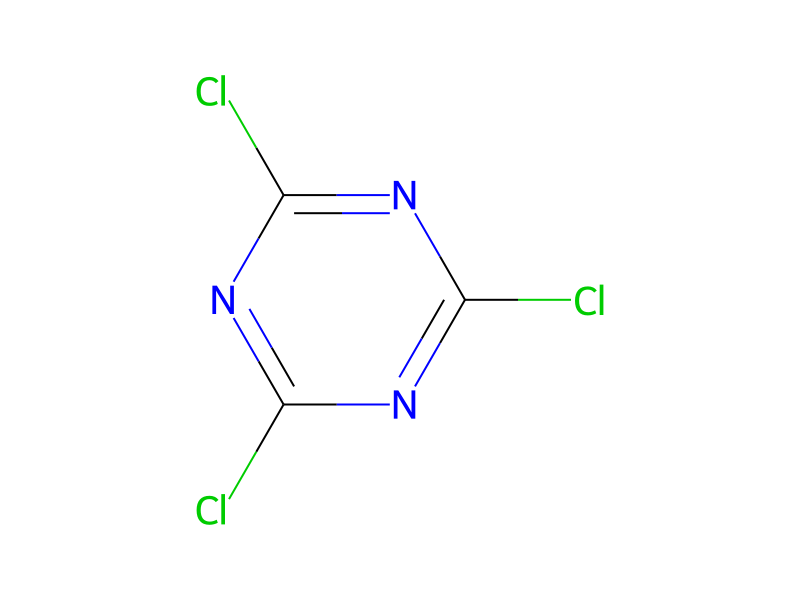
Cyanuric chloride

HCID 7954
New noteNew reactionRequest quotes
Print preview

Completing data — refresh the page later to see the latest
Basic informationNames & identifiersPropertiesSafety & regulationChemistry & industryRelated reactionsCompound notes
Substructure searchFind similar structures

Basic information

CAS
108-77-0
Standard SMILES
Clc1nc(Cl)nc(Cl)n1
InChIKey
MGNCLNQXLYJVJD-UHFFFAOYSA-N
Molecular formula
C3Cl3N3
Average molar mass
184.41 g/mol
Monoisotopic mass
182.91578

Names & identifiers

Preferred name
Cyanuric chloride
IUPAC
2,4,6-trichloro-1,3,5-triazine
English name
Cyanuric chloride
Molecular formula
C3Cl3N3
Molecular weight
184.41

Names & synonyms

Cyanuric chloride108-77-02,4,6-Trichloro-1,3,5-triazineCyanuryl chlorideCyanuric acid chloride2,4,6-TRICHLORO-S-TRIAZINEs-Triazine trichlorideCyanuric trichlorideTricyanogen chlorideTrichloro-s-triazineTrichlorocyanidineChlorotriazine
Show more names
TCT1,3,5-trichloro-2,4,6-triazineCYCcyanuricCYNURIC CHLORIDETrichloro-1,3,5-triazineCYCS
CyanurchlorideCyanur chloridesym-Trichlorotriazine1,3,5-Triazine, 2,4,6-trichloro-Kyanurchloridsyn-TrichlotriazinCyanuric acid trichloride1,3,5-Trichlorotriazine

Database identifiers

CAS
108-77-0
PubChem CID
7954
DTXSID
DTXSID6026799
ChEMBL
CHEMBL1530777
ChEBI
CHEBI:58964
UNII
5U4L4QHD6I
EC Number
203-614-9
Nikkaji
J5.080F

Properties

Computed structural propertiesFilling in

XLogP
2.9
Topological polar surface area
38.7 Ų
Hydrogen bond donors
0
Hydrogen bond acceptors
3
Rotatable bonds
0
Heavy atoms
9
Formal charge
0
Complexity
69

Experimental & physicochemical properties

OdorPungent odor
Density · 3 items

1.32 at 20 °C/4 °C

1.3 g/cm³

1.32 @ 20°C

Color/Form · 2 items

Crystals from ether or benzene

Colorless, monoclinic crystals from C6H6

Solubility · 3 items

Insol in water; sol in alcohol

Sol in chloroform, carbon tetrachloride, hot ether, dioxane, ketones

Solubility in water: reaction

Boiling Point · 3 items

192 °C

Boiling point: 194 °C at 764 mm Hg. Hydrolyzes in cold water.

192 °C

Melting Point · 2 items

146 °C

154 °C

Vapor Density · 2 items

6.36 (Air = 1)

Relative vapor density (air = 1): 6.4

Odor ThresholdOlfactometric measurements ... a concn of 0.019 mg/cu /m cyanuric chloride air ....

Safety & regulation

Safety information is for reference only and does not replace the supplier’s Safety Data Sheet (SDS), applicable regulations, or professional assessment.

GHS classification

GHS Classification · 6 items

Danger

H302: Harmful if swallowed [Warning Acute toxicity, oral];H314: Causes severe skin burns and eye damage [Danger Skin corrosion/irritation];H317: May cause an allergic skin reaction [Warning Sensitization, Skin];H330: Fatal if inhaled [Danger Acute toxicity, inhalation]

P260, P261, P264, P270, P271, P272, P280, P284, P301+P317, P301+P330+P331, P302+P352, P302+P361+P354, P304+P340, P305+P354+P338, P316, P320, P321, P330, P333+P317, P362+P364, P363, P403+P233, P405, and P501 (click each P-code to see the statement)

Danger

Hazard information

Regulatory Information · 5 items

Chemical: 1,3,5-Triazine, 2,4,6-trichloro-

1,3,5-Triazine, 2,4,6-trichloro- is listed on the EPA's Chemical Data Reporting (CDR) system. Manufacturers and importers of 1,3,5-Triazine, 2,4,6-trichloro- are required to report information about their production and use of this chemical to the EPA under the Toxic Substances Control Act (TSCA). (40 eCFR Part 711)

Status: Active Update: 16-06-2022 https://echa.europa.eu/registration-dossier/-/registered-dossier/14952;Status: Active Update: 24-10-2011 https://echa.europa.eu/registration-dossier/-/registered-dossier/1593;Status: Active Update: 08-03-2013 https://echa.europa.eu/registration-dossier/-/registered-dossier/8300;Status: Cease Manufacture Update: 28-09-2010 https://echa.europa.eu/registration-dossier/-/registered-dossier/1372

Cyanuric chloride: Does not have an individual approval but may be used under an appropriate group standard

The New Jersey Worker and Community Right to Know Act requires public and private employers to provide information about hazardous substances at their workplaces. (N.J.S.A. 34:5A-1 et. seq.)

DOT LabelCorrosive
Fire Hazards · 3 items

Excerpt from ERG Guide 157 [Substances - Toxic and/or Corrosive (Non-Combustible / Water-Sensitive)]:;Non-combustible, substance itself does not burn but may decompose upon heating to produce corrosive and/or toxic fumes. UN1802, UN2032, UN3084, UN3093, UN1796 (above 50%), UN1826 (above 50%), and UN2031 (above 65%) may act as oxidizers. Also consult ERG Guide 140. Vapors may accumulate in confined areas (basement, tanks, hopper/tank cars, etc.). Substance may react with water (some violently), releasing corrosive and/or toxic gases and runoff. Corrosives in contact with metals may evolve flammable hydrogen gas. Containers may explode when heated or if contaminated with water. (ERG, 2024)

Chemistry & industry

Pharmacology

MeSH Pharmacological Classification · 1 item

Reagents with two reactive groups, usually at opposite ends of the molecule, that are capable of reacting with and thereby forming bridges between side chains of amino acids in proteins; the locations of naturally reactive areas within proteins can thereby be identified; may also be used for other macromolecules, like glycoproteins, nucleic acids, or other.

Uses & manufacturing

Uses · 6 items

Used to make s-triazine herbicides, insecticides, triallyl cyanurate, polyesters, optical brighteners, other dyes, plastics, pharmaceuticals, explosives, and surfactants; [HSDB] Used as a coupling agent for nucleic acids and proteins; Also used in cyanuric chloride-activated paper for capillary and electroblotting applications; [Merck Index]

Chemical synthesis, dyestuffs, herbicides, optical brighteners.

INTERMEDIATE IN SYNTHESIS OF CHEMICALS & INSECTICIDES

CHEM INT FOR S-TRIAZINE HERBICIDES, TRIALLYL CYANURATE, POLYESTERS, OPTICAL BRIGHTENERS, OTHER DYES, PLASTICS, PHARMACEUTICALS, EXPLOSIVES & SURFACTANTS

The most important cyanuric chloride derivatives are the aminotriazines.

Cyanuric chloride and cyanurates are used as cross-linking agents.

ImpuritiesHydrolysis caused by improper handling can result in cyanuric acid impurities
U.S. Production · 5 items

2023: 100,000,000 - <500,000,000 lb;2022: 100,000,000 - <500,000,000 lb;2021: 100,000,000 - <500,000,000 lb;2020: 100,000,000 - <500,000,000 lb

(1972) PROBABLY GREATER THAN 9.08X10+5 G

(1975) PROBABLY GREATER THAN 9.08X10+5 G

Production volumes for non-confidential chemicals reported under the Inventory Update Rule. [Table#4279]

This chemical is listed as a High Production Volume (HPV) (65FR81686). Chemicals listed as HPV were produced in or imported into the U.S. in >1 million pounds in 1990 and/or 1994. The HPV list is based on the 1990 Inventory Update Rule. (IUR) (40 CFR part 710 subpart B; 51FR21438).

Related reactions

1,031 records
New reaction record
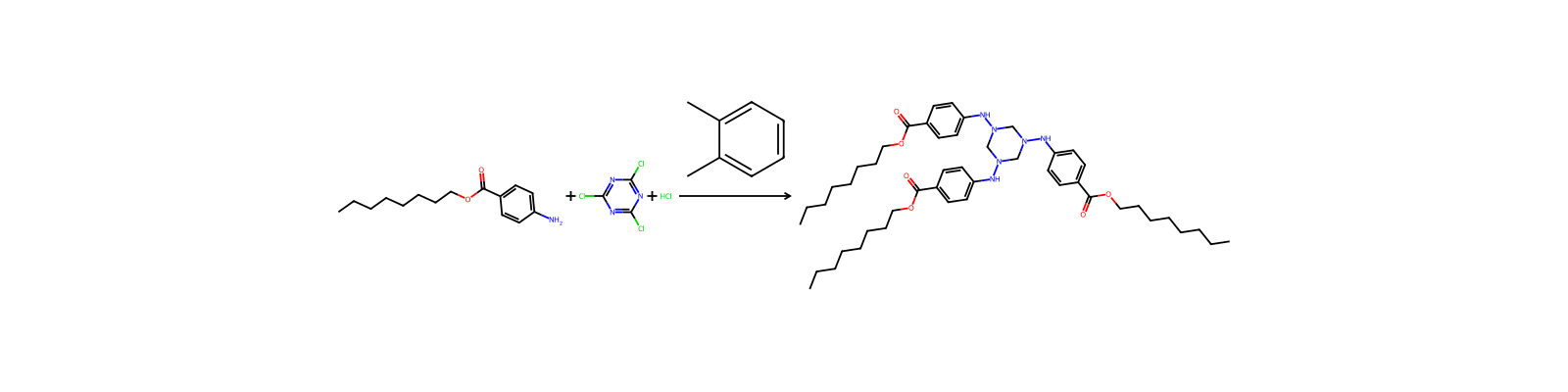
HRID 1728 reaction equation
HRID 1728As reactantuspto-grants-1998_03
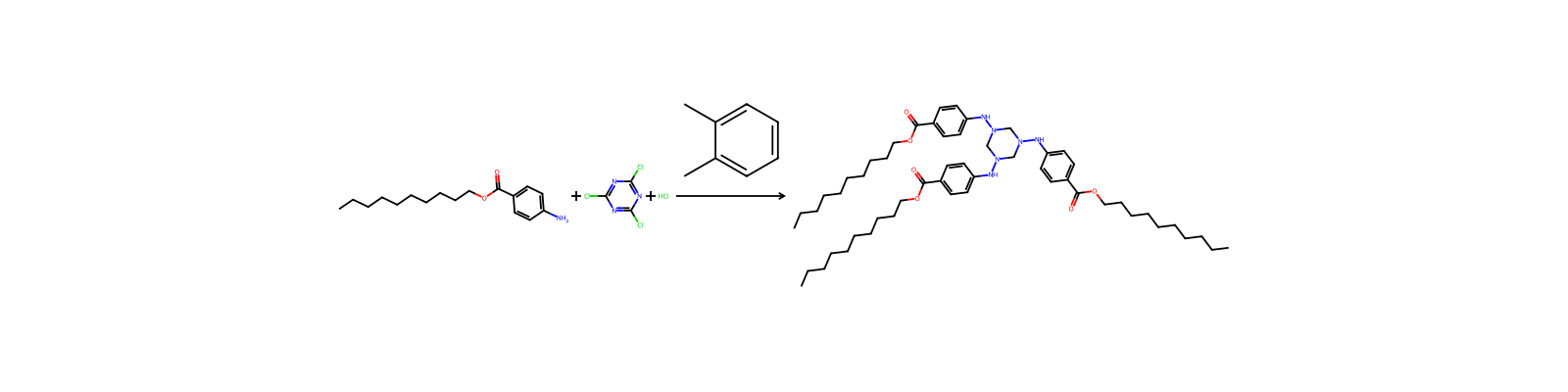
HRID 3760 reaction equation
HRID 3760As reactantuspto-grants-1988_02
HRID 4156 reaction equation
HRID 4156As reactantuspto-grants-1988_02
HRID 4157 reaction equation
HRID 4157As reactantuspto-grants-1988_02
HRID 4158 reaction equation
HRID 4158As reactantuspto-grants-1988_02
HRID 4159 reaction equation
HRID 4159As reactantuspto-grants-1988_02
HRID 8415 reaction equation
HRID 8415As reactantuspto-grants-2006_08
HRID 8418 reaction equation
HRID 8418As reactantuspto-grants-2006_08
Page 1 of 129

Compound notes

Loading…

On this pageBasic informationNames & identifiersPropertiesSafety & regulationChemistry & industryRelated reactionsCompound notes
More actions
New noteNew reactionRequest quotes
Vapor Pressure · 4 items

0.02 [mmHg]

Vapor pressure = 2 mm Hg at 70 °C

Vapor pressure, kPa at 70 °C: 0.3

2 [mm Hg] @70 °C

Heat of Vaporization256 kJ/kg
Physical Description · 4 items

Cyanuric chloride appears as a colorless crystalline solid with a pungent odor. Melting point 146 °C. Density 1.32 g / cm3. Very slightly soluble in water. Toxic by ingestion and inhalation of vapors. Irritates skin and eyes. Used to make dyes.

Large Crystals; Liquid; Liquid; Dry Powder; Other Solid

Colorless crystals with pungent odor; [ICSC] White powder; [MSDSonline]

COLOURLESS CRYSTALS WITH PUNGENT ODOUR.

Kovats Retention Index1051

Physicochemical properties

Melting point
145 · 145-147 °C(lit.)
Boiling point
190 °C · 190 °C(lit.)
Density
1.92 · 1.92
bulk density
600 · 600-900kg/m3
vapor density
6.36 · 6.36 (vs air)
vapor pressure
0.8 mm · 0.8 mm Hg ( 62.2 °C)
refractive index
1.676 · 1.676
Flash point
190 °C · 190°C
storage temp.
30 °C · Store below +30°C.
solubility
Chloroform (Slightly), Methanol (Slightly)
form
Solidified Mass or Fragments
pka
-3.26 · -3.26±0.10(Predicted)
color
White
Odor
pungent odor
Water Solubility
reacts
Sensitive
Moisture Sensitive
Merck
14 · 14,2699
BRN
124246 · 124246
Henry's Law Constant
2 · 2.0×101 mol/(m3Pa) at 25℃, HSDB (2015)
Stability
Stable. Incompatible with strong oxidizing agents, water.
InChI
1S/C3Cl3N3/c4-1-7-2(5)9-3(6)8-1
InChIKey
MGNCLNQXLYJVJD-UHFFFAOYSA-N
SMILES
Clc1nc(Cl)nc(Cl)n1
LogP
1.73 · 1.73-2.14 at 25℃
CAS DataBase Reference
108 · 108-77-0(CAS DataBase Reference)
EWG's Food Scores
1 · 1-2
FDA UNII
5 U4L4QHD6I · 5U4L4QHD6I
NIST Chemistry Reference
Cyanuric chloride(108-77-0)
EPA Substance Registry System
Cyanuric chloride (108-77-0)
UNSPSC Code
12352101 · 12352101
NACRES
22 · NA.22
Symbol(GHS)
5 · GHS05,GHS06,GHS08
Signal word
Danger
Hazard statements
330 · H330-H302-H314-H361-H370-H372-H373-H317-H334-H335-H336
Precautionary statements
501 · P501-P272-P260-P270-P202-P201-P271-P264-P280-P284-P342+P311-P308+P311-P362+P364-P303+P361+P353-P333+P313-P301+P330+P331-P301+P312+P330-P304+P340+P310-P305+P351+P338+P310-P403+P233-P405
target organs
Respiratory system
PPE
3 · Eyeshields, Faceshields, Gloves, type P3 (EN 143) respirator cartridges
Hazard Codes
T+,C
Risk Statements
14 · 14-22-26-34-43
Safety Statements
26 · 26-28-36/37/39-45-46-63-28A
RIDADR
2670 · UN 2670
WGK Germany
1 · 1
RTECS
1400000 · XZ1400000
Autoignition Temperature
650 °C · >650 °C
TSCA
TSCA listed
HazardClass
8 · 8
PackingGroup
II
HS Code
29336980 · 29336980
Storage Class
6.1 B · 6.1B - Non-combustible acute toxic Cat. 1 and 2very toxic hazardous materials
Hazard Classifications
2 InhalationAcute · Acute Tox. 2 InhalationAcute Tox. 4 OralEye Dam. 1Skin Corr. 1BSkin Sens. 1ASTOT SE 3
Hazardous Substances Data
108 · 108-77-0(Hazardous Substances Data)
Toxicity
50 orally · LD50 orally in Rabbit: 315 mg/kg LD50 dermal Rabbit > 2000 mg/kg
REACH Registrations
Active
Excepted Quantities
Max Inner Pack (30g or 30ml) and Max Outer Pack (500g or 500ml)

· Non-combustible, substance itself does not burn but may decompose upon heating to produce corrosive and/or toxic fumes.;· UN1802, UN2032, UN3084, UN3093, UN1796 (above 50%), UN1826 (above 50%), and UN2031 (above 65%) may act as oxidizers. Also consult GUIDE 140.;· Vapors may accumulate in confined areas (basement, tanks, hopper/tank cars, etc.).;· Substance may react with water (some violently), releasing corrosive and/or toxic gases and runoff.;· Corrosives in contact with metals may evolve flammable hydrogen gas.;· Containers may explode when heated or if contaminated with water.

Not combustible. Gives off irritating or toxic fumes (or gases) in a fire.

Health Hazards · 2 items

Excerpt from ERG Guide 157 [Substances - Toxic and/or Corrosive (Non-Combustible / Water-Sensitive)]:;TOXIC and/or CORROSIVE; inhalation, ingestion or contact (skin, eyes) with vapors, dusts or substance may cause severe injury, burns or death. Reaction with water or moist air may release toxic, corrosive or flammable gases. Reaction with water may generate much heat that will increase the concentration of fumes in the air. Fire will produce irritating, corrosive and/or toxic gases. Runoff from fire control or dilution water may be corrosive and/or toxic and cause environmental contamination. (ERG, 2024)

· TOXIC and/or CORROSIVE; inhalation, ingestion or contact (skin, eyes) with vapors, dusts or substance may cause severe injury, burns or death.;· Reaction with water or moist air may release toxic, corrosive or flammable gases.;· Reaction with water may generate much heat that will increase the concentration of fumes in the air.;· Fire will produce irritating, corrosive and/or toxic gases.;· Runoff from fire control or dilution water may be corrosive and/or toxic and cause environmental contamination.

Hazards Summary · 1 item

A severe skin, eye, and respiratory tract irritant; May cause pulmonary edema; May cause skin sensitization and asthma after prolonged contact; [ICSC] Toxic by ingestion and inhalation; [Hawley] Lachrymator; [CHEMINFO] Causes burns; Harmful if swallowed; Very toxic by inhalation; Reacts violently with water; May cause skin sensitization; [MSDSonline]

DOT ID and Guide2670 157
Reactive GroupAmines, Phosphines, and Pyridines;Acyl Halides, Sulfonyl Halides, and Chloroformates
EC ClassificationSymbol: T+, C; R: 14-22-26-34-43; S: (1/2)-26-28-36/37/39-45-46-63
UN ClassificationUN Hazard Class: 8; UN Pack Group: II
Special Reports · 2 items

Organization for Economic Cooperation and Development; Screening Information Data Set for Cyanuric Chloride, CAS #108-77-0 (November 2001)

Gesellschaft Deutscher Chemiker (GDCh)/Advisory Committee on Existing Chemicals of Environmental Relevance (BUA) Cyanuric Chloride (2,4,6-trichloro-1,3,5-triazine). Verlag, Stuttgart, Germany (1995). Criteria document /concerned occupational exposure to cyanuric chloride/.

Reactivity AlertsWater-Reactive
Reactivity Profile · 1 item

CYANURIC CHLORIDE reacts rapidly and exothermically with water to generate hydrogen chloride. A mixture with water in an industrial reactor with refrigeration turned off developed pressure that blew gaskets and filled the building with flammable vapors. An explosion occurred when the vapors were ignited [MCA Case History 1869(1972)]. Runaway reactions have occurred with acetone/water; methanol/water, ethoxyethanol/water, allyl alcohol/sodium hydroxide/water, 2-butanone/sodium hydroxide/water, and methanol/sodium bicarbonate [Loss Prev. Bull., 1979, (25), 21]. Reacts with methanol to give gaseous methyl chloride. Reacts rapidly with bicarbonates to generate gaseous carbon dioxide. Reacts vigorously with dimethyl formamide (DMF) to form carbon dioxide after a deceptive induction period [BCISC Quart. Safety Summ., 1960, 35, 24]. Can react with reducing agents to generate heat and products that may be gaseous (causing pressurization of closed containers). The products may themselves be capable of further reactions (such as combustion in the air).

Safety & protection

Fire Fighting · 2 items

Excerpt from ERG Guide 157 [Substances - Toxic and/or Corrosive (Non-Combustible / Water-Sensitive)]:;Note: Some foams will react with the material and release corrosive/toxic gases.;SMALL FIRE: CO2 (except for Cyanides), dry chemical, dry sand, alcohol-resistant foam.;LARGE FIRE: Water spray, fog or alcohol-resistant foam. If it can be done safely, move undamaged containers away from the area around the fire. Avoid aiming straight or solid streams directly onto the product. Dike runoff from fire control for later disposal.;FIRE INVOLVING TANKS, RAIL TANK CARS OR HIGHWAY TANKS: Fight fire from maximum distance or use unmanned master stream devices or monitor nozzles. Do not get water inside containers. Cool containers with flooding quantities of water until well after fire is out. Withdraw immediately in case of rising sound from venting safety devices or discoloration of tank. ALWAYS stay away from tanks in direct contact with flames. (ERG, 2024)

NO water. NO hydrous agents. In case of fire in the surroundings, use appropriate extinguishing media.

First Aid Measures · 4 items

Fresh air, rest. Half-upright position. Artificial respiration may be needed. Refer for medical attention.

Remove contaminated clothes. Rinse and then wash skin with water and soap. Refer for medical attention .

First rinse with plenty of water for several minutes (remove contact lenses if easily possible), then refer for medical attention.

Rinse mouth. Do NOT induce vomiting. Refer for medical attention .

Accidental Release Measures · 2 items

· CALL 911. Then call emergency response telephone number on shipping paper. If shipping paper not available or no answer, refer to appropriate telephone number listed on the inside back cover.;· Keep unauthorized personnel away.;· Stay upwind, uphill and/or upstream.;· Ventilate closed spaces before entering, but only if properly trained and equipped.

· ELIMINATE all ignition sources (no smoking, flares, sparks or flames) from immediate area.;· All equipment used when handling the product must be grounded.;· Do not touch damaged containers or spilled material unless wearing appropriate protective clothing.;· Stop leak if you can do it without risk.;· A vapor-suppressing foam may be used to reduce vapors.;· DO NOT GET WATER INSIDE CONTAINERS.;· Use water spray to reduce vapors or divert vapor cloud drift. Avoid allowing water runoff to contact spilled material.;· Prevent entry into waterways, sewers, basements or confined areas.;Small Spill;· Cover with DRY earth, DRY sand or other non-combustible material followed with plastic sheet to minimize spreading or contact with rain.;· Use clean, non-sparking tools to collect material and place it into loosely covered plastic containers for later disposal.

First Aid · 2 items

Excerpt from ERG Guide 157 [Substances - Toxic and/or Corrosive (Non-Combustible / Water-Sensitive)]:;Refer to the "General First Aid" section. Specific First Aid: For corrosives, in case of contact, immediately flush skin or eyes with running water for at least 30 minutes. Additional flushing may be required. In case of skin contact with Hydrofluoric acid (UN1790), if calcium gluconate gel is available, rinse 5 minutes, then apply gel. Otherwise, continue rinsing until medical treatment is available. (ERG, 2024)

General First Aid:;· Call 911 or emergency medical service.;· Ensure that medical personnel are aware of the material(s) involved, take precautions to protect themselves and avoid contamination.;· Move victim to fresh air if it can be done safely.;· Administer oxygen if breathing is difficult.;· If victim is not breathing:;-- DO NOT perform mouth-to-mouth resuscitation; the victim may have ingested or inhaled the substance.;-- If equipped and pulse detected, wash face and mouth, then give artificial respiration using a proper respiratory medical device (bag-valve mask, pocket mask equipped with a one-way valve or other device).;-- If no pulse detected or no respiratory medical device available, provide continuous compressions. Conduct a pulse check every two minutes or monitor for any signs of spontaneous respirations.;· Remove and isolate contaminated clothing and shoes.;· For minor skin contact, avoid spreading material on unaffected skin.;· In case of contact with substance, remove immediately by flushing skin or eyes with running water for at least 20 minutes.;· For severe burns, immediate medical attention is required.;· Effects of exposure (inhalation, ingestion, or skin contact) to substance may be delayed.;· Keep victim calm and warm.;· Keep victim under observation.;· For further assistance, contact your local Poison Control Center.;· Note: Basic Life Support (BLS) and Advanced Life Support (ALS) should be done by trained professionals.;Specific First Aid:;· For corrosives, in case of contact, immediately flush skin or eyes with running water for at least 30 minutes. Additional flushing may be required.

Safe StorageSeparated from food and feedstuffs. See Chemical Dangers. Dry. Well closed. Keep in a well-ventilated room.
Exposure Control and Personal Protection · 2 items

· Wear positive pressure self-contained breathing apparatus (SCBA).;· Wear chemical protective clothing that is specifically recommended by the manufacturer when there is NO RISK OF FIRE.;· Structural firefighters' protective clothing provides thermal protection but only limited chemical protection.

0.0076 [mg/m3]

Fire Fighting Procedures · 1 item

If material on fire or involved in fire: Extinguish fire using agent suitable for type of surrounding fire. (Material itself does not burn or burns with difficulty.) Use dry chemical, dry sand, or carbon dioxide. Do not use water on material itself. If large quantities of combustibles are involved, use water in flooding quantities as spray and fog.

Storage Conditions · 2 items

IN GENERAL, MATERIALS WHICH ARE TOXIC AS STORED OR WHICH CAN DECOMP INTO TOXIC COMPONENTS...SHOULD BE STORED IN A COOL, WELL-VENTILATED PLACE, OUT OF DIRECT RAYS OF THE SUN, AWAY FROM AREAS OF HIGH FIRE HAZARD, & SHOULD BE PERIODICALLY INSPECTED... INCOMPATIBLE MATERIALS SHOULD BE ISOLATED FROM EACH OTHER.

Cyanuric chloride should be stored in strictly dry conditions. The solid should be stored in a cool place to avoid an increase in particle size. Tank farms for molten product must have a well-designed heat-tracing system that includes the vent and relief lines.

Cleanup Methods · 4 items

CYANURIC CHLORIDE WAS PARTIALLY (50%) HYDROLYZED TO CYANURIC ACID BY TREATMENT WITH SODIUM HYDROXIDE AT 80 °C. THE SOLN OBTAINED WAS TREATED WITH SODIUM OXYCHLORIDE AT PH 9-10 & AT 50 & 70 °C. USING 5.5 MOL OF ACTIVE CL/MOL OF CYANURIC CHLORDE, 99% OF CYANURIC CHLORIDE WAS DECOMP ACCORDING TO THE EQUATION. THE REACTION TIME AT 50 & 70 °C WERE 40 & 15 MIN.

Sweep spilled substance into sealable containers. Carefully collect remainder, then remove to safe place.

Environmental considerations - and spill: Dig a pit, pond, lagoon, holding area to contain liquid or solid material. /SRP: If time permits, pits, ponds, lagoons, soak holes, or holding areas should be sealed with an impermeable flexible membrane liner./ Cover solids with a plastic sheet to prevent dissolving in rain or fire fighting water. Dike surface flow using soil, sand bags, foamed polyurethane, or foamed concrete.

Environmental considerations - water spill: Use natural barriers or oil spill control booms to limit spill travel. Use natural deep water pockets, excavated lagoons, or sand bag barriers to trap material at bottom. Remove trapped material with suction hoses.

Nonfire Spill Response · 1 item

Excerpt from ERG Guide 157 [Substances - Toxic and/or Corrosive (Non-Combustible / Water-Sensitive)]:;ELIMINATE all ignition sources (no smoking, flares, sparks or flames) from immediate area. All equipment used when handling the product must be grounded. Do not touch damaged containers or spilled material unless wearing appropriate protective clothing. Stop leak if you can do it without risk. A vapor-suppressing foam may be used to reduce vapors. DO NOT GET WATER INSIDE CONTAINERS. Use water spray to reduce vapors or divert vapor cloud drift. Avoid allowing water runoff to contact spilled material. Prevent entry into waterways, sewers, basements or confined areas.;SMALL SPILL: Cover with DRY earth, DRY sand or other non-combustible material followed with plastic sheet to minimize spreading or contact with rain. Use clean, non-sparking tools to collect material and place it into loosely covered plastic containers for later disposal. (ERG, 2024)

Disposal Methods · 1 item

SRP: The most favorable course of action is to use an alternative chemical product with less inherent propensity for occupational exposure or environmental contamination. Recycle any unused portion of the material for its approved use or return it to the manufacturer or supplier. Ultimate disposal of the chemical must consider: the material's impact on air quality; potential migration in soil or water; effects on animal, aquatic, and plant life; and conformance with environmental and public health regulations.

Spillage DisposalSweep spilled substance into covered sealable containers. Carefully collect remainder. Then store and dispose of according to local regulations. Personal protection: complete protective clothing including self-contained breathing apparatus.

Toxicology

Ecotoxicity Values · 5 items

EC50 Daphnia magna (water flea, <24 hrs old) >1000 mg/L/24 hr; static, 18-19 °C, pH 8.2-8.3, hardness 201 mg/L CaCO3. /immobility/ /2-chlor-4,6-dihydroxy-1,3,5-triazine/

LC50 Poecilia reticulata (guppy, length 20 + or - 10 cm) >1000 mg/L/96 hr; static, 25-30 °C, hardness 201 mg/L CaCO3. /Cyanuric acid/

LC50 Oryzias latipes (orange-red killfish) >1000 mg/L/48 hr; static or semi-static, 25 +/- 2 °C. /Cyanuric acid/

LC50 Anas domesticus (Peking ducklings) (3-5 days), 174-206 g) >1000 mg/kg/8 d diet.

LD50 /Coturnix japonica/ (Japanese quail, adult (60-70 days), mean weight 139-144 g) oral 192 mg/kg bw (95% CI: 102-313 mg/kg bw).

Environmental Fate · 3 items

TERRESTRIAL FATE: Based on a classification scheme(1), an estimated Koc value of 120(SRC), determined from a structure estimation method(2), indicates that cyanuric chloride will have high mobility in soil(SRC). Volatilization of cyanuric chloride from moist soil surfaces(SRC) is not expected to be an important environmental fate process given an estimated Henry's Law constant of 4.9X10⁻⁷ atm-cu m/mole(SRC), derived using a fragment constant estimation method(3). Volatilization from dry soil surfaces is not expected(SRC), based on an estimated vapor pressure of 0.023 mm Hg(SRC), derived from a structure estimation method(4). Complete anaerobic degradation of 250-500 uM of cyanuric chloride solutions incorporated into a methanogenic aquifer slurry was observed after a one year time period(5); however, cyanuric chloride hydrolyzes rapidly(6) and the degradation was likely due to hydrolytic dehalogenation rather than biodegradation(SRC).

AQUATIC FATE: Based on a classification scheme(1), an estimated Koc value of 120(SRC), determined from a structure estimation method(2), indicates that cyanuric chloride is unlikely to adsorb to suspended solids and sediment in water(SRC). Volatilization from water surfaces is not expected(3) based upon an estimated Henry's Law constant of 4.9X10⁻⁷ atm-cu m/mole(SRC), developed using a fragment constant estimation method(4). According to a classification scheme(5), an estimated BCF value of 2(SRC), from an estimated log Kow of 1.73(6), and a regression-derived equation(7), suggests the potential for bioconcentration in aquatic organisms is low(SRC). cyanuric chloride hydrolyzes rapidly in water(8). Approximately 40% degradation was observed in 1 hour at a temperature of 30 °C(8). Complete anaerobic degradation of 250-500 uM of cyanuric chloride solutions incorporated into a methanogenic aquifer slurry was observed after a one year time period(9); however, the degradation was likely due to abiotic (hydrolysis) rather than biotic (microbial) processes(SRC).

ATMOSPHERIC FATE: According to a model of gas/particle partitioning of semivolatile organic compounds in the atmosphere(1), cyanuric chloride, which has an estimated vapor pressure of 0.023 mm Hg at 25 °C(SRC), determined from a fragment constant estimation method(2), will exist solely as a vapor in the ambient atmosphere. Vapor phase cyanuric chloride is degraded slowly in the atmosphere by reaction with photochemically-produced hydroxyl radicals(SRC); the half-life for this reaction in air is estimated to be about 4,300 days(SRC), calculated from its rate constant of 3.7X10⁻¹⁵ cu cm/molecule-sec at 25 °C(SRC) that was derived using a structure estimation method(3).

Adverse Effects · 1 item

Dermatotoxin - Skin burns.;Lacrimator (Lachrymator) - A substance that irritates the eyes and induces the flow of tears.;Skin Sensitizer - An agent that can induce an allergic reaction in the skin.;Toxic Pneumonitis - Inflammation of the lungs induced by inhalation of metal fumes or toxic gases and vapors.

Exposure RoutesThe substance can be absorbed into the body by inhalation and by ingestion.
Signs and Symptoms · 4 items

Burning sensation. Cough. Laboured breathing. Shortness of breath. Sore throat.

Redness. Pain.

Redness. Pain.

Abdominal pain. Burning sensation. Shock or collapse.

Soil Adsorption/Mobility · 1 item

Using a structure estimation method based on molecular connectivity indices(1), the Koc for cyanuric chloride is estimated as 120(SRC). According to a classification scheme(2), this estimated Koc value suggests that cyanuric chloride possesses high mobility in soil(SRC).

TSCA Test Submissions · 4 items

Cyanuryl chloride (CAS# 108-77-0) was evaluated for acute oral toxicity. The test substance was administered orally to female Charles River albino rats. Dosage levels and mortality data are as follows: 10 (0/1); 30 (0/1); 100 (0/1); 300 (0/1); 1000 (1/1); 3000 (1/1); and 10,000 mg/kg of body weight (1/1). Clinical findings included a dose-related increased in hypoactivity, ruffled fur, labored breathing, muscular weakness, lacrimation, and prostration. Necropsy findings revealed severe chemical burns in the stomach lining, duodenum, and the lobe of the liver adjacent to the stomach. The animal dosed with 300 mg/kg revealed necrotic tissue in the stomach lining. The test substance was determined to be slightly to moderately toxic. The LD50 was determined to be greater than 300 mg/kg and less than 1000 mg/kg.

Cyanuryl chloride (CAS# 108-77-0) was evaluated for acute inhalation toxicity. The test substance was administered via inhalation to male and female albino rats of the Tif: RAIf (SPF) strain for 4-hours. Concentration levels and mortality data are as follows: 0.0 (0/10 M, 0/10 F); 5.0 (0/9 M, 0/9 F); 7.0 (0/9 M, 0/9 F); 18.4 (1/9 M, 0/9 F); 40.5 (6/9 M, 0/9 F); 108 (9/9 M, 6/9 F); and 495 mg/m3 (9/9 M, 9/9 F). Clinical signs included a dose-related increase in dyspnea, chromodacryorrhea, rhinorrhea, cyanosis, diarrhea, tremors and ruffled fur as well as lateral, ventral, and curved body position. A significant decrease in body weights was noted in both sexes at 40.5 mg/cu m, and depressed body weights and weight gains at 108 mg/cu m. Pathological findings revealed an area of discoloration of the lungs in all exposure groups. At 40.5 mg/cu m, enlarged or edematous lungs in 6/9 males was present, and similar findings were noted in 7/9 males and 6/9 females in the 495 mg/cu m group. Also noted was dilation of the stomach in 1 male in the 108 mg/cu m groups and 1 animal of each sex in the 495 mg/cu m group. The LC50 for males was 35 mg/cu m, and for females was 88 mg/cu m. The test substance was determined to be very toxic when administered to rats by the inhalation route.

Cyanuryl chloride (CAS# 108-77-0) was evaluated for subchronic oral toxicity. The test substance was administered by oral gavage to Charles River CD albino rats for 5-days. Dosage levels and mortality data are as follows: 0 (0/5 M, 0/5 F); 10 (0/5 M, 0/5 F); 20 (0/5 M, 0/5 F); 40 (0/5 M, 1/5 F); 80 (2/5 M, 4/5 F); 160 (4/5 M, 4/5 F); and 320 mg/kg/day (5/5 M, 5/5 F). Clinical signs at 20 mg/kg/day included rales, excessive salivation and/or gasping. At 40 mg/kg/day and above, toxicity consisted of rales, excessive salivation, labored breathing, gasping, cool to touch, decreased motor activity, brown material around mouth/nose, and moist areas of yellow material. At 20 mg/kg/day and above, a significant reduction in body weights and food consumption was noted for all rats. Pathological findings at 20 mg/kg/day and above, included lesions consisting of a dark discoloration, hemorrhages, erosions, and/or ulcerations in the glandular and nonglandular areas of the stomach.

Human Toxicity Excerpts · 5 items

/HUMAN EXPOSURE STUDIES/ In human volunteers, the 1-min threshold irritation effect of inhaled cyanuric chloride was found to be 0.3 mg/cu m.

/SIGNS AND SYMPTOMS/ ...HAS SEVERE IRRITANT EFFECT ON EYES & RESP PASSAGES, BUT LESS EFFECT ON SKIN. SENSITIVITY & CHRONIC ECZEMA HAVE BEEN OBSERVED.

/CASE REPORTS/ Cyanuric chloride is a lachrymator and an irritant to the eyes and nose. Exposure of a laboratory assistant to a small amount of vapor resulted in rash on the neck and behind the ears with irritation.

/CASE REPORTS/ An, in general, healthy male (age 54) was exposed to cyanuric chloride during an inspection in a factory where herbicides were produced. Cyanuric chloride (one of the basic materials) was accidentally released, because a vessel got broken. The man was totally submerged under the powder. Signs of intoxication consisted of irritation of the skin, eyes and pharynx, followed by serious obstructive pulmonary syndrome with impairment of alveolar capillary exchanges. No effects on the heart function were seen (although a slightly abnormal ECG was reported from an pre-exposure investigation). The man recovered within 20 days.

/BIOMONITORING/ 39 workers with known history of long-term exposure to cyanuric chloride (between 1 and 22 years) were investigated. Investigations included anamnesis, physical examination (with special attention to lungs, skin and eyes), lung function (forced expiratory volume) and blood pressure measurements. Medical records of another 21 workers previously exposed to incidental high concentrations, who had changed jobs in the mean time, were checked. Determination of concentrations at the workplace. Samples (30-60 min) were taken during the filling procedure (worst case) and during normal production procedures (both room and personal monitoring). The samples were analyzed after adsorption tosilicagel, desorption with H2SO4, hydrolysis to cyanuric acid (70 min at 70 °C) and analysis of the cyanuric acid by HPLC with UV detection. No effects on any of the measured parameters were found. FEV was within normal ranges. Accidental acute exposure to high doses of cyanuric chloride was reported to lead to irritation/corrosion of the conjunctiva and skin irritation. After inhalation of the test substance coughing, breathing problems and shortness of breath were seen. These effects disappeared completely after a short time and did not result in persisting problems. Measured concentrations were 7.09 = or - 9.22 ug/cu m, 4.43 = or - 2.72 ug/cu m and 92.76 = or - 147.52 cu m, for filling, room and personal monitoring, respectively.

Artificial Pollution SourcesCyanuric chloride's production and use as a precursor in the synthesis of herbicides and insecticides, optical brighteners, dyes, and plastics(1) may result in its release to the environment through various waste streams(SRC).
Environmental BiodegradationANAEROBIC: Complete anaerobic degradation of 250-500 uM cyanuric chloride solutions incorporated into a methanogenic aquifer slurry was observed after a one year time period(1).
Environmental Bioconcentration · 1 item

An estimated BCF of 2 was calculated in fish for cyanuric chloride(SRC), using an estimated log Kow of 1.73(1) and a regression-derived equation(2). According to a classification scheme(3), this BCF value suggests the potential for bioconcentration in aquatic organisms is low(SRC). Cyanuric chloride hydrolyzes rapidly in water(4), thus eliminating bioconcentration as an important environmental fate property.

Volatilization from Water/Soil · 1 item

The Henry's Law constant for cyanuric chloride is estimated as 4.9X10⁻⁷ atm-cu m/mole(SRC) using a fragment constant estimation method(1). This value indicates that cyanuric chloride is not expected to volatilize from water surfaces or moist soil surfaces(2). Moreover, cyanuric chloride hydrolyzes rapidly in water(3), thus eliminating volatilization as an important environmental fate property. Cyanuric chloride is not expected to volatilize from dry soil surfaces(SRC) based upon an estimated vapor pressure of 0.023 mm Hg(SRC), determined from a fragment constant method(4).

Regulatory information

Regulatory Information · 5 items

Chemical: 1,3,5-Triazine, 2,4,6-trichloro-

1,3,5-Triazine, 2,4,6-trichloro- is listed on the EPA's Chemical Data Reporting (CDR) system. Manufacturers and importers of 1,3,5-Triazine, 2,4,6-trichloro- are required to report information about their production and use of this chemical to the EPA under the Toxic Substances Control Act (TSCA). (40 eCFR Part 711)

Status: Active Update: 16-06-2022 https://echa.europa.eu/registration-dossier/-/registered-dossier/14952;Status: Active Update: 24-10-2011 https://echa.europa.eu/registration-dossier/-/registered-dossier/1593;Status: Active Update: 08-03-2013 https://echa.europa.eu/registration-dossier/-/registered-dossier/8300;Status: Cease Manufacture Update: 28-09-2010 https://echa.europa.eu/registration-dossier/-/registered-dossier/1372

Cyanuric chloride: Does not have an individual approval but may be used under an appropriate group standard

The New Jersey Worker and Community Right to Know Act requires public and private employers to provide information about hazardous substances at their workplaces. (N.J.S.A. 34:5A-1 et. seq.)

Atmospheric Standards · 1 item

This action promulgates standards of performance for equipment leaks of Volatile Organic Compounds (VOC) in the Synthetic Organic Chemical Manufacturing Industry (SOCMI). The intended effect of these standards is to require all newly constructed, modified, and reconstructed SOCMI process units to use the best demonstrated system of continuous emission reduction for equipment leaks of VOC, considering costs, non air quality health and environmental impact and energy requirements. Cyanuric chloride is produced, as an intermediate or a final product, by process units covered under this subpart.

Safety data

PPE
Eyeshields, Faceshields, Gloves, type P3 (EN 143) respirator cartridges
wgk
1
tsca
TSCA listed
rtecs
XZ1400000
ridadr
UN 2670
hs_code
29336980
Toxicity
LD50 orally in Rabbit: 315 mg/kg LD50 dermal Rabbit > 2000 mg/kg
risk_code
14-22-26-34-43
Signal word
Danger
Symbol(GHS)
GHS05,GHS06,GHS08
hazard_code
T+,C
safety_code
26-28-36/37/39-45-46-63-28A
hazard_class
8
Storage Class
6.1B - Non-combustible acute toxic Cat. 1 and 2very toxic hazardous materials
packing_group
II
target organs
Respiratory system
Hazard statements
H330-H302-H314-H361-H370-H372-H373-H317-H334-H335-H336
Excepted Quantities
Max Inner Pack (30g or 30ml) and Max Outer Pack (500g or 500ml)
REACH Registrations
Active
Hazard Classifications
Acute Tox. 2 InhalationAcute Tox. 4 OralEye Dam. 1Skin Corr. 1BSkin Sens. 1ASTOT SE 3
Autoignition Temperature
>650 °C
Precautionary statements
P501-P272-P260-P270-P202-P201-P271-P264-P280-P284-P342+P311-P308+P311-P362+P364-P303+P361+P353-P333+P313-P301+P330+P331-P301+P312+P330-P304+P340+P310-P305+P351+P338+P310-P403+P233-P405
Hazardous Substances Data
108-77-0(Hazardous Substances Data)
Consumption Patterns · 1 item

More than 70% of production is used for pesticides and especially herbicides, with about &0% of that volume for atrazine. ... Less than 30% of demand is accounted for by industrial applications, predominantly optical brighteners, UV stabilizers, reactive dyes, and certain anthraquinone dyes.

Consumer UsesFlame retardant
Industry UsesUV stabilizer;Intermediate;Flame retardant;Brightener;Not Known or Reasonably Ascertainable
Methods of Manufacturing · 3 items

TRIMERIZATION OF CYANOGEN CHLORIDE (WHICH IS FORMED FROM CHLORINE AND HYDROGEN CYANIDE)

IT IS OBTAINED BY TRIMERIZATION OF CYANOGEN CHLORIDE IN ORG SOLVENTS...IN PRESENCE OF ACIDIC CATALYSTS...CARRIED OUT IN GASEOUS PHASE AT...200-500 °C USING ACTIVATED CHARCOAL AS CATALYST.

... Hydrocyanic acid is chlorinated to cyanogen chloride, which is trimerized directly to cyanuric chloride.

General Manufacturing Information · 6 items

Not Known or Reasonably Ascertainable;Synthetic Dye and Pigment Manufacturing;Plastics Material and Resin Manufacturing;All Other Basic Organic Chemical Manufacturing;Paper Manufacturing;Pesticide, Fertilizer, and Other Agricultural Chemical Manufacturing;Plastics Product Manufacturing

1,3,5-Triazine, 2,4,6-trichloro-: ACTIVE

ACYLATION OF AMINO-AZO DYESTUFF WITH TRICHLORO-S-TRIAZINE...PRODUCES REACTIVE DYES WHICH GIVE WASH-FAST SHADES ON COTTON OR WOOL...

ASSAY FOR SERUM ANGIOTENSIN-CONVERTING ENZYME IS BASED ON COLORIMETRIC DETERMINATION OF HIPPURATE WITH CYANURIC CHLORIDE/DIOXAN REAGENT.

THE MULTIFUNCTIONAL REAGENT 1,3,5-TRICHLOROTRIAZINE YIELDED RESULTS SIMILAR TO METHYL-PARA-HYDROXYBENZIMIDATE WHEN COUPLING AMINO-HAPTENS TO THE SURFACE OF SRBC (SHEEP RED BLOOD CELLS) FOR USE IN THE HEMOLYTIC SPOT ASSAY.

Worldwide production exceeds 100,000 tons/year

Applications · 7 items

Usescyanuric chloride is an important fine chemical product, with a wide range of uses, it is the intermediate in pesticide industry, and the manufacture of reactive dyes raw material, it can used as all kinds of organic industrial production additives, such as fluorescent brighteners , textiles shrink-proof agents, surface active agents, it is one of the materials used in the manufacture of defense explosives and rubber accelerator and it is also the material for the synthesis of drugs by the pesticide and pharmaceutical industry. The above information is edited by the chemicalbook of Tian Ye.

UsesCyanurchloride is an intermediate to manufacture of agrochemicals (triazine herbicides), dyestuffs, optical brighteners, tanning agents, reactive dyes, UV-absorbing agent, softening agents and pharmaceuticals, as well as block-builders for plastics. Product Data Sheet

UsesCyanurchloride is an intermediate to manufacture of agrochemicals, dyestuffs, optical brighteners, tanning agents, softening agents and pharmaceuticals, as well as block-builders for plastics.

UsesReagent for the conversion of alcohols to chlorides and for the immobilization of microorganisms and enzymes.1

UsesCyanuric Chloride is extensively used in the preparation of the triazine-class pesticides and herbicides. Cyanuric chloride is also used as a precursor to dyes and crosslinking agents due to the react ive chlorine atoms towards nucleophilic substitution reactions. Cyanuric chloride derivatives possess a large spectrum of activities as antibacterial and anticancer agents.

UsesIntermediate in the synthesis of active dyes, agricultural products, and drug substances. Reagent in organic synthesis. Coupling agent for nucleic acids and proteins; cyanuric chloride-activated paper is used in capillary and electroblotting applications, dot tests, and hybridization protocols.

General DescriptionA colorless crystalline solid with a pungent odor. Melting point 146°C. Density 1.32 g / cm3. Very slightly soluble in water. Toxic by ingestion and inhalation of vapors. Irritates skin and eyes. Used to make dyes.

Upstream & downstream products

Upstream raw materials

ChlorineUreaSodium cyanideHydrogen cyanideMethyl thiocyanate

Downstream products

C.I. Reactive Blue 1REACTIVE RED 120Fluorescent Brightener 220trisodium 2-[[6-[(4,6-dichloro-1,3,5-triazin-2-yl)methylamino]-1-hydroxy-3-sulphonato-2-naphthyl]azo]naphthalene-1,5-disulphonateReactive Disperse Scarlet GReactive Red M-3BEC.I. Reactive yellow 1CyanazineCIBACRON BRILLIANT YELLOW 3G-Pdisodium 4-[[5-(aminocarbonyl)-1-ethyl-2-hydroxy-4-methyl-6-oxopiperidin-3-yl]azo]-6-[(4,6-dichloro-1,3,5-triazin-2-yl)amino]benzene-1,3-disulphonateReactive Red Violet X-2RDirect Yellow L-5Rfluorescent whitening agent RADirect Blending Brilliant Red D-5BLSimazineTerbutylazineReactive Yellow 179trisodium 2-[[6-[(4-amino-6-chloro-1,3,5-triazin-2-yl)methylamino]-1-hydroxy-3-sulphonato-2-naphthyl]azo]naphthalene-1,5-disulphonateREACTIVE RED 195Reactive Orange 2Reactive Blue 812-[[4-[[4-[bis(2-hydroxyethyl)amino]-6-chloro-1,3,5-triazin-2-yl]amino]phenyl]azo]-p-cresolDirect Blend Rubine D-BLLReactive Red KD-8BNeutral Brilliant Yellow S-5GLCyanuric fluorideReactive Light Yellow M-5GPrairie Net Wettable PowderReactive Brilliant Orange K-RANILAZINEReactivebrilliantredKE-7BReactive Yellow 18REACTIVE ORANGE 14Reactive Yellow 84Reactive Violet 2tetrasodium 3,3'-[(1,6-dihydro-6-oxo-1,3,5-triazine-2,4-diyl)bis[imino(5-methoxy-2-methyl-4,1-phenylene)azo]]bis(naphthalene-1,5-disulphonate)Reactive Yellow KE-RNAltretaminehexasodium 4-amino-3,6-bis[[5-[[4-chloro-6-[(3-sulphonatophenyl)amino]-1,3,5-triazin-2-yl]amino]-2-sulphonatophenyl]azo]-5-hydroxynaphthalene-2,7-disulphonateSSH-108

Additional notes

DefinitionChEBI: A chloro-1,3,5-triazine in which the triazine ring is substituted on each carbon by chlorine. Its main use is in the preparation of the triazine-class pesticides.

Cyanuric chloride (108-77-0) was evaluated for developmental effects in groups of 25 female Charles River rats exposed to the test substance by gavage on days 6 through 19 of gestation at dose levels of 0, 5, 25, and 50 mg/kg/day. All rats survived to sacrifice on day 20 except one animal at 25 mg/kg/day which died due to an intubation error. Animals at 50 mg/kg/day showed a slight decrease in group mean maternal body weight gain when compared to controls. The high dose group showed a significantly lower value for viable fetus/dam than the control group. Treatment had no affect on the incidence of malformations or developmental variations in any of the treated groups when compared with the control group.