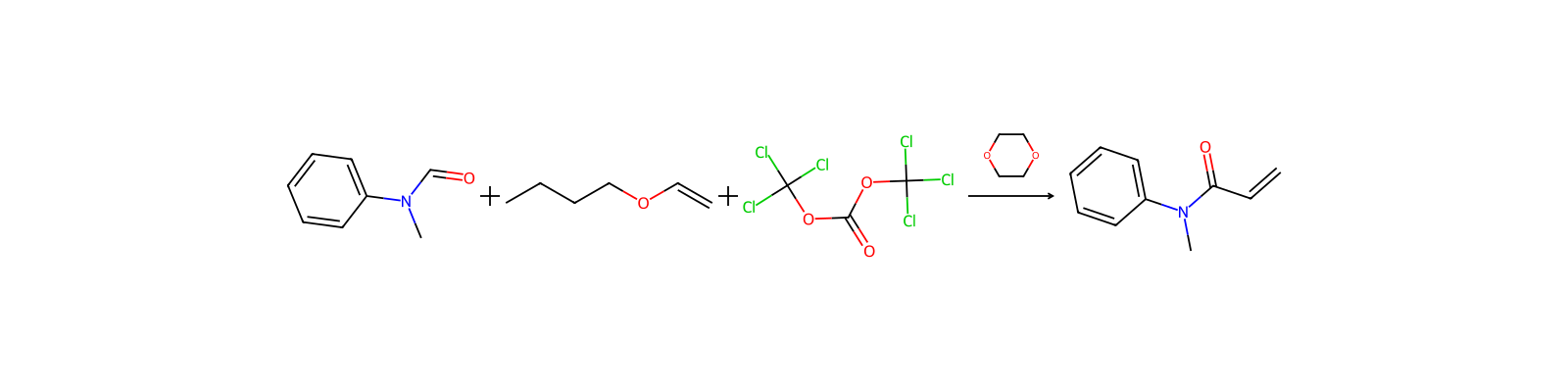
HRID 9933As reactant

111-34-2C=COCCCCUZKWTJUDCOPSNM-UHFFFAOYSA-NButyl vinyl ether, stabilized appears as a liquid. Less dense than water. Vapors heavier than air. May irritate skin and eyes. Used to make other chemicals.
111-34-2DTXSID5051575CHEMBL35611250.7888 at 20 °C/20 °C
Bulk density: 7.45 lb/gal at 20 °C
Sol in alc and ether
Sol in acetone, benzene
Water solubility of 3,000 mg/l
Very sol in ethyl alcohol, acetone; miscible in ethyl ether
15 °F (NFPA, 2010)
-9 °C (Open cup)
Safety information is for reference only and does not replace the supplier’s Safety Data Sheet (SDS), applicable regulations, or professional assessment.
Danger
H225 (100%): Highly Flammable liquid and vapor [Danger Flammable liquids]
P210, P233, P240, P241, P242, P243, P261, P264, P272, P280, P302+P352, P303+P361+P353, P321, P332+P317, P333+P317, P362+P364, P370+P378, P403+P235, and P501 (click each P-code to see the statement)
Aggregated GHS information provided per 150 reports by companies from 11 notifications to the ECHA C&L Inventory. Each notification may be associated with multiple companies.
Chemical: Butane, 1-(ethenyloxy)-
REACH registered substance: Butyl vinyl ether (EC: 203-860-7)
Butane, 1-(ethenyloxy)-: HSNO Approval: HSR001104 Approved with controls
The New Jersey Worker and Community Right to Know Act requires public and private employers to provide information about hazardous substances at their workplaces. (N.J.S.A. 34:5A-1 et. seq.)
Excerpt from ERG Guide 127 [Flammable Liquids (Water-Miscible); polymerization hazard]:
· HIGHLY FLAMMABLE: Will be easily ignited by heat, sparks or flames.
Flammable, dangerous fire risk.
Fire hazard: Dangerous, when exposed to heat or flame.
Excerpt from ERG Guide 127 [Flammable Liquids (Water-Miscible); polymerization hazard]:
· Inhalation or contact with material may irritate or burn skin and eyes.
Used in the synthesis of copolymers and as an acrylic/vinyl acetate resin comonomer; [HSDB]
Butyl vinyl ether /is/ ... used in the synthesis of copolymers.
Acrylic/vinyl acetate resin comonomer
Reaction of acetylene with n-butyl alcohol.
Acetylene + n-butanol (ethynylation)
DescriptionButyl vinyl ether is an extremely flammable,colorless liquid with an ether-like odor. Molecularweight = 100.2; Specific gravity (H2O:1) = 0.8; Boilingpoint = 94℃; Freezing/Melting point = - 112.8℃; Vapordensity (air =1) = 3.5; Flash point = - 9.4℃ (oc);Autoignition temperature = -55℃. Hazard Identification(based on NFPA-704 M Rating System): Health 2,Flammability 3, Reactivity 2. Slightly soluble in water.
UsesSynthesis, copolymerization.
UsesButyl Vinyl Ether is a reagent used in organic chemical reactions and the preparation of pharmaceutical compounds used in anticancer therapy. It is also used in the synthesis of potent inhibitors for PDE5. It is also used in the synthesis of copolymers and as an acrylic/vinyl acetate resin comonomer.
General DescriptionA liquid. Flash point 0°F. Less dense than water. Vapors heavier than air. May irritate skin and eyes. Used to make other chemicals.

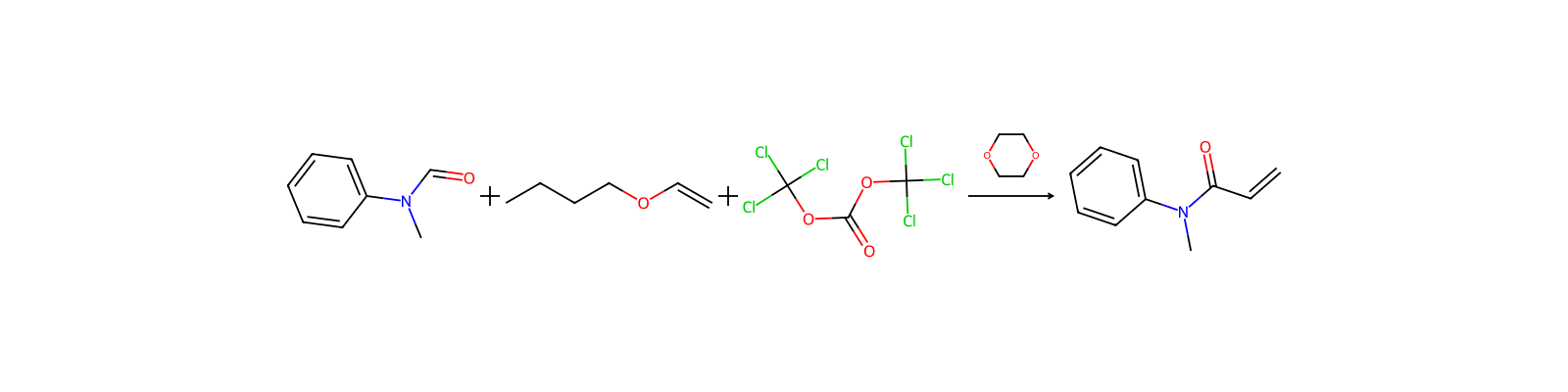


49.1 [mmHg]
49 mm Hg at 25 °C /from experimentally derived coefficients/
Flammable liquid; [Hawley] A skin and eye irritant; [Sax] Probably causes CNS depression; [HSDB] May cause skin burns; [CAMEO] An irritant; Chronic effects in high-dose animal studies include degenerative changes to brain; [MSDSonline] Butyl vinyl ether, stabilized (UN2352) has warning of explosive polymerization; [ERG 2016] See Vinyl methyl ether.
Ethers, such as BUTYL VINYL ETHER can act as bases. They form salts with strong acids and addition complexes with Lewis acids. The complex between diethyl ether and boron trifluoride is an example. Ethers may react violently with strong oxidizing agents. In other reactions, which typically involve the breaking of the carbon-oxygen bond, ethers are relatively inert.
/GUIDE 127P: FLAMMABLE LIQUIDS (POLAR/WATER-MISCIBLE)/ Fire or Explosion: HIGHLY FLAMMABLE: Will be easily ignited by heat, sparks or flames. Vapors may form explosive mixtures with air. Vapors may travel to source of ignition and flash back. Most vapors are heavier than air. They will spread along ground and collect in low or confined areas (sewers, basements, tanks). Vapor explosion hazard indoors, outdoors or in sewers. Those substances designated with a "P" may polymerize explosively when heated or involved in a fire. Runoff to sewer may create fire or explosion hazard. Containers may explode when heated. Many liquids are lighter than water. /Butyl vinyl ether, inhibited; Butyl vinyl ether, stabilized/
/GUIDE 127P: FLAMMABLE LIQUIDS (POLAR/WATER-MISCIBLE)/ Health: Inhalation or contact with material may irritate or burn skin and eyes. Fire may produce irritating, corrosive and/or toxic gases. Vapors may cause dizziness or suffocation. Runoff from fire control may cause pollution. /Butyl vinyl ether, inhibited; Butyl vinyl ether, stabilized/
/GUIDE 127P: FLAMMABLE LIQUIDS (POLAR/WATER-MISCIBLE)/ Public Safety: CALL Emergency Response Telephone Number ... . As an immediate precautionary measure, isolate spill or leak area for at least 50 meters (150 feet) in all directions. Keep unauthorized personnel away. Stay upwind. Keep out of low areas. Ventilate closed spaces before entering. /Butyl vinyl ether, inhibited; Butyl vinyl ether, stabilized/
/GUIDE 127P: FLAMMABLE LIQUIDS (POLAR/WATER-MISCIBLE)/ Protective Clothing: Wear positive pressure self-contained breathing apparatus (SCBA). Structural firefighters' protective clothing will only provide limited protection. /Butyl vinyl ether, inhibited; Butyl vinyl ether, stabilized/
For more DOT Emergency Guidelines (Complete) data for BUTYL VINYL ETHER (8 total), please visit the HSDB record page.
Butyl vinyl ether, stabilized
UN2352
Class 3 Flammable and combustible liquid (49 eCFR § 173.120)
PG II: the degree of danger presented by the material is medium
· CALL 911. Then call emergency response telephone number on shipping paper. If shipping paper not available or no answer, refer to appropriate telephone number listed on the inside back cover.
· ELIMINATE all ignition sources (no smoking, flares, sparks or flames) from immediate area.
Excerpt from ERG Guide 127 [Flammable Liquids (Water-Miscible); polymerization hazard]:
General First Aid:
Water may be ineffective ... alcohol foam is recommended ... . /From table/
... Carbon dioxide, dry chemical, foam, alcohol foam.
SRP: At the time of review, criteria for land treatment or burial (sanitary landfill) disposal practices are subject to significant revision. Prior to implementing land disposal of waste residue (including waste sludge), consult with environmental regulatory agencies for guidance on acceptable disposal practices.
This compound should be susceptible to removal from waste water by air stripping. /Bis(2-chloroethyl)ether/
SRP: The scientific literature for the use of contact lenses in industry is conflicting. The benefit or detrimental effects of wearing contact lenses depend not only upon the substance, but also on factors including the form of the substance, characteristics and duration of the exposure, the uses of other eye protection equipment, and the hygiene of the lenses. However, there may be individual substances whose irritating or corrosive properties are such that the wearing of contact lenses would be harmful to the eye. In those specific cases, contact lenses should not be worn. In any event, the usual eye protection equipment should be worn even when contact lenses are in place.
Excerpt from ERG Guide 127 [Flammable Liquids (Water-Miscible); polymerization hazard]:
Immediate precautionary measure
TERRESTRIAL FATE: Based on a classification scheme(1), an estimated Koc value of 53(SRC), determined from a water solubility of 3,000 mg/l(2) and a regression-derived equation(3), indicates that butyl vinyl ether is expected to have very high mobility in soil(SRC). Volatilization of butyl vinyl ether from moist soil surfaces is expected to be important(3,SRC) given an estimated Henry's Law constant of 2.2X10⁻³ atm-cu m/mole(SRC), calculated from its water solubility(2) and vapor pressure(4). The potential for volatilization of butyl vinyl ether from dry soil surfaces may exist(SRC) based on a vapor pressure of 49 mm Hg(4). Limited data are present in the scientific literature regarding the biodegradation of butyl vinyl ether(SRC).
AQUATIC FATE: Based on a classification scheme(1), an estimated Koc value of 53(SRC), determined from a water solubility of 3,000 mg/l(2) and a regression-derived equation(3), indicates that butyl vinyl ether is not expected to adsorb to suspended solids and sediment in water(SRC). Butyl vinyl ether is expected to volatilize rapidly from water surfaces(3,SRC) based on an estimated Henry's Law constant of 2.2X10⁻³ atm-cu m/mole(SRC), calculated from its water solubility(2) and vapor pressure(4). Estimated volatilization half-lives for a model river and model lake are 3 hours and 4 days, respectively(3,SRC). Butyl vinyl ether may be susceptible to appreciable hydrolysis in certain environmental waters(5,SRC). The calculated half-lives for hydrolysis of butyl vinyl ether are 9.5 hours, 40 days, and 10.9 years at pH 5, 7, and 9, respectively(5,SRC). According to a classification scheme(6), an estimated BCF of 7(3,SRC), from butyl vinyl ether's water solubility(2), suggests the potential for bioconcentration in aquatic organisms is low(SRC). Limited data are present in the scientific literature regarding the biodegradation of butyl vinyl ether(SRC).
ATMOSPHERIC FATE: According to a model of gas/particle partitioning of semivolatile organic compounds in the atmosphere(1), butyl vinyl ether, which has a vapor pressure of 49 mm Hg at 25 °C(2,SRC), is expected to exist solely as a vapor in the ambient atmosphere. Vapor-phase butyl vinyl ether is degraded in the atmosphere by reaction with photochemically-produced hydroxyl radicals(SRC); the half-life for this reaction in air is estimated to be 9 hours(3,SRC). Butyl vinyl ether may be susceptible to photooxidation via vapor phase reaction with ozone; the half-life for this reaction in air is estimated to be 6.5 days(4,SRC). Direct photolysis will not be an important removal process since butyl vinyl ether does not absorb light at wavelengths >290 nm(5).
The Koc of butyl vinyl ether is estimated as approximately 53(SRC), using a water solubility of 3,000 mg/l(1) and a regression-derived equation(2,SRC). According to a classification scheme(3), this estimated Koc value suggests that butyl vinyl ether is expected to have very high mobility in soil(SRC).
Butyl vinyl ether was detected, but not quantified, at 1 of 4 sites in the Houston, TX, area sampled in Nov 1974(1). It was not found in any of the samples from the 5 sites in the Los Angeles Basin sampled in March and April 1975 or the 2 sites in the Kanawha Valley, WV sampled in Sept 1974 and it was not detected in any of the night ambient air samples in the study(1).
An estimated BCF of 7 was calculated for butyl vinyl ether(SRC), using a water solubility of 3,000 mg/l(1) and a regression-derived equation(2). According to a classification scheme(3), this BCF suggests the potential for bioconcentration in aquatic organisms is low.
The Henry's Law constant for butyl vinyl ether is estimated as 2.2X10⁻³ atm-cu m/mole(SRC) from its experimental values for vapor pressure, 49 mm Hg(2), and water solubility, 3,000 mg/l(1). This Henry's Law constant indicates that butyl vinyl ether is expected to volatilize rapidly from water surfaces(3,SRC). Based on this Henry's Law constant, the estimated volatilization half-life from a model river (1 m deep, flowing 1 m/sec, wind velocity of 3 m/sec) is approximately 3 hours(3,SRC). The estimated volatilization half-life from a model lake (1 m deep, flowing 0.05 m/sec, wind velocity of 0.5 m/sec) is approximately 4 days(3,SRC). Butyl vinyl ether's Henry's Law constant(1,2,SRC) indicates that rapid volatilization from moist soil surfaces may occur(SRC). The potential for volatilization of butyl vinyl ether from dry soil surfaces may exist(SRC) based on a vapor pressure of 49 mm Hg(2).
4-Nitrophenyl vinyl ether and phenyl vinyl ether administered i.p. in mice lowered hepatic non-protein sulfhydryl content, but did not elevate the serum glutamate pyruvate transaminase activity. n-Butyl vinyl ether showed no significant effects either on the non-protein sulfhydryl content or on the serum glutamate pyruvate transaminase activity. Mice pretreated with buthionine sulfoximine were sensitive to the potential toxicity of 4-Nitrophenyl vinyl ether. These results showed that aryl vinyl ethers, 4-Nitrophenyl vinyl ether and phenyl vinyl ether, are more toxic than the alkyl vinyl ether, n-Butyl vinyl ether, and that glutathione plays an important role on the protection of hepatic injury by reactive metabolite(s) derived from vinyl ethers.
The rate constant for the vapor phase reactions of butyl vinyl ether with photochemically produced hydroxyl radicals has been measured to be 4.3X10⁻¹¹ cu cm/molecule-sec at 25 °C(1) which corresponds to a half-life of 9 hours at an atmospheric concentration of 5X10+5 hydroxyl radicals per cu cm (SRC). The rate constant for the vapor phase reactions of butyl vinyl ether with photochemically produced ozone has been estimated to be 1.75X10⁻¹⁸ cu cm/molecule-sec at 25 °C(2) which corresponds to a half-life of 6.5 days at an atmospheric concentration of 7X10+11 ozone molecules per cu cm(SRC). Direct photolysis will not be an important removal process since aliphatic ethers do not absorb light at wavelengths >290 nm(3). Butyl vinyl ether is susceptible to appreciable hydrolysis in certain environmental waters, especially at acidic pH, based upon a measured acid catalyzed hydrolysis rate constant of 2.02 M-1 s-1 at 25 °C(4). This hydrolysis rate constant corresponds to half-lives for hydrolysis of 9.5 hr, 40 days, and 10.9 yr at pH 5, 7, and 9, respectively(4,SRC).
NIOSH (NOES Survey 1981-1983) has statistically estimated that 851 workers (187 of these are female) are exposed to butyl vinyl ether in the USA(1). The most probable routes of general population exposure to butyl vinyl ether are via inhalation of contaminated air(1,SRC) and ingestion of contaminated drinking water(2,3,SRC). Exposure through dermal contact may occur in occupational settings(SRC). Inhalation and dermal exposure will be expected to be highest in workplaces where butyl vinyl ether is made and used(SRC).
DRINKING WATER: Butyl vinyl ether was tentatively identified, but not quantified, in a drinking water concentrate from Seattle, WA sampled in Nov 1976(1).
SURFACE WATER: Butyl vinyl ether has been detected, not quantified, in samples of water from the southern basin of Lake Michigan(1).
Butyl vinyl ether's production and use in synthesis and copolymerization may result in its release to the environment through various waste streams. If released to air, a vapor pressure of 49 mm Hg at 25 °C indicates butyl vinyl ether will exist solely as a vapor in the ambient atmosphere. Vapor-phase butyl vinyl ether will be degraded in the atmosphere by reaction with photochemically-produced hydroxyl radicals; the half-life for this reaction in air is estimated to be 9 hours. The vapor phase reactions of butyl vinyl ether with photochemically produced ozone corresponds to a half-life of 6.5 days. Direct photolysis will not be an important removal process since aliphatic ethers do not absorb light at wavelengths >290 nm. If released to soil, butyl vinyl ether is expected to have very high mobility based upon an estimated Koc of 53. Volatilization from moist soil surfaces is expected to be an important fate process based upon an estimated Henry's Law constant of 2.2X10⁻³ atm-cu m/mole. Volatilization from dry soil surfaces may be important given the vapor pressure of this compound. If released into water, butyl vinyl ether is not expected to adsorb to suspended solids and sediment in water based on the estimated Koc. Volatilization from water surfaces is expected to be an important fate process based on its estimated Henry's Law constant. The volatilization half-life from a model river and a model lake is estimated as approximately 3 hours and 4 days, respectively. An estimated BCF of 7 suggests the potential for bioconcentration in aquatic organisms is low. Limited data are present in the scientific literature regarding the biodegradation of butyl vinyl ether. Butyl vinyl ether will be susceptible to appreciable hydrolysis in certain environmental waters, especially at acidic pH, with calculated half-lives for hydrolysis of 9.5 hr, 40 days, and 10.9 yr at pH 5, 7, and 9, respectively. The most probable route of general population exposure to butyl vinyl ether is via inhalation of contaminated air. Exposure through dermal contact may occur in occupational settings. (SRC)