HomeMCPWorkbenchSkills
HomeWorkbenchNotificationsMe
llms.txt · MCP GuidePrivacy Policy · Terms of Service · Supportv1.8.0
  1. Home
  2. /Compound

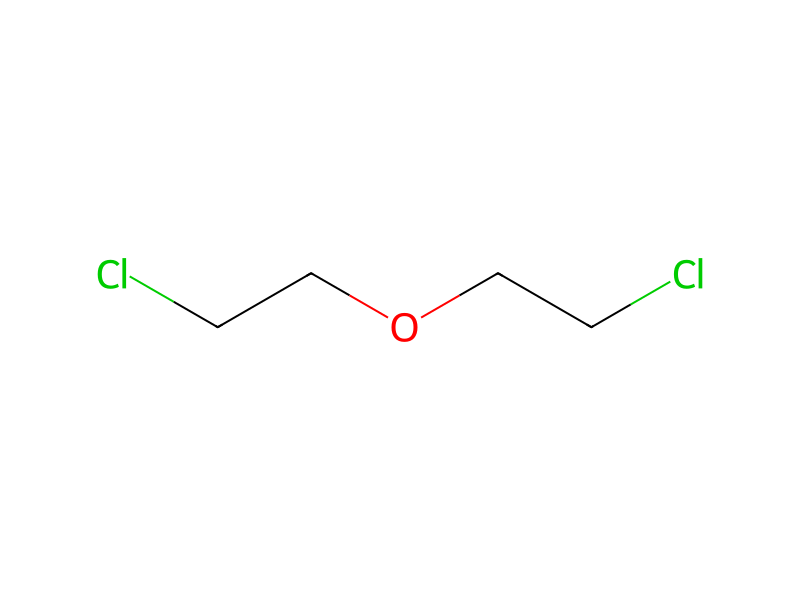
Bis(2-chloroethyl) ether

HCID 8115
New noteNew reactionRequest quotes
Print preview

Completing data — refresh the page later to see the latest
Basic informationNames & identifiersPropertiesSafety & regulationChemistry & industryRelated reactionsCompound notes
Substructure searchFind similar structures

Basic information

CAS
111-44-4
Standard SMILES
ClCCOCCCl
InChIKey
ZNSMNVMLTJELDZ-UHFFFAOYSA-N
Molecular formula
C4H8Cl2O
Average molar mass
143.01 g/mol
Monoisotopic mass
141.9952203

Names & identifiers

Preferred name
Bis(2-chloroethyl) ether
IUPAC
1-chloro-2-(2-chloroethoxy)ethane
English name
2,2'-Dichlorodiethyl ether
Molecular formula
C4H8Cl2O
Molecular weight
143.01

Names & synonyms

111-44-42,2'-Dichlorodiethyl etherBIS(2-CHLOROETHYL) ETHER2-Chloroethyl etherBis(2-chloroethyl)ether1-Chloro-2-(2-chloroethoxy)ethaneChlorexDCEEChloroethyl etherDichloroetherClorexDichloroethyl ether
Show more names
DICHLORO DIETHYL ETHER2,2-DICHLORODIETHYL ETHER
BCEEDichloroethyl oxidesym-Dichloroethyl etherEther dichlore1,5-Dichloro-3-oxapentane2,2'-Dichlorethyl ether2,2'-Dichloroethyl etherDi(2-chloroethyl) ether

Database identifiers

CAS
111-44-4
PubChem CID
8115
DTXSID
DTXSID9020168
ChEMBL
CHEMBL1613350
ChEBI
CHEBI:34573
UNII
6K7D1G5M5N
EC Number
203-870-1
Nikkaji
J2.455D

Properties

Computed structural propertiesFilling in

XLogP
1.3
Topological polar surface area
9.2 Ų
Hydrogen bond donors
0
Hydrogen bond acceptors
1
Rotatable bonds
4
Heavy atoms
7
Formal charge
0
Complexity
28

Experimental & physicochemical properties

LogP · 2 items

log Kow= 1.29

1.29

Odor · 4 items

PUNGENT

NAUSEATING ODOR RESEMBLING ETHYLENE DICHLORIDE

SWEET, LIKE CHLOROFORM

... Chlorinated solvent-like odor.

Density · 6 items

1.22 at 68 °F (EPA, 1998) - Denser than water; will sink

1.22 @ 20 °C/20 °C

% IN "SATURATED" AIR @ 25 °C, 760 MM HG: 0.18; DENSITY OF "SATURATED" AIR @ 25 °C, 760 MM HG: 1.007

Relative density (water = 1): 1.22

1.22

1.22 @ 20°C

Viscosity2.0653 cP @ 25 °C
Color/Form · 2 items

COLORLESS, CLEAR LIQ

Colorless liquid ...

Solubility · 6 items

Reaction (NTP, 1992)

MISCIBLE WITH AROMATIC BUT NOT PARAFFIN HYDROCARBONS

SOL IN ALC, ETHER, ACETONE, BENZENE

1.1 wt% water @ 20 °C

Soluble in oxygenated solvents and aromatic solvents

In water, 10,200 mg/l at 20 °C

Corrosivity

Safety & regulation

Safety information is for reference only and does not replace the supplier’s Safety Data Sheet (SDS), applicable regulations, or professional assessment.

GHS classification

GHS Classification · 6 items

Danger

H300: Fatal if swallowed [Danger Acute toxicity, oral];H310: Fatal in contact with skin [Danger Acute toxicity, dermal];H330: Fatal if inhaled [Danger Acute toxicity, inhalation];H351: Suspected of causing cancer [Warning Carcinogenicity]

P203, P260, P262, P264, P270, P271, P280, P284, P301+P316, P302+P352, P304+P340, P316, P318, P320, P321, P330, P361+P364, P403+P233, P405, and P501 (click each P-code to see the statement)

Danger

Hazard information

Regulatory Information · 6 items

Chemical: Ethane, 1,1'-oxybis[2-chloro-

Hazard Traits - Carcinogenicity;Authoritative List - CA TACs; CWA 303(c); CWA 303(d); IRIS Carcinogens - B2; Prop 65;Report - regardless of intended function of ingredient in the product

Ethane, 1,1'-oxybis[2-chloro- is listed on the EPA's Chemical Data Reporting (CDR) system. Manufacturers and importers of Ethane, 1,1'-oxybis[2-chloro- are required to report information about their production and use of this chemical to the EPA under the Toxic Substances Control Act (TSCA). (40 eCFR Part 711)

Status: Active Update: 09-03-2022 https://echa.europa.eu/registration-dossier/-/registered-dossier/20699;Status: Active Update: 09-12-2020 https://echa.europa.eu/registration-dossier/-/registered-dossier/13909

Bis(2-chloroethyl) ether: HSNO Approval: HSR002958 Approved with controls

The New Jersey Worker and Community Right to Know Act requires public and private employers to provide information about hazardous substances at their workplaces. (N.J.S.A. 34:5A-1 et. seq.)

Other Safety InformationIMAP assessments - Ethane, 1,1'-oxybis[2-chloro-: Human health tier II assessment
DOT LabelPoison Flammable Liquid
Fire Hazards · 4 items

Chemistry & industry

Pharmacology

Biological Half-LifeMALE RATS WERE GIVEN A SINGLE ORAL DOSE OF 40 MG/KG (14)C-LABELED BIS(2-CHLOROETHYL) ETHER (BCEE). THE TIME REQUIRED TO ELIMINATE ONE HALF OF THE DOSE WAS 12 HR FOR (1-(14)C)BCEE.
Metabolism/Metabolites · 5 items

MALE RATS GIVEN SINGLE ORAL DOSE OF BIS(2-CHLOROETHYL)ETHER, TWO METABOLITES WERE IDENTIFIED IN URINE SAMPLES: THIODIGLYCOLIC ACID (TDGA) & 2-CHLOROETHYL BETA-D-GLUCURONIC ACID.

MALE RATS WERE GIVEN A SINGLE ORAL DOSE OF 40 MG/KG (14)C-LABELED BIS(2-CHLOROETHYL) ETHER (BCEE). THIODIGLYCOLIC ACID ACCOUNTED FOR APPROX 75% OF THE TOTAL URINARY (14)C COLLECTED AFTER THE (1-(14)C)BIS(2-CHLOROETHYL) ETHER DOSE. LESSER METABOLITES OF BCEE WERE (2-CHLOROETHOXY)ACETIC ACID (5%), AND N-ACETYL-S-(2-(2-CHLOROETHOXY)ETHYL)-L-CYSTEINE (7%).

Either 40 umole or 160 umole DCEE was injected into male Wistar rats and the metabolites, thiodiglycolic acid (TdGA) and hydroxyethyl mercapturic acid (HEMA), were determined in the 24 hr urine specimens. ...

... In a further step, inhalation experiments were performed to determine urinary excretion of the two metabolites after an 8 hr exposure of male Wistar rats to 10, 50, 100, and 500 ppm DCEE ... .

BCEE is absorbed following inhalation exposure, oral administration, as well as contact to the skin. BCEE is distributed through the body, but highest levels are found in the liver, kidney and small intestine, while much lower levels are found in lung, spleen and muscle. BCEE is extensively metabolized to thiodiglycolic acid (TDGA), 2-chloroethoxyacetic acid (CEAA), and N-acetyl-S-[2-(2-chloroethoxy)ethyl]-L-cysteine, with TDGA being the principal endproduct. Smaller amounts of BCEE are metabolized by oxidation or substitution at a chlorine without ether cleavage. Approximately 80% of BCEE administered orally is excreted as TDGA within 48 hours. Smaller amounts are excreted in feces or expired air and only a very small fraction of the dose remains in the body. This indicates that BCEE is effectively excreted, and that it has a low tendency to accumulate in tissues. (L183, A129)

Absorption, Distribution and Excretion · 2 items

MALE RATS WERE GIVEN A SINGLE ORAL DOSE OF 40 MG/KG (14)C-LABELED BIS(2-CHLOROETHYL) ETHER (BCEE). EXCRETION OF (14)CARBON DIOXIDE AND URINARY (14)C FOLLOWED FOR 48 HR. THE TIME REQUIRED TO ELIMINATE ONE HALF OF THE DOSE WAS 12 HR FOR (1-(14)C)BCEE. EXPIRED (14)CARBON DIOXIDE ACCOUNTED FOR 11.5% OF THE DOSE, URINARY (14)C ACCOUNTED FOR 64.7%, AND 2.4% WAS FOUND IN THE FECES.

Related reactions

217 records
New reaction record
HRID 6475 reaction equation
HRID 6475As reactantuspto-grants-1993_09
HRID 18700 reaction equation
HRID 18700As reactantuspto-grants-2010_06
HRID 18706 reaction equation
HRID 18706As reactantuspto-grants-2010_06
HRID 37819 reaction equation
HRID 37819As reactantuspto-grants-2013_09
HRID 41426 reaction equation
HRID 41426As reactantuspto-grants-2013_09
HRID 46138 reaction equation
HRID 46138As reactantuspto-grants-2013_09
HRID 56114 reaction equation
HRID 56114As reactantuspto-grants-2016_09
HRID 56121 reaction equation
HRID 56121As reactantuspto-grants-2016_09
Page 1 of 28

Compound notes

Loading…

On this pageBasic informationNames & identifiersPropertiesSafety & regulationChemistry & industryRelated reactionsCompound notes
More actions
New noteNew reactionRequest quotes
NOT VERY CORROSIVE TO IRON, MILD STEEL, OR ALUMINUM.
Flash Point · 5 items

131 °F (EPA, 1998)

63 °C (CLOSED CUP)

55 °C c.c.

131 °F

131 °F

Boiling Point · 6 items

352 °F at 760 mmHg (EPA, 1998)

178.5 °C

178 °C

352 °F

178.5 °C @760 [mm Hg]

352 °F

DecompositionWHEN HEATED TO DECOMP, EMITS HIGHLY TOXIC FUMES OF /HYDROGEN CHLORIDE/.
Melting Point · 6 items

-58 °F (EPA, 1998)

-51.9 °C

-50 °C

-58 °F

-51.9 °C

-58 °F

Vapor Density · 4 items

4.93 (EPA, 1998) - Heavier than air; will sink (Relative to Air)

4.93 (AIR= 1)

Relative vapor density (air = 1): 4.9

4.93

Physicochemical properties

Melting point
47 °C · −47 °C(lit.)
Boiling point
65 · 65-67 °C15 mm Hg(lit.)
Density
1.22 g/mL · 1.22 g/mL at 25 °C(lit.)
vapor pressure
0.4 mm · 0.4 mm Hg ( 20 °C)
refractive index
20 · n20/D 1.456(lit.)
Flash point
131 °F · 131 °F
storage temp.
20 °C · Store at <= 20°C.
solubility
0.01 g/l · 0.01g/l
form
Colorless liquid
color
Colorless to Almost colorless
Odor
Sweet, like chloroform.
explosive limit
0.8 % · 0.8%(V)
Water Solubility
1.72 g/100 · Slightly soluble. 1.72 g/100 mL
Specific Heat Capacity
1.54 J/ · Cp(liquid): 1.54 J/(g·K), at 25℃
Merck
14 · 14,3066
BRN
605317 · 605317
Henry's Law Constant
10 · (x 10-5 atmm3/mol): 124.7, 15.8, 72.0, 12.5, and 1.38 at 10, 15, 20, 25, and 30 °C, respectively (EPICS, Howe et al., 1987)
Exposure limits
5 ppm · ACGIH:TLV-TWA 5 ppm (29 mg/m3); TLV-STEL 10 ppm (58 mg/m3)OSHA:PEL-Ceiling 15 ppm (90 mg/m3)NIOSH:REL-TWA 5 ppm; REL-STEL 10 ppm
Dielectric constant
20.79 · 20.789999999999999
Stability
Stable. Combustible. Incompatible with strong oxidizing agents.
InChI
1S/C4H8Cl2O/c5-1-3-7-4-2-6/h1-4H2
InChIKey
ZNSMNVMLTJELDZ-UHFFFAOYSA-N
SMILES
ClCCOCCCl
LogP
1.12 · 1.12-1.56 at 20℃
Indirect Additives used in Food Contact Substances
BIS(2-CHLOROETHYL) ETHER
CAS DataBase Reference
111 · 111-44-4(CAS DataBase Reference)
FDA 21 CFR
176.17 · 176.170
EWG's Food Scores
5 · 5
FDA UNII
6 K7D1G5M5N · 6K7D1G5M5N
Proposition 65 List
Bis(2-chloroethyl) Ether
NIST Chemistry Reference
Beta,beta'-dichloroethyl ether(111-44-4)
IARC
3 · 3 (Vol. 9, Sup 7, 71) 1999
EPA Substance Registry System
Bis(2-chloroethyl) ether (111-44-4)
Toxicological Profile|ATSDR
2 · 2,2'-Dichlorodiethyl ether|Toxicological Profile|ATSDR
UNSPSC Code
12352112 · 12352112
NACRES
22 · NA.22
Symbol(GHS)
2 · GHS02,GHS06,GHS08
Signal word
Danger
Hazard statements
330 · H330-H301+H311-H315+H320-H370-H336-H226
Precautionary statements
501 · P501-P270-P240-P260-P210-P233-P243-P241-P242-P271-P264-P280-P284-P370+P378-P337+P313-P305+P351+P338-P308+P311-P361+P364-P303+P361+P353-P332+P313-P301+P310+P330-P304+P340+P310-P403+P233-P403+P235-P405
PPE
Eyeshields, Faceshields, Gloves, type ABEK (EN14387) respirator filter
Hazard Codes
T+,T,F
Risk Statements
10 · 10-26/27/28-40-39/23/24/25-23/24/25-11
Safety Statements
27 · 27-28-36/37-45-7/9-28A-16
RIDADR
1916 · UN 1916
OEB
A
OEL
5 ppm · TWA: 5 ppm (30 mg/m3), STEL: 10 ppm (60 mg/m3) [skin]
WGK Germany
2 · 2
RTECS
875000 · KN0875000
Autoignition Temperature
365 °C · 365 °C
TSCA
TSCA listed
HazardClass
6.1 · 6.1
PackingGroup
II
HS Code
29091900 · 29091900
Storage Class
3 · 3 - Flammable liquids
Hazard Classifications
1 DermalAcute · Acute Tox. 1 DermalAcute Tox. 2 InhalationAcute Tox. 2 OralCarc. 2Flam. Liq. 3
Hazardous Substances Data
111 · 111-44-4(Hazardous Substances Data)
Toxicity
50 orally · LD50 orally in rats: 75 mg/kg (Smyth, Carpenter)
IDLA
100 ppm · 100 ppm
REACH Registrations
Active
Limited Quantities
100 ml · 100ml (liquid) or 0.5 Kg (solid)
Excepted Quantities
Max Inner Pack (1g or 1ml) and Max Outer Pack (500g or 500ml)

May form phosgene or hydrogen chloride in fires. There is danger of explosion when ethers are heated or exposed to flames or sparks. Ethers tend to form peroxides; when ethers containing peroxides are heated, they can detonate. May be ignited by heat, sparks, or flames. Container may explode in heat of fire. Vapor explosion and poison hazard indoors, outdoors or in sewers. Decomposes in the presence of moisture to form hydrochloric acid. Emits toxic fumes when heated to decomposition. Reacts vigorously with oleum and chlorosulfonic acid. Ethers tend to form peroxides upon standing. Heating peroxide-containing ethers can cause detonation. (EPA, 1998)

· Combustible material: may burn but does not ignite readily.;· Containers may explode when heated.;· Those substances designated with a (P) may polymerize explosively when heated or involved in a fire.;· Runoff may pollute waterways.;· Substance may be transported in a molten form.

· Combustible material: may burn but does not ignite readily.;· Containers may explode when heated.;· Those substances designated with a (P) may polymerize explosively when heated or involved in a fire.;· Runoff may pollute waterways.;· Substance may be transported in a molten form.

Flammable. Gives off irritating or toxic fumes (or gases) in a fire. Above 55 °C explosive vapour/air mixtures may be formed.

Fire Potential · 2 items

FLAMMABLE LIQUID WHEN EXPOSED TO HEAT, FLAME, OR OXIDANTS.

COMBUSTIBLE LIQ.

Health Hazards · 3 items

This material is very toxic; the probable oral lethal dose is 50-500 mg/kg, or between 1 teaspoonful and 1 ounce for a 150 pound person. It can be a central nervous system depressant in high concentrations. It is extremely irritating to the eyes, nose, and respiratory passages. It can penetrate the skin to cause serious and even fatal poisoning. Poisonous; may be fatal if inhaled, swallowed or absorbed through skin. (EPA, 1998)

· Highly toxic, may be fatal if inhaled, ingested or absorbed through skin.;· Contact with molten substance may cause severe burns to skin and eyes.;· Avoid any skin contact.;· Fire may produce irritating, corrosive and/or toxic gases.;· Runoff from fire control or dilution water may be corrosive and/or toxic and cause environmental contamination.

· Highly toxic, may be fatal if inhaled, ingested or absorbed through skin.;· Contact with molten substance may cause severe burns to skin and eyes.;· Avoid any skin contact.;· Fire may produce irritating, corrosive and/or toxic gases.;· Runoff from fire control or dilution water may be corrosive and/or toxic and cause environmental contamination.

Hazards Summary · 3 items

Bis(2-chloroethyl) ether is a colorless, nonflammable liquid with a strong unpleasant odor. It dissolves easily in water, and some of it will slowly evaporate to the air. It does not occur naturally. Bis(2-chloroethyl) ether is made in factories, and most of it is used to make pesticides. Some of it is used as a solvent, cleaner, component of paint and varnish, rust inhibitor, or as a chemical intermediate to make other chemicals.

Dichloroethyl ether is mainly used as a chemical intermediate in industry. Limited health effects information is available on this chemical. The major effect from acute (short-term) inhalation exposure to dichloroethyl ether in humans is extreme irritation of the respiratory tract and skin. Dichloroethyl ether has been shown to be carcinogenic in animal studies; an increased incidence of liver tumors in mice has been reported. EPA has classified dichloroethyl ether as a Group B2, probable human carcinogen.

Damage to the lungs, liver, kidneys, and brain occur in studies of guinea pigs and rats at 500 ppm for 5 to 8 hours. Volunteers found exposures above 550 ppm intolerable because of nauseating odor and irritation of the eyes, nose, and respiratory tract. [ACGIH] The vapor can cause lacrimation.[HSDB] A severe eye irritant; [CHEMINFO] Some animal studies indicate that bis(2-chloroethyl) ether can affect the nervous system resulting in sluggish and slow movement, staggering, unconsciousness, and death. [ATSDR - ToxFAQs]

DOT ID and Guide · 3 items

1916 152

1916 152

1916 152

Reactive GroupEthers;Halogenated Organic Compounds
EC ClassificationSymbol: T+; R: 10-26/27/28-40; S: (1/2)-7/9-27-28-36/37-45
UN ClassificationUN Hazard Class: 6.1; UN Subsidiary Risks: 3; UN Pack Group: II
Special Reports · 5 items

CHLOROALKYL ETHERS; IN: PRIORITY TOXIC POLLUTANTS: HEALTH IMPACTS AND ALLOWABLE LIMITS. SITTIG M, ED (NOYES DATA CORP: PARK RIDGE, NJ) 132 (1980). TOXICOLOGICAL DATA ARE PRESENTED ON THE CHLOROALKYL ETHERS, INCLUDING BIS(2-CHLOROETHYL) ETHER, WHICH ARE AMONG PRIORITY POLLUTANTS DESCRIBED BY THE EPA.

USEPA; Ambient Water Quality Criteria Doc: Chloroalkyl Ethers (1980) EPA 440/5-80-030

USEPA; Chemical Emergency Preparedness Program: Interim Guidance (1985). The voluntary program provides two goals: to increase community awareness of chemical hazards and to develop state and local emergency response plans for dealing with chemical accidents.

USEPA; EPA Chemical Profiles: Dichloroethyl ether p.4 (Dec 1985). Aspects covered in this data sheet: chemical identity; exposure limits; physicochemical properties; fire and explosion hazards; reactivity; health hazards; uses; handling of spills or releases.

DHHS/ATSDR; Toxicological Profile for Bis(2-Chloroethyl) ether (1989) ATSDR/TP-89/02

Safety & protection

Fire Fighting · 2 items

Wear full protective clothing. Do not extinguish fire unless flow can be stopped. Cool all affected containers with flooding quantities of water. Apply water from as far a distance as possible.;Use water, foam, mist, fog, spray, or dry chemical. Use water in flooding quantities as fog. Small fires: dry chemical, carbon dioxide, water spray, or foam. Large fires: water spray, fog, or foam. Move container from fire area if you can do so without risk. Spray cooling water on containers that are exposed to flames until well after fire is out. Fight fire from maximum distance. Dike fire control water for later disposal; do not scatter the material. (EPA, 1998)

Use water spray, foam, powder, carbon dioxide. In case of fire: keep cylinder cool by spraying with water. NO direct contact with water.

First Aid Measures · 4 items

Fresh air, rest. Half-upright position. Refer for medical attention.

Remove contaminated clothes. Rinse and then wash skin with water and soap. Refer for medical attention .

First rinse with plenty of water for several minutes (remove contact lenses if easily possible), then refer for medical attention.

Rinse mouth. Induce vomiting (ONLY IN CONSCIOUS PERSONS!). Rest. Refer for medical attention .

Accidental Release Measures · 4 items

· CALL 911. Then call emergency response telephone number on shipping paper. If shipping paper not available or no answer, refer to appropriate telephone number listed on the inside back cover.;· Keep unauthorized personnel away.;· Stay upwind, uphill and/or upstream.

· ELIMINATE all ignition sources (no smoking, flares, sparks or flames) from immediate area.;· Do not touch damaged containers or spilled material unless wearing appropriate protective clothing.;· Stop leak if you can do it without risk.;· Prevent entry into waterways, sewers, basements or confined areas.;· Cover with plastic sheet to prevent spreading.;· Absorb or cover with dry earth, sand or other non-combustible material and transfer to containers.;· DO NOT GET WATER INSIDE CONTAINERS.

First Aid · 4 items

Signs and Symptoms of Dichloroethyl Ether Exposure: Acute exposure to dichloroethyl ether may produce the following signs and symptoms: irritation of the eyes, skin, and mucous membranes, profuse tearing, coughing, retching, and vomiting. Contact with skin and eyes may cause burns. Respiratory signs may include irritation of the respiratory tract, which may progress to pulmonary edema.;Emergency Life-Support Procedures: Acute exposure to dichloroethyl ether may require decontamination and life support for the victims. Emergency personnel should wear protective clothing appropriate to the type and degree of contamination. Air-purifying or supplied-air respiratory equipment should also be worn, as necessary. Rescue vehicles should carry supplies such as plastic sheeting and disposable plastic bags to assist in preventing spread of contamination.;Inhalation Exposure:;1. Move victims to fresh air. Emergency personnel should avoid self-exposure to dichloroethyl ether.;2. Evaluate vital signs including pulse and respiratory rate, and note any trauma. If no pulse is detected, provide CPR. If not breathing, provide artificial respiration. If breathing is labored, administer 100% humidified oxygen or other respiratory support.;3. Obtain authorization and/or further instructions from the local hospital for administration of an antidote or performance of other invasive procedures.;4. Transport to a health care facility.;Dermal/Eye Exposure:;1. Remove victims from exposure. Emergency personnel should avoid self-exposure to dichloroethyl ether.;2. Evaluate vital signs including pulse and respiratory rate, and note any trauma. If no pulse is detected, provide CPR. If not breathing, provide artificial respiration. If breathing is labored, administer 100% humidified oxygen or other respiratory support.;3. Remove and isolate contaminated clothing as soon as possible.;4. If eye exposure has occurred, eyes must be flushed with lukewarm water for at least 15 minutes.;5. Wash exposed skin areas thoroughly with soap and water.;6. Obtain authorization and/or further instructions from the local hospital for administration of an antidote or performance of other invasive procedures.;7. Transport to a health care facility.;Ingestion Exposure:;1. Evaluate vital signs including pulse and respiratory rate, and note any trauma. If no pulse is detected, provide CPR. If not breathing, provide artificial respiration. If breathing is labored, administer 100% humidified oxygen or other respiratory support.;2. Obtain authorization and/or further instructions from the local hospital for administration of an antidote or performance of other invasive procedures.;3. Vomiting may be induced with syrup of Ipecac. If elapsed time since ingestion of dichloroethyl ether is unknown or suspected to be greater than 30 minutes, do not induce vomiting and proceed to Step;4. Ipecac should not be administered to children under 6 months of age.Warning: Syrup of Ipecac should be administered only if victims are alert, have an active gag-reflex, and show no signs of impending seizure or coma. If ANY uncertainty exists, proceed to Step

Safe StorageFireproof. Separated from food and feedstuffs. See Chemical Dangers. Keep in the dark. Well closed.
Exposure Control and Personal Protection · 3 items

· Wear positive pressure self-contained breathing apparatus (SCBA).;· Wear chemical protective clothing that is specifically recommended by the manufacturer when there is NO RISK OF FIRE.;· Structural firefighters' protective clothing provides thermal protection but only limited chemical protection.

· Wear positive pressure self-contained breathing apparatus (SCBA).;· Wear chemical protective clothing that is specifically recommended by the manufacturer when there is NO RISK OF FIRE.;· Structural firefighters' protective clothing provides thermal protection but only limited chemical protection.

0.5 [ppm]

Fire Fighting Procedures · 4 items

WATER, FOAM, MIST, FOG, SPRAY, DRY CHEMICAL.

If material is on fire or involved in fire: Do not extinguish fire unless flow can be stopped. Use water in flooding quantities as fog. Cool all affected containers with flooding quantities of water and apply water from as far a distance as possible.

If material not on fire and not involved in fire: Keep sparks, flames, and other sources of ignition away. Keep material out of water sources and sewers. Build dikes to contain flow as necessary. Use water spray to knock-down vapors.

Personnel protection: Wear self-contained breathing apparatus when fighting fires involving this material.

Storage Conditions · 3 items

Store in a cool, dry, well-ventilated location. Store away form heat, oxidizing materials, strong acids, & sunlight.

Ethers should not be stored near powerful oxidizers or in areas of high fire hazard. They should be kept cool and the containers electrically grounded to avoid sparks. /Ethers/

PRECAUTIONS FOR "CARCINOGENS": Storage site should be as close as practicable to lab in which carcinogens are to be used, so that only small quantities required for ... expt need to be carried. Carcinogens should be kept in only one section of cupboard, an explosion-proof refrigerator or freezer (depending on chemicophysical properties ...) that bears appropriate label. An inventory ... should be kept, showing quantity of carcinogen & date it was acquired ... Facilities for dispensing ... should be contiguous to storage area. /Chemical Carcinogens/

Cleanup Methods · 4 items

1. REMOVE ALL IGNITION SOURCES. 2. VENTILATE AREA OF SPILL OR LEAK. 3. FOR SMALL QUANTITIES, ABSORB ON PAPER TOWELS. EVAPORATE IN A SAFE PLACE (SUCH AS A FUME HOOD). ALLOW SUFFICIENT TIME FOR EVAPORATING VAPORS TO COMPLETELY CLEAR THE HOOD DUCTWORK. BURN THE PAPER IN A SUITABLE LOCATION AWAY FROM COMBUSTIBLE MATERIALS. LARGE QUANTITIES CAN BE RECLAIMED.

Treatment methods: conventional municipal treatment: influent 0.055 mg/l, effluent 0.010 mg/l, 82% removal; conventional plus activated carbon: influent 0.154 mg/l, effluent no data, +/- 100% removal.

PRECAUTIONS FOR "CARCINOGENS": A high-efficiency particulate arrestor (HEPA) or charcoal filters can be used to minimize amt of carcinogen in exhausted air ventilated safety cabinets, lab hoods, glove boxes or animal rooms ... Filter housing that is designed so that used filters can be transferred into plastic bag without contaminating maintenance staff is avail commercially. Filters should be placed in plastic bags immediately after removal ... The plastic bag should be sealed immediately ... The sealed bag should be labelled properly ... Waste liquids ... should be placed or collected in proper containers for disposal. The lid should be secured & the bottles properly labelled. Once filled, bottles should be placed in plastic bag, so that outer surface ... is not contaminated ... The plastic bag should also be sealed & labelled. ... Broken glassware ... should be decontaminated by solvent extraction, by chemical destruction, or in specially designed incinerators. /Chemical Carcinogens/

A method was developed to differentiate between the physical and chemical components of containment for different contaminants in cement-based waste-forms. The method was illustrated using seven waste forms containing four organic contaminants. Containment was mainly physical for phenol and aniline, while chemical containment was more important for acenaphthene and bis (2-chloroethyl/ether). The method proposed involves a simple addition to the ANSI/ANS 16.1 protocol and it can be used to determine the importance of waste form durability for the long-term containment of contaminants.

Nonfire Spill Response · 1 item

Excerpt from ERG Guide 152 [Substances - Toxic (Combustible)]:;ELIMINATE all ignition sources (no smoking, flares, sparks or flames) from immediate area. Do not touch damaged containers or spilled material unless wearing appropriate protective clothing. Stop leak if you can do it without risk. Prevent entry into waterways, sewers, basements or confined areas. Cover with plastic sheet to prevent spreading. Absorb or cover with dry earth, sand or other non-combustible material and transfer to containers. DO NOT GET WATER INSIDE CONTAINERS. (ERG, 2024)

Disposal Methods · 5 items

Generators of waste (equal to or greater than 100 kg/mo) containing this contaminant, EPA hazardous waste number U025, must conform with USEPA regulations in storage, transportation, treatment and disposal of waste.

A potential candidate for liquid injection incineration at a temperture range of 650 to 1,600 °C and a residence time 0.1 to 2 seconds. Also, a potential candidate for rotary kiln incineration at a temperature range of 820 to 1,600 °C and residence times of seconds for liquids and gases, and hours for solids. Also, a potential candidate for fluidized bed incineration at a temperature range of 450 to 980 °C and residence times of seconds for liquids and gases, and longer for solids.

Dichloroethyl ether is a waste chemical stream constituent which may be subjected to ultimate disposal by controlled incineration, preferably after mixing with another combustible fuel. Care must be exercised to assure complete combustion to prevent the formation of phosgene. An acid scrubber is necessary to remove the halo acids produced.

PRECAUTIONS FOR "CARCINOGENS": There is no universal method of disposal that has been proved satisfactory for all carcinogenic compounds & specific methods of chem destruction ... published have not been tested on all kinds of carcinogen-containing waste. ... Summary of avail methods & recommendations ... /given/ must be treated as guide only. /Chemical Carcinogens/

For more Disposal Methods (Complete) data for BIS(2-CHLOROETHYL) ETHER (9 total), please visit the HSDB record page.

Spillage Disposal · 1 item

Personal protection: chemical protection suit. Ventilation. Remove all ignition sources. Collect leaking and spilled liquid in sealable containers as far as possible. Absorb remaining liquid in sand or inert absorbent. Then store and dispose of according to local regulations.

Toxicology

Toxicological InformationCDC-ATSDR Toxicological Profile
Cancer Sites · 2 items

Hepatic

[in animals: liver tumors]

Target Organs · 2 items

Body Weight, Ocular (Eyes), Respiratory (From the Nose to the Lungs)

Eyes, respiratory system, liver

Health Effects · 1 item

The principal acute effect of inhalation exposure to BCEE vapor is irritation and injury to the cells of the respiratory epithelium. BCEE vapors can cause loss of weight, nose irritation, severe injury to the lungs, and may lead to death. It might also cause cancer. (L183)

Ecotoxicity ValuesEC50 Daphnia magna (cladoceran) 238,000 ug/l/48 hr /in static and unmeasured methodologies/
Environmental Fate · 3 items

TERRESTRIAL FATE: Based on a classification scheme(1), an estimated Koc value of 120(SRC), determined from a log Kow of 1.29(2) and a regression-derived equation(3), indicates that bis(2-chloroethyl) ether is expected to have high mobility in soil(SRC). Volatilization of bis(2-chloroethyl) ether from moist soil surfaces is expected to be important(SRC) given an estimated Henry's Law constant of 2.9X10⁻⁵ atm-cu m/mole(SRC), calculated from its vapor pressure(4) and water solubility(5). In a 140 cm long column containing Lincoln fine sand collected in Ada, OK, 86% of the applied bis(2-chloroethyl) ether reached 140 cm, indicating minimal adsorption to this soil(6). The potential for volatilization of bis(2-chloroethyl) ether from dry soil surfaces may exist(SRC) based on a vapor pressure of 1.55 mm Hg(4). No data concerning the hydrolysis of bis(2-chloroethyl) ether in soil were available. The hydrolysis rate constant for bis(2-chloroethyl) ether in water was determined to be 2.6X10⁻⁵/hour under neutral conditions; this corresponds to a half-life at pH 7 and 25 °C of 3 years(7). Bis(2-chloroethyl) ether may be resistant to biodegradation under aerobic conditions in environmental media based upon screening test data from studies using activated sludge(8,RC). In one study, bis(2-chloroethyl) ether showed 50% biodegradation after 30 days when incubated with Ohio River water; acclimation appears to be important(9). In general, many ethers are known to be resistant to biodegradation(10).

AQUATIC FATE: Based on a classification scheme(1), an estimated Koc value of 120(SRC), determined from a log Kow of 1.29(2) and a regression-derived equation(3), indicates that bis(2-chloroethyl) ether is not expected to adsorb to suspended solids and sediment in water(SRC). Bis(2-chloroethyl) ether is expected to volatilize from water surfaces(3,SRC) based on an estimated Henry's Law constant of 2.9X10⁻⁵ atm-cu m/mole(SRC), calculated from its vapor pressure(4) and water solubility(5). Estimated volatilization half-lives for a model river and model lake are 40 hours and 16 days, respectively(3,SRC). According to a classification scheme(6), a BCF of 0.4 to 1.3(7) suggests the potential for bioconcentration in aquatic organisms is low(SRC). In one study, bis(2-chloroethyl) ether showed 50% biodegradation after 30 days when incubated with Ohio River water; acclimation appears to be important(8). Bis(2-chloroethyl) ether may be resistant to biodegradation under aerobic conditions in environmental media based upon screening test data from studies using activated sludge(7,SRC). In general, many ethers are known to be resistant to biodegradation(9). The hydrolysis rate constant for bis(2-chloroethyl) ether in water was determined to be 2.6X10⁻⁵/hour under neutral conditions; this corresponds to a half-life at pH 7 and 25 °C of 3 years(10). The hydrolysis half-life of bis(2-chloroethyl) ether in demineralized water at 25 °C was determined to be 22 years(11). 2-(2-Chloroethoxy) ethanol and diethylene glycol were determined to be the major hydrolysis by-products of bis(2-chloroethyl) ether(12).

ATMOSPHERIC FATE: According to a model of gas/particle partitioning of semivolatile organic compounds in the atmosphere(1), bis(2-chloroethyl) ether, which has a vapor pressure of 1.55 mm Hg at 25 °C(2), is expected to exist solely as a vapor in the ambient atmosphere. Vapor-phase bis(2-chloroethyl) ether is degraded in the atmosphere by reaction with photochemically-produced hydroxyl radicals(SRC); the half-life for this reaction in air is estimated to be 5 days(3,SRC). Direct photolysis in the atmosphere is not expected to be a major significant degradation process since no functional groups are present in bis(2-chloroethyl) ether that would lead to absorption of sunlight(SRC).

Adverse Effects · 1 item

Neurotoxin - Acute solvent syndrome;Occupational hepatotoxin - Secondary hepatotoxins: the potential for toxic effect in the occupational setting is based on cases of poisoning by human ingestion or animal experimentation.;Lacrimator (Lachrymator) - A substance that irritates the eyes and induces the flow of tears.;ACGIH Carcinogen - Not Classifiable.

Exposure Routes · 3 items

The substance can be absorbed into the body by inhalation of its vapour, through the skin and by ingestion.

inhalation, skin absorption, ingestion, skin and/or eye contact

Oral (L184); inhalation (L184) ; dermal (L184)

Toxicity Summary · 2 items

Quantitative information on the kinetics and metabolism of BCEE /bis(2-chloroethyl) ether/... in humans is not available. ... Limited data show that radioactive BCEE administered to rats by inhalation or gavage is rapidly absorbed. ... BCEE is readily metabolized in rats. The principal metabolite is thiodiglycolic acid ... BCEE is eliminated quickly in both rats and rhesus monkeys. ... BCEE is acutely toxic by the oral, inhalation or dermal routes of exposure. ... Exposure of laboratory animals by inhalation to high single concentrations ... resulted in eye irritation as well as congestion, edema, and hemorrhage in the lungs. ... In general, positive results were obtained when ... tested for mutagenicity in vitro. ... /In one study/ there was a significant increase in the incidence of hepatomas (combined benign hepatomas and malignant tumors) compared to unexposed controls. ... Other limited studies in rats and mice using oral gavage, subcutaneous or intraperitoneal injection and skin painting failed to confirm these findings. ... BCEE was found to be irritating to the eyes and nasal passages of humans ... following short term exposure. No epidemiological studies on the effects of long term exposure to BCEE have been reported. ... None of the long term studies in laboratory animals is of sufficient quality to provide quantitative information on either the potential of BCEE to cause cancer or the toxicological effects produced by long term exposure to this substance.

BCEE is extremely meabolized, with thiodiglycolic acid (TDGA) being the principal endproduct. The pathway leading to TDGA formation is uncertain, but probably involves oxidative cleavage of the ether bond to yield chloroacetaldehyde and 2-chloroethanol. (L183)

Signs and Symptoms · 6 items

Cough. Sore throat. Nausea. Vomiting. Burning sensation. Laboured breathing. Symptoms may be delayed.

MAY BE ABSORBED!

Redness. Pain.

Abdominal pain. Nausea. Vomiting. Burning sensation.

irritation nose, throat, respiratory system; lacrimation (discharge of tears); cough; nausea, vomiting; In Animals: pulmonary edema; liver damage; [potential occupational carcinogen]

Symptoms of BCEE exposure include coughing, sore throat, nausea, vomiting, burning sensation, redness of the exposed surface, laboured breathing, and abdominal pain, depending on the route of exposure. Symptoms may be delayed. (L184)

Effluent Concentrations · 1 item

Bis(2-chloroethyl) ether residues in treated wastewater effluents from several industries were as follows: Foundries - 2 samples, 100% positive, 8-9 ug/l, 8.5 ug/l avg; organic chemicals manufacturing/plastics - 3 of an unspecified number of samples pos, 710 ug/l avg; paint and ink formulation - unspecified number of samples or number pos, >10 ug/l maximum concn(1). Bis(2-chloroethyl) ether was identified in a synthetic rubber plant effluent - 0.16 mg/l(2). The concn of bis(2-chloroethyl) ether identified in leachate from 58 landfills across North America was determined to be 12.4 mg/l(3). Bis(2-chloroethyl) ether was detected in raw sludge and treated sludge, concns unknown, in samples taken from 37 water pollution control plants in Ontario, Canada between January and July 1986(4). Bis(2-chloroethyl) ether was detected but not quantified in stack emissions from a hazardous waste incinerator in California(5).

EPA IRIS Information · 2 items

Bis(chloroethyl)ether (BCEE)

Hepatic

Regulatory information

Regulatory Information · 6 items

Chemical: Ethane, 1,1'-oxybis[2-chloro-

Hazard Traits - Carcinogenicity;Authoritative List - CA TACs; CWA 303(c); CWA 303(d); IRIS Carcinogens - B2; Prop 65;Report - regardless of intended function of ingredient in the product

Ethane, 1,1'-oxybis[2-chloro- is listed on the EPA's Chemical Data Reporting (CDR) system. Manufacturers and importers of Ethane, 1,1'-oxybis[2-chloro- are required to report information about their production and use of this chemical to the EPA under the Toxic Substances Control Act (TSCA). (40 eCFR Part 711)

Status: Active Update: 09-03-2022 https://echa.europa.eu/registration-dossier/-/registered-dossier/20699;Status: Active Update: 09-12-2020 https://echa.europa.eu/registration-dossier/-/registered-dossier/13909

Bis(2-chloroethyl) ether: HSNO Approval: HSR002958 Approved with controls

The New Jersey Worker and Community Right to Know Act requires public and private employers to provide information about hazardous substances at their workplaces. (N.J.S.A. 34:5A-1 et. seq.)

RCRA Requirements · 1 item

U025; As stipulated in 40 CFR 261.33, when bis(2-chloroethyl) ether, as a commercial chemical product or manufacturing chemical intermediate or an off-specification commercial chemical product or a manufacturing chemical intermediate, becomes a waste, it must be managed according to Federal and/or State hazardous waste regulations. Also defined as a hazardous waste is any residue, contaminated soil, water, or other debris resulting from the cleanup of a spill, into water or on dry land, of this waste. Generators of small quantities of this waste may qualify for partial exclusion from hazardous waste regulations (40 CFR 261.5).

Atmospheric Standards · 2 items

This action promulgates standards of performance for equipment leaks of Volatile Organic Compounds (VOC) in the Synthetic Organic Chemical Manufacturing Industry (SOCMI). The intended effect of these standards is to require all newly constructed, modified, and reconstructed SOCMI process units to use the best demonstrated system of continuous emission reduction for equipment leaks of VOC, considering costs, non air quality health and environmental impact and energy requirements. Dichloroethyl ether is produced, as an intermediate or a final product, by process units covered under this subpart.

Listed as a hazardous air pollutant (HAP) generally known or suspected to cause serious health problems. The Clean Air Act, as amended in 1990, directs EPA to set standards requiring major sources to sharply reduce routine emissions of toxic pollutants. EPA is required to establish and phase in specific performance based standards for all air emission sources that emit one or more of the listed pollutants. Bis(2-chloroethyl)ether is included on this list.

CERCLA Reportable Quantities · 2 items

Persons in charge of vessels or facilities are required to notify the National Response Center (NRC) immediately, when there is a release of this designated hazardous substance, in an amount equal to or greater than its reportable quantity of 10 lb or 4.54 kg. The toll free number of the NRC is (800) 424-8802; In the Washington D.C. metropolitan area (202) 426-2675. The rule for determining when notification is required is stated in 40 CFR 302.4 (section IV. D.3.b).

Releases of CERCLA hazardous substances are subject to the release reporting requirement of CERCLA section 103, codified at 40 CFR part 302, in addition to the requirements of 40 CFR part 355. Dichloroethyl ether is an extremely hazardous substance (EHS) subject to reporting requirements when stored in amounts in excess of its threshold planning quantity (TPQ) of 10,000 lbs.

Clean Water Act Requirements · 2 items

For the maximum protection of human health from the potential carcinogenic effects due to exposure of bis(2-chloroethyl)ether through ingestion of contaminated water and contaminated aquatic organisms, the ambient water concentrations should be zero based on the non-threshold assumption for this chemical. However, zero level may not be attainable at the present time. Therefore, the levels which may result in incremental increase of cancer risk over the lifetime are estimated at 1x10⁻⁵, 1x10⁻⁶, and 1x10⁻⁷. The corresponding recommended criteria are 0.30 ug/l, 0.030 ug/l, and 0.003 ug/l, respectively. If the above estimates are made for consumption of aquatic organisms only, excluding consumption of water, the levels are 13.6 ug/l, 1.36 ug/l, and 0.136 ug/l, respectively.

Toxic pollutant designated pursuant to section 307(a)(1) of the Clean Water Act and is subject to effluent limitations. /Chloralkyl ethers/

State Drinking Water Guidelines · 5 items

(AZ) ARIZONA 0.030 ug/l

(FL) FLORIDA 1.5 ug/l

(ME) MAINE 0.3 ug/l

(MN) MINNESOTA 0.3 ug/l

(NH) NEW HAMPSHIRE 0.03 ug/l

Safety data

OEB
A
OEL
TWA: 5 ppm (30 mg/m3), STEL: 10 ppm (60 mg/m3) [skin]
PPE
Eyeshields, Faceshields, Gloves, type ABEK (EN14387) respirator filter
wgk
2
IDLA
100 ppm
tsca
TSCA listed
rtecs
KN0875000
ridadr
UN 1916
hs_code
29091900
Toxicity
LD50 orally in rats: 75 mg/kg (Smyth, Carpenter)
risk_code
10-26/27/28-40-39/23/24/25-23/24/25-11
Signal word
Danger
Symbol(GHS)
GHS02,GHS06,GHS08
hazard_code
T+,T,F
safety_code
27-28-36/37-45-7/9-28A-16
hazard_class
6.1
Storage Class
3 - Flammable liquids
packing_group
II
Hazard statements
H330-H301+H311-H315+H320-H370-H336-H226
Limited Quantities
100ml (liquid) or 0.5 Kg (solid)
Excepted Quantities
Max Inner Pack (1g or 1ml) and Max Outer Pack (500g or 500ml)
REACH Registrations
Active
Hazard Classifications
Acute Tox. 1 DermalAcute Tox. 2 InhalationAcute Tox. 2 OralCarc. 2Flam. Liq. 3
Autoignition Temperature
365 °C
Precautionary statements
P501-P270-P240-P260-P210-P233-P243-P241-P242-P271-P264-P280-P284-P370+P378-P337+P313-P305+P351+P338-P308+P311-P361+P364-P303+P361+P353-P332+P313-P301+P310+P330-P304+P340+P310-P403+P233-P403+P235-P405
Hazardous Substances Data
111-44-4(Hazardous Substances Data)

Either 40 umole or 160 umole DCEE was injected into male Wistar rats and the metabolites, thiodiglycolic acid (TdGA) and hydroxyethyl mercapturic acid (HEMA), were determined in the 24 hr urine specimens. ... Analysis of the metabolites showed that hydroxymethyl mercapturic acid excretion was much lower than the excretion of thiodiglycolic acid following the uptake of DCEE ... .

Uses & manufacturing

Uses · 6 items

Dichloroethyl ether is primarily used as a chemical intermediate for the manufacture of pesticides. A small amount of dichloroethyl ether is used as a solvent.

Used as a solvent, dewaxing agent, wetting agent, soil fumigant, and chemical intermediate; [ACGIH] Used to control earworms on corn silks; No longer used as a soil fumigant; [HSDB]

Farming (Pesticides) [Category: Industry]

For Bis(2-chloroethyl) ether (USEPA/OPP Pesticide Code: 029501) there are 0 labels match. /SRP: Not registered for current use in the U.S., but approved pesticide uses may change periodically and so federal, state and local authorities must be consulted for currently approved uses./

REAGENT FOR ORGANIC SYNTHESIS; SOLVENT

SCAVENGE LEAD DEPOSITS IN GASOLINE; ANESTHETIC

U.S. Imports(1977) AT LEAST 5.90X10+8 G
U.S. Production · 3 items

2023: 1,000,000 - <5,000,000 lb;2022: 4,000,000 - <5,500,000 lb;2021: 5,000,000 - <10,000,000 lb;2020: 1,000,000 - <5,000,000 lb

(1977) AT LEAST 4.59X10+8 G

(1982) GREATER THAN 2.27X10+6 G

Industry UsesIntermediate;Cleaning agent;Corrosion inhibitor;Not Known or Reasonably Ascertainable;Surfactant (surface active agent);Solvent
Methods of Manufacturing · 3 items

... (A) THE TREATMENT OF ETHYLENE CHLOROHYDRIN WITH SULFURIC ACID; (B) BY THE PASSAGE OF CHLORINE AND ETHYLENE CHLOROHYDRIN AT 80 °C; BRITISH PATENT 438,271; (C) BY THE DIRECT CHLORINATION OF ETHYL ETHER.

Diethylene glycol (chlorination)

Chlorination of ethyl ether

Formulations/Preparations · 4 items

USEPA/OPP Pesticide Code 029501; Trade Names: Chlorex.

GRADES OF PURITY: COMMERCIAL

Grade: Technical

Typical specifications for the cmpd limit the maximum % by weight of acidity (as hydrochloric acid) to 0.005% & of water to 0.10%. It has been marketed as an emulsifiable concentrate & an aerosol as an ingredient of pesticide products: The concentrate has been reported to contain 70% bis(2-chloroethyl)ether & copper chloride (1% metallic copper); the aerosol has been reported to contain 1.25% bis(chloroethyl)ether formulated with beta-butoxy-beta'-thiocyano diethyl ether & pine oil.

Use ClassificationChemical Classes -> Nitrosamines/ethers/alcohols
General Manufacturing Information · 5 items

Paint and Coating Manufacturing;All Other Chemical Product and Preparation Manufacturing;Not Known or Reasonably Ascertainable;All Other Basic Organic Chemical Manufacturing;Pesticide, Fertilizer, and Other Agricultural Chemical Manufacturing;All Other Basic Inorganic Chemical Manufacturing;Petroleum Lubricating Oil and Grease Manufacturing;Oil and Gas Drilling, Extraction, and Support activities;Soap, Cleaning Compound, and Toilet Preparation Manufacturing

Ethane, 1,1'-oxybis[2-chloro-: ACTIVE

... Bis(2-chlorethyl)ether is no longer produced for sale in the USA in commercial quantities (1975)

REACTIONS OF CHLORINE WITH ETHYLENE UNDER SIMULATED ATMOSPHERIC CONDITIONS INCL UV IRRADIATION GAVE BIS(2-CHLOROETHYL) ETHER.

Discontinued by Union Carbide, Intermediates

Applications · 5 items

DescriptionDichloroethyl ether is a clear, colorless liquidwith a pungent, fruity odor. It is also described as having achlorinated solvent-like odor. Molecular weight=143.02;Boiling point=176-178℃; Flash point=55℃;Autoignition temperature=369℃; Explosive limits:LEL=2.7%; UEL=unknown. Hazard Identification(based on NFPA-704 M Rating System): Health 3,Flammability 2, Reactivity 1. Insoluble in water.

UsesSoil fumigant; acaricide.

UsesReagent for organic synthesis; solvent. Has been used as a scouring agent for textiles; as soil fumigant.

UsesBis(2-chloroethyl)ether (BCEE) is used as ascouring agent for textiles; as a dewaxingagent for lubricating oils; as a soil fumigant;as a solvent for resins, oils, and lacquers; andin organic synthesis.

General DescriptionA clear colorless liquid with a sweet pleasant or nauseating odor. Flash point 131°F. Denser than water and insoluble in water. Toxic by inhalation and skin absorption. Used in cleaning compounds, paints, textile finishing, and as a general solvent.

Upstream & downstream products

Upstream raw materials

Nitrous acid 2-chloroethyl esterOxydiethylene bis(chloroformate)

Downstream products

Tetrahydropyran-4-carbaldehydeTetrahydro-2H-pyran-4-carbonyl chloride4-(Bromomethyl)tetrahydropyran4-Methylmorpholine4-(2-Aminoethyl)tetrahydropyran2,2'-Oxybis(ethylamine) hydrochlorideN-AminomorpholineTetrahydro-2H-pyran-4-carboxylic acid(Tetrahydro-2H-pyran-4-yl)methanoldiamfenetideBenzethonium chloride4-(Aminomethyl)tetrahydro-2H-pyranDibenzo-18-crown-61,4-Dioxane

Additional notes

DefinitionChEBI: Bis(2-chloroethyl)ether is an ether.

General First Aid:;· Call 911 or emergency medical service.;· Ensure that medical personnel are aware of the material(s) involved, take precautions to protect themselves and avoid contamination.;· Move victim to fresh air if it can be done safely.;· Administer oxygen if breathing is difficult.;· If victim is not breathing:;-- DO NOT perform mouth-to-mouth resuscitation; the victim may have ingested or inhaled the substance.;-- If equipped and pulse detected, wash face and mouth, then give artificial respiration using a proper respiratory medical device (bag-valve mask, pocket mask equipped with a one-way valve or other device).;-- If no pulse detected or no respiratory medical device available, provide continuous compressions. Conduct a pulse check every two minutes or monitor for any signs of spontaneous respirations.;· Remove and isolate contaminated clothing and shoes.;· For minor skin contact, avoid spreading material on unaffected skin.;· In case of contact with substance, remove immediately by flushing skin or eyes with running water for at least 20 minutes.;· For severe burns, immediate medical attention is required.;· Effects of exposure (inhalation, ingestion, or skin contact) to substance may be delayed.;· Keep victim calm and warm.;· Keep victim under observation.;· For further assistance, contact your local Poison Control Center.;· Note: Basic Life Support (BLS) and Advanced Life Support (ALS) should be done by trained professionals.;Specific First Aid:;· Removal of solidified molten material from skin requires medical assistance.

General First Aid:;· Call 911 or emergency medical service.;· Ensure that medical personnel are aware of the material(s) involved, take precautions to protect themselves and avoid contamination.;· Move victim to fresh air if it can be done safely.;· Administer oxygen if breathing is difficult.;· If victim is not breathing:;-- DO NOT perform mouth-to-mouth resuscitation; the victim may have ingested or inhaled the substance.;-- If equipped and pulse detected, wash face and mouth, then give artificial respiration using a proper respiratory medical device (bag-valve mask, pocket mask equipped with a one-way valve or other device).;-- If no pulse detected or no respiratory medical device available, provide continuous compressions. Conduct a pulse check every two minutes or monitor for any signs of spontaneous respirations.;· Remove and isolate contaminated clothing and shoes.;· For minor skin contact, avoid spreading material on unaffected skin.;· In case of contact with substance, remove immediately by flushing skin or eyes with running water for at least 20 minutes.;· For severe burns, immediate medical attention is required.;· Effects of exposure (inhalation, ingestion, or skin contact) to substance may be delayed.;· Keep victim calm and warm.;· Keep victim under observation.;· For further assistance, contact your local Poison Control Center.;· Note: Basic Life Support (BLS) and Advanced Life Support (ALS) should be done by trained professionals.;Specific First Aid:;· Removal of solidified molten material from skin requires medical assistance.

(General first aid procedures);Eye: Irrigate immediately - If this chemical contacts the eyes, immediately wash (irrigate) the eyes with large amounts of water, occasionally lifting the lower and upper lids. Get medical attention immediately.;Skin: Soap wash - If this chemical contacts the skin, wash the contaminated skin with soap and water.;Breathing: Respiratory support;Swallow: Medical attention immediately - If this chemical has been swallowed, get medical attention immediately.