
HRID 8389As reactant
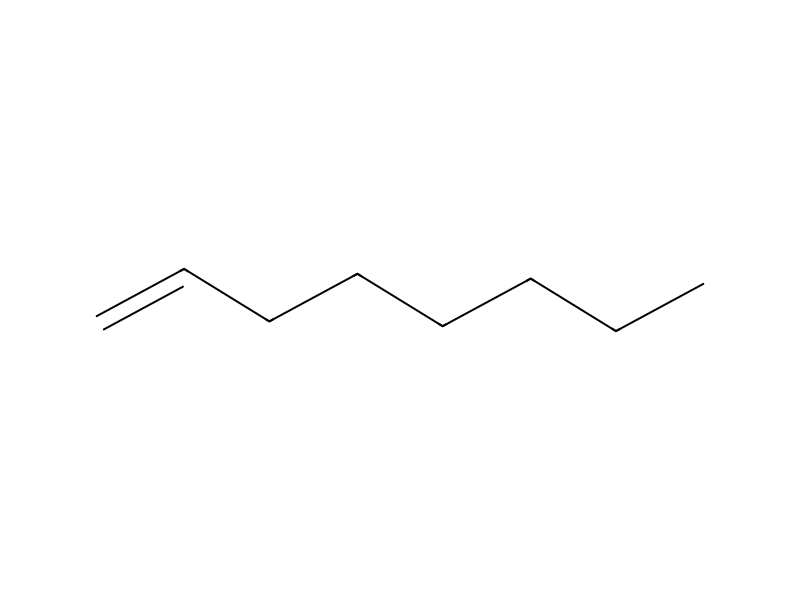
111-66-0C=CCCCCCCKWKAKUADMBZCLK-UHFFFAOYSA-N1-octene appears as a colorless liquid. Flash point 70 °F. Insoluble in water and less dense (at about 6 lb / gal) than water. Hence floats on water. Vapors are heavier than air and may settle in depressions. Reported to biodegrade very slowly. Used in organic synthesis, surfactants, and plasticizers.
111-66-0、25377-83-7DTXSID6025804CHEMBL1376677CHEBI:46708Other Classes -> Aliphatics, Unsaturated
Other Classes -> Aliphatics, Unsaturated
log Kow= 4.57
4.57
3.5/4.6
4.72
0.715 at 68 °F (USCG, 1999) - Less dense than water; will float
0.7149 @ 20 °C/4 °C
Density: 0.7149 /1-Octene/; 0.7199 g/cu cm @ 20 °C /2-Octene (E)/; 0.7243 g/cu cm @ 20 °C /2-Octene (Z)/; 0.7152 g/cu cm @ 20 °C /3-Octene (E)/; 0.7159 g/cu cm @ 20 °C /3-Octene (Z)/; 0.7141 g/cu cm @ 20 °C /4-Octene (E)/; 0.7212 g/cu cm @ 20 °C /4-Octene (Z)/
Relative density (water = 1): 0.7
0.718-0.722
0.71 @25 °C
Safety information is for reference only and does not replace the supplier’s Safety Data Sheet (SDS), applicable regulations, or professional assessment.
This chemical does not meet GHS hazard criteria for 5.1% (102 of 2014) of reports.
Danger
H225 (94.9%): Highly Flammable liquid and vapor [Danger Flammable liquids]
P210, P233, P240, P241, P242, P243, P264, P273, P280, P301+P316, P302+P352, P303+P361+P353, P321, P331, P332+P317, P362+P364, P370+P378, P391, P403+P235, P405, and P501 (click each P-code to see the statement)
Aggregated GHS information provided per 2014 reports by companies from 23 notifications to the ECHA C&L Inventory. Each notification may be associated with multiple companies.
This chemical does not meet GHS hazard criteria for 3.5% (4 of 113) of reports.
Chemical: 1-Octene
Commission Regulation (EC) No 1565/2000 (Repealed by Com. Implementing Reg. (EU) No 872/2012)
1-Octene is listed on the EPA's Chemical Data Reporting (CDR) system. Manufacturers and importers of 1-Octene are required to report information about their production and use of this chemical to the EPA under the Toxic Substances Control Act (TSCA). (40 eCFR Part 711)
Octene is listed on the EPA's Chemical Data Reporting (CDR) system. Manufacturers and importers of Octene are required to report information about their production and use of this chemical to the EPA under the Toxic Substances Control Act (TSCA). (40 eCFR Part 711)
REACH registered substance: Oct-1-ene (EC: 203-893-7)
REACH registered substance: Octene (EC: 246-920-8)
Excerpt from ERG Guide 128 [Flammable Liquids (Water-Immiscible)]:
IN THE PRESENCE OF 4,5-EPOXY-N-OCTANE, 1,2-EPOXY-N-OCTANE AND N-OCTANE-1,2-DIOL WERE PRODUCED FROM N-1 OCTENE. THESE EPOXIDES WERE CAPABLE OF INHIBITING EPOXY HYDROLASE IN VITRO.
1-BUTANOL & GAMMA-BUTYROLACTONE INDUCED 1-OCTENE EPOXIDATION OF PSEUDOMONAS AERUGINOSA CELLS.
BINDING WAS INVESTIGATED OF DIFFERENT 1-ALKENES TO CYTOCHROME P450 IN MICROSOMES FROM F344 RATS.
Used as a plasticizer, in surfactants, and as a co-monomer in the production of polyethylene; [HSDB]
Present in gasoline and emitted in exhausts of automobiles, turbines, and breweries; Detected in food, e.g., hot cooking oils; Octene includes the following isomers: 1-Octene, 2-Octene (E), 2-Octene (Z), 3-Octene (E), 3-Octene (Z), 4-Octene (E), 4-Octene (Z); Used to make polymers, surfactants, and detergents; 1-Octene used as a chemical intermediate, plasticizer, surfactant, and comonomer to produce polyethylene; [HSDB] Di-n-butene (25377-83-7) is a mixture of octenes with boiling points in the range of 116-126 deg C; [Ullmann].
Organic synthesis, plasticizer, surfactants
As a comonomer in the production of high density polyethylene and linear low density polyethylene. The addition of 1-octene is used to modify the density and other properties of the polymer.
Used in the polymer, surfactant and detergent industries
(1974) 3.4X10+10 G (ALL C6-C20 ALPHA-OLEFINS)
(1975) 2.27X10+10 G (EST-LINEAR ALPHA-OLEFINS)
2023: 1,000,000,000 - <2,500,000,000 lb

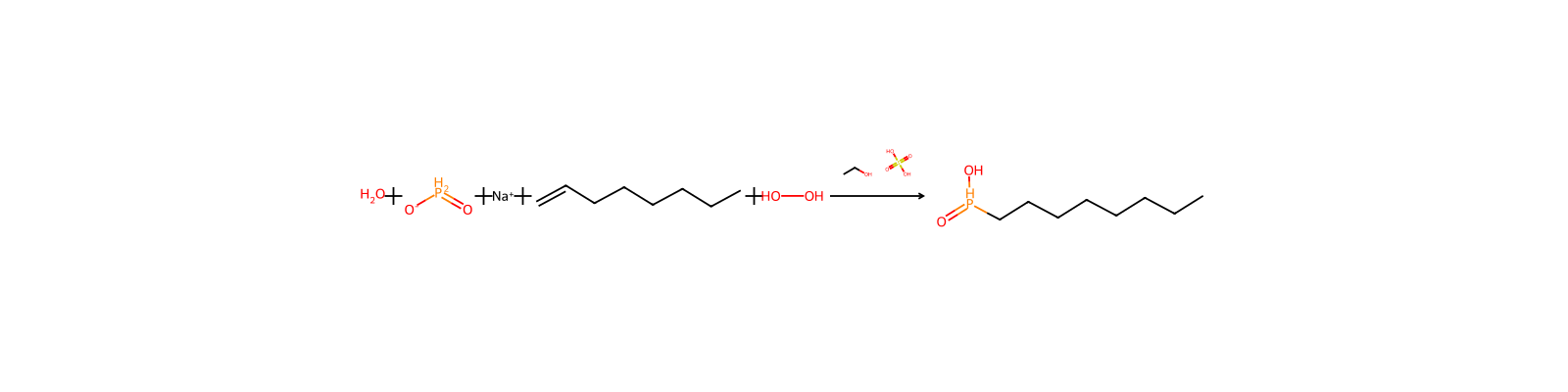


Miscible with ethanol, ether
Miscible in ethanol; soluble in ethyl ether and acetone
In water, 4.1 mg/l @ 25 °C
0.0041 mg/mL at 25 °C
Solubility in water, g/100ml at 25 °C: 0.0004
Practically insoluble to insoluble
70 °F (USCG, 1999)
10 °C
70 °F (21 °C) (OPEN CUP)
10 °C c.c.
250.3 °F at 760 mmHg (USCG, 1999)
121.2 °C @ 760 mm Hg
Boiling point: 121.2 °C /1-Octene/; 125 °C /2-Octene (E)/; 125.6 °C /2-Octene (Z)/; 123.3 °C /3-Octene (E)/; 122.9 °C /3-Octene (Z)/ 122.3 °C /4-Octene (E)/; 122.5 °C /4-Octene (Z)/
123 °C
121 -122 °C
121.2 °C @760 [mm Hg]
Highly flammable. Vapour/air mixtures are explosive.
Inhalation of high concentrations can cause CNS depression; [ICSC] Forms explosive mixtures with air and will ignite at room temperature; [CHEMINFO] May cause irritation; Defats the skin; Inhalation of high concentrations can cause CNS depression; [MSDSonline] In animal experiments, causes CNS depression after acute inhalation and evidence of liver and kidney injury after subchronic feeding; [AIHA]
May be a skin irritant; [HSDB] See 1-Octene.
1-OCTENE may react vigorously with strong oxidizing agents. May react exothermically with reducing agents to release hydrogen gas. In the presence of various catalysts (such as acids) or initiators, may undergo exothermic addition polymerization reactions.
Excerpt from ERG Guide 128 [Flammable Liquids (Water-Immiscible)]:
Use dry powder, foam, carbon dioxide. In case of fire: keep drums, etc., cool by spraying with water.
Fresh air, rest.
Remove contaminated clothes. Rinse and then wash skin with water and soap.
First rinse with plenty of water for several minutes (remove contact lenses if easily possible), then refer for medical attention.
Rinse mouth. Do NOT induce vomiting.
SRP: At the time of review, criteria for land treatment or burial (sanitary landfill) disposal practices are subject to significant revision. Prior to implementing land disposal of waste residue (including waste sludge), consult with environmental regulatory agencies for guidance on acceptable disposal practices.
SRP: At the time of review, criteria for land treatment or burial (sanitary landfill) disposal practices are subject to significant revision. Prior to implementing land disposal of waste residue (including waste sludge), consult with environmental regulatory agencies for guidance on acceptable disposal practices.
Personal protection: filter respirator for organic gases and vapours adapted to the airborne concentration of the substance. Ventilation. Remove all ignition sources. Collect leaking and spilled liquid in covered containers as far as possible. Absorb remaining liquid in dry sand or inert absorbent. Then store and dispose of according to local regulations. Do NOT wash away into sewer. Do NOT let this chemical enter the environment.
VENTILATION CONTROL: THE BASIC ... METHODS ARE LOCAL EXHAUST VENTILATION & DILUTION OR GENERAL VENTILATION.
SRP: The scientific literature for the use of contact lenses in industry is conflicting. The benefit or detrimental effects of wearing contact lenses depend not only upon the substance, but also on factors including the form of the substance, characteristics and duration of the exposure, the uses of other eye protection equipment, and the hygiene of the lenses. However, there may be individual substances whose irritating or corrosive properties are such that the wearing of contact lenses would be harmful to the eye. In those specific cases, contact lenses should not be worn. In any event, the usual eye protection equipment should be worn even when contact lenses are in place.
TERRESTRIAL FATE: Based on a classification scheme(1), an estimated Koc value of 507(SRC), determined from a structure estimation method(2), indicates that 1-octene should have low to moderate mobility in soil(SRC). Volatilization of 1-octene from moist soil surfaces is expected to be an important fate process(SRC) given an estimated Henry's Law constant of 0.627 atm-cu m/mole(SRC) from its vapor pressure, 17.4 mm Hg(3), and water solubility, 4.1 mg/l(4). The potential for volatilization of 1-octene from dry soil surfaces may exist(SRC) based upon a vapor pressure of 17.4 mm Hg(3). However, adsorption to soil is expected to attenuate volatilization(SRC). Based on pure culture studies, 1-octene has the potential to biodegrade under aerobic conditions in soil(5,6).
AQUATIC FATE: Based on a classification scheme(1), an estimated Koc value of 510(SRC), determined from an estimation method(2), indicates that 1-octene should adsorb to suspended solids and sediment in water(SRC). Volatilization from water surfaces is expected(3) based upon an estimated Henry's Law constant of 0.627 atm-cu m/mole(SRC) from its vapor pressure, 17.4 mm Hg(4), and water solubility, 4.1 mg/l(5). Using this Henry's Law constant and an estimation method(3), volatilization half-lives for a model river and model lake are 3.1 hours and 4.2 days, respectively(SRC). The volatilization half-life from a model pond 2 m deep is estimated to be 37 hrs ignoring adsorption; when considering maximum adsorption, the volatilization half-life increases to 95 hrs(6). According to a classification scheme(7), a BCF of 660(SRC) estimated from its log Kow of 4.57(8) and a regression-derived equation(9), suggests the potential for bioconcentration in aquatic organisms is high. Based on pure culture studies, 1-octene has the potential to biodegrade under aerobic conditions in water(10,11).
ATMOSPHERIC FATE: According to a model of gas/particle partitioning of semivolatile organic compounds in the atmosphere(1), 1-octene, which has a vapor pressure of 17.4 mm Hg at 25 °C(2), is expected to exist solely as a vapor in the ambient atmosphere. Vapor-phase 1-octene is degraded in the atmosphere by reaction with photochemically-produced hydroxyl radicals(SRC); the half-life for this reaction in air is estimated to be 3.9 hrs(SRC), calculated from its rate constant of 3.X10-11 cu cm/molecule-sec at 25 °C(3) determined using a structure estimation method(3). Vapor-phase 1-octene is also degraded in the atmosphere by reaction with ozone molecules(SRC); the half-life for this reaction in air is estimated to be 23 hrs(SRC), calculated from its rate constant of 1.2X10⁻¹⁷ cu cm/molecule-sec at 25 °C(3) determined using a structure estimation method(3).
Neurotoxin - Acute solvent syndrome
Neurotoxin - Acute solvent syndrome
Drowsiness. Dizziness.
Dry skin.
1-Octene was detected in one of 10 influent samples at waste water treatment plants (POTWs) in the Great Lakes basin at a concn of <1 ppb(1). Exhaust from turbojet engines operated at simulated high-altitude flight conditions 0.06-36.1 ppmC (ppm carbon) of 1-octene(2). It was identified as a volatile emission from gasoline(3).
Using a structure estimation method based on molecular connectivity indices(1), the Koc for 1-octene can be estimated to be 510(SRC). According to a classification scheme(2), this estimated Koc value suggests that 1-octene is expected to have a low to moderate mobility in soil.
URBAN/SUBURBAN: 1-octene was qualitatively detected in air samples collected in Riverside, CA, 1990(1). It was qualitatively detected in roadside ambient air samples, date and location not provided(2). 1-Octene was qualitatively detected in samples taken in the Allegheny Mountain Tunnel of the Pennsylvania Turnpike, 1979(3).
INDOOR AIR: 1-Octene was listed as a volatile organic compound frequently found in new and renovated buildings(1).
In humans, they cause headache, inability to pay sustained attention, vertigo, nausea, and CNS depression. Octenes may be more irritant to mucous membranes, skin, and eyes than the lower homologues. /Octenes/
Octenes, when ingested, may rapidly be aspirated into the lungs and may act as a simple asphyxiant. /Octenes/
1-Octene's production and use in the manufacture of high density polyethylene, linear low density polyethylene, plasticizers and surfactants(1) may result in its release to the environment through various waste streams(SRC). 1-Octene is emitted in auto exhaust, by turbines, and in brewing(1). It is also a volatile emission from gasoline(2). 1-Octene was identified in emissions in which the field burning of agricultural plastic was simulated in laboratory experiments(3).
AEROBIC: Pure culture studies using Cornynebacterium sp(1) and various strains of Pseudomonas(2-5) were found to oxidize 1-octene indicating that it has the potential to biodegrade under aerobic conditions(SRC). 1,2-Epoxyoctane was identified as a product of the pure culture oxidations(5,6).
2023: 1,000,000 - <8,500,000 lb
(1972) 1.6X10+11 G (ALL C6-C20 ALPHA-OLEFINS)
(1975) 1.7X10+11 G (EST-LINEAR ALPHA OLEFINS)
(1979) 6.8x10+9 G (ESTIMATED)
(1981) 6.8-9.1x10+9 G (ESTIMATED)
Intermediate
Fuel
/Prepared/ ... from appropriate alkylmagnesium bromide & allyl bromide or chloride ... From formaldehyde or paraformaldehyde & triphenyl(phenylmethylene)phosphorane ...
/Prepared/ ... by catalytic dehydration of 2-octanol ...
REACTION OF BUTYLENES OR LOW MOLECULAR WEIGHT OLEFINIC REFINERY STREAMS (USUALLY CONTAINING BUTYLENES) OVER A PHOSPHORIC ACID CATALYST TO FORM POLYGAS, FOLLOWED BY FRACTIONATION
Fragrance Ingredients
Flavouring Agent -> FLAVOURING_AGENT -> JECFA Functional Classes
Flavoring Agents -> JECFA Flavorings Index
Flavouring Agent -> FLAVOURING_AGENT -> JECFA Functional Classes
Flavouring Agent -> FLAVOURING_AGENT -> JECFA Functional Classes
Flavouring Agent -> FLAVOURING_AGENT -> JECFA Functional Classes
All Other Chemical Product and Preparation Manufacturing
Petroleum Refineries
1-Octene: ACTIVE
Octene: ACTIVE
UsesPlasticizer; surfactants. Used as a comonomer in the production of high density polyethylene and linear low density polyethylene. Starting material for synthesis of a variety of compounds including nananoic acid.
Uses1-Octene acts as a comonomer used in the preparation of polyethylene, especially high-density polyethylene (HDPE) and linear low-density polyethylene(LLDPE) resins. It is also used in organic synthesis, surfactants and plasticizers. Further, it is used in process regulators and viscosity adjustors. In addition to this, it is used in the preparation of linear aldehyde through the oxo synthesis (hydroformylation) to get the nonanal.
Uses1-Octene is a linear α-olefin mainly used as a comonomer in the synthesis of linear low-density polyethylene (LLDPE). Extensive work has been reported on the hydroformylation of 1-octene using various catalysts. It is also an important source to synthesize important petrochemical building blocks via epoxidation reaction.
General DescriptionA colorless liquid. Flash point 70°F. Insoluble in water and less dense (at about 6 lb / gal) than water. Hence floats on water. Vapors are heavier than air and may settle in depressions. Reported to biodegrade very slowly. Used in organic synthesis, surfactants, and plasticizers.
DefinitionChEBI: An octene with an unsaturation C-1.