HomeMCPWorkbenchSkills
HomeWorkbenchNotificationsMe
llms.txt · MCP GuidePrivacy Policy · Terms of Service · Supportv1.8.3
  1. Home
  2. /Compound

1-Naphthylurea

HCID 81387
New reaction
Print
Basic informationOverviewNames & identifiersPropertiesSafety & regulationChemistry & industryRelated reactionsCompound notes
Substructure searchFind similar structures

Basic information

CAS
6950-84-1
Standard SMILES
NC(=O)Nc1cccc2ccccc12
InChIKey
FVSUYFWWFUVGRG-UHFFFAOYSA-N
Molecular formula
C11H10N2O
Average molar mass
186.21 g/mol
Monoisotopic mass
186.07931294

Overview

Naphthylurea appears as a gray solid. Insoluble in water and denser than water. Contact may irritate skin, eyes and mucous membranes. May be toxic by ingestion. Used to make other chemicals.

Names & identifiers

Preferred name
1-Naphthylurea
IUPAC
naphthalen-1-ylurea
English name
1-Naphthylurea
Molecular formula
C11H10N2O
Molecular weight
186.21

Names & synonyms

6950-84-11-Naphthylurea1-(1-naphthyl)ureaUrea, 1-naphthalenyl-alpha-NAPHTHYLUREAPJB18S9UREUrea, N-1-naphthalenyl-EINECS 230-121-6NSC 65627AI3-61345UNII-PJB18S9URENSC-65627
Show more names
Naphthylureaα-Naphthyl urea1-(1-Naphtyl)urea
.ALPHA.-NAPHTHYLUREAN-1-NAPHTHALENYLUREAN-.ALPHA.-NAPHTHYLUREAUREA, (1-NAPHTHYL)-DTXSID1075303.ALPHA.-NAPHTHYLCARBAMIDERefChem:76550N-ALPHA-NAPHTHYLUREA

Database identifiers

CAS
6950-84-1
PubChem CID
81387
DTXSID
DTXSID1075303
ChEMBL
CHEMBL1550615
UNII
PJB18S9URE
EC Number
230-121-6
Nikkaji
J265.985I

Properties

Computed structural properties

XLogP
1.1
Topological polar surface area
55.1 Ų
Hydrogen bond donors
2
Hydrogen bond acceptors
1
Rotatable bonds
1
Heavy atoms
14
Formal charge
0
Complexity
217

Experimental & physicochemical properties

Physical DescriptionNaphthylurea appears as a gray solid. Insoluble in water and denser than water. Contact may irritate skin, eyes and mucous membranes. May be toxic by ingestion. Used to make other chemicals.

Physicochemical properties

Melting point
219.5 °C · 219.5°C
Boiling point
320.7 °C · 320.7°C (rough estimate)
Density
1.1458 · 1.1458 (rough estimate)
refractive index
1.53 · 1.5300 (estimate)
storage temp.
2 · 2-8°C
pka
14.45 · 14.45±0.50(Predicted)
Appearance
White to off-white Solid
FDA UNII
18 S9URE · PJB18S9URE
EPA Substance Registry System
1 · Urea, 1-naphthalenyl- (6950-84-1)
Symbol(GHS)
7 · GHS07
Signal word
Warning
Hazard statements
302 · H302-H315-H319-H335
Precautionary statements
261 · P261-P305+P351+P338
RIDADR
1652 · UN 1652
HazardClass
6.1 · 6.1
PackingGroup
II

Safety & regulation

Safety information is for reference only and does not replace the supplier’s Safety Data Sheet (SDS), applicable regulations, or professional assessment.

GHS classification

GHS Classification · 4 items

Danger

H301 (100%): Toxic if swallowed [Danger Acute toxicity, oral]

P261, P264, P264+P265, P270, P271, P280, P301+P316, P302+P352, P304+P340, P305+P351+P338, P319, P321, P330, P332+P317, P337+P317, P362+P364, P403+P233, P405, and P501 (click each P-code to see the statement)

The GHS information provided by 1 company from 1 notification to the ECHA C&L Inventory.

Hazard information

DOT LabelPoison
Fire Hazards · 2 items

Excerpt from ERG Guide 153 [Substances - Toxic and/or Corrosive (Combustible)]:

· Combustible material: may burn but does not ignite readily.

Health Hazards · 2 items

Excerpt from ERG Guide 153 [Substances - Toxic and/or Corrosive (Combustible)]:

· TOXIC and/or CORROSIVE; inhalation, ingestion or skin contact with material may cause severe injury or death.

DOT ID and Guide1652 153
Reactive GroupAmides and Imides
Reactivity Profile · 1 item

NAPHTHYLUREA is an amide. Amides/imides react with azo and diazo compounds to generate toxic gases. Flammable gases are formed by the reaction of organic amides/imides with strong reducing agents. Amides are very weak bases (weaker than water). Imides are less basic yet and in fact react with strong bases to form salts. That is, they can react as acids. Mixing amides with dehydrating agents such as P2O5 or SOCl2 generates the corresponding nitrile. The combustion of these compounds generates mixed oxides of nitrogen (NOx).

DOT Hazard Classification · 4 items

Naphthylurea

UN1652

Div 6.1 Poisonous materials (49 eCFR § 173.132)

PG II: the degree of danger presented by the material is medium

Air and Water ReactionsInsoluble in water.
Hazard Classes and CategoriesAcute Tox. 3 (100%)

Safety & protection

Fire FightingExcerpt from ERG Guide 153 [Substances - Toxic and/or Corrosive (Combustible)]:
Accidental Release Measures · 2 items

· CALL 911. Then call emergency response telephone number on shipping paper. If shipping paper not available or no answer, refer to appropriate telephone number listed on the inside back cover.

· ELIMINATE all ignition sources (no smoking, flares, sparks or flames) from immediate area.

First Aid · 2 items

Excerpt from ERG Guide 153 [Substances - Toxic and/or Corrosive (Combustible)]:

General First Aid:

Exposure Control and Personal Protection· Wear positive pressure self-contained breathing apparatus (SCBA).
Nonfire Spill ResponseExcerpt from ERG Guide 153 [Substances - Toxic and/or Corrosive (Combustible)]:
Isolation and Evacuation · 2 items

Excerpt from ERG Guide 153 [Substances - Toxic and/or Corrosive (Combustible)]:

Immediate precautionary measure

Personal Protective Equipment (PPE)Excerpt from ERG Guide 153 [Substances - Toxic and/or Corrosive (Combustible)]:
Emergency Response Planning GuidelinesSmall Fire

Safety data

ridadr
UN 1652
Signal word
Warning
Symbol(GHS)
GHS07
hazard_class
6.1
packing_group
II
Hazard statements
H302-H315-H319-H335
Precautionary statements
P261-P305+P351+P338

Chemistry & industry

Applications

General DescriptionA gray solid. Insoluble in water and denser than water. Contact may irritate skin, eyes and mucous membranes. May be toxic by ingestion. Used to make other chemicals.

Upstream & downstream products

Downstream products

Direct Orange S

Related reactions

6 records
New reaction record
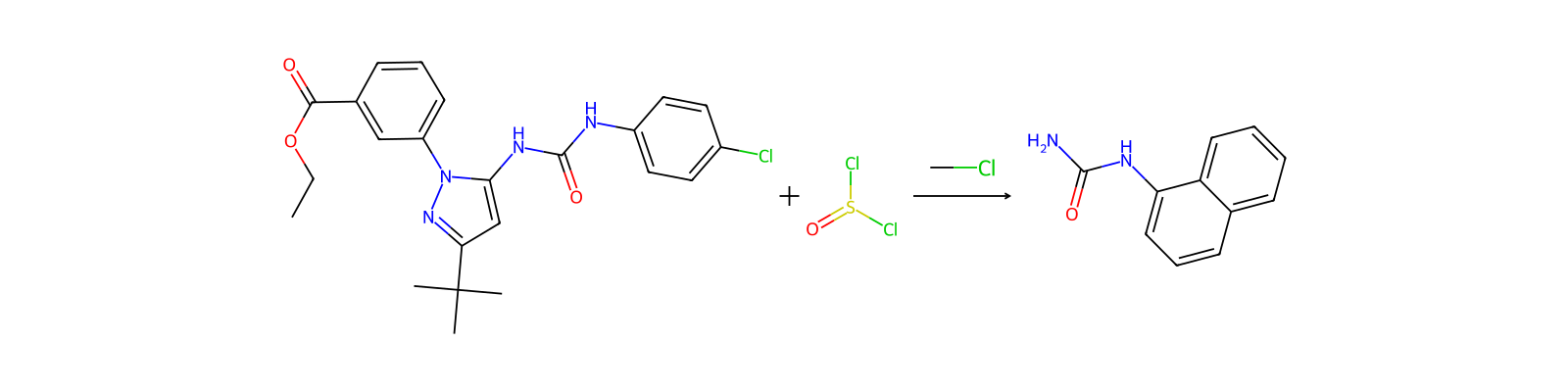
HRID 16939 reaction equation
HRID 16939As product
HRID 491978 reaction equation
HRID 491978As product
HRID 857135 reaction equation
HRID 857135As product
HRID 1270502 reaction equation
HRID 1270502As product
HRID 1392292 reaction equation
HRID 1392292As product
HRID 1445724 reaction equation
HRID 1445724As product

Compound notes

On this pageBasic informationOverviewNames & identifiersPropertiesSafety & regulationChemistry & industryRelated reactionsCompound notes