Reaction equation
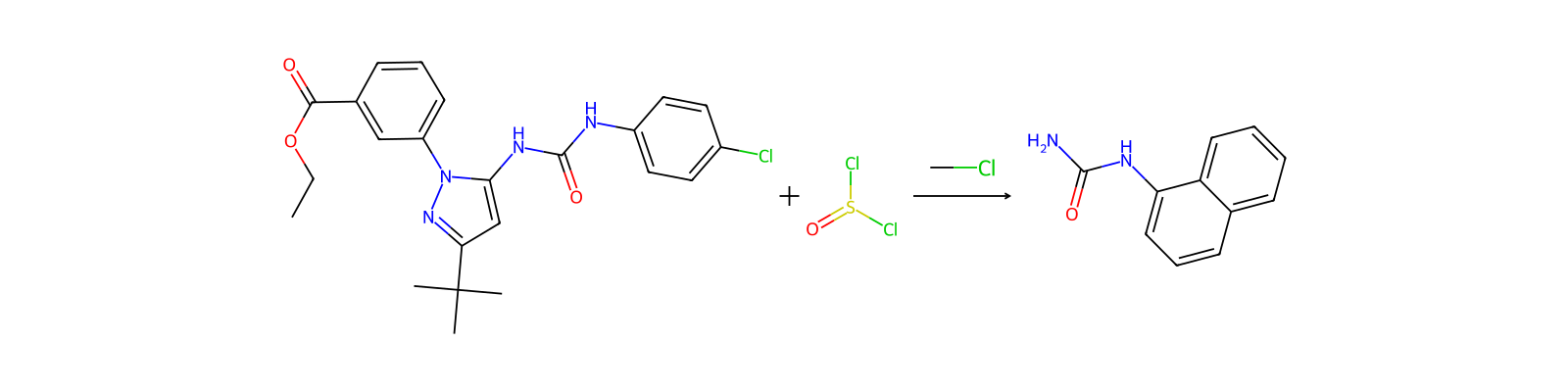
C(C1C=C([NH:10][C:11]([NH:13][C:14]2[CH:19]=[CH:18][C:17](Cl)=[CH:16][CH:15]=2)=[O:12])N(C2C=C(C=CC=2)C(OCC)=O)N=1)(C)(C)C.O=S(Cl)Cl>CCl>[C:14]1([NH:13][C:11](=[O:12])[NH2:10])[C:15]2[C:16](=[CH:19][CH:14]=[CH:15][CH:16]=2)[CH:17]=[CH:18][CH:19]=1Participants
4
Reactant 2


Product 1

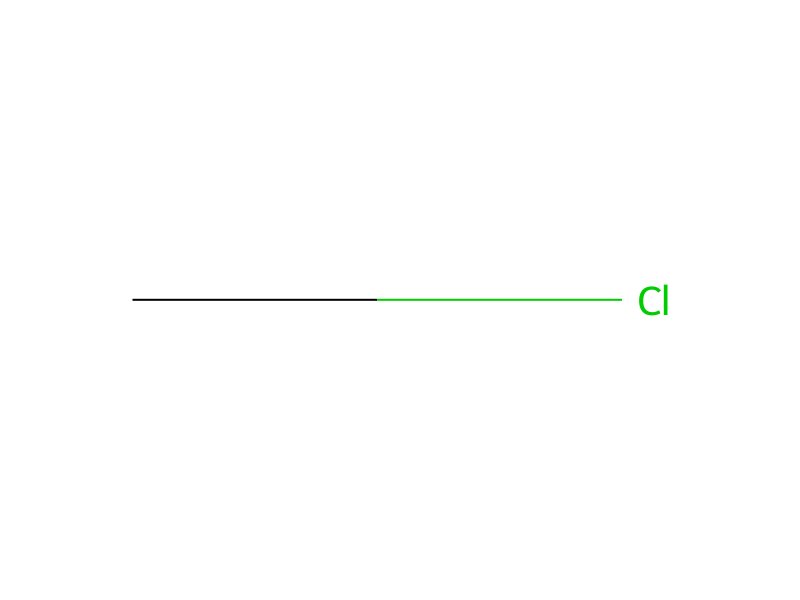
Reagents, catalysts & solvents 1
Procedure
A solution of Example C (1.66 g, 4.0 mmol) and SOCl2 (0.60 mL, 8.0 mmol) in CH3Cl (100 mL) was refluxed for 3 h and concentrated in vacuum to yield 1-{3-tert-butyl-1-[3-chloromethyl)phenyl]-1H-pyrazol-5-yl}-3-(naphthalen-1-yl)urea (1.68 g, 97%) was obtained as white powder. 1H NMR (DMSO-d6): δ 9.26 (s, 1H), 9.15 (s, 1H), 8.42-7.41 (m, 11H), 6.40 (s, 1, H), 4.85 (s, 2H), 1.28 (s, 9H). MS (ESI) m/z: 433 (M+H+).
Workup
- concentrationconcentrated in vacuum
Sources & evidence
- ORD record
- ord-bdd478e2ef3943429204057596235e97
- Source dataset
- uspto-grants-2010_06
- Patent number
- US07737283B2
Linked notes
Loading…