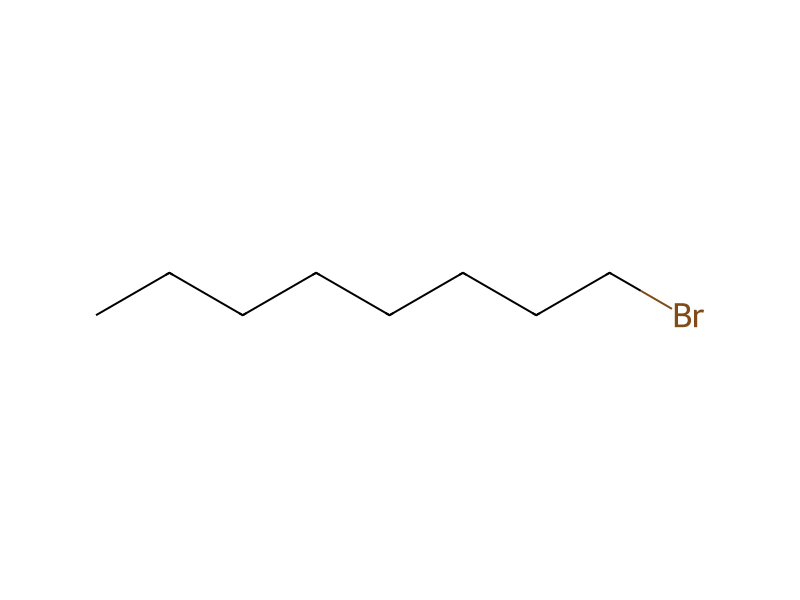
1-Bromooctane
Completing data — refresh the page later to see the latest
Basic information
- CAS
111-83-1- Standard SMILES
CCCCCCCCBr- InChIKey
VMKOFRJSULQZRM-UHFFFAOYSA-N- Molecular formula
- C8H17Br
- Average molar mass
- 193.12 g/mol
- Monoisotopic mass
- 192.05136
Names & identifiers
- Preferred name
- 1-Bromooctane
- IUPAC
- 1-bromooctane
- English name
- 1-Bromooctane
- Molecular formula
- C8H17Br
- Molecular weight
- 193.12
Names & synonyms
1-Bromooctane111-83-1n-Octyl bromideOctyl bromide1-OctylbromideOctane, 1-bromo-1-Bromo-octanebromooctanen-octylbromide1-octyl bromideMFCD00000276DTXSID3021938
Show more names
1-bromoctane1-BromoctanCaprylbromideOctoicbromide1-bromo-octan
Q382HPC6LC1-?Bromooctane(Octyl Bromide)NSC-9821Octane, bromo-1219803-37-88-bromooctane1-Bromo octaneNSC 9821
Database identifiers
- CAS
111-83-1- PubChem CID
- 8140
- DTXSID
DTXSID3021938- ChEMBL
CHEMBL156047- UNII
- Q382HPC6LC
- EC Number
- 203-912-9
- Nikkaji
- J1.989E
Properties
Computed structural propertiesFilling in
- XLogP
- 4.9
- Topological polar surface area
- 0 Ų
- Hydrogen bond donors
- 0
- Hydrogen bond acceptors
- 0
- Rotatable bonds
- 6
- Heavy atoms
- 9
- Formal charge
- 0
- Complexity
- 43
Experimental & physicochemical properties
Density1.11 @25 °C
Boiling Point201.5 °C @760 [mm Hg]
Melting Point-55 °C
Vapor Pressure0.34 [mmHg]
Physical DescriptionColorless liquid; [Merck Index]
Kovats Retention Index
1138;1118;1119;1121;1122;1124;1126;1129;1130;1132;1133;1133;1132.5;1132
1136.2;1119;1142;1132
1368;1373;1351;1364;1365;1385
Physicochemical properties
- Melting point
- -55 °C · -55 °C
- Boiling point
- 201 °C · 201 °C (lit.)
- Density
- 1.118 g/mL · 1.118 g/mL at 25 °C (lit.)
- vapor density
- 6.7 · 6.7 (vs air)
- vapor pressure
- 0.34 mm · 0.34 mm Hg ( 25 °C)
Safety & regulation
Safety information is for reference only and does not replace the supplier’s Safety Data Sheet (SDS), applicable regulations, or professional assessment.
GHS classification
GHS Classification
Warning
H400 (98.8%): Very toxic to aquatic life [Warning Hazardous to the aquatic environment, acute hazard];H410 (95.7%): Very toxic to aquatic life with long lasting effects [Warning Hazardous to the aquatic environment, long-term hazard]
P273, P391, and P501 (click each P-code to see the statement)
Aggregated GHS information provided per 163 reports by companies from 12 notifications to the ECHA C&L Inventory. Each notification may be associated with multiple companies.;Information may vary between notifications depending on impurities, additives, and other factors. The percentage value in parenthesis indicates the notified classification ratio from companies that provide hazard codes. Only hazard codes with percentage values above 10% are shown. For more detailed information, please visit ECHA C&L website.
Hazard information
Regulatory Information
Chemical: Octane, 1-bromo-
Status: Active Update: 15-07-2020 https://echa.europa.eu/registration-dossier/-/registered-dossier/17679
Octane, 1-bromo-: Does not have an individual approval but may be used under an appropriate group standard
Hazards SummaryOral LD50 (rat) = 4,490 uL/kg; [RTECS] May cause irritation; [Sigma-Aldrich MSDS] See 1-Bromohexane.
Hazard Classes and CategoriesAquatic Acute 1 (98.8%);Aquatic Chronic 1 (95.7%)
Safety & protection
Protective Action Criteria (PAC)
15 [mg/m3]
170 [mg/m3]
990 [mg/m3]
Chemistry & industry
Uses & manufacturing
UsesUsed in organic syntheses; [Merck Index]
General Manufacturing InformationOctane, 1-bromo-: ACTIVE
Applications
Uses1-Bromooctane is used in organic synthesis. It is also used as an extraction solvent in the determination of volatile organic compounds present in water samples. Further, it is used in the preparation of quaternary ammonium chloride-modified poly(propylenimine) dendrimers.
Preparation methods
Preparation1-Bromooctane is prepared by reacting octanol with hydrobromic acid. After the sodium bromide was completely dissolved with sulfuric acid, n-octanol was added, heated to reflux for 7-8 hours, cooled and diluted with water, the organic phase was separated, washed with water, concentrated sulfuric acid, water, and 10% sodium carbonate solution in turn, and washed with anhydrous sulfuric acid. Sodium dry. Distillation of 196-200°C, or 91-93°C (2.93kPa) fraction, is the finished product of 1-bromooctane. The yield is over 90%.
Upstream & downstream products
Upstream raw materials
Downstream products
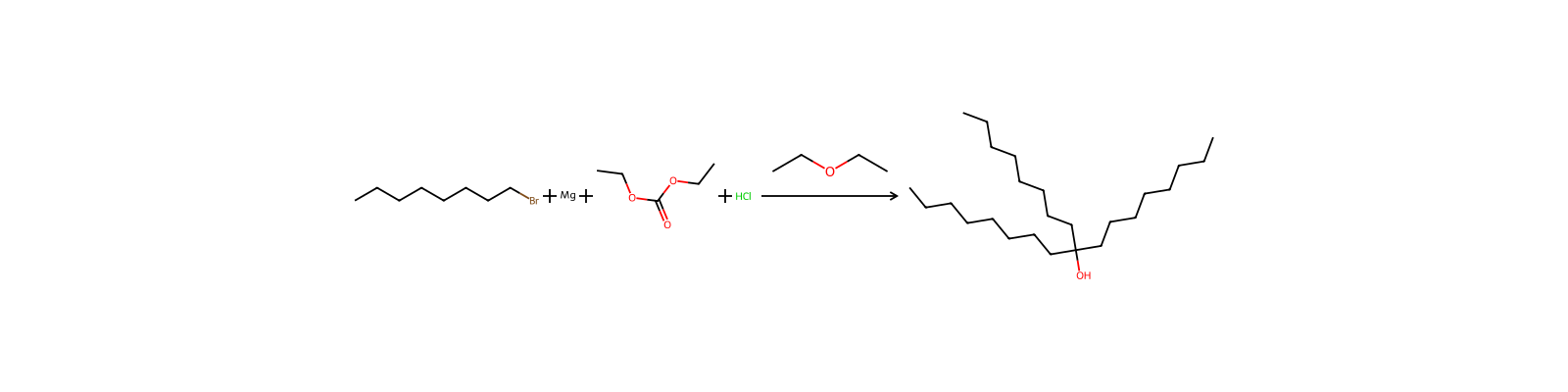
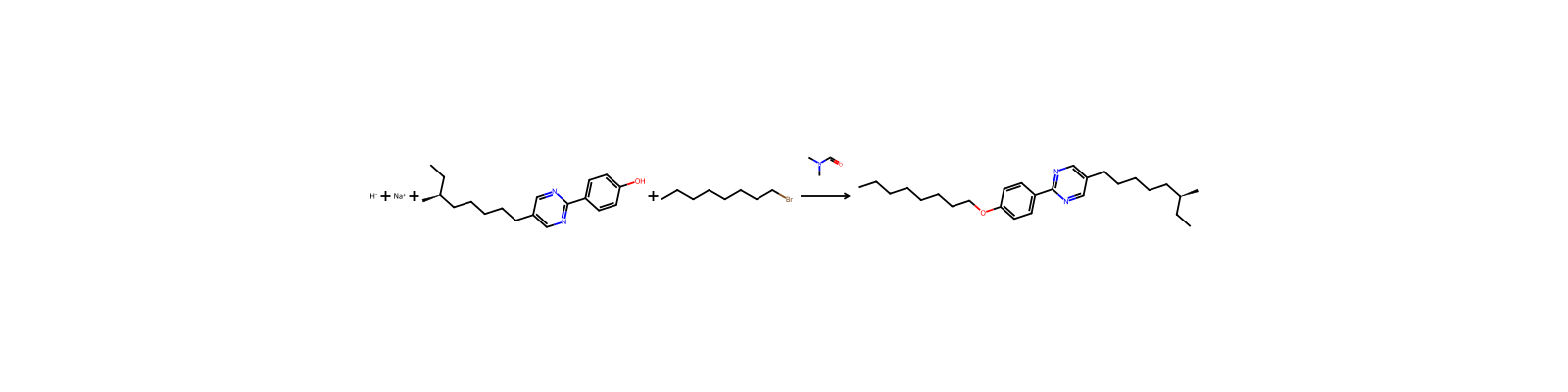
Related reactions
529 records




Compound notes
Loading…