HomeMCPWorkbenchSkills
HomeWorkbenchNotificationsMe
llms.txt · MCP GuidePrivacy Policy · Terms of Service · Supportv1.8.3
  1. Home
  2. /Compound

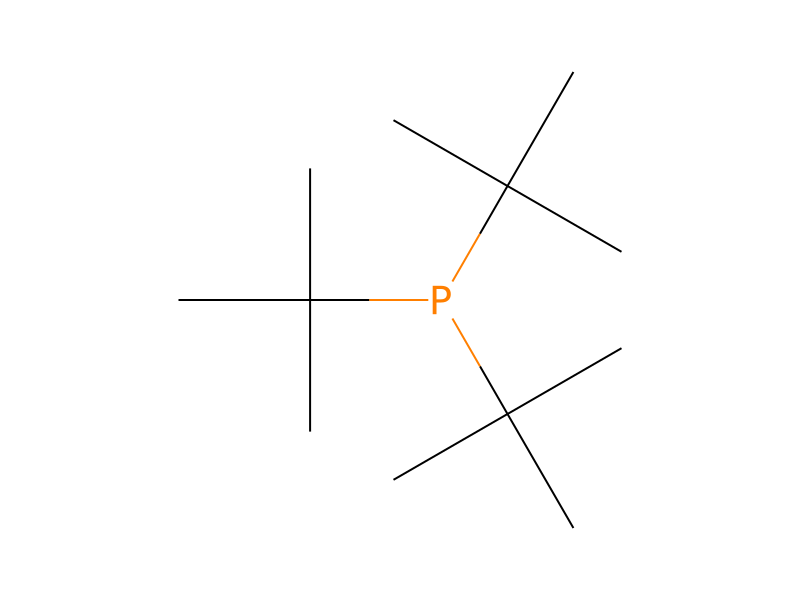
Tris(1,1-dimethylethyl)phosphine

HCID 83681
New reaction
Print
Basic informationNames & identifiersPropertiesSafety & regulationChemistry & industryRelated reactionsCompound notes
Substructure searchFind similar structures

Basic information

CAS
13716-12-6
Standard SMILES
CC(C)(C)P(C(C)(C)C)C(C)(C)C
InChIKey
BWHDROKFUHTORW-UHFFFAOYSA-N
Molecular formula
C12H27P
Average molar mass
202.32 g/mol
Monoisotopic mass
202.18503786

Names & identifiers

Preferred name
Tris(1,1-dimethylethyl)phosphine
IUPAC
tritert-butylphosphane
English name
Tri-tert-butylphosphine
Molecular formula
C12H27P
Molecular weight
202.32

Names & synonyms

Tri-tert-butylphosphine13716-12-6Tris(1,1-dimethylethyl)phosphineEINECS 237-266-4DTXSID80160090RefChem:900102DTXCID4082581237-266-4tri-t-Butylphosphinetritert-butylphosphanetri-tert-butylphosphanePhosphine, tris(1,1-dimethylethyl)-
Show more names
P(t-Bu)3TTBPTri-tert-butyLButylphosphineri-tert-butylphosphineUncle Ding JilinTri-t-butylphosphosphin
TRIS(TERT-BUTYL)PHOSPHINEPtBu3tBu3Ptri-Tertbutylphosphinetri-tert-butylphosphintri(tert-butyl)phosphinetert-Bu3PTri-tert-butylphosphine,TTBP

Database identifiers

CAS
13716-12-6
PubChem CID
83681
DTXSID
DTXSID80160090
UNII
BH6Z6Z4K6W
EC Number
237-266-4
Nikkaji
J278.010K

Properties

Computed structural properties

XLogP
2.9
Topological polar surface area
0 Ų
Hydrogen bond donors
0
Hydrogen bond acceptors
0
Rotatable bonds
3
Heavy atoms
13
Formal charge
0
Complexity
128

Experimental & physicochemical properties

SpringerMaterials PropertiesSchoenflies notation

Physicochemical properties

Melting point
30 · 30-35 °C(lit.)
Boiling point
102 · 102-103 °C13 mm Hg(lit.)
Density
0.861 g/mL · 0.861 g/mL at 25 °C
Flash point
1 °F · 1 °F
storage temp.
Flammables area
form
solid
Specific Gravity
0.68 · 0.68
Water Solubility
insoluble
Sensitive
Air & Moisture Sensitive
Hydrolytic Sensitivity
9 · 9: reacts extremely rapidly with atmospheric moisture - may be pyrophoric - glove box or sealed system required
BRN
1738613 · 1738613
InChI
InChI=1S/C12H27P/c1-10(2,3)13(11(4,5)6)12(7,8)9/h1-9H3

Safety & regulation

Safety information is for reference only and does not replace the supplier’s Safety Data Sheet (SDS), applicable regulations, or professional assessment.

GHS classification

GHS Classification · 4 items

Danger

H250 (98.2%): Catches fire spontaneously if exposed to air [Danger Pyrophoric liquids]

P210, P222, P231, P233, P260, P264, P264+P265, P280, P301+P330+P331, P302+P335+P334, P302+P361+P354, P304+P340, P305+P354+P338, P316, P317, P321, P363, P370+P378, P405, and P501 (click each P-code to see the statement)

Aggregated GHS information provided per 57 reports by companies from 6 notifications to the ECHA C&L Inventory. Each notification may be associated with multiple companies.

Hazard information

Hazard Classes and CategoriesPyr. Liq. 1 (98.2%)

Safety data

F
10-19-23
wgk
3
ridadr
UN 2846 4.2/PG 1
hs_code
2931900090
risk_code
17-34-67-65-63-48/20-11
Signal word
Danger
Symbol(GHS)
GHS02,GHS05
hazard_code
F,C
safety_code
26-45-62-36/37/39-25-43-27-16
hazard_class
4.2
Storage Class
4.2 - Pyrophoric and self-heating hazardous materials
packing_group
I
target organs
Respiratory system
Hazard statements
H250-H314

Chemistry & industry

Applications · 2 items

UsesTri-tert-butylphosphine is used primarily in the preparation of mono- and bidentate phosphine ligands in metal complexes for catalytic chiral asymmetric hydrogenations and other asymmetric reactions as well as transition metal coupling reactions. This reagent is also used in the preparation of other phosphines in catalytic polymerization reactions.

UsesValuable ligand for several coupling reactions. This product is offered as the THF solution for more convenient handling.

Upstream & downstream products

Upstream raw materials

Hexanetert-Butyllithium2-Chloro-2-methylpropaneLithium bromidePhosphorus trichlorideTetrahydrofuranDiethyl etherEthyl acetateCopper(I) chlorideDichloromethaneMagnesium

Downstream products

1-(4-Pyridyl)piperazineBenzenamine, 4-methoxy-N,N-bis(4-methoxyphenyl)-1-(3-Pyridinyl)piperazine

Related reactions

2,436 records
New reaction record
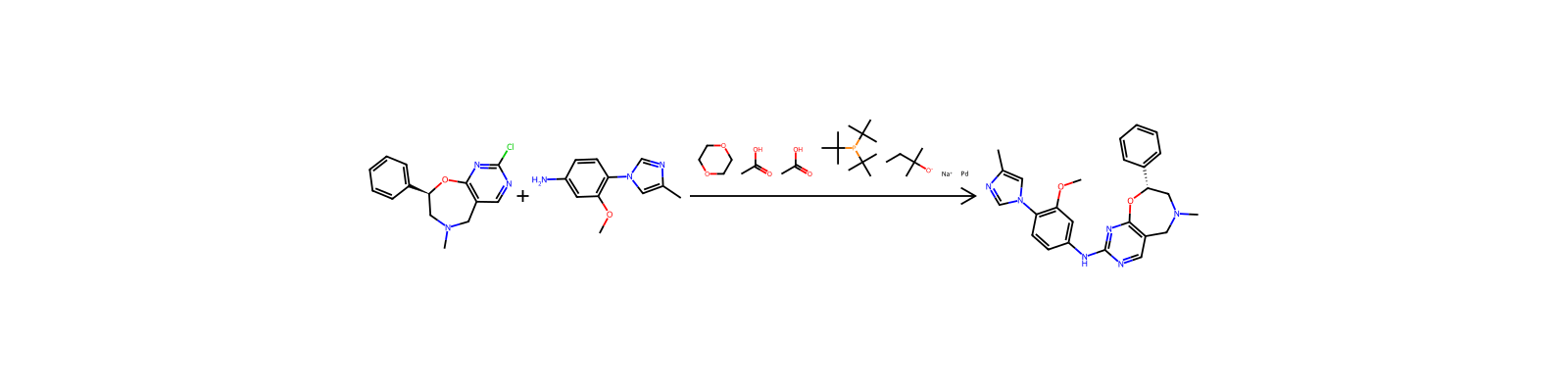
HRID 106 reaction equation
HRID 106As catalyst
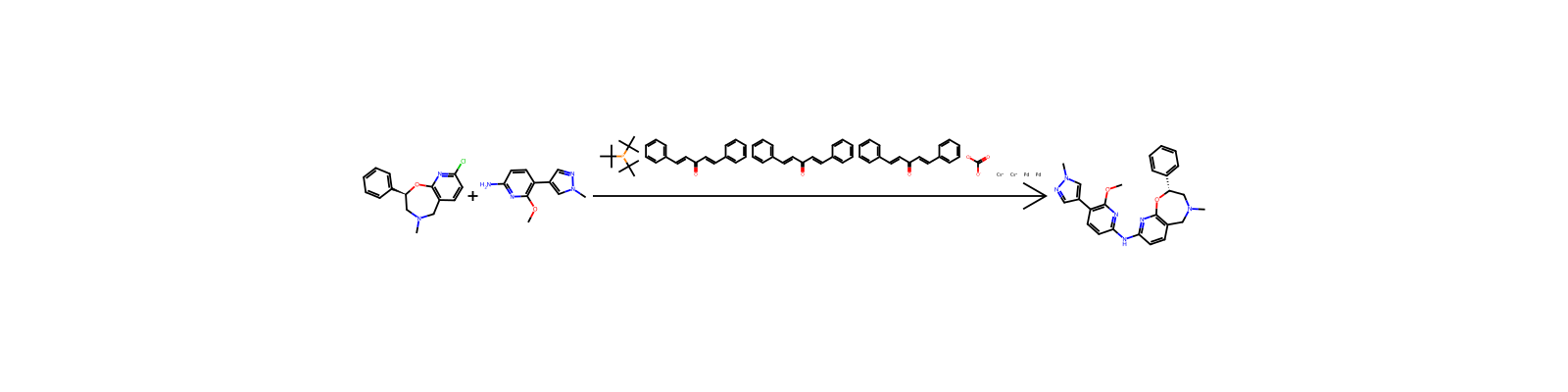
HRID 108 reaction equation
HRID 108As catalyst
HRID 120 reaction equation
HRID 120As catalyst
HRID 203 reaction equation
HRID 203As catalyst
HRID 221 reaction equation
HRID 221As catalyst
HRID 269 reaction equation
HRID 269As catalyst
HRID 270 reaction equation
HRID 270As catalyst
HRID 344 reaction equation
HRID 344As catalyst
PreviousPage 1 of 305

Compound notes

On this pageBasic informationNames & identifiersPropertiesSafety & regulationChemistry & industryRelated reactionsCompound notes
InChIKey
BWHDROKFUHTORW-UHFFFAOYSA-N
SMILES
P(C(C)(C)C)(C(C)(C)C)C(C)(C)C
CAS DataBase Reference
13716 · 13716-12-6(CAS DataBase Reference)
NIST Chemistry Reference
Tri-tert-butylphosphine(13716-12-6)
Comptox DTXSID
80160090 · DTXSID80160090
UNSPSC Code
12352128 · 12352128
NACRES
22 · NA.22
Symbol(GHS)
2 · GHS02,GHS05
Signal word
Danger
Hazard statements
250 · H250-H314
Precautionary statements
231 · P231+P232-P260-P280-P303+P361+P353-P305+P351+P338-P370+P378
target organs
Respiratory system
Hazard Codes
F,C
Risk Statements
17 · 17-34-67-65-63-48/20-11
Safety Statements
26 · 26-45-62-36/37/39-25-43-27-16
RIDADR
2846 · UN 2846 4.2/PG 1
WGK Germany
3 · 3
F
10 · 10-19-23
HazardClass
4.2 · 4.2
PackingGroup
I
HS Code
2931900090 · 2931900090
Storage Class
4.2 · 4.2 - Pyrophoric and self-heating hazardous materials
Hazard Classifications
2 Eye · Carc. 2Eye Dam. 1Flam. Liq. 2Pyr. Liq. 1Skin Corr. 1BSTOT SE 3
Excepted Quantities
Forbidden
Excepted Quantities
Forbidden
Hazard Classifications
Carc. 2Eye Dam. 1Flam. Liq. 2Pyr. Liq. 1Skin Corr. 1BSTOT SE 3
Precautionary statements
P231+P232-P260-P280-P303+P361+P353-P305+P351+P338-P370+P378
N-(4-BroMophenyl)-N,N-bis(1,1'-biphenyl-4-yl)aMine
3,6-Diphenyl-9H-carbazole
Methanesulfonato[di-t-butyl(n-butyl)phosphine](2'-amino-1,1'-biphenyl-2-yl)palladium(II) dichloromethane
Tri-tert-butylphosphine tetrafluoroborate