HomeMCPWorkbenchSkills
HomeWorkbenchNotificationsMe
llms.txt · MCP GuidePrivacy Policy · Terms of Service · Supportv1.8.0
  1. Home
  2. /Compound

Isoquinoline

HCID 8405
New noteNew reactionRequest quotes
Print preview

Completing data — refresh the page later to see the latest
Basic informationOverviewNames & identifiersPropertiesSafety & regulationChemistry & industryRelated reactionsCompound notes
Substructure searchFind similar structures

Basic information

CAS
119-65-3
Standard SMILES
c1ccc2cnccc2c1
InChIKey
AWJUIBRHMBBTKR-UHFFFAOYSA-N
Molecular formula
C9H7N
Average molar mass
129.16 g/mol
Monoisotopic mass
129.05784923

Overview

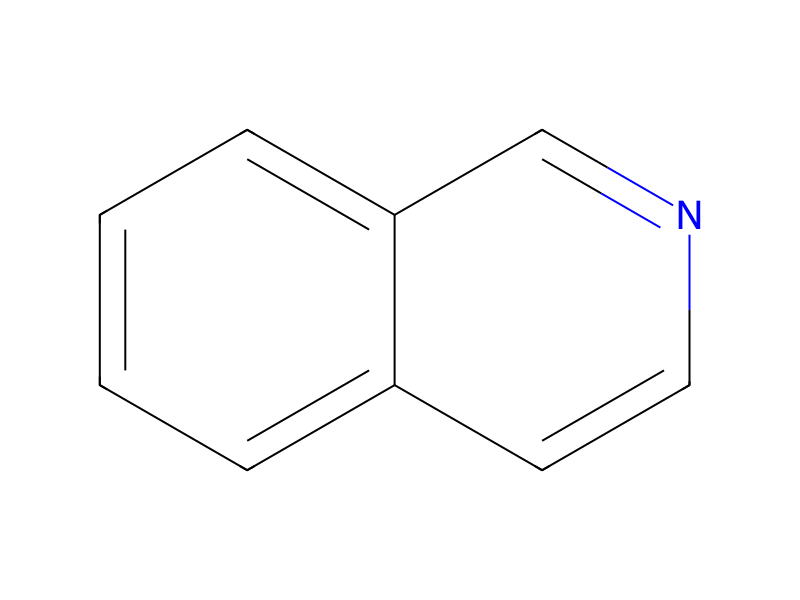
Isoquinoline is an ortho-fused heteroarene that is a benzopyridine in which the N atom not directly attached to the benzene ring. It is a member of isoquinolines, a mancude organic heterobicyclic parent, an azaarene and an ortho-fused heteroarene.

Names & identifiers

Preferred name
Isoquinoline
IUPAC
isoquinoline
English name
Isoquinoline
Molecular formula
C9H7N
Molecular weight
129.16

Names & synonyms

ISOQUINOLINE119-65-32-Benzazine2-AzanaphthaleneLeucolinebeta-QuinolineIsochinolinBenzo[c]pyridine3,4-BenzopyridineBenzo(c)pyridineFEMA No. 2978DTXSID2047644
Show more names
ISOQUINOLINBenzopyridineFEMA 2978ISOQINOLINEIsoquinoL
JGX76Y85M6NSC-3395DTXCID0027644CHEBI:16092RefChem:792283204-341-87-methoxy-1,6-dimethylisoquinoline-5,8-dione2-Benzanine

Database identifiers

CAS
119-65-3
PubChem CID
8405
DTXSID
DTXSID2047644
ChEMBL
CHEMBL12315
ChEBI
CHEBI:16092
UNII
JGX76Y85M6
EC Number
204-341-8
Nikkaji
J43.394B

Properties

Computed structural propertiesFilling in

XLogP
2.1
Topological polar surface area
12.9 Ų
Hydrogen bond donors
0
Hydrogen bond acceptors
1
Rotatable bonds
0
Heavy atoms
10
Formal charge
0
Complexity
111

Experimental & physicochemical properties

Chemical Classes · 2 items

Nitrogen Compounds -> Quinolines

Waste-water effluent contaminant

DrugsPharmaceuticals -> Listed in ZINC15
SpringerMaterials PropertiesAngular frequency
LogP · 2 items

2.08

2.08

Food AdditivesFLAVORING AGENT OR ADJUVANT -> FDA Substance added to food
Density1.097-1.103
Flavoring AgentsEU Flavoring substances
Solubility · 3 items

4.52 mg/mL at 25 °C

Slightly soluble in water

Soluble (in ethanol)

Boiling Point · 2 items

242.00 to 243.00 °C. @ 760.00 mm Hg

242-243 °C

Safety & regulation

Safety information is for reference only and does not replace the supplier’s Safety Data Sheet (SDS), applicable regulations, or professional assessment.

GHS classification

GHS Classification · 6 items

This chemical does not meet GHS hazard criteria for < 0.1% (1 of 1677) of reports.

Danger

H302 (> 99.9%): Harmful if swallowed [Warning Acute toxicity, oral]

P262, P264, P264+P265, P270, P280, P301+P317, P302+P352, P305+P351+P338, P316, P321, P330, P332+P317, P337+P317, P361+P364, P362+P364, P405, and P501 (click each P-code to see the statement)

Aggregated GHS information provided per 1677 reports by companies from 8 notifications to the ECHA C&L Inventory. Each notification may be associated with multiple companies.

Warning

Hazard information

Regulatory Information · 5 items

Chemical: Isoquinoline

Commission Regulation (EC) No 1565/2000 (Repealed by Com. Implementing Reg. (EU) No 872/2012)

Isoquinoline is listed on the EPA's Chemical Data Reporting (CDR) system. Manufacturers and importers of Isoquinoline are required to report information about their production and use of this chemical to the EPA under the Toxic Substances Control Act (TSCA). (40 eCFR Part 711)

REACH registered substance: Isoquinoline (EC: 204-341-8)

Isoquinoline: Does not have an individual approval but may be used under an appropriate group standard

Hazards SummaryA moderate skin irritant; [RTECS] Safe when used as a flavoring agent in food; [JECFA] An irritant; Highly toxic by skin absorption; Harmful by ingestion; [Acros Organics MSDS] See Quinoline.
Hazard Classes and Categories · 2 items

Acute Tox. 4 (> 99.9%)

Acute toxicity (Oral) - Category 4

Toxicology

Toxicological Information

Chemistry & industry

Pharmacology

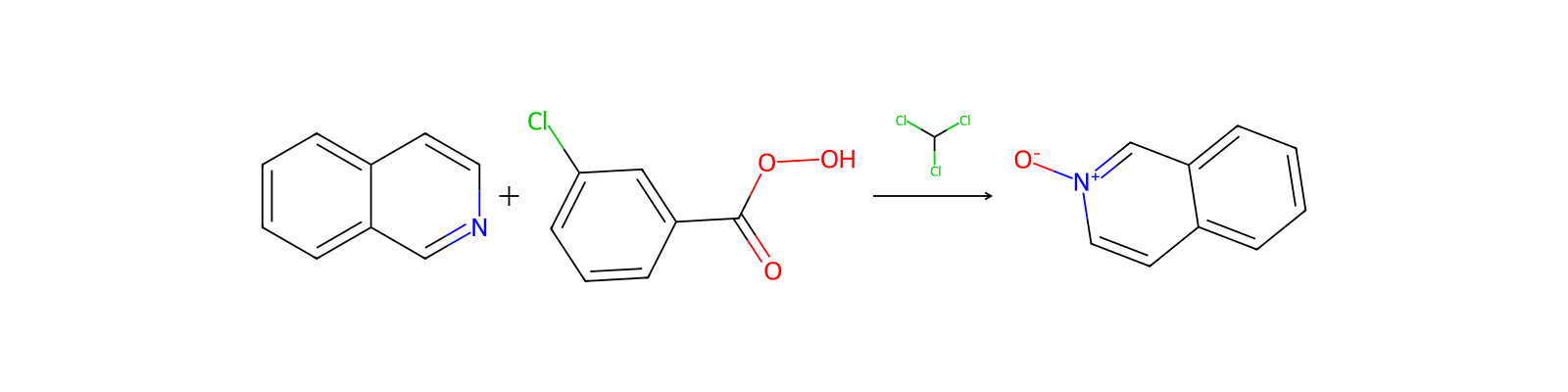
Metabolism/MetabolitesIsoquinoline has known human metabolites that include isoquinoline N-oxide.
Cellular LocationsCytoplasm

Uses & manufacturing

UsesPresent in coal tar; Used to make dyes, insecticides, antimalarials, and rubber accelerators; [Merck Index] Used as flavoring agent or adjuvant; [FDA]
U.S. Production2023: 25,000,000 - <75,000,000 lb
Industry UsesCatalyst
Use Classification · 5 items

Flavouring Agent -> FLAVOURING_AGENT -> JECFA Functional Classes

Flavoring Agents -> JECFA Flavorings Index

Flavouring Agent -> FLAVOURING_AGENT -> JECFA Functional Classes

Flavouring Agent -> FLAVOURING_AGENT -> JECFA Functional Classes

Flavouring Agent -> FLAVOURING_AGENT -> JECFA Functional Classes

General Manufacturing Information · 2 items

Plastics Material and Resin Manufacturing

Isoquinoline: ACTIVE

Applications · 3 items

DescriptionIsoquinoline, also known as 2-azanaphthalene, benzo[c]pyridine, or 2-benzanine, is a structural isomer of quinoline. It has structural and spectroscopic properties similar to quinoline. Isoquinoline was first isolated in 1885 by Hoogewerf and van Dorp from the quinoline fraction of coal tar by fractional crystallization. It is used to prepare dyes, insecticides, and antimalarial compounds, among other things.

UsesIsoquinolines are used in the manufacture of dyes, paints, insecticides and antifungals. It is also used as a solvent for the extraction of resins and terpenes, and as a corrosion inhibitor.Isoquinoline (isq) has been used:in the preparation of cis-[(dcbH2)2Ru(isq)2](ClO4)2 [dcbH2 = 4,4′-(CO2H)2-2,2′-bipyridine].to investigate the toxicity of three two-ring and five three-ring azaarenes to the green alga Scenedesmus acuminatus and its relationship with molecular structure.

Related reactions

279 records
New reaction record
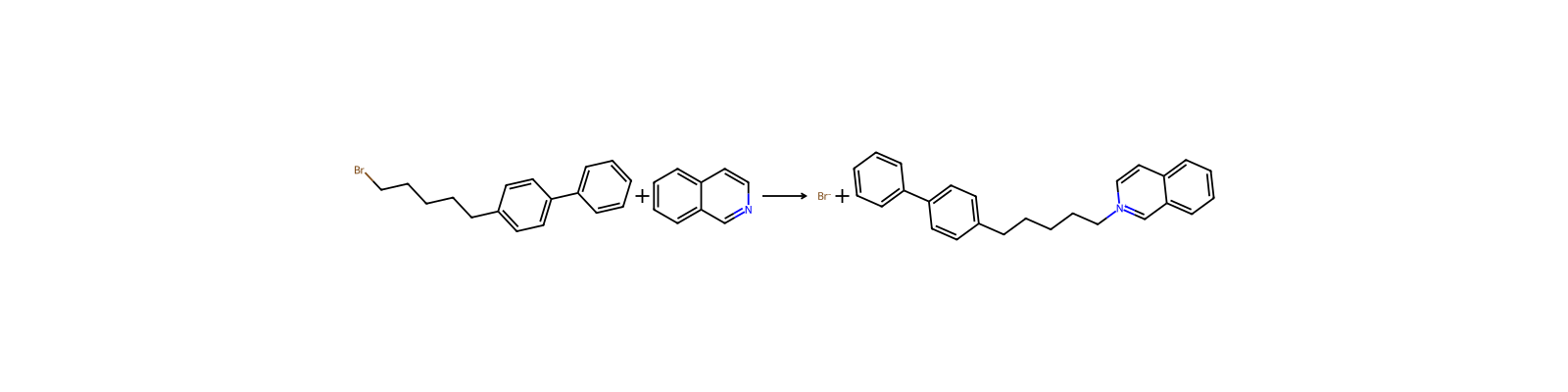
HRID 8710 reaction equation
HRID 8710As reactantuspto-grants-2006_08
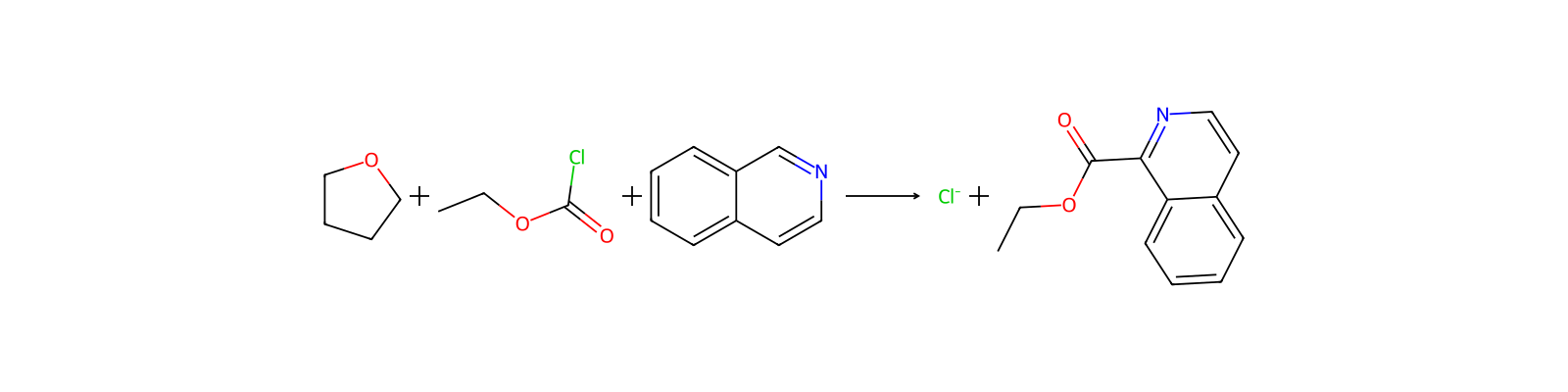
HRID 44819 reaction equation
HRID 44819As reactantuspto-grants-2013_09
HRID 48208 reaction equation
HRID 48208As reactantuspto-grants-2004_03
HRID 84355 reaction equation
HRID 84355As reactantuspto-grants-2014_09
HRID 116394 reaction equation
HRID 116394As reactantTraining data from https://doi.org/10.1039/C8SC04228D (2/10)
HRID 123662 reaction equation
HRID 123662As productTraining data from https://doi.org/10.1039/C8SC04228D (2/10)
HRID 134824 reaction equation
HRID 134824As reactantTraining data from https://doi.org/10.1039/C8SC04228D (9/10)
HRID 162609 reaction equation
HRID 162609As reactantTraining data from https://doi.org/10.1039/C8SC04228D (9/10)
Page 1 of 35

Compound notes

Loading…

On this pageBasic informationOverviewNames & identifiersPropertiesSafety & regulationChemistry & industryRelated reactionsCompound notes
More actions
New noteNew reactionRequest quotes
Melting Point
25.5 - 26 °C
Refractive Index1.621-1.627
Physical Description · 4 items

Liquid

Liquid or hygroscopic solid with a pungent odor like anise oil mixed with benzaldehyde; mp = 26.48 deg C; [Merck Index] Light brown; mp = 24-28 deg C; [Acros Organics MSDS]

Solid

Colourless liquid, hygroscopic platelets when solid; Heavy-sweet balsamic, herbaceous aroma

Physicochemical properties

Melting point
26 · 26-28 °C (lit.)
Boiling point
242 · 242-243 °C (lit.)
Density
1.099 g/mL · 1.099 g/mL at 25 °C (lit.)
vapor pressure
5 Pa · 5Pa at 20℃
FEMA
2978 · 2978 | ISOQUINOLINE
FLAVIS Number
14.001 · 14.001 | Isoquinoline
refractive index
20 · n20/D 1.623(lit.)
Flash point
225 °F · 225 °F
storage temp.
2 · 2-8°C
solubility
5 g/l · 5g/l
pka
5.42 · 5.42(at 20℃)
form
Low Melting Solid
color
Light brown
PH
7.5 · 7.5 (5g/l, H2O, 20℃)
Odor
0.1 % · at 0.10 % in triacetin. sweet balsam herbal benzaldehyde anise
Odor Type
balsamic
Water Solubility
practically insoluble
Specific Heat Capacity
1.52 J/ · Cp(liquid): 1.52 J/(g·K), at 25℃
JECFA Number
1303 · 1303
Merck
14 · 14,5222
BRN
107549 · 107549
Henry's Law Constant
5.2 · 5.2×10-2 mol/(m3Pa) at 25℃, Mackay et al. (2006)
Dielectric constant
10.7 · 10.7(20℃)
InChI
1S/C9H7N/c1-2-4-9-7-10-6-5-8(9)3-1/h1-7H
InChIKey
AWJUIBRHMBBTKR-UHFFFAOYSA-N
SMILES
c1ccc2cnccc2c1
LogP
2.08 · 2.08
Dissociation constant
5.19 at · 5.19 at 25℃
Substances Added to Food (formerly EAFUS)
ISOQUINOLINE
FDA 21 CFR
172.515 · 172.515
CAS DataBase Reference
119 · 119-65-3(CAS DataBase Reference)
EWG's Food Scores
1 · 1
FDA UNII
76 Y85M6 · JGX76Y85M6
NIST Chemistry Reference
Isoquinoline(119-65-3)
EPA Substance Registry System
Isoquinoline (119-65-3)
UNSPSC Code
85151701 · 85151701
NACRES
24 · NA.24
Symbol(GHS)
6 · GHS06
Signal word
Danger
Hazard statements
302 · H302-H311-H315-H319-H412
Precautionary statements
264 · P264-P273-P280-P301+P312-P302+P352+P312-P305+P351+P338
PPE
2 · Eyeshields, Faceshields, Gloves, type P2 (EN 143) respirator cartridges
Hazard Codes
T
Risk Statements
22 · 22-24-38-52/53-36/38-21/22-45
Safety Statements
36 · 36/37-45-36/37/39-61-53
RIDADR
2811 · UN 2811 6.1/PG 3
WGK Germany
2 · 2
RTECS
6825000 · NW6825000
TSCA
TSCA listed
HazardClass
6.1 · 6.1
PackingGroup
II
HS Code
29334900 · 29334900
Storage Class
6.1 C · 6.1C - Combustible acute toxic Cat.3toxic compounds or compounds which causing chronic effects
Hazard Classifications
3 DermalAcute · Acute Tox. 3 DermalAcute Tox. 4 OralAquatic Chronic 3Eye Irrit. 2Skin Irrit. 2
Toxicity
50 orally · LD50 orally in rats: 360 mg/kg (Smyth)
REACH Registrations
Active
Ranking: 454 (total points: 460.62)
USGS Health-Based Screening Levels for Evaluating Water-Quality · 3 items

Isoquinoline

Waste-water effluent contaminant

Smith, C.D. and Nowell, L.H., 2024. Health-Based Screening Levels for evaluating water-quality data (3rd ed.). DOI:10.5066/F71C1TWP

Safety data

PPE
Eyeshields, Faceshields, Gloves, type P2 (EN 143) respirator cartridges
wgk
2
tsca
TSCA listed
rtecs
NW6825000
ridadr
UN 2811 6.1/PG 3
hs_code
29334900
Toxicity
LD50 orally in rats: 360 mg/kg (Smyth)
risk_code
22-24-38-52/53-36/38-21/22-45
Signal word
Danger
Symbol(GHS)
GHS06
hazard_code
T
safety_code
36/37-45-36/37/39-61-53
hazard_class
6.1
Storage Class
6.1C - Combustible acute toxic Cat.3toxic compounds or compounds which causing chronic effects
packing_group
II
Hazard statements
H302-H311-H315-H319-H412
REACH Registrations
Active
Hazard Classifications
Acute Tox. 3 DermalAcute Tox. 4 OralAquatic Chronic 3Eye Irrit. 2Skin Irrit. 2
Precautionary statements
P264-P273-P280-P301+P312-P302+P352+P312-P305+P351+P338

General DescriptionIsoquinoline is one of the very few heterocyclic compounds in which numbering of the ring atoms does not start on the hetero atom.It consists of a benzene ring fused to the β- and Y-positions of a pyridine ring.Isoquinoline has an odor reminiscent of benzaldehyde and anise. Isoquinoline may be obtained from coal tar (238 - 250°C boiling fraction); it is isolated as the sulfate or as is by repeated freezing.

Preparation methods · 1 item

PreparationBischler-Napieralski synthesis is used to synthesize isoquinolines. β-phenylethylamine is acylated, and then cyclodehydrated using phosphoryl chloride, phosphorus pentoxide or other Lewis acids to yield dihydroisoquinoline, which can be aromatized by dehydrogenation with palladium, for example in the synthesis of papaverine, a pharmacologically active isoquinoline alkaloid.Pictet-Spengler synthesis is another method of preparing isoquinolines. β-phenylethylamine reacts with an aldehyde to produce an imine, which undergoes acid-catalysed cyclization, resulting in the synthesis of the tetrahydroisoquinoline system. Again, tetrahydroisoquinoline can be aromatized by palladium dehydrogenation to produce an isoquinoline system.

Upstream & downstream products

Upstream raw materials

COAL TARQuinaldine5-Methylquinoline3,4-Dihydro-2H-isoquinolin-1-one

Downstream products

8-AminoisoquinolineISOQUINOLINE N-OXIDEQuinolineFASUDIL1-IsoquinolinecarbonitrileIsoquinoline-4-carbaldehyde1-CYANO-2-BENZOYL-1,2-DIHYDROISOQUINOLINEDyestuff4-Bromo-1-chloroisoquinoline8-BromoisoquinolineISOQUINOLINE-5-SULFONYL CHLORIDELYCORINE4-Isoquinolineboronic acidQuinaldinePraziquantel5-Isoquinolinesulfonic acid5-Hydroxyisoquinoline
Additional notes · 1 item

DefinitionChEBI: Isoquinoline is an ortho-fused heteroarene that is a benzopyridine in which the N atom not directly attached to the benzene ring. It is a mancude organic heterobicyclic parent, an azaarene, an ortho-fused heteroarene and a member of isoquinolines.