1-Methylpyrrolidine
Completing data — refresh the page later to see the latest

Basic information
- CAS
120-94-5- Standard SMILES
CN1CCCC1- InChIKey
AVFZOVWCLRSYKC-UHFFFAOYSA-N- Molecular formula
- C5H11N
- Average molar mass
- 85.15 g/mol
- Monoisotopic mass
- 85.08914935
Overview
1-methylpyrrolidine is a member of the class of pyrrolidines that is pyrrolidine substituted by a methyl group at position 1. It has a role as an impurity, a solvent and an insect repellent. It is functionally related to a pyrrolidine.
Names & identifiers
- Preferred name
- 1-Methylpyrrolidine
- IUPAC
- 1-methylpyrrolidine
- English name
- 1-Methylpyrrolidine
- Molecular formula
- C5H11N
- Molecular weight
- 85.15
Names & synonyms
1-METHYLPYRROLIDINE120-94-5N-MethylpyrrolidinePyrrolidine, 1-methyl-N-MethyltetrahydropyrroleDTXSID804221006509TZU6CNSC-65579NSC-65DTXCID6022210RefChem:830788204-438-5
Show more names
1-methylPyrrolidine,1-methyl-NSC 655791-Methylpyrrodine1-methyl-pyrrolidincefepiMe iMpurity G
MethylpyrrolidinePYRROLIDINE, N-METHYLMFCD00003173Cefepime Impurity 1N-methyl pyrrolidinemethyl pyrrolidinePYRROLIDINE, N-METHYL-1-Methyl-pyrrolidine
Database identifiers
- CAS
120-94-5- PubChem CID
- 8454
- DTXSID
DTXSID8042210- ChEMBL
CHEMBL665- ChEBI
CHEBI:234043- UNII
- 06509TZU6C
- EC Number
- 204-438-5
- Nikkaji
- J102.087K
Properties
Computed structural propertiesFilling in
- XLogP
- 0.9
- Topological polar surface area
- 3.2 Ų
- Hydrogen bond donors
- 0
- Hydrogen bond acceptors
- 1
- Rotatable bonds
- 0
- Heavy atoms
- 6
- Formal charge
- 0
- Complexity
- 37.2
Experimental & physicochemical properties
Chemical Classes
Nitrogen Compounds -> Amines, Cyclic
Flammable agents - 3rd degree
DrugsPharmaceuticals -> Metabolite of Cefepime
CosmeticsSurfactant
SpringerMaterials Properties15N nuclear magnetic resonance spectrum
LogP0.92
Density0.8054 @25 °C
Flavoring AgentsEU Flavoring substances
Boiling Point80.5 °C @760 [mm Hg]
Melting Point-90 °C
Vapor Pressure100.0 [mmHg]
Physical DescriptionLiquid; [Alfa Aesar MSDS]
Safety & regulation
Safety information is for reference only and does not replace the supplier’s Safety Data Sheet (SDS), applicable regulations, or professional assessment.
GHS classification
GHS Classification
Danger
H225 (100%): Highly Flammable liquid and vapor [Danger Flammable liquids]
P210, P233, P240, P241, P242, P243, P260, P261, P264, P264+P265, P270, P271, P273, P280, P301+P316, P301+P317, P301+P330+P331, P302+P361+P354, P303+P361+P353, P304+P340, P305+P354+P338, P316, P317, P321, P330, P363, P370+P378, P391, P403+P235, P405, and P501 (click each P-code to see the statement)
Aggregated GHS information provided per 191 reports by companies from 10 notifications to the ECHA C&L Inventory. Each notification may be associated with multiple companies.
Hazard information
Regulatory Information
Chemical: Pyrrolidine, 1-methyl-
Commission Regulation (EC) No 1565/2000 (Repealed by Com. Implementing Reg. (EU) No 872/2012)
Status: Active Update: 01-07-2015 https://echa.europa.eu/registration-dossier/-/registered-dossier/11871
N-Methylpyrrolidine: Does not have an individual approval but may be used under an appropriate group standard
The New Jersey Worker and Community Right to Know Act requires public and private employers to provide information about hazardous substances at their workplaces. (N.J.S.A. 34:5A-1 et. seq.)
Hazards SummaryIntraperitoneal LD50 (mouse) = 178 mg/kg; [RTECS] Causes burns; Inhalation may cause corrosive injuries to upper respiratory tract and lungs; [Alfa Aesar MSDS]
Hazard Classes and Categories
Flam. Liq. 2 (100%)
Flammable agents - 3rd degree, Reactive agents - 1st degree
CSL Reaction Information
CSL00039
N-BROMOSUCCINIMIDE + 1-METHYL-2-PYRROLIDINONE + 1-METHYLPYRROLIDINE
Thermal runaway from ambient to >100°C
Chemistry & industry
Uses & manufacturing
UsesPermitted for use as an inert ingredient in non-food pesticide products; [EPA]
Use ClassificationCosmetics -> Surfactant
General Manufacturing InformationPyrrolidine, 1-methyl-: ACTIVE
Applications
Uses1-Methylpyrrolidine is a methylated pyrollidine and is involved as an essential part of the structure of cefipime. It is also an active component of cigarette smoke.
Preparation methods
Preparationn-methylpyrrolidine was successfully synthesized in an aqueous medium by using methylamine and 1,4-dibromobutane in the presence of catalyst k2co3 at a moderated temperature. here, n-methylpyrrolidine was firstly synthesized via the green chemistry process, in which both the water solvent and potassium carbonate catalyst were inexpensive and environmentally friendly. also, the reaction temperature was quite moderated at 90°C.green organic synthesis of n-methylpyrrolidine
Upstream & downstream products
Upstream raw materials
Downstream products
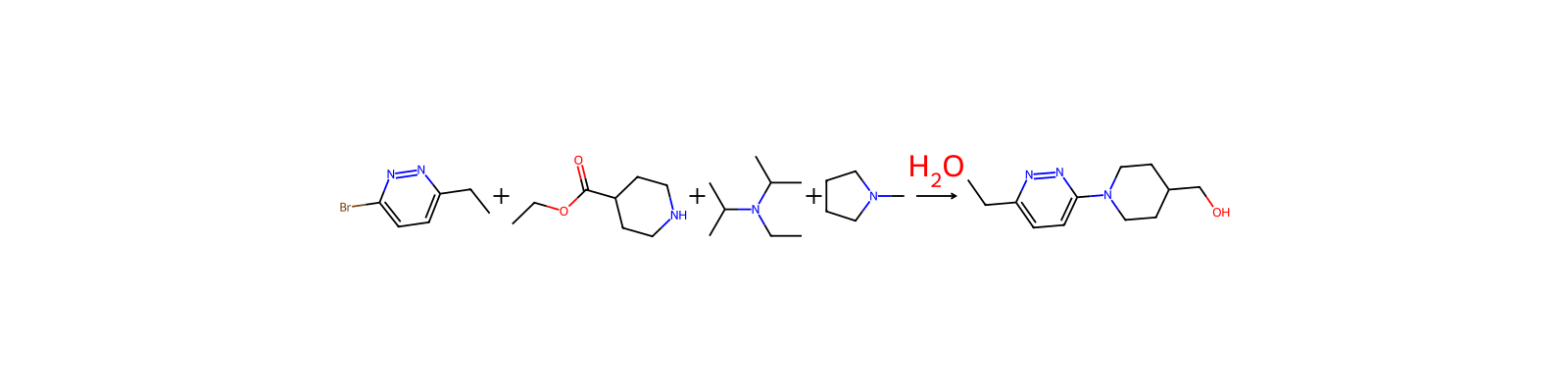
Related reactions
480 records


Compound notes
Loading…