

Basic information
- Standard SMILES
O=C1Nc2ccc(Cl)cc2C1=O- InChIKey
XHDJYQWGFIBCEP-UHFFFAOYSA-N- Molecular formula
- C8H4ClNO2
- Average molar mass
- 181.57 g/mol
- Monoisotopic mass
- 180.99305605
Overview
5-Chloro-1H-indole-2,3-dione is a member of indoles. It has a role as an anticoronaviral agent.
Names & identifiers
- Preferred name
- 5-chloro-1H-indole-2,3-dione
- IUPAC
- 5-chloro-1H-indole-2,3-dione
- English name
- 5-Chloroisatin
- Molecular formula
- C8H4ClNO2
- Molecular weight
- 181.58
Names & synonyms
5-Chloro-1H-indole-2,3-dione1H-Indole-2,3-dione, 5-chloro-NSC 135811EINECS 241-614-0DTXSID00170111RefChem:534322DTXCID10926021H-Indole-2,3-dione, 5-chloro-(9CI)241-614-0InChI=1/C8H4ClNO2/c9-4-1-2-6-5(3-4)7(11)8(12)10-6/h1-3H,(H,10,11,125-Chloroisatin17630-76-1
Show more names
CL039oroisatin5-choroisatin5-CHLORISATIDEAURORA KA-5424AKOS BBS-00000996BUTTPARK 50\07-91
5-chloroindoline-2,3-dione5-chloro-2,3-dihydro-1H-indole-2,3-dioneMFCD000145675-chlor-2,3-dioxoindolin5-chlorisatin5-CHLORO ISATIN2HQNSC135811
Database identifiers
- CAS
17630-76-1- PubChem CID
- 87203
- DTXSID
DTXSID00170111- ChEMBL
CHEMBL327012- ChEBI
CHEBI:149904- EC Number
- 241-614-0
- Nikkaji
- J287.098C
Properties
Computed structural properties
- XLogP
- 1.3
- Topological polar surface area
- 46.2 Ų
- Hydrogen bond donors
- 1
- Hydrogen bond acceptors
- 2
- Rotatable bonds
- 0
- Heavy atoms
- 12
- Formal charge
- 0
- Complexity
- 241
Experimental & physicochemical properties
SpringerMaterials PropertiesNuclear quadrupole resonance spectroscopy
Physicochemical properties
- Melting point
- 254 · 254-258 °C (lit.)
- Density
- 1.3743 · 1.3743 (rough estimate)
- refractive index
- 1.556 · 1.5560 (estimate)
- storage temp.
- Sealed in dry,Room Temperature
- pka
- 8.65 · 8.65±0.20(Predicted)
- form
- Powder
- Appearance
- Yellow to orange Solid
- Water Solubility
- insoluble
- BRN
- 383759 · 383759
- InChI
- InChI=1S/C8H4ClNO2/c9-4-1-2-6-5(3-4)7(11)8(12)10-6/h1-3H,(H,10,11,12)
- InChIKey
- XHDJYQWGFIBCEP-UHFFFAOYSA-N
- SMILES
- N1C2=C(C=C(Cl)C=C2)C(=O)C1=O
- CAS DataBase Reference
- 17630 · 17630-76-1(CAS DataBase Reference)
- UNSPSC Code
- 12352100 · 12352100
- NACRES
- 22 · NA.22
- Symbol(GHS)
- 7 · GHS07
- Signal word
- Warning
- Hazard statements
- 315 · H315-H319-H335
- Precautionary statements
- 261 · P261-P305+P351+P338
- target organs
- Respiratory system
- PPE
- 95 · dust mask type N95 (US), Eyeshields, Gloves
- Hazard Codes
- Xi
- Risk Statements
- 36 · 36/37/38
- Safety Statements
- 26 · 26-36
- WGK Germany
- 3 · 3
- Hazard Note
- Irritant
- HS Code
- 29339900 · 29339900
- Storage Class
- 11 · 11 - Combustible Solids
- Hazard Classifications
- 2 Skin · Eye Irrit. 2Skin Irrit. 2STOT SE 3
Safety & regulation
GHS classification
GHS Classification
Warning
H315 (97.7%): Causes skin irritation [Warning Skin corrosion/irritation]
P261, P264, P264+P265, P271, P280, P302+P352, P304+P340, P305+P351+P338, P319, P321, P332+P317, P337+P317, P362+P364, P403+P233, P405, and P501 (click each P-code to see the statement)
Aggregated GHS information provided per 43 reports by companies from 6 notifications to the ECHA C&L Inventory. Each notification may be associated with multiple companies.
Hazard information
Hazard Classes and CategoriesSkin Irrit. 2 (97.7%)
Safety data
- PPE
- dust mask type N95 (US), Eyeshields, Gloves
- wgk
- 3
- hs_code
- 29339900
- risk_code
- 36/37/38
- Signal word
- Warning
- Symbol(GHS)
- GHS07
- hazard_code
- Xi
- hazard_note
- Irritant
- safety_code
- 26-36
- Storage Class
- 11 - Combustible Solids
- target organs
- Respiratory system
- Hazard statements
- H315-H319-H335
- Hazard Classifications
- Eye Irrit. 2Skin Irrit. 2STOT SE 3
- Precautionary statements
- P261-P305+P351+P338
Chemistry & industry
Applications
Uses5-Chloroisatin is a reagent used in the synthesis of Schiff bases through the reaction with 2-methyl-4-nitroaniline or 4-amino-4,5-dihydro-1H-1,2,3-triazole-5-one.
General Description5-Chloroisatin reacts with substituted 4-amino-4,5-dihydro-1H-1,2,4-triazole-5-ones to yield Schiff bases.
Upstream & downstream products
Upstream raw materials
Downstream products
Suppliers50 total
国药集团化学试剂有限公司86-21-63210123 · [email protected]
郑州阿尔法化工有限公司+86-18530059196 · [email protected]
上海阿拉丁生化科技股份有限公司400-6206333 13167063860 · [email protected]
Baoji Guokang Healthchem co.,ltd+8615604608665 15604608665 · [email protected]
武汉科美沃化工有限公司+86-2785736489 +8618171418573 · [email protected]
上海赫文斯化工有限公司15721252604 17321035817 · [email protected]
Dayang Chem (Hangzhou) Co.,Ltd.+86-0571-88938639 17705817739 · [email protected]
上海弘顺生物科技有限公司15901914505 · [email protected]
韶远科技(上海)有限公司021-50795510 4000665055 · [email protected]
科瑞迪化学400-821-5857 021-64326257 · [email protected]
上海拓磊化学试剂有限公司86-021-50318510
Syntechem Co.,Ltd[email protected]
上海迈瑞尔生化科技有限公司4006356688 18621169109 · [email protected]
武汉易泰科技有限公司上海分公司18930552037 · [email protected]
阿法埃莎(中国)化学有限公司400-6106006 · [email protected]
安耐吉化学&3A(安徽泽升科技股份有限公司)400-0056266 · [email protected]
武汉凯威斯科技有限公司86-027-67849912 · [email protected]
上海瀚鸿科技股份有限公司021-54306202 13764082696 · [email protected]
上海相辉医药科技有限公司13761987713 · [email protected]
上海景颜化工科技有限公司13817811078 · [email protected]
上海保信化学有限公司+86-021-37788663
上海隆盛化工有限公司58099637 13585536065 · [email protected]
上海攀鸿化工科技有限公司021-56491756 13512199871 · [email protected]
苏州施亚生物科技有限公司86(512)5235 8471 17715136450 · [email protected]
玛雅试剂+86 (573) 82222445 (0)18006601000 452520369 · [email protected]
上海耐士化工科技有限公司400-188-0725 +86 21 34310725 13611771617
天津希恩思生化科技有限公司400 638 7771 · [email protected]
斯百全化学(上海)有限公司021-021-021-67601398-809-809-809 15221380277 · [email protected]
上海思域化工科技有限公司86-21-34053660 · [email protected]
上海特伯化学科技有限公司+86-21-60341587 · [email protected]
深圳康特腾科技有限公司86-0755-86635001 · [email protected]
越林试剂021-62960152 · [email protected]
Clearsynth Labs Limited+91-22-26355700 · [email protected]
无锡中坤生化科技有限公司+86 0510-85629785
郑州鸿晟医药科技有限公司0371-0371-13526885213 15637198702 · [email protected]
成都零六生物科技有限公司400-1166-196 13458535857 · [email protected]
雷丁试剂0510-85629785 18013409632 · [email protected]
上海御略医药科技有限公司021-60345187 13671753212 · [email protected]
上海洽凡生化科技有限公司+86-021-61654350 · [email protected]
上海有朋化工有限公司021-69005955 13701776567 · [email protected]
北京海力扬化学科技有限公司13718199399 · [email protected]
四川海诺威科技有限公司13708085536 13708085536 · [email protected]
江苏艾康生物医药研发有限公司025-66028182 17714375163 · [email protected]
上海凯赛化工有限公司021-33516722 13701817765 · [email protected]
上海彤源化工有限公司021-021-69182866 13701855675 · [email protected]
上海孚一生物科技有限公司+86 (21) 61124340
上海蓝润化学有限公司021-69515658 ; 69515628 13701998368 · [email protected]
上海容立化学科技有限公司021-69992220 13701886816 · [email protected]
上海康拓化工有限公司021-69185552 13701777608 · [email protected]
上海皓骏医药科技有限公司021-34621078 13120882795 · [email protected]
Additional notes
DefinitionChEBI: 5-Chloro-1H-indole-2,3-dione is a member of indoles. It has a role as an anticoronaviral agent.
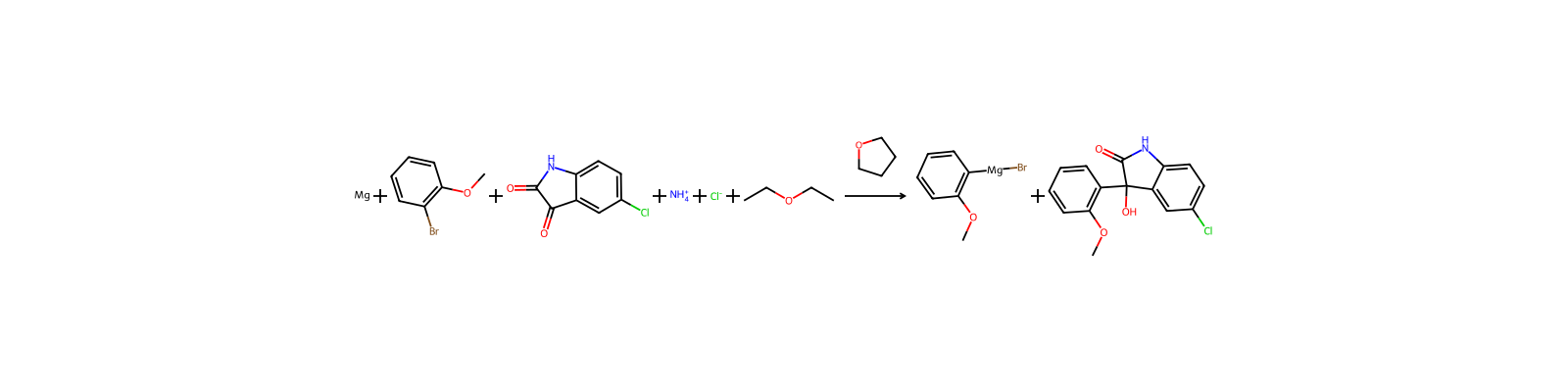
Related reactions
208 records



Linked notes
Loading…