HomeMCPWorkbenchSkills
HomeWorkbenchNotificationsMe
llms.txt · MCP GuidePrivacy Policy · Terms of Service · Supportv1.8.0
  1. Home
  2. /Compound

Aminoethylpiperazine

HCID 8795
New noteNew reactionRequest quotes
Print preview

Completing data — refresh the page later to see the latest

Basic informationOverviewNames & identifiersPropertiesSafety & regulationChemistry & industryRelated reactionsCompound notes
Substructure searchFind similar structures

Basic information

CAS
140-31-8
Standard SMILES
NCCN1CCNCC1
InChIKey
IMUDHTPIFIBORV-UHFFFAOYSA-N
Molecular formula
C6H15N3
Average molar mass
129.2 g/mol
Monoisotopic mass
129.12659748

Overview

N-aminoethylpiperazine appears as a colorless liquid with a faint fishlike odor. Flash point 199 °F. Corrosive to tissue. Toxic oxides of nitrogen are produced by combustion.

Names & identifiers

Preferred name
Aminoethylpiperazine
IUPAC
2-piperazin-1-ylethanamine
English name
N-Aminoethylpiperazine
Molecular formula
C6H15N3
Molecular weight
129.2

Names & synonyms

Aminoethylpiperazine1-AMINOETHYLPIPERAZINEmonoaminoethylpiperazineRefChem:8290281-MAEP140-31-8N-(2-Aminoethyl)piperazine1-(2-Aminoethyl)piperazineN-Aminoethylpiperazine2-(piperazin-1-yl)ethanamine1-Piperazineethanamine2-piperazin-1-ylethanamine
Show more names
AEPN-AEPPRSC1D.E.H. 39usafdo-46
Piperazineethanamine1-PiperazineethylaminePiperazine, 1-(2-aminoethyl)-USAF DO-462-Piperazinylethylamine2-(1-Piperazinyl)ethylamine2-Piperazin-1-ylethylamine2-(piperazin-1-yl)ethan-1-amine

Database identifiers

CAS
140-31-8、28631-79-0
PubChem CID
8795
DTXSID
DTXSID2021997
ChEMBL
CHEMBL209790
UNII
I86052F9F6
EC Number
205-411-0、608-228-8
Nikkaji
J35.446E

Properties

Computed structural propertiesFilling in

XLogP
-1.3
Topological polar surface area
41.3 Ų
Hydrogen bond donors
2
Hydrogen bond acceptors
3
Rotatable bonds
2
Heavy atoms
9
Formal charge
0
Complexity
68.7

Experimental & physicochemical properties

Chemical Classes · 2 items

Nitrogen Compounds -> Piperazines

Corrosives

SpringerMaterials PropertiesBoiling point
Density · 3 items

0.9852 at 68 °F (USCG, 1999) - Less dense than water; will float

0.985 g/cu cm at 25 °C

0.985 @25 °C

Color/FormLight-colored liquid
SolubilitySoluble in water
Flash Point · 3 items

200 °F (USCG, 1999)

93 °C

200 °F (93 °C) open cup

Boiling Point · 3 items

428 °F at 760 mmHg (USCG, 1999)

220 °C

222 °C @760 [mm Hg]

DecompositionWhen heated to decomposition it emits toxic fumes of /nitric oxides/.
Melting Point · 3 items

Safety & regulation

Safety information is for reference only and does not replace the supplier’s Safety Data Sheet (SDS), applicable regulations, or professional assessment.

GHS classification

GHS Classification · 6 items

Danger

H302: Harmful if swallowed [Warning Acute toxicity, oral]

P260, P261, P264, P270, P272, P273, P280, P301+P317, P301+P330+P331, P302+P352, P302+P361+P354, P304+P340, P305+P354+P338, P316, P317, P321, P330, P333+P317, P362+P364, P363, P405, and P501 (click each P-code to see the statement)

Danger

H302 (94.3%): Harmful if swallowed [Warning Acute toxicity, oral]

P260, P261, P262, P264, P264+P265, P270, P272, P273, P280, P301+P317, P301+P330+P331, P302+P352, P302+P361+P354, P304+P340, P305+P354+P338, P316, P317, P321, P330, P333+P317, P361+P364, P362+P364, P363, P405, and P501 (click each P-code to see the statement)

Hazard information

Regulatory Information · 4 items

Chemical: 1-Piperazineethanamine

1-Piperazineethanamine is listed on the EPA's Chemical Data Reporting (CDR) system. Manufacturers and importers of 1-Piperazineethanamine are required to report information about their production and use of this chemical to the EPA under the Toxic Substances Control Act (TSCA). (40 eCFR Part 711)

Status: Active Update: 15-12-2021 https://echa.europa.eu/registration-dossier/-/registered-dossier/16054

The New Jersey Worker and Community Right to Know Act requires public and private employers to provide information about hazardous substances at their workplaces. (N.J.S.A. 34:5A-1 et. seq.)

DOT LabelCorrosive Poison
Fire Hazards · 2 items

Special Hazards of Combustion Products: Toxic fumes of NO x (USCG, 1999)

· Combustible material: may burn but does not ignite readily.

Health Hazards · 2 items

INHALATION: Burning sensation, coughing, wheezing, laryngitis, shortness of breath, headache, nausea, and vomiting. EYES AND SKIN: Extremely destructive to mucous membranes, upper respiratory tract, eyes and skin. Causes burns on short contact. (USCG, 1999)

Chemistry & industry

Uses & manufacturing

Uses · 5 items

Used as an epoxy curing agent and chemical intermediate for pharmaceuticals, anthelmintics, and surface-active agents; [HSDB] Used as an epoxy resin hardener; [Sullivan, p. 473]

Plastic Composites Manufacturing [Category: Industry]

Epoxy curing agent; intermediate for pharmaceuticals; anthelmintics, surface-active agents; synthetic fibers

Has been used in past as corrosion inhibitor and as an asphalt additive.

Main use as epoxy resin curing agent, where expected to be incorporated into resin, with very low concentrations of unreacted product.

U.S. Production · 4 items

2023: 8,500,000 - <10,000,000 lb

1-Piperazineethanamine is listed as a High Production Volume (HPV) chemical (65FR81686). Chemicals listed as HPV were produced in or imported into the U.S. in >1 million pounds in 1990 and/or 1994. The HPV list is based on the 1990 Inventory Update Rule. (IUR) (40 CFR part 710 subpart B; 51FR21438).

Production volumes for non-confidential chemicals reported under the Inventory Update Rule. [Table#5472]

Production volume for non-confidential chemicals reported under the 2006 Inventory Update Rule. Chemical: 1-Piperazineethanamine. Aggreated National Production Volume: 10 to < 50 million lbs.

Industry UsesCBI
Methods of ManufacturingReaction of ethylene dichloride with NH3, neutralization with NaOH and salt removal. Separation of N-aminoethylpiperazine by fractionated distillation. Manufacturing process completely closed.
Household ProductsInformation on 16 consumer products that contain Aminoethylpiperazine in the following categories is provided:
General Manufacturing Information · 3 items

CBI

1-Piperazineethanamine: ACTIVE

Alkyl mercury compounds have been used as seed disinfectants and for fungicides. They have also been used in organic synthesis. /Mercury alkyl compounds/

Applications

Related reactions

59 records
New reaction record
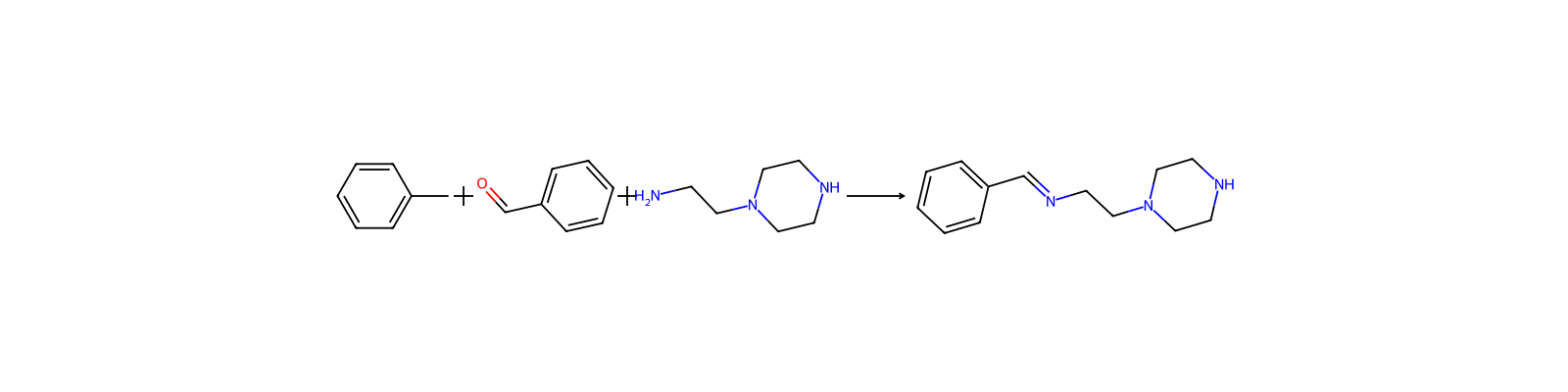
HRID 132895 reaction equation
HRID 132895As reactantuspto-grants-2008_06
HRID 172726 reaction equation
HRID 172726As reactantTraining data from https://doi.org/10.1039/C8SC04228D (9/10)
HRID 180757 reaction equation
HRID 180757As reactantTraining data from https://doi.org/10.1039/C8SC04228D (6/10)
HRID 201110 reaction equation
HRID 201110As reactantTraining data from https://doi.org/10.1039/C8SC04228D (6/10)
HRID 249034 reaction equation
HRID 249034As reactantuspto-grants-1993_05
HRID 260910 reaction equation
HRID 260910As reactantuspto-grants-1996_06
HRID 271747 reaction equation
HRID 271747As reactantuspto-grants-2008_11
HRID 323997 reaction equation
HRID 323997As reactantuspto-grants-2001_04
Page 1 of 8

Compound notes

Loading…

On this pageBasic informationOverviewNames & identifiersPropertiesSafety & regulationChemistry & industryRelated reactionsCompound notes
More actions
New noteNew reactionRequest quotes

-2 °F (USCG, 1999)

FP: 17.6 °C

-20 °C

Vapor Density4.4 (Air = 1)
Odor ThresholdOdor Threshold Low: 0.1 [ppm]
Vapor Pressure · 2 items

0.04 [mmHg]

0.04 [mm Hg] @20 °C

Physicochemical properties

Melting point
-19 °C · -19 °C
Boiling point
218 · 218-222 °C(lit.)
Density
0.985 g/mL · 0.985 g/mL at 25 °C(lit.)
vapor density
4.4 · 4.4 (vs air)
vapor pressure
0.05 mm · 0.05 mm Hg ( 20 °C)
refractive index
20 · n20/D 1.500
Flash point
200 °F · 200 °F
storage temp.
30 °C · Store below +30°C.
solubility
1000 g/l · >1000g/l
form
Liquid
pka
10.11 · 10.11±0.10(Predicted)
color
Clear colorless to slightly yellow
PH
12 · 12 (100g/l, H2O, 20℃)
explosive limit
2.1 · 2.1-10.5%(V)
Water Solubility
soluble
Sensitive
Air Sensitive
BRN
104363 · 104363
Henry's Law Constant
1.5 · 1.5×107 mol/(m3Pa) at 25℃, HSDB (2015)
Stability
Stable. Flammable. Incompatible with acids, acid anhydrides, acid chlorides, strong oxidizing agents, chloroformates.
InChI
1S/C6H15N3/c7-1-4-9-5-2-8-3-6-9/h8H,1-7H2
InChIKey
IMUDHTPIFIBORV-UHFFFAOYSA-N
SMILES
NCCN1CCNCC1
LogP
-1.48 at · -1.48 at 20℃
CAS DataBase Reference
140 · 140-31-8(CAS DataBase Reference)
FDA UNII
86052 F9F6 · I86052F9F6
NIST Chemistry Reference
N-(2-Aminoethyl)piperazine(140-31-8)
EPA Substance Registry System
1 · 1-Piperazineethanamine (140-31-8)
UNSPSC Code
12352100 · 12352100
NACRES
22 · NA.22
Symbol(GHS)
5 · GHS05,GHS06
Signal word
Danger
Hazard statements
311 · H311-H302-H314-H317-H412-H227
Precautionary statements
501 · P501-P273-P272-P270-P261-P210-P264-P280-P370+P378-P361+P364-P303+P361+P353-P333+P313-P301+P330+P331-P301+P312+P330-P304+P340+P310-P305+P351+P338+P310-P403+P235-P405
PPE
Faceshields, Gloves, Goggles, type ABEK (EN14387) respirator filter
Hazard Codes
C
Risk Statements
21 · 21/22-34-43-52/53
Safety Statements
26 · 26-36/37/39-45-61
RIDADR
2815 · UN 2815
WGK Germany
2 · 2
RTECS
8050000 · TK8050000
Autoignition Temperature
315 °C · 315 °C
TSCA
TSCA listed
HazardClass
8 · 8
PackingGroup
III
HS Code
29335995 · 29335995
Storage Class
6.1 C · 6.1C - Combustible acute toxic Cat.3toxic compounds or compounds which causing chronic effects
Hazard Classifications
3 DermalAcute · Acute Tox. 3 DermalAcute Tox. 4 OralAquatic Chronic 3Skin Corr. 1BSkin Sens. 1
Hazardous Substances Data
140 · 140-31-8(Hazardous Substances Data)
Toxicity
50 orally · LD50 orally in Rabbit: 1470 mg/kg
REACH Registrations
Active
Limited Quantities
5 L · 5.0 L (1.3 gallons) (liquid) or 5.0 kg (11 lbs) (solid)
Excepted Quantities
Max Inner Pack (30g or 30ml) and Max Outer Pack (1Kg or 1L)

· TOXIC and/or CORROSIVE; inhalation, ingestion or skin contact with material may cause severe injury or death.

Hazards SummaryLiquid causes second or third degree burns after short contact. [CHRIS] Pulmonary edema may result from inhalation of high concentrations. [NJ-HSFS] Can cause coughing, wheezing, and shortness of breath if inhaled; [CAMEO]
DOT ID and Guide2815 153
Reactive GroupAmines, Phosphines, and Pyridines
Special Reports · 2 items

European Commission, ESIS; IUCLID Dataset, 1-Aminoethylpiperazine (140-31-8) (2000 CD-ROM Edition) contains information on use, toxicology, and environmental effects of this chemical as supplied to the European Union by industry.[Available from, as of February 8, 2009: http://esis.jrc.ec.europa.eu/]

Organisation for Economic Cooperation and Development; Screening Information Data Set for Aminoethylpiperazine, CAS No. 140-31-8 (December 2005). This OECD Initial Assessment of HPV Chemicals is part of a series of OECD SIDS documents published by UNEP Chemicals to facilitate the access to information needed for health and environmental risk assessments of chemicals.

Reactivity Profile · 1 item

N-AMINOETHYLPIPERAZINE neutralizes acids to form salts plus water in exothermic reactions. May be incompatible with isocyanates, halogenated organics, peroxides, phenols (acidic), epoxides, anhydrides, and acid halides. Flammable gaseous hydrogen is generated in combination with strong reducing agents, such as hydrides.

DOT Emergency Guidelines · 5 items

/GUIDE 153: SUBSTANCES - TOXIC and/or CORROSIVE (Combustible)/ Fire or Explosion: Combustible material: may burn but does not ignite readily. When heated, vapors may form explosive mixtures with air: indoors, outdoors and sewers explosion hazards. Those substances designated with a (P) may polymerize explosively when heated or involved in a fire. Contact with metals may evolve flammable hydrogen gas. Containers may explode when heated. Runoff may pollute waterways. Substance may be transported in a molten form.

/GUIDE 153: SUBSTANCES - TOXIC and/or CORROSIVE (Combustible)/ Health: TOXIC; inhalation, ingestion or skin contact with material may cause severe injury or death. Contact with molten substance may cause severe burns to skin and eyes. Avoid any skin contact. Effects of contact or inhalation may be delayed. Fire may produce irritating, corrosive and/or toxic gases. Runoff from fire control or dilution water may be corrosive and/or toxic and cause pollution.

/GUIDE 153: SUBSTANCES - TOXIC and/or CORROSIVE (Combustible)/ Public Safety: CALL Emergency Response Telephone Number on Shipping Paper first. If Shipping Paper not available or no answer, refer to appropriate telephone number listed on the inside back cover. As an immediate precautionary measure, isolate spill or leak area in all directions for at least 50 meters (150 feet) for liquids and at least 25 meters (75 feet) for solids. Keep unauthorized personnel away. Stay upwind. Keep out of low areas. Ventilate enclosed areas.

/GUIDE 153: SUBSTANCES - TOXIC and/or CORROSIVE (Combustible)/ Protective Clothing: Wear positive pressure self-contained breathing apparatus (SCBA). Wear chemical protective clothing that is specifically recommended by the manufacturer. It may provide little or no thermal protection. Structural firefighters' protective clothing provides limited protection in fire situations ONLY; it is not effective in spill situations where direct contact with the substance is possible.

For more DOT Emergency Guidelines (Complete) data for N-(2-Aminoethyl)piperazine (8 total), please visit the HSDB record page.

DOT Hazard Classification · 5 items

N-Aminoethylpiperazine

UN2815

Class 8 Corrosive material (49 eCFR § 173.136)

Class 8 Corrosive material (49 eCFR § 173.136)

PG III: the degree of danger presented by the material is minor

Air and Water ReactionsWater soluble.

Safety & protection

Fire FightingExcerpt from ERG Guide 153 [Substances - Toxic and/or Corrosive (Combustible)]:
Accidental Release Measures · 2 items

· CALL 911. Then call emergency response telephone number on shipping paper. If shipping paper not available or no answer, refer to appropriate telephone number listed on the inside back cover.

· ELIMINATE all ignition sources (no smoking, flares, sparks or flames) from immediate area.

First Aid · 2 items

INHALATION: Remove to fresh air; if not breathing, give artificial respiration; if breathing difficult, give oxygen.

General First Aid:

Exposure Control and Personal Protection· Wear positive pressure self-contained breathing apparatus (SCBA).
Fire Fighting Procedures · 2 items

If material on fire or involved in fire: Do not extinguish fire unless flow can be stopped. Use water in flooding quantities as fog. Cool all affected containers with flooding quantities of water. Apply water from as far a distance as possible. Solid streams of water may be ineffective. Use "alcohol" foam, dry chemical, or carbon dioxide.

Wear positive pressure self-contained breathing appartus when fighting fires involving this material.

Storage ConditionsKeep container tightly closed in a dry and well-ventilated place. Containers which are opened must be carefully resealed and kept upright to prevent leakage.
Cleanup Methods · 1 item

Use personal protective equipment. Avoid breathing vapors, mist or gas. Ensure adequate ventilation. Evacuate personnel to safe areas. Do not let product enter drains. Discharge into the environment must be avoided. Soak up with inert absorbent material and dispose of as hazardous waste. Keep in suitable, closed containers for disposal.

Nonfire Spill ResponseExcerpt from ERG Guide 153 [Substances - Toxic and/or Corrosive (Combustible)]:
Disposal Methods · 2 items

Disposal of N-aminoethylpiperazine only via incineration at federal approved incinerators.

This combustible material may be burned in a chemical incinerator equipped with an afterburner and scrubber. Observe all federal, state, and local environmental regulations. Contact a licensed professional waste disposal service to dispose of this material.

Preventive Measures · 4 items

If material not on fire and not involved in fire: Keep sparks, flames, and other sources of ignition away. Keep material out of water sources and sewers. Build dikes to contain flow as necessary.

Personnel protection: Avoid breathing vapors. Keep upwind. Avoid bodily contact with the material ... Do not handle broken packages unless wearing appropriate personal protective equipment. Wash away any material with may have contacted the body with copious amounts of water or soap and water ... If contact with the material anticipated, wear appropriate chemical protective clothing.

Environmental considerations - land spill: Dig a pit, pond, lagoon, holding area to contain liquid or solid material. /SRP: If time permits, pits, ponds, lagoons, soak holes, or holding areas should be sealed with an impermeable flexible membrane liner./ Dike surface flow using soil, sand bags, foamed polyurethane, or foamed concrete. Absorb bulk liquid with fly ash, cement powder, or commercial sorbents.

Avoid contact with skin and eyes. Avoid inhalation of vapor or mist. Keep away from sources of ignition - No smoking. Take measures to prevent the build up of electrostatic charge.

Isolation and Evacuation · 2 items

Excerpt from ERG Guide 153 [Substances - Toxic and/or Corrosive (Combustible)]:

Immediate precautionary measure

Protective Action Criteria (PAC) · 3 items

6.3 [mg/m3]

69 [mg/m3]

420 [mg/m3]

Toxicology

Ecotoxicity Values · 1 item

LC50; Species: Pimephales promelas (Fathead minnow, age 31 days, mean length 21.0 mm, mean weight 0.147 g); Conditions: flow through, 25.1 °C, pH 7.66, hardness 37.8 mg/L CaCO3, alkalinity 92.0 mg/L CaCO3, dissolved oxygen 6.1 mg/L; Concentration: 2190 mg/L for 96 hr (95% confidence limit: 1950-2460 mg/L) /97% purity/

Environmental Fate · 3 items

TERRESTRIAL FATE: Based on a classification scheme(1), an estimated Koc value of 43(SRC), determined from a structure estimation method(2), indicates that N-(2-aminoethyl)piperazine is expected to have very high mobility in soil(SRC). However, N-(2-aminoethyl)piperazine will exist primarily as a cation in the environment, and cations are expected to adsorb more strongly to soils containing organic carbon and clay than their neutral counterparts(3), suggesting that mobility may be much lower in some soils(SRC). Volatilization of N-(2-aminoethyl)piperazine from moist soil surfaces is not expected to be an important fate process(SRC) given an estimated Henry's Law constant of 6.6X10⁻¹³ atm-cu m/mole(SRC), using a fragment constant estimation method(4). N-(2-Aminoethyl)piperazine is not expected to volatilize from dry soil surfaces(SRC) based upon an estimated vapor pressure of 6.6X10⁻² mm Hg at 25 °C(SRC), determined from a fragment constant method(5). Utilizing the Japanese MITI test, 0-1% of the theoretical BOD was reached in 4 weeks(6) indicating that biodegradation is not an important environmental fate process in soil(SRC).

AQUATIC FATE: Based on a classification scheme(1), an estimated Koc value of 43(SRC), determined from a structure estimation method(2), indicates that N-(2-aminoethyl)piperazine is not expected to adsorb to suspended solids and sediment(SRC). However, N-(2-aminoethyl)piperazine will exist primarily as a cation in the environment, and cations are expected to adsorb more strongly to soils containing organic carbon and clay than their neutral counterparts(3), suggesting that mobility may be much lower in some soils(SRC). Volatilization from water surfaces is not expected(4) based upon an estimated Henry's Law constant of 6.6X10⁻¹³ atm-cu m/mole(SRC), developed using a fragment constant estimation method(5). According to a classification scheme(6), an estimated BCF of 3(SRC), from an estimated log Kow of -1.6(7) and a regression-derived equation(8), suggests the potential for bioconcentration in aquatic organisms is low(SRC). Utilizing the Japanese MITI test, 0-1% of the theoretical BOD was reached in 4 weeks(9) indicating that biodegradation is not an important environmental fate process in water(SRC).

ATMOSPHERIC FATE: According to a model of gas/particle partitioning of semivolatile organic compounds in the atmosphere(1), N-(2-aminoethyl)piperazine, which has an estimated vapor pressure of 6.6X10⁻² mm Hg at 25 °C(SRC), determined from a fragment constant method(2), is expected to exist solely as a vapor in the ambient atmosphere. Vapor-phase N-(2-aminoethyl)piperazine is degraded in the atmosphere by reaction with photochemically-produced hydroxyl radicals(SRC); the half-life for this reaction in air is estimated to be 1.8 hrs(SRC), calculated from its rate constant of 2.1X10⁻¹⁰ cu cm/molecule-sec at 25 °C(SRC) that was derived using a structure estimation method(3). N-(2-Aminoethyl)piperazine does not contain chromophores that absorb at wavelengths >290 nm(4) and therefore is not expected to be susceptible to direct photolysis by sunlight(SRC).

Adverse EffectsDermatotoxin - Skin burns.
Soil Adsorption/Mobility · 1 item

Using a structure estimation method based on molecular connectivity indices(1), the Koc of N-(2-aminoethyl)piperazine can be estimated to be 43(SRC). According to a classification scheme(2), this estimated Koc value suggests that N-(2-aminoethyl)piperazine is expected to have very high mobility in soil. However, N-(2-aminoethyl)piperazine will exist primarily as a cation in the environment, and cations are expected to adsorb more strongly to soils containing organic carbon and clay than their neutral counterparts(3), suggesting that mobility may be much lower in some soils(SRC).

Human Toxicity Excerpts · 3 items

/SIGNS AND SYMPTOMS/ Strong irritant to tissue.[Lewis RJ Sr; Hawley's Condensed Chemical Dictionary 15th ed Wiley (2007)

/SIGNS AND SYMPTOMS/ Inhalation: May be harmful if inhaled. Material is extremely destructive to the tissue of the mucous membranes and upper respiratory tract. Skin: Toxic if absorbed through skin. Causes skin burns. Eyes: Causes eye burns. Ingestion: May be harmful if swallowed. Causes burns.

/GENOTOXICITY/ Clastogenic activity /d-1-aminoethylpiperazine/ in cultured human lymphocytes was measured without S-9 mix at 100, 200, 300, and 400 ug/mL; and with S-9 mix (24 and 48 hr sampling times) at 200, 400, 800, and 900 ug/m. Results were negative.

Artificial Pollution Sources · 1 item

N-(2-Aminoethyl)piperazine's production and use as an epoxy curing agent, intermediate for pharmaceuticals, anthelmintics, surface-active agents, and synthetic fibers(1) may result in its release to the environment through various waste streams(SRC).

Environmental Biodegradation · 1 item

AEROBIC: N-(2-Aminoethyl)piperazine, present at 100 mg/L, reached 0-1% of its theoretical BOD (one test result resulted in -1% theoretical BOD indicating toxicity) in 4 weeks using an activated sludge inoculum at 30 mg/L in the Japanese MITI test(1).

Environmental Bioconcentration · 1 item

An estimated BCF of 3 was calculated in fish for N-(2-aminoethyl)piperazine(SRC), using an estimated log Kow of -1.6(1) and a regression-derived equation(2). According to a classification scheme(3), this BCF suggests the potential for bioconcentration in aquatic organisms is low(SRC).

Volatilization from Water/Soil · 1 item

The Henry's Law constant for N-(2-aminoethyl)piperazine is estimated as 6.6X10⁻¹³ atm-cu m/mole(SRC) using a fragment constant estimation method(1). This Henry's Law constant indicates that N-(2-aminoethyl)piperazine is expected to be essentially nonvolatile from water surfaces(2). N-(2-Aminoethyl)piperazine is not expected to volatilize from dry soil surfaces(SRC) based upon an estimated vapor pressure of 6.6X10⁻² mm Hg(SRC), determined from a fragment constant method(3).

Non-Human Toxicity Excerpts · 5 items

/LABORATORY ANIMALS: Acute Exposure/ Draize test /in rabbits (strain unidentified),/ 24 hour exposure time. Skin necrosis observed. Draize score 8.0/8.0 obtained using original Draize classification.

/LABORATORY ANIMALS: Acute Exposure/ 5 mg, 24 hour dermal exposure in rabbits (strain unidentified). Results: severe irritation.

/LABORATORY ANIMALS: Acute Exposure/ 100 ug open application to rabbit skin, 24 hour exposure. Results: Necrosis observed.

/LABORATORY ANIMALS: Acute Exposure/ Moderately irritating to rabbit eyes (strain not identified).

For more Non-Human Toxicity Excerpts (Complete) data for N-(2-Aminoethyl)piperazine (12 total), please visit the HSDB record page.

Environmental Abiotic Degradation · 1 item

The rate constant for the vapor-phase reaction of N-(2-aminoethyl)piperazine with photochemically-produced hydroxyl radicals has been estimated as 2.1X10⁻¹⁰ cu cm/molecule-sec at 25 °C(SRC) using a structure estimation method(1). This corresponds to an atmospheric half-life of about 1.8 hours at an atmospheric concentration of 5X10+5 hydroxyl radicals per cu cm(1). N-(2-Aminoethyl)piperazine is not expected to undergo hydrolysis in the environment due to the lack of functional groups that hydrolyze under environmental conditions(2). N-(2-Aminoethyl)piperazine does not contain chromophores that absorb at wavelengths >290 nm(2) and therefore is not expected to be susceptible to direct photolysis by sunlight(SRC).

Probable Routes of Human Exposure · 2 items

According to the 2006 TSCA Inventory Update Report, the number of persons reasonably likely to be exposed in the industrial manufacturing, processing, and use persons for N-(2-aminoethyl)piperazine is 100 to 999; the data may be greatly underestimated(1).

NIOSH (NOES Survey 1981-1983) has statistically estimated that 60,625 workers (12,978 of these were female) were potentially exposed to N-(2-aminoethyl)piperazine in the US(1). Occupational exposure to N-(2-aminoethyl)piperazine may occur through inhalation and dermal contact with this compound at workplaces where N-(2-aminoethyl)piperazine is produced or used. Use data indicate that the general population may be exposed to N-(2-aminoethyl)piperazine via dermal contact with consumer products containing N-(2-aminoethyl)piperazine(SRC).

Safety data

PPE
Faceshields, Gloves, Goggles, type ABEK (EN14387) respirator filter
wgk
2
tsca
TSCA listed
rtecs
TK8050000
ridadr
UN 2815
hs_code
29335995
Toxicity
LD50 orally in Rabbit: 1470 mg/kg
risk_code
21/22-34-43-52/53
Signal word
Danger
Symbol(GHS)
GHS05,GHS06
hazard_code
C
safety_code
26-36/37/39-45-61
hazard_class
8
Storage Class
6.1C - Combustible acute toxic Cat.3toxic compounds or compounds which causing chronic effects
packing_group
III
Hazard statements
H311-H302-H314-H317-H412-H227
Limited Quantities
5.0 L (1.3 gallons) (liquid) or 5.0 kg (11 lbs) (solid)
Excepted Quantities
Max Inner Pack (30g or 30ml) and Max Outer Pack (1Kg or 1L)
REACH Registrations
Active
Hazard Classifications
Acute Tox. 3 DermalAcute Tox. 4 OralAquatic Chronic 3Skin Corr. 1BSkin Sens. 1
Autoignition Temperature
315 °C
Precautionary statements
P501-P273-P272-P270-P261-P210-P264-P280-P370+P378-P361+P364-P303+P361+P353-P333+P313-P301+P330+P331-P301+P312+P330-P304+P340+P310-P305+P351+P338+P310-P403+P235-P405
Hazardous Substances Data
140-31-8(Hazardous Substances Data)
· 3 items

Uses1-(2-Aminoethyl)piperazine is utilized in a variety of reactions for studying corrosion inhibition, biological activity and metal ligand effects on catalysis. It is used for epoxy curing, surface activation, and as an asphalt additive. It is used in lube oil and fuel additives, mineral processing aids, polyamide resins, urethane chemicals, wet strength resins.

UsesUsed for studying corrosion inhibition

General DescriptionN-aminoethylpiperazine appears as a colorless liquid with a faint fishlike odor. Flash point 199 °F. Corrosive to tissue. Toxic oxides of nitrogen are produced by combustion.

Preparation methods · 1 item

Preparationhe synthesis of N-(2-aminoethyl) piperazine from PZ and MEA in the presence of CO2 was conducted using a method similar to that of thermal degradation experiments. 7 m PZ/2 m MEA with 0.3 mol CO2 /mol alkalinity was placed in -inch OD 316 stainless steel thermal cylinders , which were then sealed and placed in a convection oven held at 150 °C. Cylinders were removed periodically and samples were analyzed using ion chromatography.

Upstream & downstream products

Upstream raw materials

2-Chloroethylamine hydrochloridePotassium carbonatePiperazineDichloroethaneAmmoniaethylenediaminediacetonitrileAMINOACETONITRILE

Downstream products

Ethylenediamine3-[(Benzyloxycarbonyl)amino]propionaldehydePiperazine-1,4-diethylamine1-(2-N-Boc-Aminoethyl)piperazine2-(2-PIPERAZIN-1-YLETHYL)-1H-BENZO[DE]ISOQUINOLINE-1,3(2H)-DIONE

Additional notes

DefinitionAn amine combining a primary, secondary, and ter- tiary amine in one molecule.