HomeMCPWorkbenchSkills
HomeWorkbenchNotificationsMe
llms.txt · MCP GuidePrivacy Policy · Terms of Service · Supportv1.8.3
  1. Home
  2. /Compound

TIN OXIDE (SnO)

HCID 88989
New reaction
Print
Basic informationOverviewNames & identifiersPropertiesSafety & regulationChemistry & industryRelated reactionsCompound notes
Substructure searchFind similar structures

Basic information

CAS
21651-19-4
Standard SMILES
[O]=[Sn]
InChIKey
QHGNHLZPVBIIPX-UHFFFAOYSA-N
Molecular formula
OSn
Average molar mass
134.71 g/mol
Monoisotopic mass
135.897117

Overview

Tin(ii) oxide appears as brownish-black powder or black to blue-black crystalline solid. Mp: 1080 °C (decomposes); density: 6.45 g cm-3. Insoluble in water.

Names & identifiers

Preferred name
TIN OXIDE (SnO)
IUPAC
oxotin
English name
Tin(II) oxide
Molecular formula
OSn
Molecular weight
134.71

Names & synonyms

Tin(II) oxide21651-19-4Tin monoxideTin oxide (SnO)Tin oxide (Sn2O2)stannanoneTin (II) OxideTIN PROTOXIDETIN(2+) OXIDERefChem:1100132244-499-5oxotin
Show more names
SnOSTANNOUS OXIDESKILOxtaintin(ii)TIN OXIDETin(Ⅱ)oxidTIB KAT 188Tin(Ⅱ)oxideZinnmonoxid
(oxo)stannaneT 1186; Tego RL; Tin dioxide; Tin dioxide (SnO2); Tin(IV) oxideMFCD00011243Tin Oxide NanowiresSTANNOUS MONOXIDESCHEMBL180008Tin(II) oxide, >=95%SCHEMBL41985469

Database identifiers

CAS
21651-19-4
PubChem CID
88989
EC Number
244-499-5
Nikkaji
J44.252F、J751.730K

Properties

Computed structural properties

Topological polar surface area
17.1 Ų
Hydrogen bond donors
0
Hydrogen bond acceptors
1
Rotatable bonds
0
Heavy atoms
2
Formal charge
0
Complexity
2

Experimental & physicochemical properties

Chemical ClassesMetals -> Metals, Inorganic Compounds
Density · 5 items

6.3 (NIOSH, 2024) - Denser than water; will sink

6.45 g/cm³

6.3

6.95 @25 °C

6.3

Solubility · 3 items

Insoluble (NIOSH, 2024)

Solubility in water: none

Insoluble

Boiling Point · 3 items

Decomposes (NIOSH, 2024)

decomposes

Decomposes

Melting Point · 4 items

1976 °F @ 600 mmHg. (Decomposes) (NIOSH, 2024)

1976 °F@600 mmHg (decomposes)

1630 °C

(600 mmHg): 1976 °F (Decomposes)

Vapor Pressure · 3 items

0 mmHg (approx) (NIOSH, 2024)

0 mmHg

0 mmHg (approx)

Physical Description · 6 items

Tin(ii) oxide appears as brownish-black powder or black to blue-black crystalline solid. Mp: 1080 °C (decomposes); density: 6.45 g cm-3. Insoluble in water.

Dry Powder

Brownish-black solid; [Merck Index] Bluish-black odorless powder; [Alfa Aesar MSDS]

Safety & regulation

Safety information is for reference only and does not replace the supplier’s Safety Data Sheet (SDS), applicable regulations, or professional assessment.

GHS classification

GHS Classification · 6 items

This chemical does not meet GHS hazard criteria for 64.7% (130 of 201) of all reports.

Danger

H302 (35.3%): Harmful if swallowed [Warning Acute toxicity, oral]

P260, P261, P264, P264+P265, P270, P272, P280, P301+P317, P302+P352, P305+P351+P338, P319, P321, P330, P333+P317, P337+P317, P362+P364, and P501 (click each P-code to see the statement)

Aggregated GHS information provided per 201 reports by companies from 10 notifications to the ECHA C&L Inventory. Each notification may be associated with multiple companies.

Danger

Hazard information

Regulatory Information · 4 items

Chemical: Tin oxide (SnO)

Tin oxide (SnO) is listed on the EPA's Chemical Data Reporting (CDR) system. Manufacturers and importers of Tin oxide (SnO) are required to report information about their production and use of this chemical to the EPA under the Toxic Substances Control Act (TSCA). (40 eCFR Part 711)

REACH registered substance: Tin monoxide (EC: 244-499-5)

Tin (II) oxide: Does not have an individual approval but may be used under an appropriate group standard

Other Safety InformationEvaluation - Chemicals that are unlikely to require further regulation to manage risks to environment
Fire HazardsNot combustible.
Health HazardsExcerpt from NIOSH Pocket Guide for Tin(II) oxide (as Sn):
Hazards Summary · 1 item

May cause mechanical respiratory tract irritation; Stannosis is a benign pneumoconiosis caused by inhalation of tin dust or fume. [ICSC] Slowly oxidized by air forming tin(IV) oxide; [CAMEO] May cause irritation; Harmful by ingestion; [Alfa Aesar MSDS] See Tin and inorganic compounds. See Tin(IV) oxide.

Chemistry & industry

Pharmacology

Metabolism/Metabolites · 1 item

Though tin metal is very poorly absorbed, tin compounds may be absorbed via oral, inhalation, or dermal routes, with organotin compounds being much more readily absorbed than inorganic tin compounds. Tin may enter the bloodstream and bind to hemoglobin, where it is distributed and accumulates mainly in the kidney, liver, lung, and bone. Tin and its metabolites are excreted mainly in the urine and feces. (L308)

Uses & manufacturing

Uses · 4 items

Tin oxides are used in solders, protective coatings, and alloys; [ACGIH] Used as a reducing agent and to make stannous salts; [Merck Index] Used to make gold-tin and copper-tin ruby glass; [INCHEM CICADS]

Abrasive Blasting [Category: Clean]

Glassblowing [Category: Hobbies]

Tin(II) oxide is used as a precursor in manufacturing of other, typically divalent, tin compounds or salts, and as a reducing agent and in the creation of ruby glass. (L321)

U.S. Production2023: <75,000 lb
Consumer UsesNot Known or Reasonably Ascertainable
Industry UsesPigment
General Manufacturing Information · 2 items

Synthetic Dye and Pigment Manufacturing

Tin oxide (SnO): ACTIVE

Applications · 4 items

UsesTin(II) oxide is a reducing agent; and is used in preparing other tin(II) salts. Also, it is used to make soft abrasive putty powder.

UsesReducing agent; preparation of stannous salts.

Tin(II) oxide is used as reducing agent, soft abrasive, and in preparation of stannous salts. It is used in the manufacture of copper ruby glass, and for illumination with UV light.

Related reactions

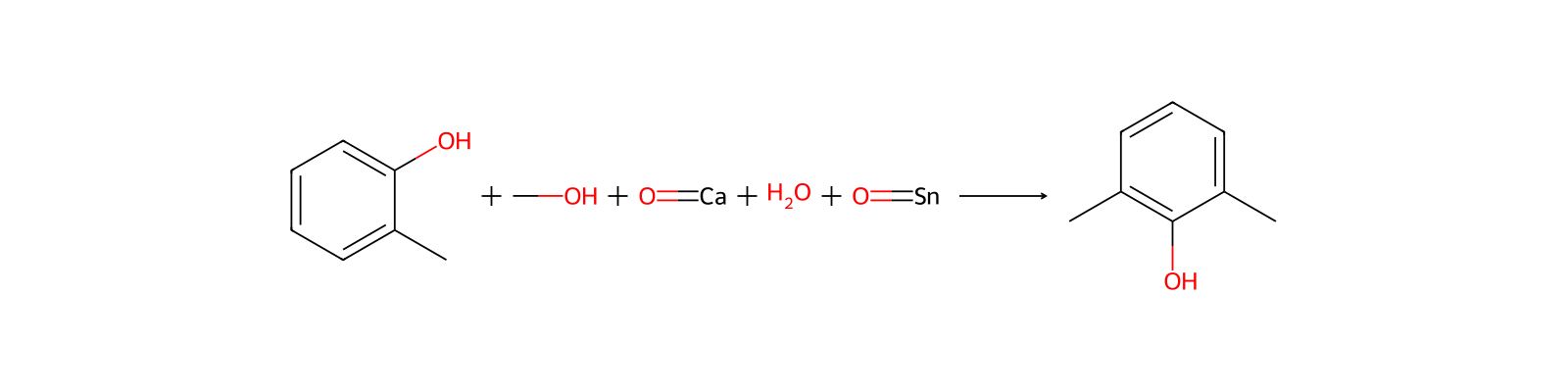
19 records
New reaction record
HRID 140467 reaction equation
HRID 140467As reactant
HRID 175288 reaction equation
HRID 175288As reactant
HRID 194048 reaction equation
HRID 194048As reactant
HRID 319559 reaction equation
HRID 319559As reactant
HRID 954815 reaction equation
HRID 954815As reactant
HRID 1089384 reaction equation
HRID 1089384As reactant
HRID 1145731 reaction equation
HRID 1145731As reactant
HRID 1628358 reaction equation
HRID 1628358As reactant
PreviousPage 1 of 3

Compound notes

On this pageBasic informationOverviewNames & identifiersPropertiesSafety & regulationChemistry & industryRelated reactionsCompound notes

BLUE-TO-BLACK CRYSTALLINE POWDER.

Brownish-black powder or black to blue-black crystalline solid.

Brownish-black powder.

Physicochemical properties

Melting point
1080 °C · 1080 °C
Density
6 · 6,95 g/cm3
storage temp.
Store at RT.
solubility
2 O, · insoluble in H2O, ethanol; soluble in acid solutions
form
powder
color
Blue-black
Specific Gravity
6.95 · 6.95
Water Solubility
Insoluble in water, and alcohol.
Thermal Conductivity
31.38 W/ · 31.38 W/(m·K)
Specific Heat Capacity
0.33 J/ · Cp(crystal): 0.33 J/(g·K); Cp(gas): 0.23 J/(g·K), at 25℃
Hydrolytic Sensitivity
4 · 4: no reaction with water under neutral conditions
Crystal Structure
PbO type
crystal system
square
Merck
14 · 14,8787
Space group
4 · P4/nmm
Lattice constant
a/nm
Symbol(GHS)
7 · GHS07,GHS08
Signal word
Danger
Hazard statements
302 · H302-H317-H319-H372
Precautionary statements
260 · P260-P280-P301+P312-P302+P352-P305+P351+P338-P314
Safety Statements
24 · 24/25
OEB
B
OEL
2 mg/m3 · TWA: 2 mg/m3
WGK Germany
3 · 3
RTECS
3700000 · XQ3700000
TSCA
TSCA listed
HS Code
28259085 · 28259085
Storage Class
6.1 C · 6.1C - Combustible acute toxic Cat.3toxic compounds or compounds which causing chronic effects
Hazard Classifications
4 OralEye · Acute Tox. 4 OralEye Irrit. 2Skin Sens. 1STOT RE 1
REACH Registrations
Active
Reactive GroupReducing Agents, Strong
Reactivity ProfileTIN(II) OXIDE is a reducing agent. Unstable in air due to slow oxidation to tin(IV) oxide. At 300 °C this oxidation proceeds incandescently. Incompatible with strong oxidizing agents. Reacts with acids and with strong bases.
Air and Water ReactionsNo rapid reaction with air. No rapid reaction with water.
Hazard Classes and Categories · 2 items

Acute Tox. 4 (35.3%)

Specific target organ toxicity - Repeated exposure - Category 1 (lung)

Hazardous Reactivities and IncompatibilitiesNone reported

Safety & protection

Fire FightingIn case of fire in the surroundings, use appropriate extinguishing media.
First Aid Measures · 4 items

Fresh air, rest.

Rinse skin with plenty of water or shower.

First rinse with plenty of water for several minutes (remove contact lenses if easily possible), then refer for medical attention.

Rinse mouth.

First Aid · 2 items

Excerpt from NIOSH Pocket Guide for Tin(II) oxide (as Sn):

(General first aid procedures)

Exposure Control and Personal Protection · 1 item

TIH (Toxic Inhalation Hazard) - Term used to describe gases and volatile liquids that are toxic when inhaled. Some are TIH materials themselves, e.g., chlorine, and some release TIH gases when spilled in water, e.g., chlorosilanes. [ERG 2016].

Spillage Disposal · 1 item

Personal protection: particulate filter respirator adapted to the airborne concentration of the substance. If appropriate, moisten first to prevent dusting. Sweep spilled substance into covered containers. Carefully collect remainder. Then store and dispose of according to local regulations.

Eye PreventionWear safety goggles or eye protection in combination with breathing protection if powder.
Inhalation RiskA harmful concentration of airborne particles can be reached quickly when dispersed, especially if powdered.
Skin PreventionProtective gloves.
Exposure PreventionPREVENT DISPERSION OF DUST!
Ingestion PreventionDo not eat, drink, or smoke during work.
Inhalation PreventionUse local exhaust or breathing protection.
Respirator RecommendationsImportant additional information about respirator selection

Toxicology

Treatment · 1 item

EYES: irrigate opened eyes for several minutes under running water. INGESTION: do not induce vomiting. Rinse mouth with water (never give anything by mouth to an unconscious person). Seek immediate medical advice. SKIN: should be treated immediately by rinsing the affected parts in cold running water for at least 15 minutes, followed by thorough washing with soap and water. If necessary, the person should shower and change contaminated clothing and shoes, and then must seek medical attention. INHALATION: supply fresh air. If required provide artificial respiration.

Target Organsrespiratory system
Health EffectsIngestion of large amounts of inorganic tin compounds can cause stomachache, anemia, and liver and kidney problems. (L307, L308)
Exposure Routes · 2 items

inhalation, skin and/or eye contact

Oral (L308) ; inhalation (L308) ; dermal (L308)

Toxicity SummaryInorganic and organic tin compounds are weak inhibitors of alcohol dehydrogenase. (A183)
Signs and Symptoms · 3 items

Cough.

Stannosis (benign pneumoconiosis): dyspnea (breathing difficulty), decreased pulmonary function

Inorganic or organic tin compounds placed on the skin or in the eyes can produce skin and eye irritation. (L308)

ICSC Environmental DataBioaccumulation of this chemical may occur in crustacea and fish.
Carcinogen ClassificationNo indication of carcinogenicity to humans (not listed by IARC).

Safety data

OEB
B
OEL
TWA: 2 mg/m3
wgk
3
tsca
TSCA listed
rtecs
XQ3700000
hs_code
28259085
Signal word
Danger
Symbol(GHS)
GHS07,GHS08
safety_code
24/25
Storage Class
6.1C - Combustible acute toxic Cat.3toxic compounds or compounds which causing chronic effects
Hazard statements
H302-H317-H319-H372
REACH Registrations
Active
Hazard Classifications
Acute Tox. 4 OralEye Irrit. 2Skin Sens. 1STOT RE 1
Precautionary statements
P260-P280-P301+P312-P302+P352-P305+P351+P338-P314
Uses

General DescriptionBrownish-black powder or black to blue-black crystalline solid. Mp: 1080°C (decomposes); density: 6.45 g cm-3. Insoluble in water.

Preparation methods

PreparationTin(II) oxide is prepared by heating tin(II) hydroxide. The latter is obtained as a white precipitate by reacting Sn2+ ions with hydroxide ions: Sn2+(aq) + 2OH¯(aq) → Sn(OH)2 (s)

Upstream & downstream products

Upstream raw materials

Tin

Downstream products

Bis(2-ethylhexyl) phthalate