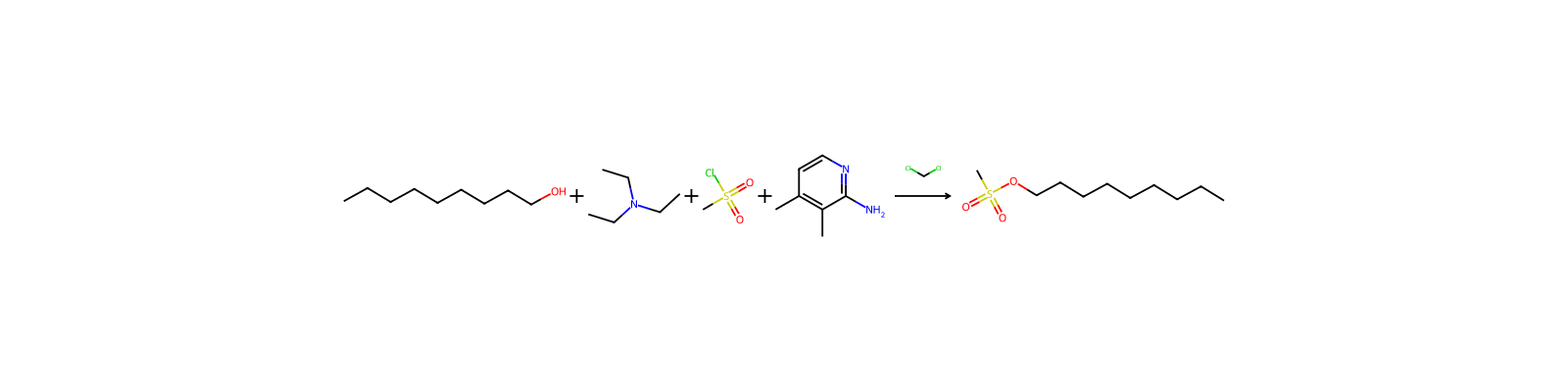
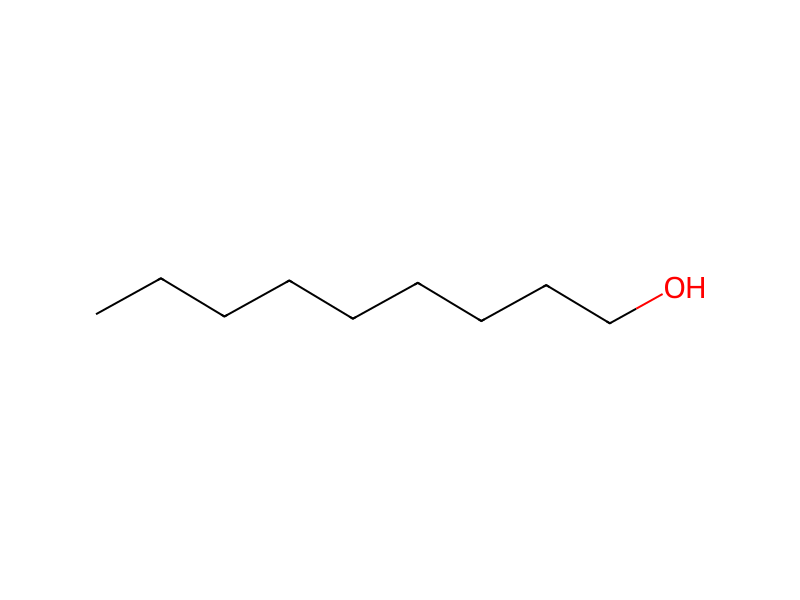
1-Nonanol
Basic information
- CAS
143-08-8- Standard SMILES
CCCCCCCCCO- InChIKey
ZWRUINPWMLAQRD-UHFFFAOYSA-N- Molecular formula
- C9H20O
- Average molar mass
- 144.25 g/mol
- Monoisotopic mass
- 144.15141526
Overview
Nonanol appears as colorless liquid with a rose or fruity odor. Floats on water. Freezing point 23 °F. (USCG, 1999)
Names & identifiers
- Preferred name
- 1-Nonanol
- IUPAC
- nonan-1-ol
- English name
- 1-Nonanol
- Molecular formula
- C9H20O
- Molecular weight
- 144.25
Names & synonyms
1-NonanolNonan-1-ol143-08-8NONYL ALCOHOLPelargonic alcoholn-Nonyl alcoholn-NonanolNonalol1-HydroxynonaneOctyl carbinoln-Nonan-1-olC9 alcohol
Show more names
NONANOLFEMA 2789n-nonylALCOHOL C9
NonylalkoholPelargonalkoholFEMA No. 2789DTXSID6022008NGK73Q6XMCNSC-5521DTXCID402008CHEBI:35986
Database identifiers
- CAS
143-08-8、28473-21-4- PubChem CID
- 8914
- DTXSID
DTXSID6022008- ChEMBL
CHEMBL24563- ChEBI
CHEBI:35986- UNII
- NGK73Q6XMC
- EC Number
- 205-583-7、249-048-6
- Nikkaji
- J2.549F
Properties
Computed structural properties
- XLogP
- 4.3
- Topological polar surface area
- 20.2 Ų
- Hydrogen bond donors
- 1
- Hydrogen bond acceptors
- 1
- Rotatable bonds
- 7
- Heavy atoms
- 10
- Formal charge
- 0
- Complexity
- 52.7
Experimental & physicochemical properties
DrugsPharmaceuticals -> Listed in ZINC15
LipidsFatty Acyls [FA] -> Fatty alcohols [FA05]
Solvents
Solvents -> Alcohols (<C12)
Solvents -> Alcohols (<C12)
SpringerMaterials PropertiesBoiling point
FragrancesFragrance Ingredient (Nonyl alcohol) -> IFRA transparency List
LogP
log Kow = 3.77
3.77
3.67
Odor
Floral odor
Odor of citronella oil
Food AdditivesFLAVORING AGENT OR ADJUVANT -> FDA Substance added to food
Density
0.827 at 68 °F (USCG, 1999) - Less dense than water; will float
0.8279 at 20 °C/4 °C
0.824-0.830
0.827 @ 20°C
Flavoring AgentsEU Flavoring substances
Viscosity11.7 centapoise at 20 °C
Color/FormColorless to yellowish liquid
Physicochemical properties
- Melting point
- -8 · -8--6 °C (lit.)
- Boiling point
- 215 °C · 215 °C (lit.)
- Density
- 0.827 g/mL · 0.827 g/mL at 25 °C (lit.)
- vapor density
- 5 · 5 (vs air)
- vapor pressure
- 13 mm · 13 mm Hg ( 104 °C)
- refractive index
- 20 · n20/D 1.433(lit.)
- FEMA
- 2789 · 2789 | NONYL ALCOHOL
- FLAVIS Number
- 2.007 · 02.007 | Nonan-1-ol
- Flash point
- 208 °F · 208 °F
- storage temp.
- 30 °C · Store below +30°C.
- solubility
- 69.54 mg/l · 69.54mg/l
- form
- Liquid
- pka
- 15.22 · 15.22±0.10(Predicted)
- color
- Clear colorless
- Odor
- Rose-citrus.
- explosive limit
- 0.8 · 0.80-6.10%(V)
- Odor Threshold
- 0.0009 ppm · 0.0009ppm
- Odor Type
- floral
- biological source
- synthetic
- Viscosity
- 12.97 mm2/s · 12.97mm2/s
- Water Solubility
- 1 g/L · 1 g/L (20 ºC)
- Thermal Conductivity
- 0.145 W/ · 0.145 W/(m·K) at 25 ℃
- JECFA Number
- 100 · 100
- Merck
- 14 · 14,6679
- BRN
- 969213 · 969213
- Henry's Law Constant
- 2.7 · 2.7×10-1 mol/(m3Pa) at 25℃, Brockbank (2013)
- Dielectric constant
- 8.83 · 8.8300000000000001
- Stability
- Stable. Combustible. Incompatible with strong oxidizing agents.
- Cosmetics Ingredients Functions
- PERFUMING
- InChI
- 1S/C9H20O/c1-2-3-4-5-6-7-8-9-10/h10H,2-9H2,1H3
- InChIKey
- ZWRUINPWMLAQRD-UHFFFAOYSA-N
- SMILES
- CCCCCCCCCO
- LogP
- 4.59 at · 4.59 at 20℃
- CAS DataBase Reference
- 143 · 143-08-8(CAS DataBase Reference)
- Substances Added to Food (formerly EAFUS)
- NONYL ALCOHOL
- EWG's Food Scores
- 1 · 1
- FDA UNII
- 73 Q6XMC · NGK73Q6XMC
- NIST Chemistry Reference
- 1 · 1-Nonanol(143-08-8)
- EPA Substance Registry System
- 1 · 1-Nonanol (143-08-8)
- UNSPSC Code
- 12352104 · 12352104
- NACRES
- 22 · NA.22
- Symbol(GHS)
- 7 · GHS07
- Signal word
- Warning
- Hazard statements
- 319 · H319-H412
- Precautionary statements
- 273 · P273-P305+P351+P338
- PPE
- Eyeshields, Faceshields, Gloves, type ABEK (EN14387) respirator filter
- Hazard Codes
- Xn,N,Xi
- Risk Statements
- 20 · 20-51/53-36
- Safety Statements
- 23 · 23-24/25-61-29-39-26-25
- RIDADR
- 3082 · UN 3082 9/PG 3
- WGK Germany
- 2 · 2
- RTECS
- 1575000 · RB1575000
- Autoignition Temperature
- 237 °C · 237 °C
- TSCA
- TSCA listed
- HS Code
- 2905 · 2905 19 00
- HazardClass
- 9 · 9
- PackingGroup
- III
- Storage Class
- 10 · 10 - Combustible liquids
- Hazard Classifications
- 3 Eye · Aquatic Chronic 3Eye Irrit. 2
- Hazardous Substances Data
- 143 · 143-08-8(Hazardous Substances Data)
- Toxicity
- 50 orally · LD50 orally in Rabbit: 3560 mg/kg LD50 dermal Rabbit 2960 mg/kg
- REACH Registrations
- Active
Safety & regulation
Safety information is for reference only and does not replace the supplier’s Safety Data Sheet (SDS), applicable regulations, or professional assessment.
GHS classification
GHS Classification
This chemical does not meet GHS hazard criteria for 0.4% (8 of 2003) of reports.
Warning
H315 (13.4%): Causes skin irritation [Warning Skin corrosion/irritation]
P264, P264+P265, P273, P280, P302+P352, P305+P351+P338, P321, P332+P317, P337+P317, P362+P364, P391, and P501 (click each P-code to see the statement)
Aggregated GHS information provided per 2003 reports by companies from 12 notifications to the ECHA C&L Inventory. Each notification may be associated with multiple companies.
Warning
Hazard information
Regulatory Information
Chemical: 1-Nonanol
Chemical: Nonanol
1-Nonanol is listed on the EPA's Chemical Data Reporting (CDR) system. Manufacturers and importers of 1-Nonanol are required to report information about their production and use of this chemical to the EPA under the Toxic Substances Control Act (TSCA). (40 eCFR Part 711)
Nonanol is listed on the EPA's Chemical Data Reporting (CDR) system. Manufacturers and importers of Nonanol are required to report information about their production and use of this chemical to the EPA under the Toxic Substances Control Act (TSCA). (40 eCFR Part 711)
REACH registered substance: Nonan-1-ol (EC: 205-583-7)
1-Nonanol: Does not have an individual approval but may be used under an appropriate group standard
DOT LabelClass 9
Fire HazardsExcerpt from ERG Guide 171 [Substances (Low to Moderate Hazard)]:
Health HazardsLiquid irritates eyes. (USCG, 1999)
Hazards Summary
In high-dose animal experiments, causes fatal intoxication, liver injury and kidney injury; [HSDB] An eye irritant; [CAMEO] An irritant; [MSDSonline] See Nonanol.
The commercial product consists of approximately 80% 3,5,5-trimethylhexanol; Members of the alkyl alcohols C6-C13 category demonstrate skin and eye irritation in rabbits; Low acute oral and dermal toxicity; Moderate to low acute inhalation toxicity; [EPA ChAMP: Hazard Characterization] See 1-Nonanol.
FDA Requirements
Nonyl alcohol is a food additive permitted for direct addition to food for human consumption as a synthetic flavoring substance and adjuvant in accordance with the following conditions: a) they are used in the minimum quantity required to produce their intended effect, and otherwise in accordance with all the principles of good manufacturing practice, and 2) they consist of one or more of the following, used alone or in combination with flavoring substances and adjuvants generally recognized as safe in food, prior-sanctioned for such use, or regulated by an appropriate section in this part.
Reactive GroupAlcohols and Polyols
Reactivity Profile
NONANOL is an alcohol. Flammable and/or toxic gases are generated by the combination of alcohols with alkali metals, nitrides, and strong reducing agents. They react with oxoacids and carboxylic acids to form esters plus water. Oxidizing agents convert them to aldehydes or ketones. Alcohols exhibit both weak acid and weak base behavior. They may initiate the polymerization of isocyanates and epoxides.
Air and Water ReactionsNo rapid reaction with air. No rapid reaction with water.
Hazard Classes and Categories
Skin Irrit. 2 (13.4%)
Flammable liquids - Category 4
Lower Explosive Limit (LEL)
0.8 % (USCG, 1999)
8000 [ppm]
Upper Explosive Limit (UEL)6.1 % (USCG, 1999)
Safety & protection
Fire FightingFire Extinguishing Agents Not to Be Used: Water may be ineffective
First AidFlush eyes and skin with water for at least 15 min. (USCG, 1999)
Cleanup Methods
AEROBIC: Nonyl alcohol degraded fast in aerobic biodegradation screening tests(1-3). In one 5-day BOD test using acclimated mixed cultures, 47.9% of theoretical BOD was consumed(1). In the other test which used an activated sludge inoculum, nonyl alcohol's half-life was 1.2 days(SRC), calculated from a biodegradation rate of 2.36X10⁻²/hr(3). In a third test, 62% of its theoretical BOD in a grab sample of freshwater incubated at 18-19 °C was expended in 4 days(2).
Nonfire Spill ResponseExcerpt from ERG Guide 171 [Substances (Low to Moderate Hazard)]:
Disposal Methods
SRP: The most favorable course of action is to use an alternative chemical product with less inherent propensity for occupational exposure or environmental contamination. Recycle any unused portion of the material for its approved use or return it to the manufacturer or supplier. Ultimate disposal of the chemical must consider: the material's impact on air quality; potential migration in soil or water; effects on animal, aquatic, and plant life; and conformance with environmental and public health regulations.
Isolation and EvacuationExcerpt from ERG Guide 171 [Substances (Low to Moderate Hazard)]:
Protective Action Criteria (PAC)
30 [mg/m3]
120 [mg/m3]
710 [mg/m3]
Personal Protective Equipment (PPE)Goggles or face shield; rubber gloves. (USCG, 1999)
Toxicology
Interactions
... Maximum permeation of MT was observed when fatty alcohol carbon chain length was 10. As the level of unsaturation increased from one to two double bonds, there was an increase in the permeation of MT both in porcine and human skin. However, a decrease in the permeation was observed with three double bonds. Regression analysis using the steady state flux data showed a significant positive correlation between porcine and human skin for saturated fatty alcohols (r(2)=0.8868, P=0.0005).
Ecotoxicity Values
LC50 Pimephales promelas (Fathead minnow, weight 0.12 g) 5.7 mg/L 96 hr flow-through bioassay, water hardness 45.5 mg/L CaCO3, temp: 25 +/- 1 °C, pH 7.5, dissolved oxygen >60% of saturation
LC50 Pimephales promelas (Fathead minnow, age 30-31 days, mean weight 0.124 g, mean length 20.0 mm) 5.7 mg/L/96 hr (95% confidence limit: 5.4-6.0 mg/L); flow through bioassay, temp 24.8 °C, pH 7.63, dissolved oxygen 7.2 mg/L, hardness 44.3 mg/L CaCO3, alkalinity 43.0 mg/L CaCO3 /purity 97%/
LC50 Alburnus alburnus (Bleak) 18 mg/L/96 hr (95% confidence limit: 16-20 mg/L); static /formulated product/
LC50 Nitocra spinipes (Harpacticoid copepod) 25 mg/L/96 hr (95% confidence limit: 21-30 mg/L); static /formulated product/
For more Ecotoxicity Values (Complete) data for 1-NONANOL (6 total), please visit the HSDB record page.
Environmental Fate
TERRESTRIAL FATE: Based on a classification scheme(1), an estimated Koc value of 290(SRC), determined from a water solubility of 140 mg/L(2) and a regression-derived equation(3), indicates that 1-nonanol is expected to have moderate mobility in soil(SRC). Volatilization of 1-nonanol from moist soil surfaces is expected to be an important fate process(SRC) given an estimated Henry's Law constant of 3.08X10⁻⁵ atm-cu m/mole(SRC), derived from its vapor pressure, 2.27X10⁻² mm Hg(4) and water solubility(2). 1-Nonanol is not expected to volatilize from dry soil surfaces(SRC) based upon its vapor pressure(4). 1-Nonanol has been demonstrated to be readily biodegradable in aerobic screening tests(5-7) and therefore may readily biodegrade in soil(SRC).
AQUATIC FATE: Based on a classification scheme(1), an estimated Koc value of 290(SRC), determined from a water solubility of 140 mg/L(2) and a regression-derived equation(3), indicates that 1-nonanol is expected to adsorb to suspended solids and sediment(SRC). Volatilization from water surfaces is expected(3) based upon an estimated Henry's Law constant of 3.08X10⁻⁵ atm-cu m/mole(SRC), derived from its vapor pressure, 2.27X10⁻² mm Hg(4), and water solubility(2). Using this Henry's Law constant and an estimation method(3), volatilization half-lives for a model river and model lake are 1.6 days and 15 days, respectively(SRC). 1-Nonanol has been demonstrated to be readily biodegradable in aerobic screening tests(5-7) and therefore may biodegrade in natural water(SRC). According to a classification scheme(8), an estimated BCF of 160(SRC), from a log Kow of 3.77(9) and a regression-derived equation(10), suggests the potential for bioconcentration in aquatic organisms is high(SRC).
ATMOSPHERIC FATE: According to a model of gas/particle partitioning of semivolatile organic compounds in the atmosphere(1), 1-nonanol, which has a vapor pressure of 2.27X10⁻² mm Hg at 25 °C(2), is expected to exist solely as a vapor in the ambient atmosphere. Vapor-phase 1-nonanol is degraded in the atmosphere by reaction with photochemically-produced hydroxyl radicals(SRC); the half-life for this reaction in air is estimated to be 28 hours(SRC), calculated from its rate constant of 1.4X10⁻¹¹ cu cm/molecule-sec at 25 °C(SRC) that was derived using a structure estimation method(3).
Food Survey Values
1-Nonanol has been identified in a variety of foods including nectarines(1), oil of orange(7), cassava(2), duck(3), peanut oil(4), earth almonds (Cyperus esculentus L.)(5), and a French mountain cheese(6). Unspecified nonyl alcohol isomers have been identified in pork and beef(7,8).
Adverse Effects
Neurotoxin - Acute solvent syndrome
Neurotoxin - Acute solvent syndrome
Toxicity Summary
The existing information was reviewed by the independent Expert Panel for Fragrance Safety and supports the use of nonyl alcohol as described in this fragrance ingredient safety assessment. Data from read-across analog heptyl alcohol (CAS # 111-70-6) show that nonyl alcohol is not expected to be genotoxic and provide a calculated Margin of Exposure (MOE) >100 for the repeated dose toxicity and reproductive toxicity endpoints. Data from read-across analog 1-decanol (CAS # 112-30-1) provided nonyl alcohol a No Expected Sensitization Induction Level (NESIL) of 10000 μg/cm2 for the skin sensitization endpoint. The photoirritation/photoallergenicity endpoints were evaluated based on ultraviolet/visible (UV/Vis) spectra; nonyl alcohol is not expected to be photoirritating/photoallergenic. The local respiratory toxicity endpoint was evaluated using the Threshold of Toxicological Concern (TTC) for a Cramer Class I material, and the exposure to nonyl alcohol is below the TTC (1.4 mg/day).
Ecotoxicity Excerpts
/AQUATIC SPECIES/ /In flow through acute toxicity testing using Pimephales promelas (Fathead minnow) exposed to concentrations of 0, 0.56, 1.0, 2.3, 4.7, and 8.2 mg/L 1-nonanol for 96 hr,/ affected fish first became sluggish in movement and stopped schooling. Some fish swam at water surface and equilibrium was lost prior to death.
/OTHER TERRESTRIAL SPECIES/ ... All the tested alcohols showed knockdown effect at 10 min and mortality 18 h after treatment. The highest activity was found for the 1-dodecanol (KC50 2.55%, LC50 2.28%) and the lowest for 1-octanol (KC50 8%, LC50 4.46%). Toxicity to head lice systematically increased with increase in carbon atoms in the n-aliphatic alcohol moiety, and with the octanol:water coefficient (r2 = 0.94). The pediculicidal activity of 1-dodecanol was not correlated with resistance to permethrin.
Plant Concentrations1-Nonanol has been identified in kiwi fruit flowers(1), nectarines(2) and earth almonds (Cyperus esculentus L.)(3).
Soil Adsorption/Mobility
An estimated BCF of 160 was calculated for 1-nonanol(SRC), using a log Kow of 3.77(1) and a regression-derived equation(2). According to a classification scheme(3), this BCF suggests the potential for bioconcentration in aquatic organisms is high(SRC), provided the compound is not metabolized by the organism(SRC).
TSCA Test Submissions
1-Nonanol (CAS # 142-08-8) was evaluated for acute oral toxicity. The test substance was administered by gavage to Sprague-Dawley albino rats. Dosage and mortality data are as follows: 2,000 mg/kg (0/3 M, 0/2 F); 2,510 mg/kg (0/2 M, 2/3 F); 3,160 mg/kg (0/3 M, 2/2 F); 3,980 mg/kg (0/2 M, 3/3 F); 5,010 mg/kg (3/3 M, 2/2 F); and 6,310 mg/kg (2/2 M, 3/3 F). Signs of intoxication included weight loss, increasing weakness, ocular discharge, collapse, and death. Gross autopsy revealed hemorrhagic lungs, liver discoloration, and acute gastrointestinal inflammation.
1-Nonanol (CAS # 142-08-8) was evaluated for acute dermal toxicity. The test substance was administered to New Zealand albino rabbits. Dosage and mortality data are as follows: 398 mg/kg (0/1 M); 631 mg/kg (0/1 F); 1,000 mg/kg (0/1 M, 1/1 F); 1,260 mg/kg (1/1 F); 2,000 mg/kg (0/1 M); 3,160 mg/kg (1/1 F); and 5,010 mg/kg (1/1 M). Signs of intoxication included weight loss, increasing weakness, ocular discharge, collapse, and death. Gross autopsy revealed hemorrhagic areas of the lungs, discoloration of the liver and kidneys, enlarged gall bladder, darkened spleen, and gastrointestinal inflammation.
1-Nonanol (CAS # 143-08-8) was evaluated for dermal sensitization using standard methods. The test substance was administered to 10 guinea pigs with an initial reaction rating of slight to very slight in 2 animals and a final patch rating of slight in 1 animal. The test substance was determined to be a non-sensitizer. No further information was available.
1-Nonanol (CAS # 142-08-8) was evaluated for primary dermal irritation. The test substance was administered to 6 New Zealand albino rabbits receiving 0.5 ml of undiluted test substance for a 24 hour exposure period. Average irritation score was 5.8/8.0. Irritation consisted of a defatting effect (skin sloughed off in 10-14 days). There was no in depth injury.
1-Nonanol (CAS # 142-08-8) was evaluated for primary eye irritation. The test substance was administered to 6 New Zealand albino rabbits receiving 0.1 ml of undiluted test substance for a 24 hour exposure period. Average irritation score was 33.3/110. Immediate discomfort was moderate with eyes tightly closed. Irritation consisted of slight erythema, copious discharge, and corneal dullness.
Natural Pollution Sources1-Nonanol is a plant volatile(1) occurring, for example in oil of orange(2), kiwi fruit flowers(3), nectarines(4) and earth almonds (Cyperus esculentus L.)(5).
Human Toxicity Excerpts/HUMAN EXPOSURE STUDIES/ 1-Nonanol (2% in petrolatum) was reportedly neither a skin irritant nor a skin sensitizer to humans. /1-Nonanol, 2% in petrolatum/
Regulatory information
FDA Requirements
Nonyl alcohol is a food additive permitted for direct addition to food for human consumption as a synthetic flavoring substance and adjuvant in accordance with the following conditions: a) they are used in the minimum quantity required to produce their intended effect, and otherwise in accordance with all the principles of good manufacturing practice, and 2) they consist of one or more of the following, used alone or in combination with flavoring substances and adjuvants generally recognized as safe in food, prior-sanctioned for such use, or regulated by an appropriate section in this part.
Safety data
- PPE
- Eyeshields, Faceshields, Gloves, type ABEK (EN14387) respirator filter
- wgk
- 2
- tsca
- TSCA listed
- rtecs
- RB1575000
- ridadr
- UN 3082 9/PG 3
- hs_code
- 2905 19 00
- Toxicity
- LD50 orally in Rabbit: 3560 mg/kg LD50 dermal Rabbit 2960 mg/kg
- risk_code
- 20-51/53-36
- Signal word
- Warning
- Symbol(GHS)
- GHS07
- hazard_code
- Xn,N,Xi
- safety_code
- 23-24/25-61-29-39-26-25
- hazard_class
- 9
- Storage Class
- 10 - Combustible liquids
- packing_group
- III
- Hazard statements
- H319-H412
- REACH Registrations
- Active
- Hazard Classifications
- Aquatic Chronic 3Eye Irrit. 2
- Autoignition Temperature
- 237 °C
- Precautionary statements
- P273-P305+P351+P338
- Hazardous Substances Data
- 143-08-8(Hazardous Substances Data)
Chemistry & industry
Pharmacology
Mechanism of Action
... Intermediate-chain alcohols (pentanol to octanol) caused channel currents to fluctuate between the fully open and closed state level so that openings occurred in bursts interrupted by brief gaps ... The number of gaps within a burst was dependent on alcohol concentration whereas gap duration was independent of concentration but increased with increasing chain length of the alcohol up to octanol. Nonanol and decanol reduced the mean duration of bursts of openings but did not cause an increase in the number of short closed intervals within a burst. Beyond decanol there was a decline in the ability of the n-alcohols to affect channel function. A saturated solution of undecanol (0.07 mM) reduced the mean open time by 33 + or - 17%, whereas a saturated solution of dodecanol had no significant effect. The current integral per burst was reduced by all the n-alcohols between pentanol and undecanol. The IC50s were as follows: hexanol, 0.53 + or - 0.14 mM; heptanol, 0.097 + or - 0.02 mM; octanol, 0.04 mM and nonanol, 0.16 + or - 0.035 mM ... Blocking rate constants (k+B) for pentanol through to nonanol were calculated to be between 2.8 and 5.7 X 10(6) /M/sec ... Equilibrium dissociation constants (KD), calculated from the blocking and unblocking rate constants (KD = k-B/k+B), decreased with increasing chain length from 8 mM for pentanol to 0.15 mM for octanol. The standard free energy per methylene group for adsorption to the site of action was calculated to be about -3.3 kJ/mol.
Metabolism/Metabolites
Nonanol, like other primary alcohols, undergoes two general reactions in vivo. The first is oxidation to the carboxylic acid derivative and next the direct conjugation with glucuronic acid. It was reported that nonanol undergoes direct glucuronic conjugation to the extent of 4.1%. This oxidation proceeds with very little inhibition as opposed to that shown by methyl amyl alcohol and 2-ethyl butyl alcohol which form ester glucuronides.
Absorption, Distribution and ExcretionSkin absorption is low; the dermal flux of 1-nonanol in human skin (epidermis) in vitro is 0.003 mg/sq cm/hr.
Cellular LocationsExtracellular
Uses & manufacturing
Uses
Used as a fragrance, flavoring agent, chemical intermediate, and to make artificial lemon oil; [HSDB]
Perfumery, flavoring (lemon oil)
In manufacture of artificial lemon oil
Fragrance, eg, in perfumes & soaps; flavoring agent, eg, in chewing gum & candy; chemical intermediate for plasticizers (as alcohol mixture) & surfactants (as alcohol mixture)
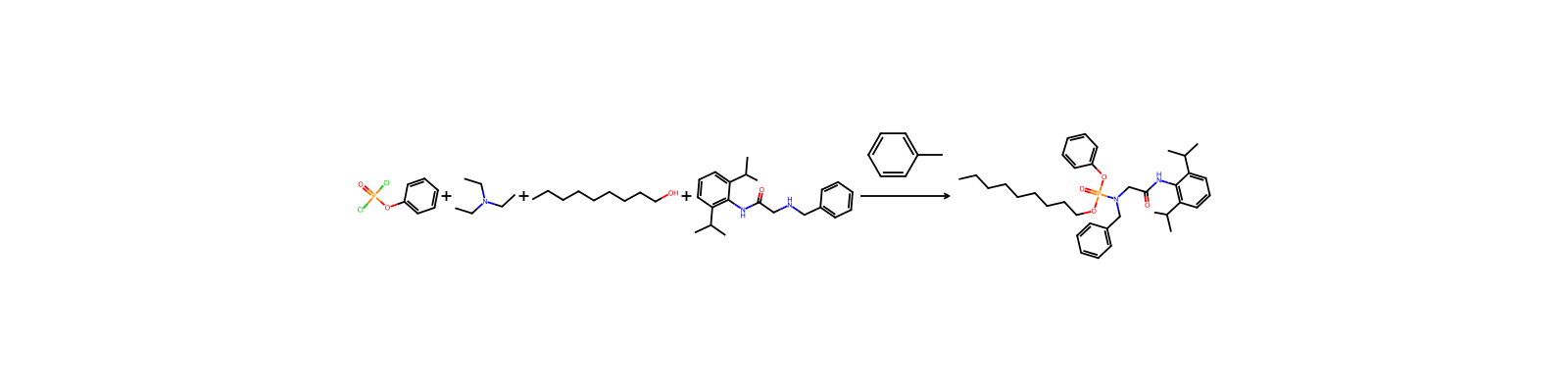
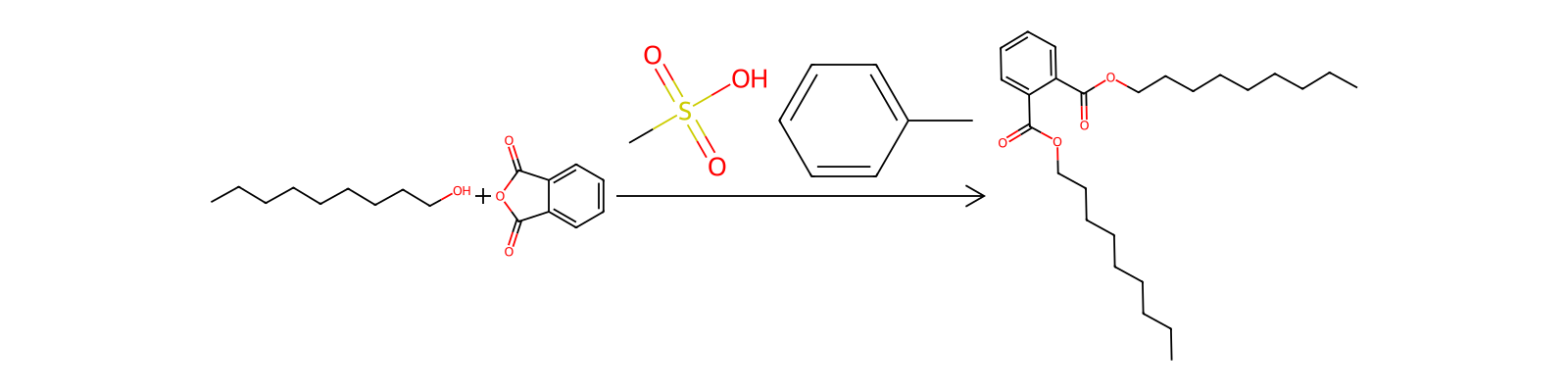
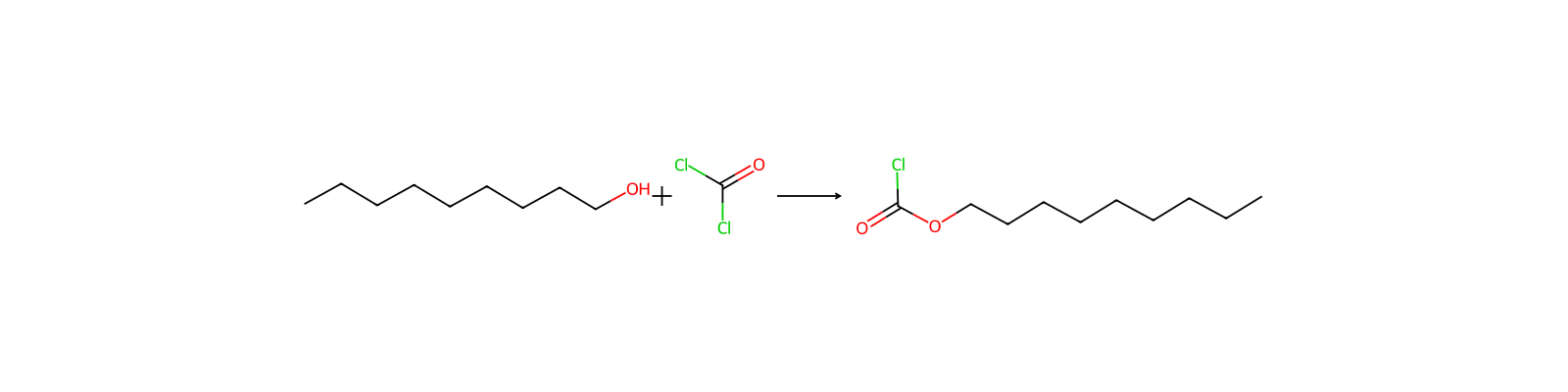
A major use of 1-nonanol is as a chemical intermediate in the production of esters ...
Used in the rubber and dyestuff industry, in the production of plasticizers, emulsifiers, etc.
U.S. Production
2023: <50,000 lb
2023: 10,000,000 - <50,000,000 lb
(1977) PROBABLY GREATER THAN 4.54X10+5 GRAMS
(1979) PROBABLY GREATER THAN 4.54X10+5 GRAMS
(2002) >1 million-10 million pounds
Industry UsesIntermediate
Methods of Manufacturing
By sodium or high-pressure catalytic reduction of esters of pelargonic acid; hydroformylation of C8 linear alpha-olefins or internal olefins (occurs in a mixt); natural constituent of rose, grapefruit & orange oils.
Preparation by reduction of ethyl delta (superscript 1)-nonylenate ... by reduction of pelargonic aldehyde ... by oxo process: Russum, Hengstebeck, US patent 2,638,487 (1953 to Standard Oil of Indiana); by reductive cleavage of oleic acid ozonide ... from diborane and propylene trimer: Marshall, Smith, British patent 879,242(1961 to I.C.I.).
... Oxo synthesis from dimeric 1-butene and 2-butene (mixture known as raffinate II) or from dimeric isobutene. /C9 Alcohol mixtures/
Use Classification
Fragrance Ingredients
Flavouring Agent -> FLAVOURING_AGENT -> JECFA Functional Classes
Flavoring Agents -> JECFA Flavorings Index
Flavouring Agent -> FLAVOURING_AGENT -> JECFA Functional Classes
Flavouring Agent -> FLAVOURING_AGENT -> JECFA Functional Classes
General Manufacturing Information
Plastics Material and Resin Manufacturing
1-Nonanol: ACTIVE
Nonanol: ACTIVE
Commercial products from the family of 6 to 11 carbon alcohols that make up the plasticizer range are available both as ... pure single carbon chain materials and as complex isomeric mixtures. Commercial descriptions of plasticizer range alcohols are ... in general a ... pure material is called "-anol" /eg, 1-nonanol/, and the mixtures are called "-yl alcohol /eg, nonyl alcohol/ or "iso...yl alcohol" /eg, isononyl alcohol/.
Applications
Description1-Nonanol is a straight chain fatty alcohol with nine carbon atoms and the molecular formula CH3(CH2)8OH. It is a colorless to slightly yellow liquid with a citrus odor similar to citronella oil. Nonanol occurs naturally in the orange oil. The primary use of nonanol is in the manufacture of artificial lemon oil. Various esters of nonanol, such as nonyl acetate, are used in perfumery and flavors. Nonanol floats on water and its freezing point 23°F.
OccurrenceReported as occurring frequently in nature, free or esterified; in the essential oils of grapefruit, Guinea sweet orange, Italian and Israeli sweet orange, bitter orange; and in oak musk concrete. Also reported found in apple, citrus juices, many berries, currants, guava, grapes, papaya, melon, pineapple, asparagus, cucumber, leek, peas, potato, cheeses, butter, milk, cooked chicken, beef and pork, hop oil, beer, rum, grape wines, tea, pecan, peanut oil, soybean, olive, plum, rose apple, beans, mushroom, starfruit, cauliflower, tamarind, fig, cardamom, rice, prickly pear, sweet corn, malt, cherimoya, clary sage, oysters, crab, crayfish, clam, nectarine, mate, pepino fruit (Solanum muricatum), apricot, tobacco, and wheat bread.
Uses1-Nonanol is an chain fatty acid alcohol that naturally occurs in oil of orange. 1-Nonanol is used in the manufacture of artificial lemon oil.
General DescriptionColorless liquid with a rose or fruity odor. Floats on water. Freezing point 23°F.
Preparation methods
Preparation1-Nonanol can be synthesized by reduction of ethyl pelargonate; from heptaldehyde via heptanol and heptylmagnesium bromide with ethylene oxide.
Upstream & downstream products
Upstream raw materials
Downstream products
Additional notes
DefinitionChEBI: Nonan-1-ol is a fatty alcohol consisting of a hydroxy function at C-1 of an unbranched saturated chain of nine carbon atoms. It has been isolated as a component of volatile oils from plants like Hordeum vulgare. It has a role as a plant metabolite and a volatile oil component. It derives from a hydride of a nonane.
Related reactions
24 records




Compound notes
Loading…