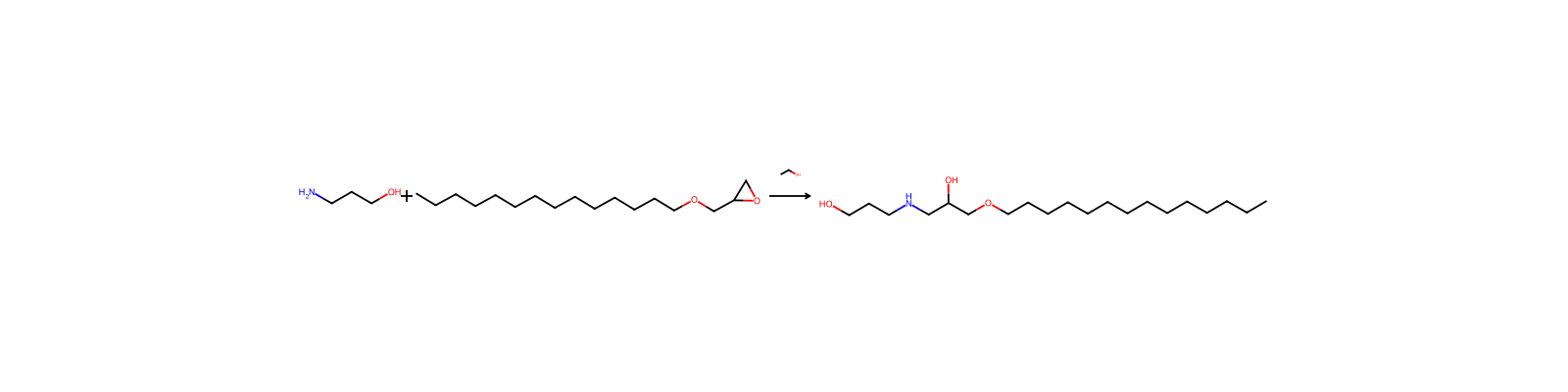
HRID 1104As reactant

156-87-6NCCCOWUGQZFFCHPXWKQ-UHFFFAOYSA-NN-propanolamine is a colorless to pale yellow liquid with a fishy odor. Less dense than water. Melting point 12.4 °C (54 °F). Moderately toxic by ingestion.
156-87-6DTXSID0059746CHEMBL115530CHEBI:1434080.982 at 68 °F (USCG, 1999) - Less dense than water; will float
0.9824 @ 26 °C/4 °C
0.985 @25 °C
SOL IN WATER, ALCOHOL & ETHER
MISCIBLE WITH ACETONE & CHLOROFORM
175 °F (USCG, 1999)
175 °F
369.5 °F at 760 mmHg (USCG, 1999)
187-188 °C @ 756 MM HG
187 °C @760 [mm Hg]
52 °F (USCG, 1999)
Safety information is for reference only and does not replace the supplier’s Safety Data Sheet (SDS), applicable regulations, or professional assessment.
This chemical does not meet GHS hazard criteria for 0.4% (1 of 259) of reports.
Danger
H302 (92.7%): Harmful if swallowed [Warning Acute toxicity, oral]
P260, P264, P264+P265, P270, P280, P301+P317, P301+P330+P331, P302+P352, P302+P361+P354, P304+P340, P305+P354+P338, P316, P317, P321, P330, P362+P364, P363, P405, and P501 (click each P-code to see the statement)
Aggregated GHS information provided per 259 reports by companies from 12 notifications to the ECHA C&L Inventory. Each notification may be associated with multiple companies.
Danger
Chemical: 1-Propanol, 3-amino-
1-Propanol, 3-amino- is listed on the EPA's Chemical Data Reporting (CDR) system. Manufacturers and importers of 1-Propanol, 3-amino- are required to report information about their production and use of this chemical to the EPA under the Toxic Substances Control Act (TSCA). (40 eCFR Part 711)
REACH registered substance: 3-aminopropan-1-ol (EC: 205-864-4)
3-Amino-1-propanol: Does not have an individual approval but may be used under an appropriate group standard
A severe eye and moderate to severe skin irritant; [RTECS] Moderately toxic by ingestion; [CAMEO] A moderate irritant; [HSDB] A fairly severe skin irritant that may cause second-degree burns following a few minutes contact; Causes irritation or burns to eyes; Vapors cause moderate irritation; [CHRIS] Causes burns; Inhalation may cause corrosive injuries to upper respiratory tract and lungs; Harmful by ingestion and skin absorption; [Alfa Aesar MSDS]
Used as a chemical intermediate; [HSDB]
CHEM INT FOR DEXPANTHENOL, A GASTROINTESTINAL DRUG
Organic intermediate
(1977) No Data
(1979) No Data
(1977) No Data
(1979) No Data
2023: 100,000 - <250,000 lb
(1977) No Data
(1980) PROBABLY GREATER THAN 2.27X10+6 GRAMS
Oil and Gas Drilling, Extraction, and Support activities
1-Propanol, 3-amino-: ACTIVE
UsesOrganic intermediate.
Uses3-Amino-1-propanol is used in the production of anionic emulsifiers, nonionic polyethylene emulsions. Its salts such as hydrochloride, nitrate, sulfate, phosphate are used for the balanced curing action with selected textile resins. It is used as a starting material in the preparation of beta-lactam antibiotics, humectants for foods and cosmetics. It acts as a corrosion inhibitor and finds application in water treatment, metal treatment and absorption of carbon dioxide gas.
Uses3-Amino-1-propanol was used in the synthesis of di-tert-butyl aminopropanol derivative.
Colorless to pale yellow liquid with a fishy odor. Less dense than water. Melting point 12.4°C (54°F). Moderately toxic by ingestion.


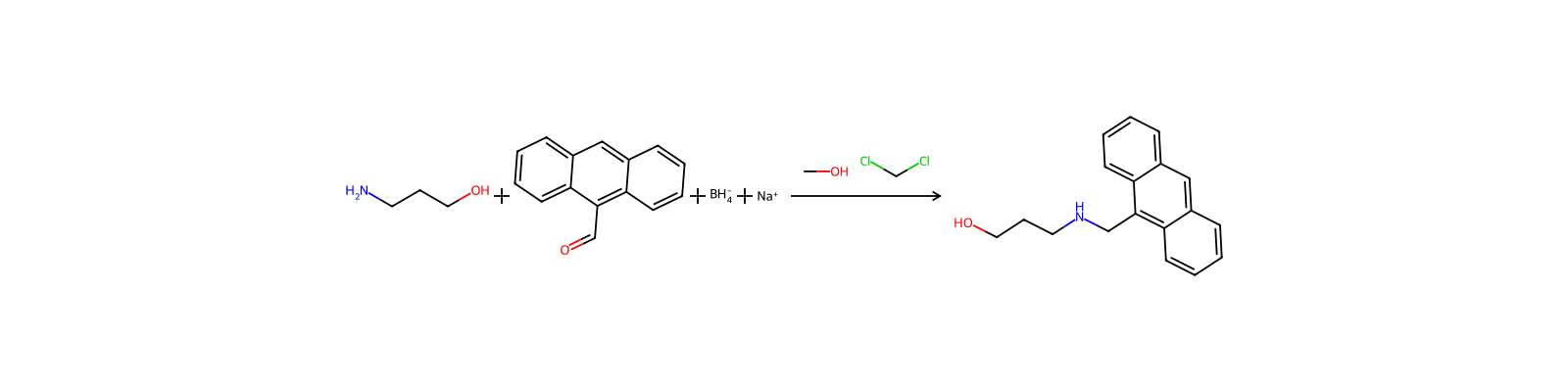
12.4 °C
-2 °C
0.07 [mmHg]
0.4 [mm Hg] @25 °C
N-propanolamine is a colorless to pale yellow liquid with a fishy odor. Less dense than water. Melting point 12.4 °C (54 °F). Moderately toxic by ingestion.
CBI; Liquid
Colorless to pale yellow liquid with a fishy odor; mp = 12.4 deg C; [CAMEO] Colorless liquid with an odor of amines; mp = 11 deg C; [Alfa Aesar MSDS]
N-PROPANOLAMINE neutralizes acids to form salts plus water in an exothermic reaction. May be incompatible with isocyanates, halogenated organics, peroxides, phenols (acidic), epoxides, anhydrides, and acid halides. Reacts with strong reducing agents, such as hydrides to generate flammable gaseous hydrogen.
Acute Tox. 4 (92.7%)
Flammable liquids - Category 4
4.0 [mg/m3]
44 [mg/m3]
270 [mg/m3]
DefinitionChEBI: 3-aminopropan-1-ol is a member of the class of propanolamines that is propane with a hydroxy substituent at C-1 and an amino substituent at C-2, making it both a primary amine and a primary alcohol. It is a primary alcohol, a primary amine and a propanolamine.