Silver(II) oxide
Basic information
- CAS
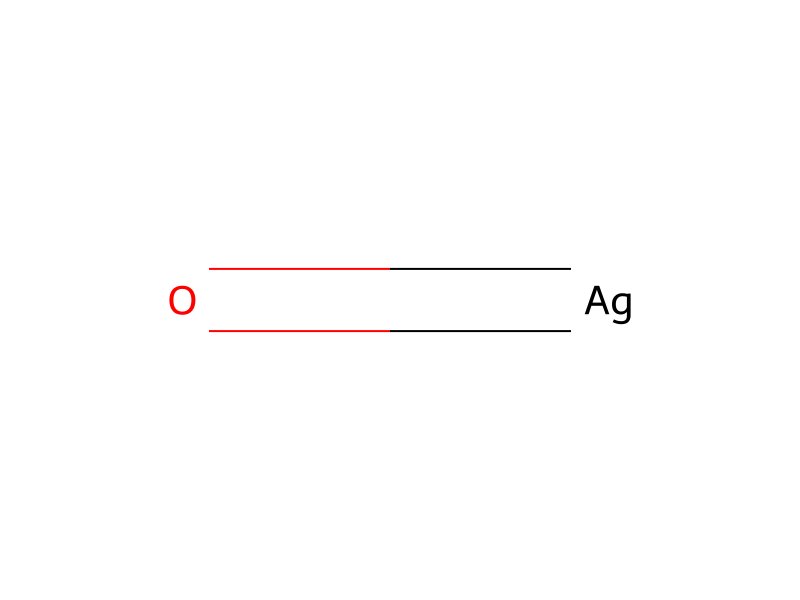
1301-96-8- Standard SMILES
[O]=[Ag]- InChIKey
OTCVAHKKMMUFAY-UHFFFAOYSA-N- Molecular formula
- AgO
- Average molar mass
- 123.868 g/mol
Overview
Silver(I,III) oxide is an oxide of silver. It is used as part of the manufacture of silver oxide-zinc alkaline batteries. Silver is a metallic element with the chemical symbol Ag and atomic number 47. It occurs naturally in its pure, free form, as an alloy with gold and other metals, and in minerals such as argentite and chlorargyrite. (L808, L809, L835)
Names & identifiers
- Preferred name
- Silver(II) oxide
- IUPAC
- oxosilver
- English name
- Silver(II) oxide
- Molecular formula
- AgO
- Molecular weight
- 123.87
Names & synonyms
Silver (II) oxideEINECS 215-098-2RefChem:886322Silver(II) oxideSILVER(II) OXIDE [MI]oxosilver155645-82-2UNII-4C3LTJ9O6JSilberperoxydSILVEROXIDESCHEMBL1754SILVER(I,III) OXIDE
Show more names
Silver suboxideDivasilSilver oxidever(II) oxideArgentic oxideSilver monoxideilver(II) Oxidesilveroxide(ago)Silver oxide(II)
Silver(II) oxide (99.9%-Ag)AKOS015832917CS-0082531Silver oxide, predominantly silver(II) oxideQ2380600
Database identifiers
- CAS
1301-96-8、155645-82-2、155645-89-9- PubChem CID
- 92152
- EC Number
- 215-098-2
- Nikkaji
- J134.341F
Properties
Computed structural properties
- Topological polar surface area
- 17.1 Ų
- Hydrogen bond donors
- 0
- Hydrogen bond acceptors
- 1
- Rotatable bonds
- 0
- Heavy atoms
- 2
- Formal charge
- 0
- Complexity
- 2
Experimental & physicochemical properties
Chemical ClassesMetals -> Metals, Inorganic Compounds
Physical DescriptionCharcoal-grey solid; Practically insoluble in water; [Merck Index] Dark grey odorless powder; Reacts with water; [Alfa Aesar MSDS]
Physicochemical properties
- Melting point
- 100 °C · 100 °C
- Density
- 7.483 g/mL · 7.483 g/mL at 25 °C
- storage temp.
- 2 · 2-8°C, protect from light, stored under nitrogen
- solubility
- soluble in alkaline solutions; reacts with acid solutions
- form
- Powder
- Specific Gravity
- 7.483 · 7.483
- color
- Gray to black
- Water Solubility
- INSOLUBLE
- Specific Heat Capacity
- 0.71 J/ · Cp(crystal): 0.71 J/(g·K), at 25℃
- Sensitive
- Moisture & Light Sensitive
- Merck
- 14 · 14,8522
Safety & regulation
Safety information is for reference only and does not replace the supplier’s Safety Data Sheet (SDS), applicable regulations, or professional assessment.
GHS classification
GHS Classification
This chemical does not meet GHS hazard criteria for 2.2% (1 of 46) of reports.
Danger
H272 (97.8%): May intensify fire; oxidizer [Danger Oxidizing liquids; Oxidizing solids]
P210, P220, P261, P264, P264+P265, P271, P280, P302+P352, P304+P340, P305+P351+P338, P319, P321, P332+P317, P337+P317, P362+P364, P370+P378, P403+P233, P405, and P501 (click each P-code to see the statement)
Aggregated GHS information provided per 46 reports by companies from 6 notifications to the ECHA C&L Inventory. Each notification may be associated with multiple companies.
Hazard information
Hazards Summary
A silver(I)-silver(III) oxide; A strong oxidizing agent; A severe skin, eye, respiratory tract, and mucous membrane irritant; [Merck Index] An oxidizing agent that may cause fire on contact with combustible materials; Causes burns; Inhalation may cause corrosive injuries to upper respiratory tract and lungs; [Alfa Aesar MSDS] See Silver.
Hazard Classes and CategoriesOx. Sol. 2 (97.8%)
Safety & protection
Exposure Control and Personal Protection0.01 [mg/m3], inhalable fraction, as Ag (salts)[German Research Foundation (DFG)]
Toxicology
Treatment
EYES: irrigate opened eyes for several minutes under running water. INGESTION: do not induce vomiting. Rinse mouth with water (never give anything by mouth to an unconscious person). Seek immediate medical advice. SKIN: should be treated immediately by rinsing the affected parts in cold running water for at least 15 minutes, followed by thorough washing with soap and water. If necessary, the person should shower and change contaminated clothing and shoes, and then must seek medical attention. INHALATION: supply fresh air. If required provide artificial respiration.
Chemistry & industry
Pharmacology
Metabolism/Metabolites
Silver and its compounds can be absorbed via inhalation, while silver compounds can also be absorbed orally and dermally. It distributes throughout the body in the blood, particularily to the liver. Insoluble silver salts are transformed into soluble silver sulfide albuminates, bind to amino or carboxyl groups in RNA, DNA, and proteins, or are reduced to metallic silver by ascorbic acid or catecholamines. Metallic silver is oxidized and may deposit in the tissues, causing arygria. Silver is eliminated primarily in the faeces. (L808)
Uses & manufacturing
Uses
Used to make silver oxide-zinc alkali batteries; [Merck Index] Active product registrations in the US for use as a swimming pool disinfectant; [NPIRS]
Battery Manufacturing [Category: Industry]
Silver(I,III) oxide is used as part of the manufacture of silver oxide-zinc alkaline batteries. (L835)
Applications
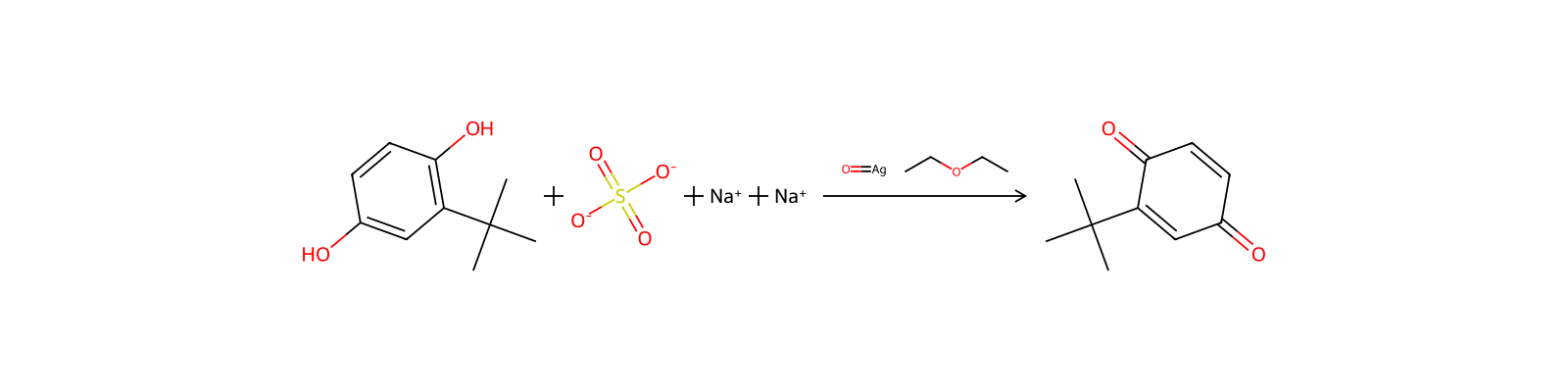
UsesSilver(II) oxide is used to make silver oxide-zinc alkali batteries. Also, it is an oxidizing agent.
UsesSilver(II) oxide is used to make silver oxide-zinc alkali batteries. It is also used as a reagent in laboratory reactions and forms transition metal-carbene complexes. It is also used as a catalyst to prepare silver metal. It acts as an effective carbon dioxide scrubber and used in nuclear submarines, the international space station and space shuttles. Further, it is used in the manufacture of filters for gas sensors and in some infection-resistant surgical fabric materials and fibrous textile articles. In addition to this, it is used in concrete and in some swimming pools to protect the water from undesired microbes.
UsesIn the manufacture of silver oxide-zinc alkali batteries.
Preparation methods
Related reactions
492 records




Compound notes
Loading…