
Basic information
- Standard SMILES
c1ncncn1- InChIKey
JIHQDMXYYFUGFV-UHFFFAOYSA-N- Molecular formula
- C3H3N3
- Average molar mass
- 81.08 g/mol
- Monoisotopic mass
- 81.03269711
Names & identifiers
- Preferred name
- 1,3,5-Triazine
- IUPAC
- 1,3,5-triazine
- English name
- 1,3,5-Triazine
- Molecular formula
- C3H3N3
- Molecular weight
- 81.08
Names & synonyms
1,3,5-TRIAZINEs-TriazineEINECS 206-028-1UNII-8B5F4CM81ENSC 561898B5F4CM81ES-TRIAZINE [MI]NSC-56189s-Triazine-(1,3,5)DTXSID7052785TRIAZINE, 1,3,5-CHEBI:30259
Show more names
TRIAZINETRIAZINETriazin(sym.)1,3,5-TriazinTriazinCyanidines-Triazinvedita250
6294-83-3RefChem:72302DTXCID3031361InChI=1/C3H3N3/c1-4-2-6-3-5-1/h1-3JIHQDMXYYFUGFV-UHFFFAOYSA-N290-87-9sym-TriazineVedita 250
Database identifiers
- CAS
290-87-9- PubChem CID
- 9262
- DTXSID
DTXSID7052785- ChEMBL
CHEMBL15698- ChEBI
CHEBI:30259- UNII
- 8B5F4CM81E
- EC Number
- 206-028-1
- Nikkaji
- J102.028E
Properties
Computed structural properties
- XLogP
- 0
- Topological polar surface area
- 38.7 Ų
- Hydrogen bond donors
- 0
- Hydrogen bond acceptors
- 3
- Rotatable bonds
- 0
- Heavy atoms
- 6
- Formal charge
- 0
- Complexity
- 21
Experimental & physicochemical properties
Kovats Retention Index663;663
Physicochemical properties
- Melting point
- 77 · 77-83 °C (dec.)(lit.)
- Boiling point
- 114 °C · 114°C
- Density
- 1 · 1,38 g/cm3
- refractive index
- 1.506 · 1.5060 (estimate)
- Flash point
- 114 °C · 114°C
- storage temp.
- Inert atmosphere,Room Temperature
- solubility
- 0.1 g/mL, · methanol: 0.1 g/mL, clear
- pka
- 2.07 · 2.07±0.10(Predicted)
- form
- powder to crystal
- color
- White to Orange to Green
- Sensitive
- Moisture Sensitive
- Merck
- 14 · 14,9602
- BRN
- 104790 · 104790
- CAS DataBase Reference
- 290 · 290-87-9(CAS DataBase Reference)
- EWG's Food Scores
- 1 · 1
- FDA UNII
- 8 B5F4CM81E · 8B5F4CM81E
- NIST Chemistry Reference
- 1 · 1,3,5-Triazine(290-87-9)
- UNSPSC Code
- 12352100 · 12352100
- NACRES
- 22 · NA.22
- Symbol(GHS)
- 5 · GHS05,GHS07
- Signal word
- Danger
- Hazard statements
- 302 · H302-H315-H318-H335
- Precautionary statements
- 280 · P280-P301+P312+P330-P302+P352-P305+P351+P338+P310
- Hazard Codes
- Xn,C
- Risk Statements
- 22 · 22-37/38-41-34
- Safety Statements
- 22 · 22-24/25-39-26-45-36/37/39-27
- RIDADR
- 2928 · UN2928
- WGK Germany
- 3 · 3
- RTECS
- 2957000 · XY2957000
- HazardClass
- 6.1 · 6.1
- PackingGroup
- II
- HS Code
- 29339900 · 29339900
Safety & regulation
GHS classification
GHS Classification
Danger
H302 (97.8%): Harmful if swallowed [Warning Acute toxicity, oral];H314 (13%): Causes severe skin burns and eye damage [Danger Skin corrosion/irritation];H315 (87%): Causes skin irritation [Warning Skin corrosion/irritation];H318 (89.1%): Causes serious eye damage [Danger Serious eye damage/eye irritation];H335 (87%): May cause respiratory irritation [Warning Specific target organ toxicity, single exposure; Respiratory tract irritation];H360 (15.2%): May damage fertility or the unborn child [Danger Reproductive toxicity]
P203, P260, P261, P264, P264+P265, P270, P271, P280, P301+P317, P301+P330+P331, P302+P352, P302+P361+P354, P304+P340, P305+P354+P338, P316, P317, P318, P319, P321, P330, P332+P317, P362+P364, P363, P403+P233, P405, and P501 (click each P-code to see the statement)
Aggregated GHS information provided per 46 reports by companies from 6 notifications to the ECHA C&L Inventory. Each notification may be associated with multiple companies.;Information may vary between notifications depending on impurities, additives, and other factors. The percentage value in parenthesis indicates the notified classification ratio from companies that provide hazard codes. Only hazard codes with percentage values above 10% are shown. For more detailed information, please visit ECHA C&L website.
Hazard information
Regulatory Information
Chemical: 1,3,5-Triazine
1,3,5-Triazine: Does not have an individual approval but may be used under an appropriate group standard
Hazard Classes and CategoriesAcute Tox. 4 (97.8%);Skin Corr. 1B (13%);Skin Irrit. 2 (87%);Eye Dam. 1 (89.1%);STOT SE 3 (87%);Repr. 1B (15.2%)
Regulatory information
Regulatory Information
Chemical: 1,3,5-Triazine
1,3,5-Triazine: Does not have an individual approval but may be used under an appropriate group standard
Safety data
- wgk
- 3
- rtecs
- XY2957000
- ridadr
- UN2928
- hs_code
- 29339900
- risk_code
- 22-37/38-41-34
- Signal word
- Danger
- Symbol(GHS)
- GHS05,GHS07
- hazard_code
- Xn,C
- safety_code
- 22-24/25-39-26-45-36/37/39-27
- hazard_class
- 6.1
- packing_group
- II
- Hazard statements
- H302-H315-H318-H335
- Precautionary statements
- P280-P301+P312+P330-P302+P352-P305+P351+P338+P310
Chemistry & industry
Applications
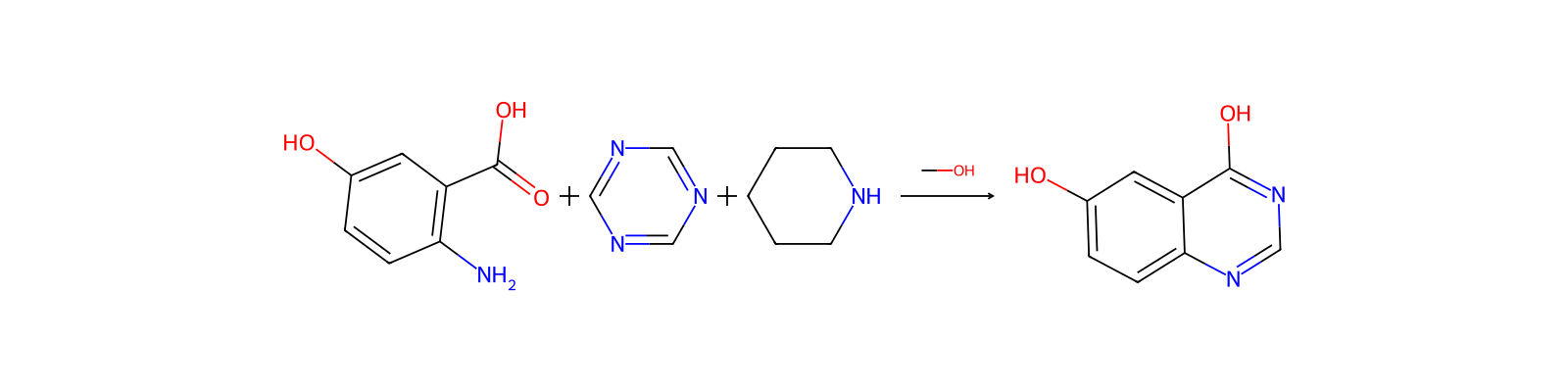
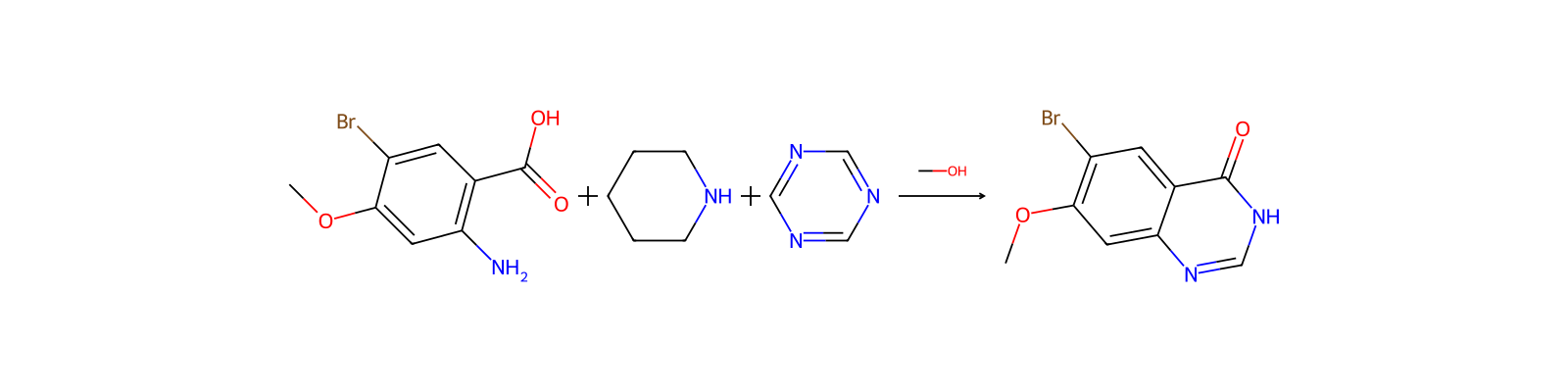
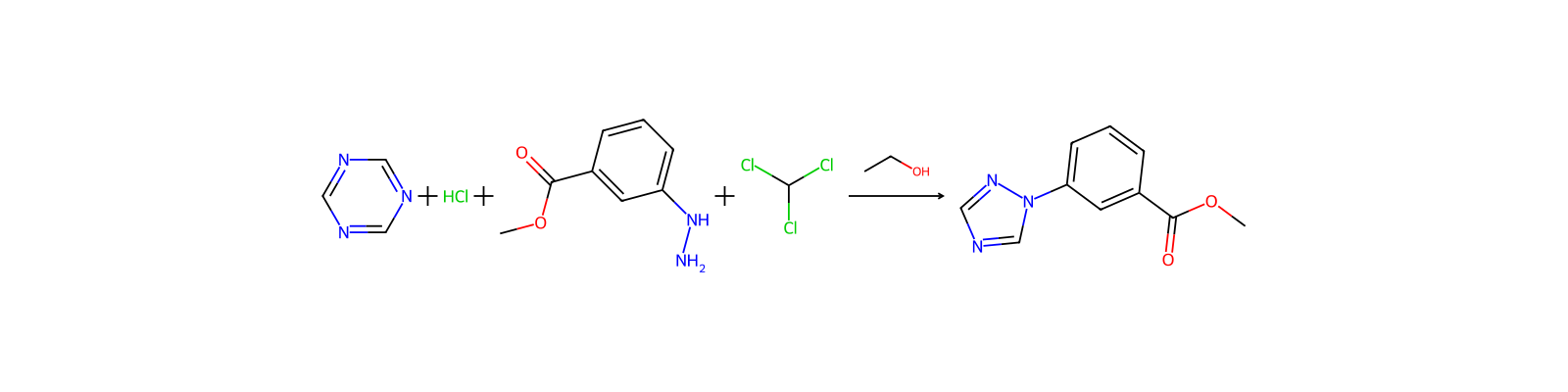
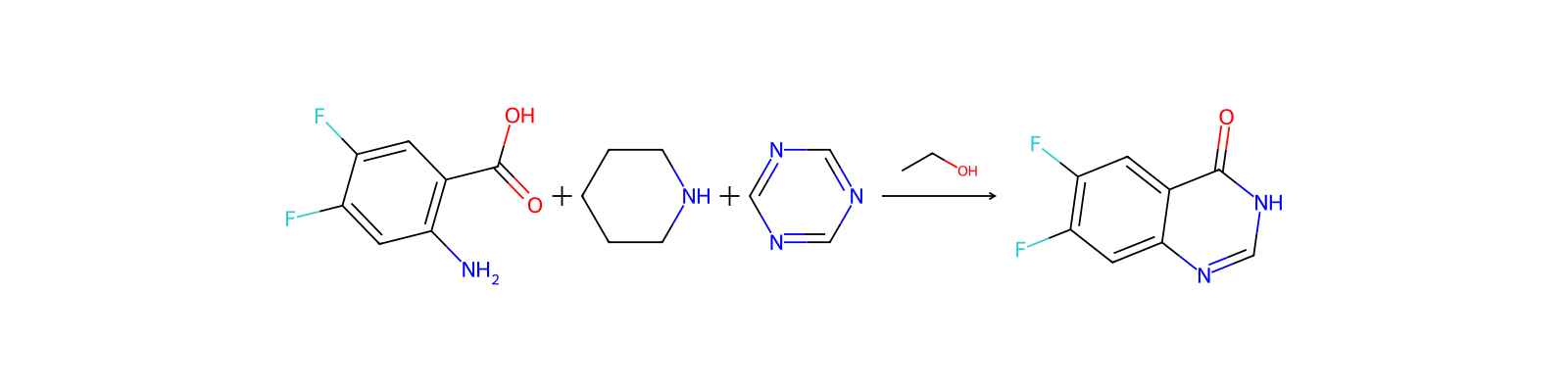
Uses1,3,5-Triazine is a reagent in oxidation reactions, in synthesis of heterocycles. Triazine derivatives are used as herbicides, pharmaceuticals, complexation agents, peptidomimetic building blocks, and dyes.
Preparation methods
PreparationSymmetrical 1,3,5-triazines are prepared by trimerization of certain nitriles such as cyanogen chloride or cyanimide. Benzoguanamine (with one phenyl and 2 amino substituents) is synthesised from benzonitrile and dicyandiamide. In the Pinner triazine synthesis (named after Adolf Pinner) the reactants are an alkyl or aryl amidine and phosgene. Insertion of an N-H moiety into a hydrazide by a copper carbenoid, followed by treatment with ammonium chloride also gives the triazine core.Amine-substituted triazines called Guanamines are prepared by the condensation of cyanoguanidine with the corresponding nitrile:(H2N)2C=NCN + RCN → (CNH2)2(CR)N3
Upstream & downstream products
Upstream raw materials
Downstream products
Suppliers50 total
梯希爱(上海)化成工业发展有限公司021-67121386 · [email protected]
湖北永阔科技有限公司027-59223108 15972152991 · [email protected]
上海阿拉丁生化科技股份有限公司400-6206333 13167063860 · [email protected]
湖北万得化工有限公司15377098680 15377098680 · [email protected]
毕佳索(上海毕得医药科技股份有限公司)400-6005915 · [email protected]
INTATRADE GmbH+49 3493/605464 · [email protected]
韶远科技(上海)有限公司021-50795510 4000665055 · [email protected]
Syntechem Co.,Ltd[email protected]
上海迈瑞尔生化科技有限公司4006356688 18621169109 · [email protected]
江苏普乐司生物科技有限公司0513-66017706 18551496367 · [email protected]
宁波亿诺化学品有限公司86-574-27787657 · [email protected]
阿法埃莎(中国)化学有限公司400-6106006 · [email protected]
安耐吉化学&3A(安徽泽升科技股份有限公司)400-0056266 · [email protected]
武汉卡诺斯科技有限公司027-83238443 15327105076 · [email protected]
上海瀚鸿科技股份有限公司021-54306202 13764082696 · [email protected]
南京圣亿来化工有限公司19951936396 · [email protected]
石家庄德科达化工有限公司0311-67790228 15531158659 · [email protected]
上海钰康生物科技有限公司+86-18930848214 +86-021-56762820 · [email protected]
湖北广奥生物科技有限公司027-02702759223056 18162699093 · [email protected]
上海攀鸿化工科技有限公司021-56491756 13512199871 · [email protected]
泰州市鑫泓川新材料有限公司18651157028 18651157028
河北津宏化工有限公司13821380987 · [email protected]
山东西亚化学有限公司13355009207 13355009207 · [email protected]
四川库利南科技有限公司400-1166-196 18981987031 · [email protected]
天津希恩思生化科技有限公司400 638 7771 · [email protected]
武汉吉业升化工有限公司027-13545242311 13545242311 · [email protected]
斯百全化学(上海)有限公司021-021-021-67601398-809-809-809 15221380277 · [email protected]
艾科试剂4008-755-333 18080918076 · [email protected]
上海遐瑞医药科技有限公司+86 21 61551611
上海健超生物科技有限公司150-2103-5486 18017383231 · [email protected]
TOKYO CHEMICAL INDUSTRY CO., LTD.03-36680489 · [email protected]
越林试剂021-62960152 · [email protected]
湖北隆信化工实业有限公司15271551270 · [email protected]
上海将来实业股份有限公司400-0066400 13621662912 · [email protected]
北京奥秘佳得医药科技有限公司+86-13522808617 · [email protected]
雷丁试剂0510-85629785 18013409632 · [email protected]
上海麦克林生化科技股份有限公司15221275939 15221275939 · [email protected]
上海嵩爰化工科技有限公司010-1234567 18521000990 · [email protected]
陕西缔都医药化工有限公司+86-29-87569262 +86-15003564040 · [email protected]
池州凯隆进出口贸易有限公司[email protected]
Sigma-Aldrich西格玛奥德里奇(上海)贸易有限公司021-61415566 800-8193336 · [email protected]
潍坊市前进精细化工有限公司18753684562 · [email protected]
诺尔凯立科技有限公司86-(0)21-31261262 373522135 · [email protected]
九鼎化学(上海)科技有限公司4009209199 · [email protected]
上海玻尔化学试剂有限公司19102157732 · [email protected]
成都润泽本土化工有限公司028-88469284 18000562381 · [email protected]
上海岚克医药科技发展有限公司0086-21-58956006
北京华威锐科化工科技有限公司89508211 18501085097 · [email protected]
上海源叶生物科技有限公司13636370518 · [email protected]
湖北齐飞医药化工有限公司027-59322506 18071128681 · [email protected]
Additional notes
Definition1,3,5-Triazine, also known as s-triazine, is a six-membered ring organic compound, which is one of the isomers of triazine.
Related reactions
40 records




Linked notes
Loading…