HomeMCPWorkbenchSkills
HomeWorkbenchNotificationsMe
llms.txt · MCP GuidePrivacy Policy · Terms of Service · Supportv1.8.3
  1. Home
  2. /Compound

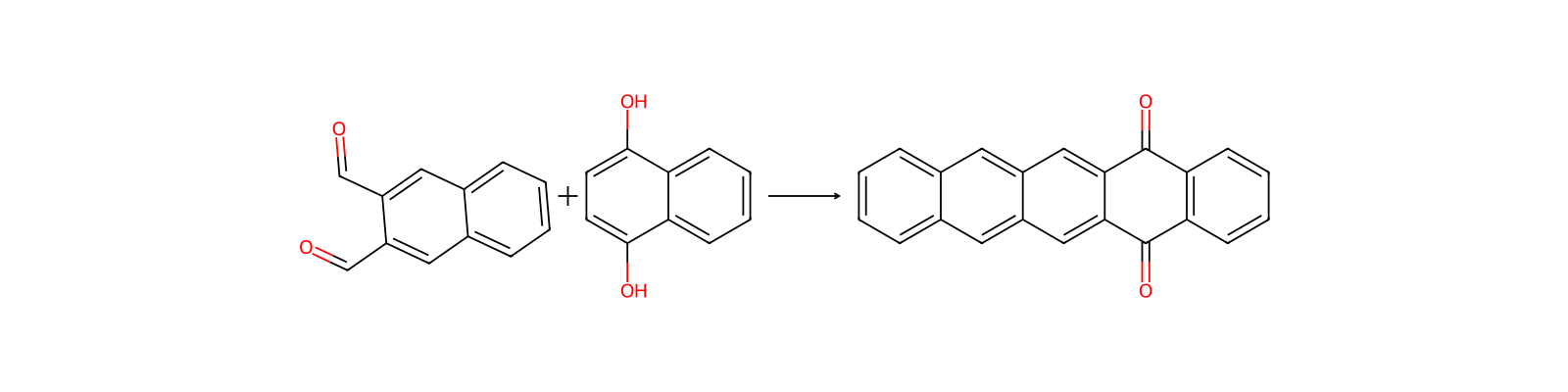
2,3-Naphthalenedicarboxaldehyde

HCID 96400
New reaction
Print
Basic informationOverviewNames & identifiersPropertiesSafety & regulationChemistry & industryRelated reactionsCompound notes
Substructure searchFind similar structures

Basic information

CAS
7149-49-7
Standard SMILES
O=Cc1cc2ccccc2cc1C=O
InChIKey
ZIPLKLQPLOWLTM-UHFFFAOYSA-N
Molecular formula
C12H8O2
Average molar mass
184.19 g/mol
Monoisotopic mass
184.0524295

Overview

used in colorimetric determination of cholesterol; RN from CA Form Index Vol 90; N1 same as NM

Names & identifiers

Preferred name
2,3-Naphthalenedicarboxaldehyde
IUPAC
naphthalene-2,3-dicarbaldehyde
English name
Naphthalene-2,3-dicarboxaldehyde
Molecular formula
C12H8O2
Molecular weight
184.19

Names & synonyms

7149-49-7naphthalene-2,3-dicarbaldehyde2,3-NaphthalenedicarboxaldehydeNaphthalene-2,3-dicarboxaldehyde2,3-NaphthalenedicarbaldehydeNaphthalene-2,3-dialdehyde2,3-NdaNSC-72106Z676031J38DTXSID20221710RefChem:442611DTXCID50144201
Show more names
NDANAPHTHALENE DIALDEHYDEFluorimetricreagentfo]2,3-NaphtahalnendialdehydeNaphthalenedicarboxaldehyde
2,3-NaphthalenedialdehydeMFCD000166182,3-DiformylnaphthaleneNSC 721062,3-naphthalene dialdehydeSCHEMBL652955orb1944849SCHEMBL11542686

Database identifiers

CAS
7149-49-7
PubChem CID
96400
DTXSID
DTXSID20221710
UNII
Z676031J38
EC Number
634-732-2
Nikkaji
J207.996H

Properties

Computed structural properties

XLogP
2.1
Topological polar surface area
34.1 Ų
Hydrogen bond donors
0
Hydrogen bond acceptors
2
Rotatable bonds
2
Heavy atoms
14
Formal charge
0
Complexity
200

Experimental & physicochemical properties

SpringerMaterials Properties13C nuclear magnetic resonance spectrum

Physicochemical properties

Melting point
131 · 131-133 °C(lit.)
Boiling point
380 · 380.0±25.0 °C(Predicted)
Density
1.254 · 1.254±0.06 g/cm3(Predicted)
storage temp.
Inert atmosphere,Room Temperature
solubility
Chloroform (Slightly), Ethyl Acetate (Slightly)
form
Crystalline Powder
color
White to pale yellow
Appearance
Yellow solid
BRN
2207267 · 2207267
InChI
InChI=1S/C12H8O2/c13-7-11-5-9-3-1-2-4-10(9)6-12(11)8-14/h1-8H
InChIKey
ZIPLKLQPLOWLTM-UHFFFAOYSA-N
SMILES
C1=C2C(C=CC=C2)=CC(C=O)=C1C=O

Safety & regulation

Safety information is for reference only and does not replace the supplier’s Safety Data Sheet (SDS), applicable regulations, or professional assessment.

GHS classification

GHS Classification · 4 items

Warning

H315 (100%): Causes skin irritation [Warning Skin corrosion/irritation]

P261, P264, P264+P265, P271, P280, P302+P352, P304+P340, P305+P351+P338, P319, P321, P332+P317, P337+P317, P362+P364, P403+P233, P405, and P501 (click each P-code to see the statement)

Aggregated GHS information provided per 42 reports by companies from 5 notifications to the ECHA C&L Inventory. Each notification may be associated with multiple companies.

Hazard information

Hazard Classes and CategoriesSkin Irrit. 2 (100%)

Safety data

F
3-10-23
PPE
dust mask type N95 (US), Eyeshields, Gloves
wgk
3
hs_code
2912299000
risk_code
36/37/38
Signal word
Warning
Symbol(GHS)
GHS07
hazard_code
Xi
safety_code
26
Storage Class
11 - Combustible Solids
target organs
Respiratory system
Hazard statements
H315-H319-H335
Hazard Classifications
Eye Irrit. 2Skin Irrit. 2STOT SE 3
Precautionary statements
P261-P264-P271-P280-P302+P352-P305+P351+P338

Chemistry & industry

Pharmacology

MeSH Pharmacological Classification · 1 item

Substances used for the detection, identification, analysis, etc. of chemical, biological, or pathologic processes or conditions. Indicators are substances that change in physical appearance, e.g., color, at or approaching the endpoint of a chemical titration, e.g., on the passage between acidity and alkalinity. Reagents are substances used for the detection or determination of another substance by chemical or microscopical means, especially analysis. Types of reagents are precipitants, solvents, oxidizers, reducers, fluxes, and colorimetric reagents. (From Grant & Hackh's Chemical Dictionary, 5th ed, p301, p499)

Applications · 3 items

DescriptionNaphthalene-2,3-dicarboxaldehyde is a fluorogenic derivatizing probe for amines.

UsesA useful reagent for the derivatization of primary amines, amino acids and small peptides

UsesNaphthalene-2,3-dicarboxaldehyde is a fluorogenic derivatizing agent for amines.

Upstream & downstream products

Upstream raw materials

Piperidine2,5-Dimethoxytetrahydrofurano-PhthalaldehydeAcetic acid

Downstream products

2,3-Naphthalenedicarboxylic acidNaphtho[2,3-c]furan-1(3H)-one

Related reactions

5 records
New reaction record
HRID 461444 reaction equation
HRID 461444As reactant
HRID 1158540 reaction equation
HRID 1158540As reactant
HRID 1177832 reaction equation
HRID 1177832As reactant
HRID 1644008 reaction equation
HRID 1644008As reactant
HRID 2104934 reaction equation
HRID 2104934As reactant

Compound notes

On this pageBasic informationOverviewNames & identifiersPropertiesSafety & regulationChemistry & industryRelated reactionsCompound notes
CAS DataBase Reference
7149 · 7149-49-7(CAS DataBase Reference)
FDA UNII
676031 J38 · Z676031J38
Comptox DTXSID
20221710 · DTXSID20221710
UNSPSC Code
12352108 · 12352108
NACRES
32 · NA.32
Symbol(GHS)
7 · GHS07
Signal word
Warning
Hazard statements
315 · H315-H319-H335
Precautionary statements
261 · P261-P264-P271-P280-P302+P352-P305+P351+P338
target organs
Respiratory system
PPE
95 · dust mask type N95 (US), Eyeshields, Gloves
Hazard Codes
Xi
Risk Statements
36 · 36/37/38
Safety Statements
26 · 26
WGK Germany
3 · 3
F
3 · 3-10-23
HS Code
2912299000 · 2912299000
Storage Class
11 · 11 - Combustible Solids
Hazard Classifications
2 Skin · Eye Irrit. 2Skin Irrit. 2STOT SE 3