

Basic information
- Standard SMILES
COC(=O)C1CC(=O)N(Cc2ccccc2)C1- InChIKey
WTRWSSDZHQOPJI-UHFFFAOYSA-N- Molecular formula
- C13H15NO3
- Average molar mass
- 233.26 g/mol
- Monoisotopic mass
- 233.10519334
Names & identifiers
- Preferred name
- Methyl 1-benzyl-5-oxopyrrolidine-3-carboxylate
- IUPAC
- methyl 1-benzyl-5-oxopyrrolidine-3-carboxylate
- English name
- METHYL 1-BENZYL-5-OXO-3-PYRROLIDINECARBOXYLATE
- Molecular formula
- C13H15NO3
- Molecular weight
- 233.26
Names & synonyms
Methyl 1-benzyl-5-oxopyrrolidine-3-carboxylate51535-00-3Methyl 1-benzyl-5-oxo-3-pyrrolidinecarboxylateEINECS 257-257-9DTXSID501248434NSC 176916RefChem:812686DTXCID10893162257-257-951523-00-31-Benzyl-5-oxo-pyrrolidine-3-carboxylic acid methyl esterMFCD00003196
Show more names
Methyl 1-benzyl-5-oxo-3-pyrrolidinecarboxylate 97%Methyl 1-benzyl-5-oxo-3-pyrrolidine-carboxylate,98%Methyl 5-oxo-1-(phenylmethyl)-3-pyrrolidinecarboxylate1-Benzyl-5-oxo-3-pyrrolidinecarboxylic acid methyl esterN-Benzyl-5-oxopyrrolidine-3-carboxylic acid methyl esterMethyl 1-benzyl-5-oxopyrrolidine-3-carboxylate - [M13556]5-Oxo-1-(phenylmethyl)-3-pyrrolidinecarboxylic acid methyl ester
Methyl 1-benzyl-5-oxo-pyrrolidine-3-carboxylate3-Pyrrolidinecarboxylic acid, 5-oxo-1-(phenylmethyl)-, methyl estermethyl 5-oxo-1-benzylpyrrolidine-3-carboxylateMFCD09261309methyl 1-benzyl-5-oxo-3-pyrrolidine-carboxylateNSC176916Methyl(R)-1-benzyl-5-oxopyrrolidine-3-carboxylateBionet2_000906
Database identifiers
- CAS
51535-00-3- PubChem CID
- 98909
- DTXSID
DTXSID501248434- ChEMBL
CHEMBL1606750- EC Number
- 257-257-9
- Nikkaji
- J236.176K
Properties
Computed structural properties
- XLogP
- 0.8
- Topological polar surface area
- 46.6 Ų
- Hydrogen bond donors
- 0
- Hydrogen bond acceptors
- 3
- Rotatable bonds
- 4
- Heavy atoms
- 17
- Formal charge
- 0
- Complexity
- 297
Experimental & physicochemical properties
Solubility>35 [ug/mL] (The mean of the results at pH 7.4)
Physicochemical properties
- Melting point
- 63 · 63-66 °C (lit.)
- Boiling point
- 375.51 °C · 375.51°C (rough estimate)
- Density
- 1.1475 · 1.1475 (rough estimate)
- refractive index
- 1.531 · 1.5310 (estimate)
- storage temp.
- Sealed in dry,Room Temperature
- pka
- -1.82 · -1.82±0.40(Predicted)
- form
- Powder
- color
- White to slightly yellow
- InChI
- InChI=1S/C13H15NO3/c1-17-13(16)11-7-12(15)14(9-11)8-10-5-3-2-4-6-10/h2-6,11H,7-9H2,1H3
- InChIKey
- WTRWSSDZHQOPJI-UHFFFAOYSA-N
- SMILES
- N1(CC2=CC=CC=C2)C(=O)CC(C(OC)=O)C1
- UNSPSC Code
- 12352100 · 12352100
- Symbol(GHS)
- 5 · GHS05,GHS07,GHS09
- Signal word
- Danger
- Hazard statements
- 302 · H302-H315-H318-H400
- Precautionary statements
- 501 · P501-P273-P270-P264-P280-P302+P352-P391-P362+P364-P332+P313-P301+P312+P330-P305+P351+P338+P310
- PPE
- 95 · Eyeshields, Gloves, type N95 (US)
- Risk Statements
- 36 · 36/37/38
- Safety Statements
- 24 · 24/25-60-37-26
- WGK Germany
- 3 · 3
- HazardClass
- IRRITANT
- HS Code
- 29337900 · 29337900
- Storage Class
- 13 · 13 - Non Combustible Solids
Safety & regulation
GHS classification
GHS Classification
Warning
H302 (100%): Harmful if swallowed [Warning Acute toxicity, oral]
P261, P264, P264+P265, P270, P271, P280, P301+P317, P302+P352, P304+P340, P305+P351+P338, P319, P321, P330, P332+P317, P337+P317, P362+P364, P403+P233, P405, and P501 (click each P-code to see the statement)
The GHS information provided by 1 company from 1 notification to the ECHA C&L Inventory.
Hazard information
Hazard Classes and CategoriesAcute Tox. 4 (100%)
Safety data
- PPE
- Eyeshields, Gloves, type N95 (US)
- wgk
- 3
- hs_code
- 29337900
- risk_code
- 36/37/38
- Signal word
- Danger
- Symbol(GHS)
- GHS05,GHS07,GHS09
- safety_code
- 24/25-60-37-26
- hazard_class
- IRRITANT
- Storage Class
- 13 - Non Combustible Solids
- Hazard statements
- H302-H315-H318-H400
- Precautionary statements
- P501-P273-P270-P264-P280-P302+P352-P391-P362+P364-P332+P313-P301+P312+P330-P305+P351+P338+P310
Chemistry & industry
Applications
UsesEnantiomeric separation of methyl 1-benzyl-5-oxo-3-pyrrolidinecarboxylate has been achieved using methylchlorophenyl carbamate of cellulose and of amylose as polysaccharide chiral stationary phases by HPLC.
General DescriptionEnantiomeric separation of methyl 1-benzyl-5-oxo-3-pyrrolidinecarboxylate has been achieved using methylchlorophenyl carbamate of cellulose and of amylose as polysaccharide chiral stationary phases by HPLC.
Upstream & downstream products
Downstream products
Suppliers50 total
广州理文科技有限公司18028686850 · [email protected]
毕佳索(上海毕得医药科技股份有限公司)400-6005915 · [email protected]
杭州品高化工有限公司0571-87658025 · [email protected]
温州共赢化学有限公司+86-0086-577-64498589 +86-15355981851 · [email protected]
Suzhou Victorypharm Co.,Ltd.+86-13916956214 · [email protected]
Suzhou ARTK Medchem Co., Ltd.+86-18168183658 · [email protected]
Baoji Guokang Healthchem co.,ltd+8615604608665 15604608665 · [email protected]
郑州鸿晟医药科技有限公司0371-55695890 15637198702 · [email protected]
河北贝克曼生物科技有限公司15961617865 15961617865 · [email protected]
郑州德元凯化工有限公司17837139533 · [email protected]
苏州维塔力生物医药有限公司512-68242903 13916956214 · [email protected]
上海迈瑞尔生化科技有限公司4006356688 18621169109 · [email protected]
北京索莱宝科技有限公司010-50973130 17801761073 · [email protected]
安耐吉化学&3A(安徽泽升科技有限公司)021-58432009 400-005-6266 · [email protected]
阿法埃莎(中国)化学有限公司400-6106006 · [email protected]
苏州艾缇克药物化学有限公司0512-68323967 18015559028 · [email protected]
安耐吉化学&3A(安徽泽升科技股份有限公司)400-0056266 · [email protected]
武汉凯威斯科技有限公司86-027-67849912 · [email protected]
上海速博化学科技有限公司21-54820552 17702105771
Jinan Dexinjia Bio&Tech Co., Ltd+86-0531-82375818 +86-15064153060 · [email protected]
济南德信佳生物科技有限公司0531-82375886 13001715031 · [email protected]
嘉兴市艾森化工有限公司0573-85285100 18627885956 · [email protected]
Pure Chemistry Scientific Inc.001-857-928-2050 or 1-888-588-9418 · [email protected]
学研惠(武汉)科技有限公司15727060112 · [email protected]
安徽德信佳生物医药有限公司0531-82375818 15064153060 · [email protected]
成都福尔斯特医药技术有限公司028-87078428 028-87074958 · [email protected]
北京恒普高药物化学科技有限公司010-81520996 13439320863 · [email protected]
上海皓伯化工科技有限公司021-57790084 13918007836
赛默飞世尔科技(中国)有限公司800-810-5118 · [email protected]
上海特伯化学科技有限公司+86-21-60341587 · [email protected]
上海健超生物科技有限公司150-2103-5486 18017383231 · [email protected]
Shanghai Witofly Chemical Co.,Ltd[email protected]
金瓯生物医药(南京)有限公司13000000000 · [email protected]
苏州爱玛特生物科技有限公司0512-56316828 4008675858 · [email protected]
上海石鑫医药科技有限公司021-18621020637 18621020637 · [email protected]
上海毕得医药科技股份有限公司400-164-7117 18317119277 · [email protected]
Labnetwork lnc.+86-27-50766799 +86-18062016861 · [email protected]
上海鑫圭生物科技有限公司15121041756 · [email protected]
上海永叶生物科技有限公司86-021-61559134 15921386130 · [email protected]
南京恰风和医药科技有限公司025-57018978 18251899859 · [email protected]
江苏艾康生物医药研发有限公司025-66028182 17714375163 · [email protected]
上海霈阳化工有限公司+86 (21) 61919736
Sigma-Aldrich西格玛奥德里奇(上海)贸易有限公司021-61415566 800-8193336 · [email protected]
成都赛诺宁科技有限公司28-87999436 02887999436 · [email protected]
斯派螺(武汉)药物研发有限公司[email protected]
北京汇科盈生物科技有限公司15210661751 · [email protected]
上海阿拉丁生化科技股份有限公司6206333 13167063860 · [email protected]
陕西缔都医药化工有限公司029-029-81120477 17792793610 · [email protected]
苏州艾瑞缇克生物科技有限公司18168183658 · [email protected]
武汉多普乐生物医药有限公司+86-02787215551 19945035818 · [email protected]
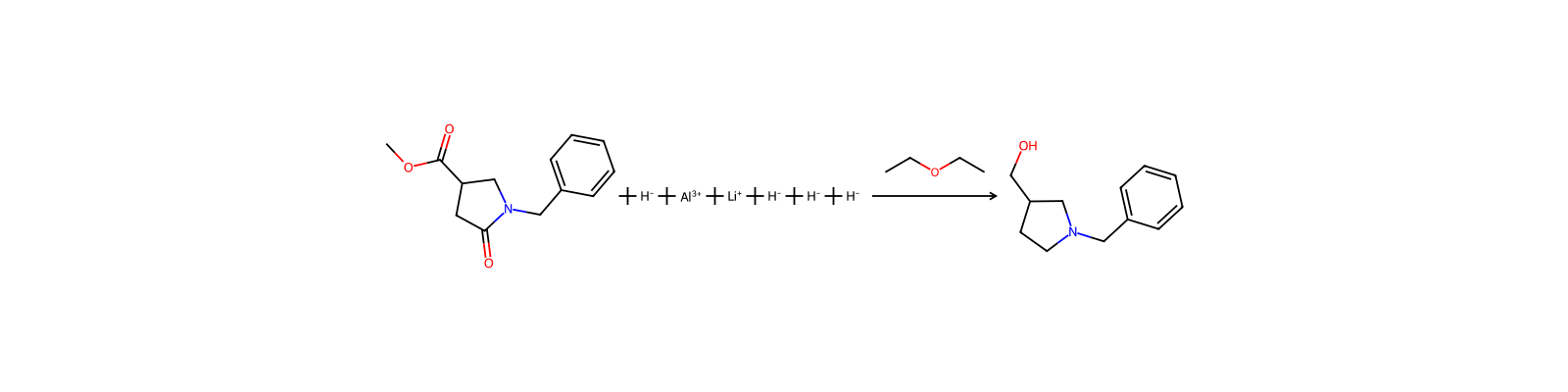
Related reactions
53 records




Linked notes
Loading…